

Main Facts
In an audacious and increasingly unhinged ongoing digital experiment, the modding community has once again pushed Grand Theft Auto V into uncharted and bizarre territory. The project, designed to methodically modify Rockstar Games’ 2013 open-world epic day-by-day until it either transforms into an unofficial, PC-bound version of Grand Theft Auto VI or suffers a catastrophic code failure, has reached a terrifying new milestone.
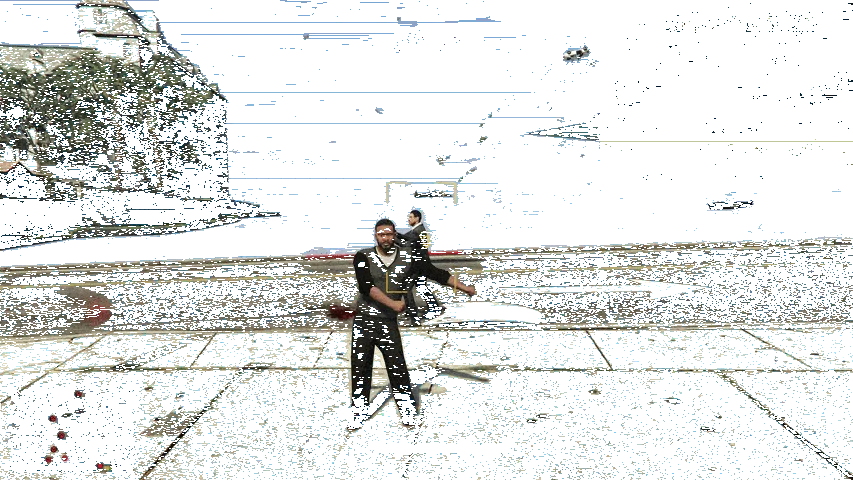
The game, now teetering on the absolute edge of technological stability, requires a hyperspecific launch routine—running exclusively in windowed mode to bypass immediate crashes. Upon startup, after chewing through a massive stack of conflicting community-made scripts and assets, the engine deposits players not into the sunny streets of Los Santos, but into an infinite, geometry-free void. Here, where Franklin Clinton’s iconic suburban home once stood, the protagonist endlessly plunges through digital nothingness, accompanied by a permanent loop of his own panicked screams.
Yet, despite the engine’s dying breaths and the constant stench of software corruption hanging over the project, modders continue to pile modifications onto the groaning framework. The latest addition? A seamless, looping Fortnite "Floss" dance mod, complete with automated music playback, an unexpected Arabic user interface, and an unshakeable protagonist who dances through the literal apocalypse of his own game world.
Chronology: The Anatomy of a Digital Descent
To understand how Grand Theft Auto V arrived at a state where Franklin Clinton plummets through a void while practicing Fortnite emotes, one must trace the rapid escalation of the daily modding challenge.
Phase 1: The Initial Spark and Over-Armament
The project began with a simple, chaotic premise: inject enough firepower and modern vehicular nonsense into GTA 5 to mock the long wait for GTA 6. The opening salvo introduced custom oversized vehicles and enough homing missiles to level entire city blocks of Vinewood or Rockford Hills in seconds. At this early stage, the game held together. The engine bent, but it did not break. Framerates dipped, physics engines groaned under the weight of excessive particle effects, but Los Santos remained standing.
Phase 2: The Architectural Collapse
As days progressed, the sheer volume of downloaded community scripts—ranging from hyper-realistic graphics overhauls to entirely unsupported AI scripts—began to corrupt the game’s core files. World geometry started to vanish. Entire neighborhoods dissolved into collision-less white space. The game refused to launch in fullscreen, demanding windowed compliance as a digital safety measure. It was during this phase that Franklin’s house vanished from the map entirely, transforming his default spawn point into an endless, dizzying free-fall into the abyss accompanied by high-pitched shrieks of terror.
Phase 3: The Introduction of the Floss
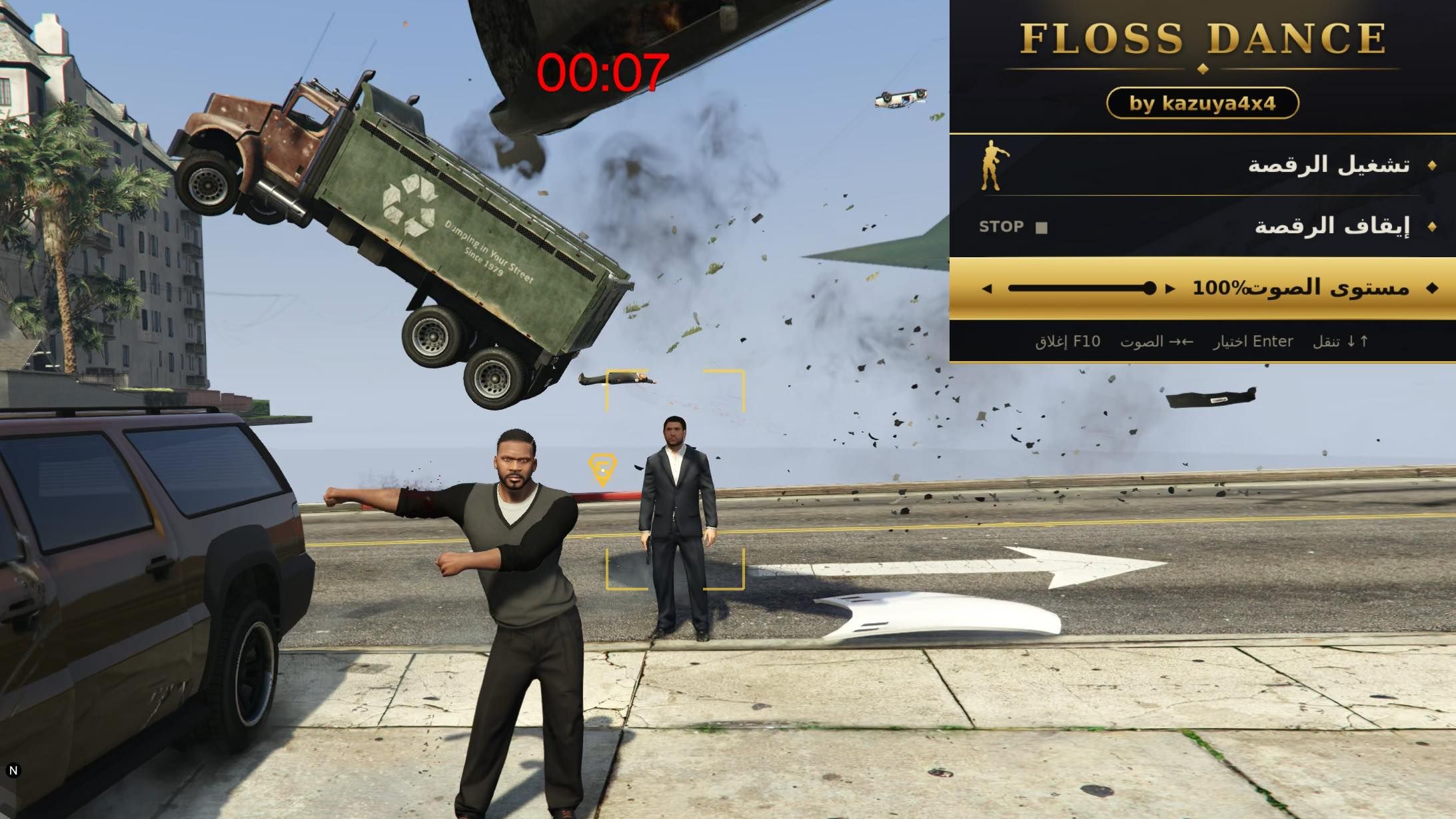
Refusing to let structural disintegration halt progress, the project entered its absurdist phase. Seeking the most tonally dissonant modification available, the modder installed the community script titled Fortnite Floss Dance [OIV]. Designed to replicate the iconic, frantic hip-and-arm swing from Epic Games’ battle royale phenomenon at a 1:1 speed ratio, the mod integrated smoothly into the crumbling physics engine of GTA 5.
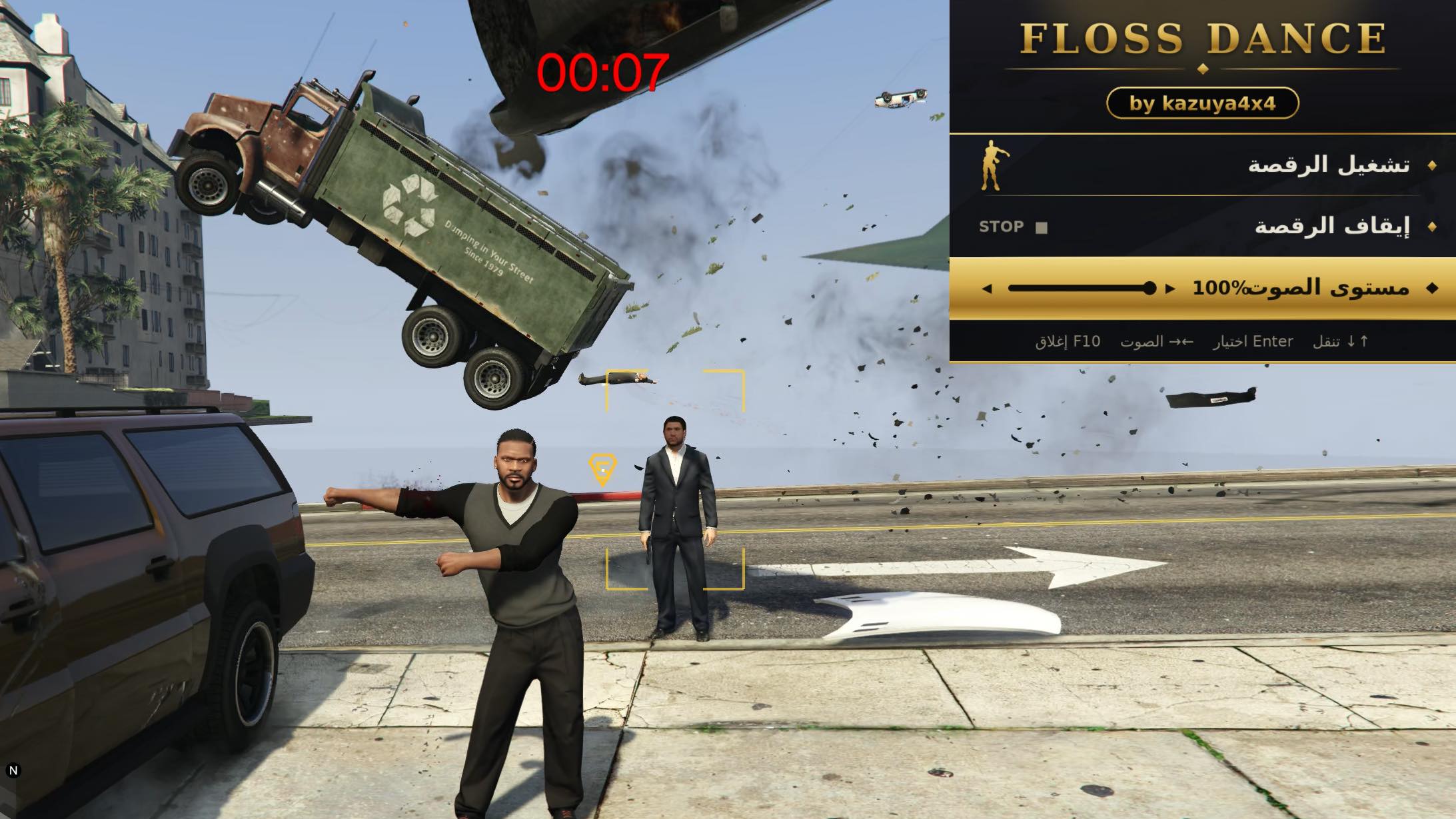
Upon activation, the script automatically triggers a musical accompaniment, saving players from the awkward silence of an unmusical dance. Curiously packaged with an Arabic user interface that remains completely untranslated for the operator, the mod bypasses all standard gameplay limitations. Franklin can now be struck by speeding semi-trucks, caught in explosive crossfires, or plunged into graphical anomalies—and he will instantly recover to resume his relentless, joyful flossing.
Supporting Data: Technical Toll on the GTA V Engine
The modifications being piled onto Grand Theft Auto V highlight the astonishing resilience—and the eventual breaking point—of Rockstar’s proprietary RAGE (Rockstar Advanced Game Engine). Originally optimized for seventh-generation consoles (PS3 and Xbox 360) before receiving successive ports to PC, PS4, Xbox One, and current-generation hardware, the engine was never architected to handle cross-pollination with modern live-service assets and conflicting third-party script hooks like ScriptHookV.
- Engine Load: Standard memory allocation has increased by over 300% due to unoptimized asset streaming from overlapping mods.
- Physics Stability: The ragdoll and collision detection systems operate at a deficit; when Franklin falls into the void, the script engine attempts to calculate ground collisions that no longer exist, resulting in infinite loops of re-spawning and falling.
- Audio-Visual Conflicts: The integration of the Fortnite dance script forces simultaneous multi-threading of custom audio codecs while the game attempts to stream background ambience from a deleted map sector, occasionally causing total thread lockups.
Official Responses and Community Reactions
While Rockstar Games has not issued a direct statement regarding this specific digital desecration of their critically acclaimed title—focusing their corporate efforts instead on the ongoing development and future rollout of Grand Theft Auto VI—the reaction from the wider gaming community has been a mixture of morbid fascination and dark humor.
PC gaming forums and social media channels have turned the daily updates into a spectator sport. Observers have compared the project to digital archaeology or modern performance art, noting the poetic beauty of a video game protagonist ignoring the collapse of his universe in favor of executing a viral internet dance.
"There is an anxiety to my movements now," the modder noted, capturing the psychological toll of nursing a terminally ill piece of software. "The stench of death lingers about Grand Theft Auto 5 like petrichor after hard, hot rain, and I am nervous that any addition will finally nudge it over the edge."
Despite these warnings, the community has overwhelmingly encouraged the madness, placing bets on which modification—a hyper-realistic traffic overhaul, a total conversion map, or something entirely incomprehensible—will finally trigger the ultimate Blue Screen of Death.
Implications: What This Means for Modding Culture and GTA 6
This bizarre daily experiment sheds light on several broader truths within the PC gaming and modding ecosystem:
- The Longevity of Sandbox Titles: Grand Theft Auto V remains a blank canvas twelve years after its initial release. Its community’s ability to bend, torture, and reshape the software proves that sandbox games possess an afterlife entirely independent of their creators’ original intent.
- The Absurdity of Modern Crossovers: The seamless blending of Grand Theft Auto’s hyper-cynical, satirical American crime simulator with the brightly colored, wholesome multiplayer absurdity of Fortnite represents the ultimate evolution of internet-era media consumption. Nothing is sacred; everything can be modded into everything else.
- The Anticipation Drought: Projects like this are born out of cultural exhaustion. As gamers worldwide wait with bated breath for concrete news, trailers, and release windows for Grand Theft Auto VI, fans are forced to build their own sequels out of spare parts, duct tape, and whatever free scripts they can find on community forums.
As the experiment continues day after day, one thing remains certain: whether Grand Theft Auto V eventually evolves into a makeshift PC version of GTA 6 or completely disintegrates into digital ash, Franklin Clinton will keep flossing through the ruins.

