

The landscape of the modern Japanese Role-Playing Game (JRPG) has been largely defined by Square Enix’s ambitious, decade-long undertaking to reimagine its most storied Final Fantasy VII. As the project nears its crescendo, the gaming industry has turned its gaze toward the horizon, questioning what follows the conclusion of a trilogy that has set new standards for the "remake" sub-genre.
At the center of this whirlwind is Naoki Hamaguchi, the director who has steered the ship through the expansive Final Fantasy VII Rebirth and is currently overseeing the development of the final chapter, tentatively titled Final Fantasy VII Revelation. In a series of recent high-profile interviews, Hamaguchi has addressed the fervent fan requests for a similar treatment of Final Fantasy VI, while simultaneously signaling a desire to step away from the remake cycle to forge a new path for the genre.
Main Facts: The Stance on Final Fantasy VI and the Road to "Revelation"
The discourse surrounding a potential Final Fantasy VI remake reached a fever pitch following Hamaguchi’s recent engagements with Game Informer and Bloomberg. Despite the overwhelming commercial and critical success of the Final Fantasy VII remake project, Hamaguchi has offered a sobering reality check to those hoping he would immediately transition to another classic reimagining.
The primary takeaway from these discussions is twofold. First, the final installment of the Final Fantasy VII trilogy, Final Fantasy VII Revelation, is officially targeted for a Spring 2027 release. This confirms that the development cycle for the third part will mirror the roughly three-to-four-year cadence established between Remake (2020) and Rebirth (2024).
Second, Hamaguchi has explicitly passed the torch regarding a Final Fantasy VI remake. While acknowledging the intense "floating" online demand for him to helm such a project, he stated, "Personally, I think that it might be in better hands if it went to another creator in Square Enix." This sentiment was punctuated by a definitive statement to Bloomberg, where he clarified his future intentions by saying, "It’s not going to be a remake!"
This suggests that while Square Enix as a corporate entity may still consider the project, the creative lead responsible for the modern Final Fantasy VII success is looking toward original intellectual properties or, at the very least, non-remake entries within the Final Fantasy anthology.
Chronology: A Decade of Reimagining a Legend
To understand Hamaguchi’s current exhaustion or desire for new horizons, one must look at the timeline of the Final Fantasy VII remake project, which has dominated his professional life for over ten years.
- 2015: The Announcement: At E3 2015, Square Enix stunned the industry by announcing a full remake of Final Fantasy VII. Hamaguchi, then a rising star at the company, was integral to the foundational planning.
- 2020: The First Step: Final Fantasy VII Remake was released during the height of the global pandemic. It proved that a 1997 classic could be expanded into a full-scale action-RPG without losing its soul, though it only covered the "Midgar" portion of the original game.
- 2024: Expanding the World: Final Fantasy VII Rebirth launched to massive critical acclaim, introducing a vast open-world structure and deep mechanical systems. This entry solidified Hamaguchi’s reputation as a director capable of handling immense scale.
- 2024–2027: The Final Push: Production is currently in full swing for the third part, Final Fantasy VII Revelation. Hamaguchi has noted that the team is focused on delivering a "perfect state" for the series’ conclusion.
- Spring 2027: The projected release window for Revelation, marking twelve years since the project’s public inception and nearly fifteen years of internal development for many staff members.
The sheer longevity of this project explains why Hamaguchi might be hesitant to commit another decade to Final Fantasy VI, a game that many argue is even more complex to modernize than its successor.
Supporting Data: The Technical and Creative Hurdle of Final Fantasy VI
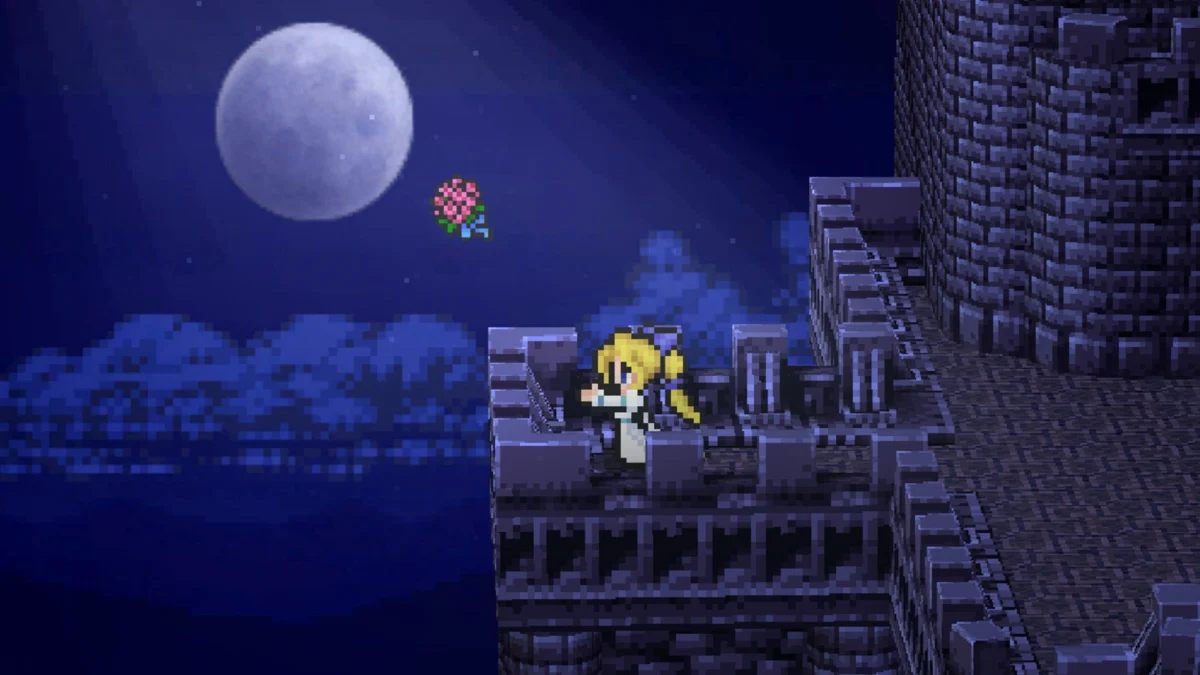
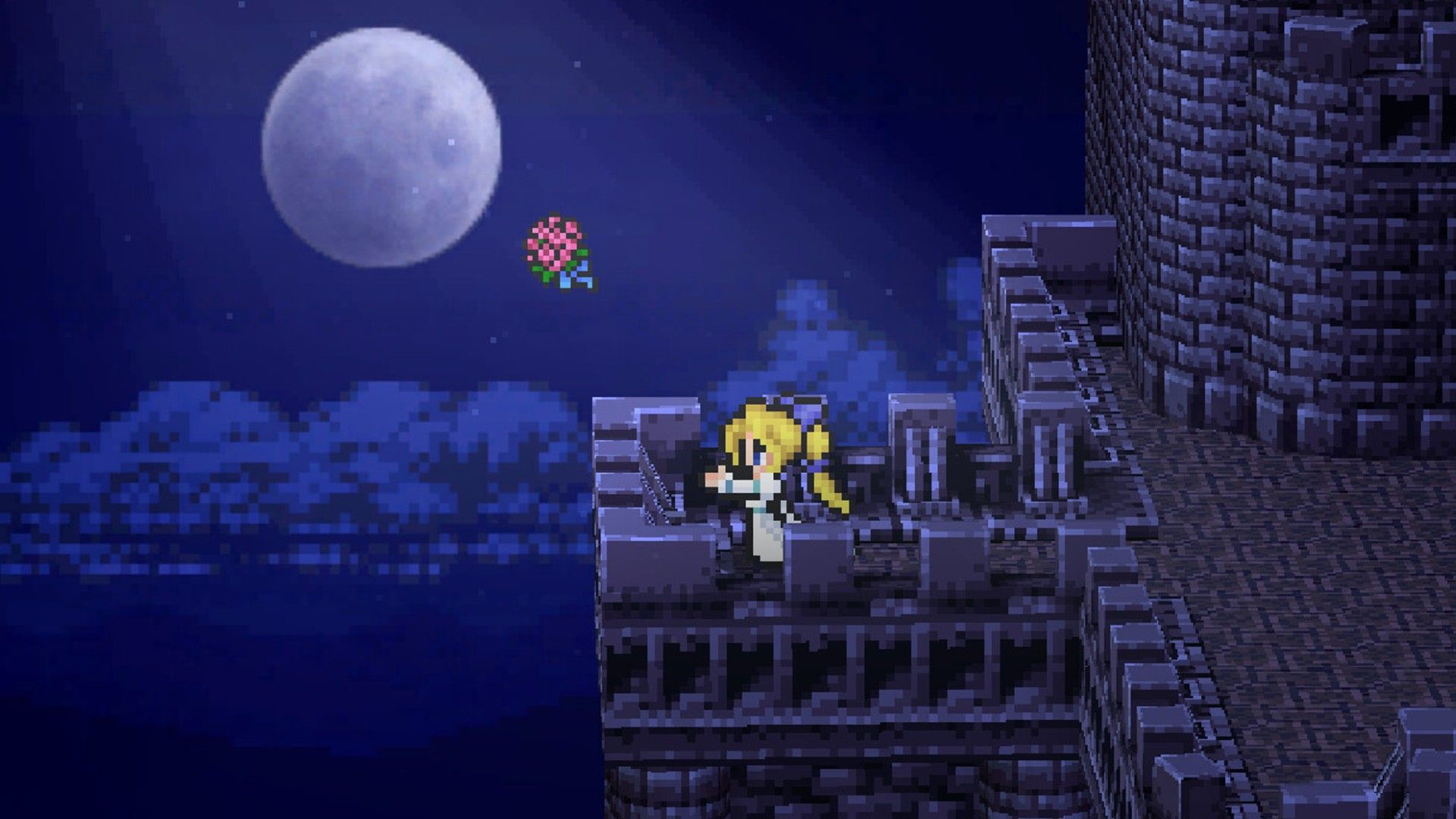
The fan demand for a Final Fantasy VI remake is not unfounded. Released in 1994, Final Fantasy VI (originally released as Final Fantasy III in North America) is often cited by critics and veteran players as the pinnacle of the 2D era. However, the data and technical requirements for a modern remake present a daunting challenge that dwarfs even the Final Fantasy VII project.
The Character Ensemble
Final Fantasy VII features a core cast of nine playable characters. In contrast, Final Fantasy VI boasts 14 permanent playable characters, the largest in the main series. Modernizing each character with the level of fidelity seen in Rebirth—including unique combat styles, synergy abilities, and individual story arcs—would require a monumental increase in assets and animation data.
The "World of Ruin"
A significant narrative beat in Final Fantasy VI involves a world-altering event that fundamentally changes the geography and atmosphere of the entire game map. For a modern AAA remake, this would essentially require developers to build two distinct open worlds: the "World of Balance" and the "World of Ruin." Square Enix leadership, including producer Yoshinori Kitase, has previously estimated that a faithful, high-fidelity remake of Final Fantasy VI could take upwards of 20 years to complete if following the Final Fantasy VII blueprint.
Market Performance
While the Final Fantasy Pixel Remaster series proved that there is a healthy appetite for classic 2D experiences, the sales of Final Fantasy VII Rebirth, while strong, have faced the reality of a shrinking high-end console market. Investing in a three-part remake of a 2D title involves a financial risk that requires a creative lead with a multi-decade commitment—a commitment Hamaguchi seems currently unwilling to make.
Official Responses: Hamaguchi and the Square Enix Mandate
In his dialogue with Game Informer, Hamaguchi was careful to balance his personal desires with the corporate reality of Square Enix. He emphasized that his current focus is singular: finishing the journey of Cloud Strife and his companions.
"Right in this moment, I’m fully focused on completing FF7 Revelation and ensuring we’re delivering the FF7 Remake series in a perfect state, so that’s where I’m right now," Hamaguchi stated.
Square Enix’s Public Relations team reportedly monitored these interviews closely, emphasizing the "hypothetical" nature of any discussion regarding Final Fantasy VI. This suggests that while there may be internal whispers or high-level "blue-sky" meetings regarding the 1994 classic, no production pipeline currently exists for it.
Furthermore, Hamaguchi’s comments to Bloomberg serve as a definitive boundary. By stating "It’s not going to be a remake," he is signaling to the market and to his superiors that his creative growth depends on original JRPG development. He has expressed a desire to remain within the JRPG genre, whether through a brand-new Final Fantasy entry (such as Final Fantasy XVII) or an entirely new IP, but the "remake" chapter of his career appears to be closing with the 2027 finale.
Implications: The Future of Square Enix’s "Remake" Strategy
Hamaguchi’s refusal to helm a Final Fantasy VI remake has several profound implications for Square Enix and the broader JRPG industry.
1. The Search for New Leadership
If Square Enix decides to move forward with a Final Fantasy VI remake, they will need to find a new directorial voice. This could lead to a different stylistic approach—perhaps something less focused on the "action-hybrid" combat of the VII trilogy and more aligned with the strategic roots of the original. There is also the possibility of an "HD-2D" remake, similar to Octopath Traveler or Live A Live, which would be significantly more cost-effective but might not satisfy the fans calling for a "Rebirth-style" reimagining.
2. The Return to Originality
For years, critics have accused Square Enix of over-relying on its legacy titles. Hamaguchi’s pivot toward a new JRPG project suggests a shift in internal philosophy. With the Final Fantasy VII trilogy concluding, the company has an opportunity to apply the technical lessons learned from the remake project to a fresh universe, potentially creating the next "golden age" of original Square Enix titles.
3. The Definition of "Faithful"
In the Game Informer interview, Hamaguchi noted that for Final Fantasy VII Revelation, the team was "able to remain true" to the 1997 original despite shifting the story order. This "remake philosophy"—where the narrative is expanded and sometimes subverted—has become divisive among purists. A different director for Final Fantasy VI might opt for a more literal translation, or an even more radical departure.
4. The 2027 Milestone
The year 2027 will be a landmark for the industry. Not only will it mark the end of one of the most ambitious projects in gaming history, but it will also likely serve as the transition point for Hamaguchi’s next project. The success or failure of Final Fantasy VII Revelation to stick its landing will dictate how much creative freedom Hamaguchi is afforded for his subsequent original work.
Conclusion
Naoki Hamaguchi’s tenure on the Final Fantasy VII remake project has been a masterclass in modernizing nostalgia. However, his recent comments serve as a reminder that even the most successful creators need new challenges. By declining the "throne" of a Final Fantasy VI remake, Hamaguchi is protecting his own creative longevity and challenging Square Enix to look forward rather than backward.
As fans await the Spring 2027 release of Final Fantasy VII Revelation, the conversation has shifted. It is no longer just about how the story of Cloud and Sephiroth ends, but about what a director of Hamaguchi’s caliber can achieve when he is finally freed from the weight of the past. For now, Final Fantasy VI remains a masterpiece frozen in its 16-bit glory, waiting for a different creator to take up the mantle, while Hamaguchi prepares to define the future of the JRPG.

