

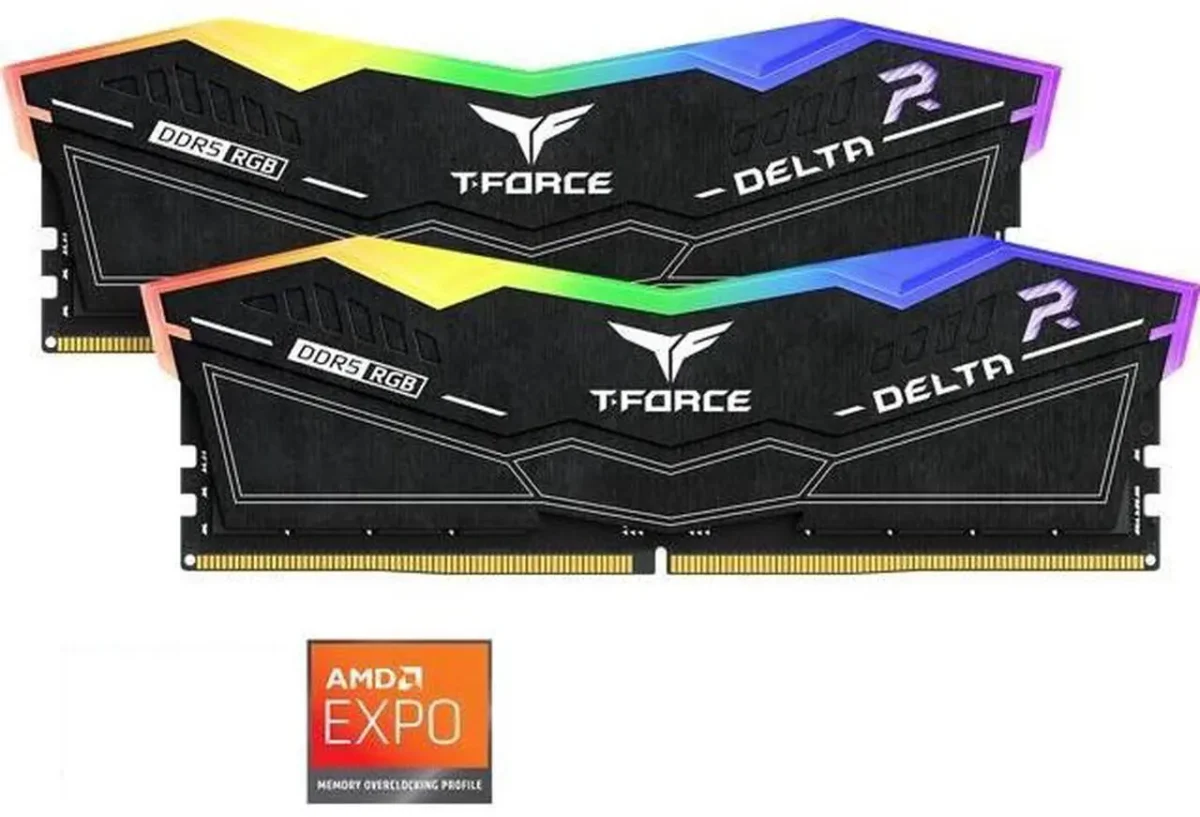
As the annual retail frenzy of the Prime Big Deals Day event unfolds, PC builders and gaming enthusiasts scouring the digital shelves for hardware bargains are encountering a vastly different memory market than in previous years. While high-end components continue to command steep prices, hardware analysts have surfaced notable discounts on a trio of reliable dual-channel 32GB DDR5 memory kits.
For those looking to complete a fresh system build or inject new life into an aging rig without breaking the bank, these targeted promotions arrive at an opportune moment. Yet, navigating the current memory landscape requires more than just chasing the lowest price tag; it demands an understanding of global supply chain pressures, shifting manufacturing priorities, and the delicate balance between immediate gaming needs and long-term hardware relevance.
Main Facts: The Current State of DDR5 Pricing and Availability
The core takeaway for builders eyeing Prime Big Deals Day discounts is that 32GB of DDR5 RAM remains the sweet spot for modern gaming rigs.
- The Sweet Spot for Performance: A dual-channel 32GB kit provides ample headroom for contemporary AAA titles, heavy multitasking, background capture software, and demanding productivity applications. For the vast majority of gamers, moving beyond 32GB yields diminishing returns.
- The AI Component Shortage Factor: While 64GB kits (comprising dual high-density DIMMs) offer a theoretical buffer for future-proofing, they have become casualties of the artificial intelligence boom. The specialized, high-density memory chips required to pack large capacities into standard consumer DIMM configurations are currently facing white-hot, enterprise-level demand.
- Enterprise Priority: Hyperscale data centers and AI server infrastructure command priority allocation from major semiconductor fabrication plants (such as SK Hynix, Samsung, and Micron). Consequently, consumer-facing 64GB and 128GB high-density kits carry eye-watering price premiums that completely negate any future-proofing value they might traditionally offer.
- Targeted Retail Discounts: Retailers participating in the current sales event have marked down select mainstream 32GB (2 x 16GB) DDR5 kits. These discounts offer a pragmatic escape hatch for consumers unwilling to pay inflated rates for bleeding-edge capacities.
Chronology: How the Memory Market Reached This Junction
To understand why 32GB kits are the undisputed heroes of this sales event, it is necessary to examine the timeline of how consumer memory pricing has evolved over recent years alongside enterprise tech trends.
Phase 1: The DDR5 Transition (2021–2022)
When Intel launched its Alder Lake (12th Gen) platform accompanied by the initial rollout of DDR5 memory, early adopters faced extreme scarcity and prohibitive pricing. Early DDR5 modules were significantly more expensive than their mature DDR4 counterparts, with performance gains that initially failed to justify the steep financial barrier to entry.
Phase 2: Mainstream Adoption and Price Normalization (2023)
As manufacturing yields improved and AMD joined the fray with its AM5 platform supporting exclusively DDR5, prices began to stabilize. By mid-2023, standard 16GB and 32GB kits became affordable enough for mainstream builders to treat DDR5 as the default choice for new platforms, gradually pushing DDR4 into legacy territory.
Phase 3: The Generative AI Boom and Enterprise Pivots (Late 2023–Present)
The explosive public adoption of generative artificial intelligence models fundamentally disrupted the semiconductor ecosystem. Large Language Models (LLMs) and massive enterprise AI workloads require unprecedented amounts of fast memory—not just on GPUs, but across system RAM and high-density server configurations.
Memory manufacturers rapidly shifted capital, production lines, and silicon wafer allocations toward high-bandwidth memory (HBM) and high-density enterprise server modules. This strategic pivot created a supply squeeze for consumer-grade silicon, disproportionately impacting high-capacity consumer kits (64GB and above) while causing baseline consumer pricing to fluctuate unpredictably during major retail events.
Supporting Data: Analyzing the Cost-Benefit Ratio of PC Memory
When evaluating whether to purchase a 32GB DDR5 kit during a major promotional window, hard data regarding game requirements and hardware economics provides essential context.
Memory Capacity vs. Gaming Workloads
Recent hardware benchmarks across modern titles—such as Cyberpunk 2077: Phantom Liberty, Starfield, and Dragon’s Dogma 2—demonstrate distinct memory utilization curves:
- 16GB Kits: Increasingly acting as a bottleneck. While sufficient for esports titles and older games, modern open-world engines routinely push past 12GB of system memory usage when operating at maximum settings with high-resolution textures.
- 32GB Kits (The Optimal Tier): Provides a comfortable safety buffer. Gamers can run a demanding triple-A title alongside Discord, a web browser with dozens of tabs, monitoring software, and recording utilities without experiencing stuttering caused by paging to a slower storage drive.
- 64GB Kits and Beyond: Generally restricted to professional workstation use cases, heavy video editing (8K workflows), game development engines (Unreal Engine 5 editor environments), and specialized simulation software.
Financial Economics in the Current Retail Economy
To quantify the "future-proofing trap," industry price tracking reveals a stark disparity:
- A standard, high-performance 32GB (2 x 16GB) DDR5-6000 CL30 kit—widely regarded as the sweet spot for modern AMD Ryzen 7000/9000 and Intel Core processors—frequently retails at accessible price points, dropping even lower during promotional windows.
- Conversely, comparable 64GB kits often command a price multiplier that far exceeds 2x the cost of their 32GB counterparts. Because high-density chips are scarcer, consumers pay a heavy enterprise-tax for capacities they likely will not utilize before their CPU and motherboard architecture become obsolete anyway.
Official Responses and Industry Insights
Industry analysts and hardware manufacturers have been transparent about the macro-economic forces shaping component availability.
During recent quarterly earnings calls, executives from major memory fabrication firms noted that capacity adjustments are directly tied to surging enterprise orders. While consumer PC demand remains steady, it no longer dictates primary fab scheduling in the same way hyperscale cloud providers do.
Speaking on hardware pricing trends, senior industry analysts emphasize that consumers should focus on immediate utility rather than speculative longevity:
"In the current economic and technological climate, buying components based on speculative future-proofing is a losing financial game," notes Jeff Kampman, Senior Analyst for Graphics and Hardware at Tom’s Hardware. "The premium attached to high-density consumer kits simply cannot be justified when you look at how long a CPU socket or motherboard platform remains viable. By the time 32GB becomes a legitimate bottleneck for standard gaming, you will likely be building an entirely new system anyway."
Retail partners have mirrored this sentiment, structuring their promotional strategies around mainstream configurations. By focusing inventory acquisition on 32GB dual-channel kits, retailers can offer genuine discounts that move volume without running afoul of the supply constraints plaguing enterprise-tier silicon.
Implications for PC Builders and Future Upgrades
The convergence of AI infrastructure demands and consumer retail events carries several distinct takeaways for anyone planning a PC build or system upgrade.
1. Re-evaluating the "Future-Proofing" Mindset
For years, PC building philosophy dictated buying the highest capacity components available to extend a rig’s lifespan. The AI boom has shattered this paradigm for memory and, to an extent, storage and GPUs. Today, "future-proofing" must be redefined as cost-effective optimization for current software paradigms. Spending an extra hundred-plus dollars on a 64GB kit yields zero tangible frame-rate improvements in current games, representing capital that would be far better invested in a superior graphics card or a faster SSD.
2. Strategic Timing for Upgrades
Major shopping events like Prime Big Deals Day represent the ideal window to secure components like DDR5 RAM. Because memory prices are subject to sudden supply-chain fluctuations driven by external tech sectors, waiting for "prices to drop further" carries a tangible risk of facing unexpected upward corrections. Securing a reliable 32GB kit at a discount removes a major variable from a system-building budget.
3. Choosing the Right Specifications
When browsing discounted 32GB kits, builders should remain focused on performance-per-dollar metrics rather than chasing absolute peak frequencies that offer negligible real-world gains. For current platforms:
- AMD Ryzen 7000 and 9000 Series: Sweet spot remains DDR5-6000 with low latency (CL30 or CL32), leveraging AMD EXPO profiles for optimal infinity fabric coupling.
- Intel Core 13th, 14th, and Core Ultra Series: Capable of handling higher frequency kits, though sweet spots around DDR5-6000 to DDR5-6400 continue to offer the best balance of stability, compatibility, and price.
Conclusion
As the retail event progresses, consumers armed with the right perspective can bypass the marketing hype surrounding inflated capacities. By zeroing in on dual-channel 32GB DDR5 kits, builders can secure top-tier gaming performance, dodge the inflated costs driven by enterprise AI demand, and assemble a formidable machine that handles today’s most demanding titles with ease—all while keeping their hard-earned money safely in their pockets.

