


The evolution of motion capture has been a journey from cumbersome, rigid suits populated with dozens of reflective markers to increasingly sophisticated sensor-based arrays. Yet, for all our technological strides, we remain tethered to systems that struggle to capture the nuance of human movement—the way fabric stretches, the subtlety of a bend in the elbow, or the complex, non-linear curvature of a human limb.
A breakthrough from the Massachusetts Institute of Technology (MIT) may soon render these limitations obsolete. Engineers have developed a novel “shape-sensing sheet” embedded with an intricate network of optical fibers. Unlike traditional motion capture technology that relies on fixed tracking points, this flexible, resilient material can digitally reconstruct its own geometry in real-time, even as it is subjected to extreme bending, twisting, or physical damage.
The Core Technology: Light as a Metric for Movement
At the heart of this innovation is the concept of the optical waveguide. The MIT team has engineered a flexible, thin sheet that functions as a holistic sensor. Within this material, light travels through a series of embedded optical fibers. As the sheet is manipulated—folded, stretched, or compressed—the physical deformation of the fibers alters the path and intensity of the light passing through them.
By tracking these changes in light transmission, a specially developed algorithm interprets the deformation, converting the physical state of the sheet into a high-fidelity 3D digital model. This process allows the system to perceive the entire surface of the object rather than merely measuring the spatial coordinates of specific nodes.
Qifan Yu, a mechanical engineering graduate student at MIT and a lead co-author of the research, emphasizes the significance of this leap. “People have used waveguides to sense the shape of a line, which they have applied to a robot arm to see how it curves, but they haven’t been applied to surface shape sensing, to reconstruct the 3D shape of a surface,” Yu explains. “That’s what we’re trying to do here.”
A Chronology of the Development
The development of this technology follows years of incremental progress in soft robotics and wearable sensor research.
- Initial Conceptualization: The MIT team began by exploring how waveguides—typically used for signal transmission—could be repurposed as dynamic sensors. The primary challenge was moving from linear sensing (measuring a single axis) to surface-level sensing.
- The Prototyping Phase: Early prototypes focused on the integration of fibers into flexible substrates. Engineers experimented with various materials to ensure that the sensors would remain durable enough to withstand the rigors of human movement without sacrificing the sensitivity required for accurate digital reconstruction.
- The Proof of Concept: The team successfully demonstrated that their algorithm could reconstruct the surface of the sheet with remarkable precision. According to the research, the current prototype operates with a margin of error of less than 0.4 centimeters.
- The Durability Milestone: Perhaps the most compelling moment in the research timeline occurred during a stress-test demonstration. In a video released by the team, an engineer intentionally pierces the sheet with a hole puncher. Despite the structural damage, the sheet continued to function and accurately map its shape, proving that the distributed nature of the sensor network provides an inherent level of fault tolerance.
Comparative Data: Accuracy and Efficiency
The superiority of the MIT design becomes clear when compared to current industry standards. Conventional motion capture systems, which rely on rigid inertial measurement units (IMUs) or external camera-based marker tracking, often suffer from "occlusion" or "drift." These systems generally exhibit errors in the range of 1 to 2 centimeters—a significant margin that often requires post-production smoothing by animators.
The MIT sheet’s sub-0.4-centimeter error rate represents a near fivefold increase in accuracy over existing rigid-sensor designs. This level of granularity is critical for applications where human movement is highly complex, such as the fine motor skills required for virtual reality (VR) interactions or the precise monitoring of anatomical shifts during physical rehabilitation.
Furthermore, the team is already looking toward the next phase of optimization. While the current prototype uses optical fibers approximately 1 millimeter in thickness, the team is exploring fabrication methods to scale these fibers down to tens of micrometers—thinner than a human hair. This reduction in scale would allow the technology to be integrated into standard fabrics, creating "smart clothing" that is indistinguishable from everyday apparel.
Implications for Virtual Reality and Gaming
The gaming industry is arguably the most immediate beneficiary of this research. While current VR systems rely on handheld controllers and head-mounted displays, the "full-body" experience remains an expensive and often clunky endeavor.
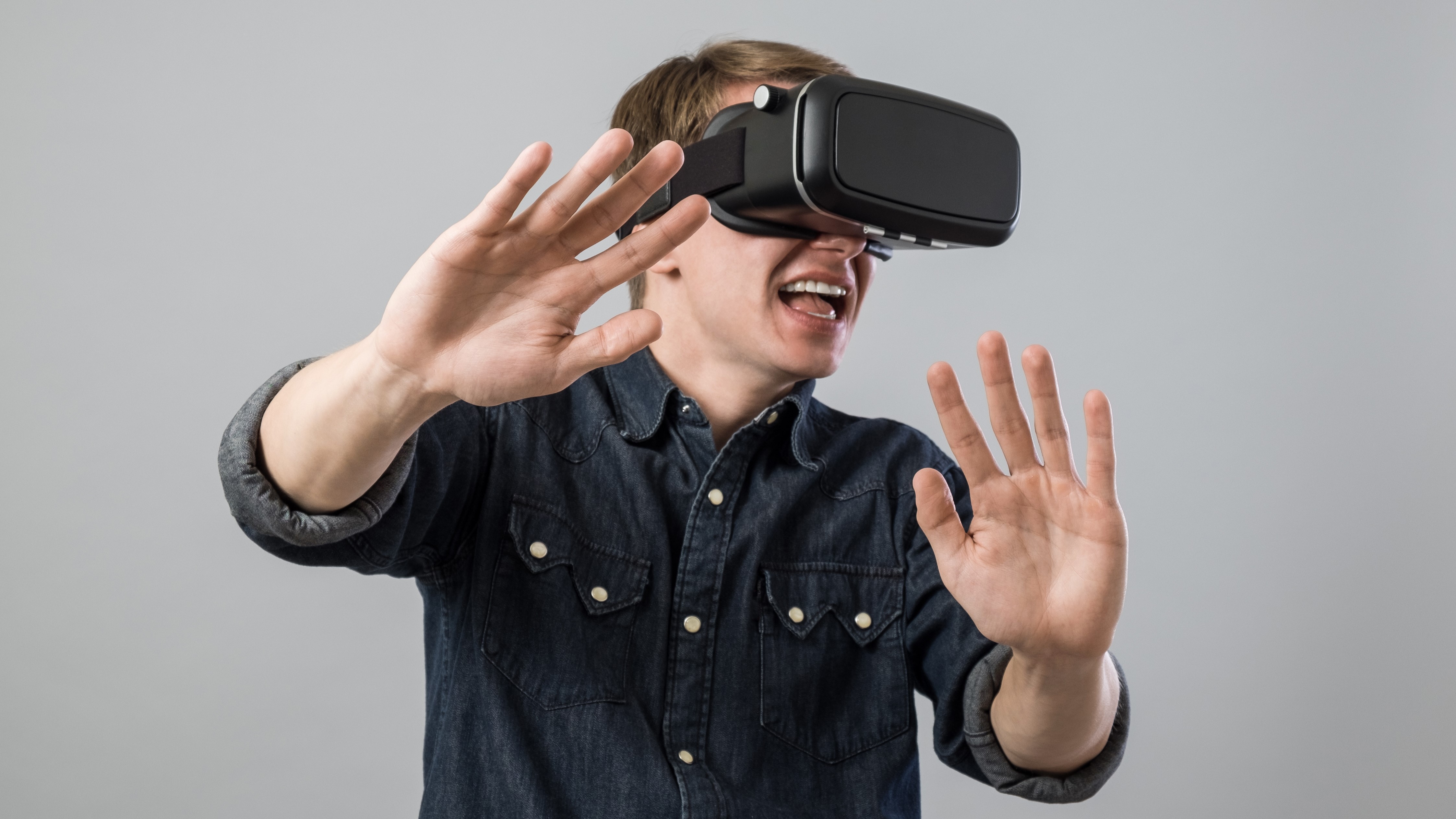
Imagine a VR environment where your movements are not limited to the position of your hands or head, but where your entire posture—from the curve of your spine to the flexion of your knees—is perfectly mirrored in the digital realm. For Vtubers, who rely on expressive, fluid avatars, this technology could offer a level of organic movement that is currently impossible without multi-thousand-dollar studio setups.
The "cube" approach—where actors like Jack Quaid are placed in specific environments to force certain physical behaviors—highlights the industry’s desire for genuine motion. MIT’s wearable, however, removes the need for controlled environments. It suggests a future where high-fidelity performance capture can occur anywhere, from a living room to an open field, without the need for an array of external cameras or a specialized stage.
Beyond Entertainment: Medical and Industrial Applications
While the gaming potential is headline-grabbing, the practical applications in healthcare may be the most transformative. Physical therapy often requires the precise tracking of a patient’s range of motion over long periods. Currently, this data is often subjective or gathered through crude, clinic-bound measurement tools.
A shape-sensing garment could be worn by a patient at home, providing medical professionals with a constant stream of high-resolution data regarding the patient’s recovery progress. "In physical therapy, you often need to gather patient data on how they are moving and stretching their arm during rehabilitation," Yu notes. "Surface shape sensing could be very useful in that way."
Beyond healthcare, the technology holds significant promise for:

- Soft Robotics: Enabling robots to have "proprioception," or the ability to sense their own body’s position in space, which is essential for robots designed to work alongside humans.
- Human-Computer Interaction: Creating interfaces that respond to the natural gestures and postures of the user rather than forcing the user to adapt to rigid, predetermined inputs.
- Industrial Safety: Smart workwear could monitor the posture of laborers in high-risk environments, alerting them to ergonomic stressors before they lead to long-term injury.
Future Challenges and Scaling
Despite the optimism, the transition from the laboratory to the consumer market is fraught with challenges. The current prototype is still described as "bulky," and the computational power required to process the data from a high-density fiber mesh in real-time is significant.
Scaling the production of these sheets—ensuring that the fiber integration remains consistent across large-scale manufacturing—remains a major hurdle. Additionally, the software side must be matured to handle the "noise" of real-world environments, ensuring that external factors like temperature or ambient light do not interfere with the fiber readings.
However, the team’s progress suggests that these are engineering hurdles rather than fundamental physical limitations. As the fibers are thinned and the fabrication processes are refined, the vision of a "second skin" that translates our physical reality into digital data becomes increasingly attainable.
Conclusion
The work coming out of MIT represents more than just a clever use of optical waveguides; it represents a paradigm shift in how we interface with the digital world. By moving away from fixed, rigid points of tracking and toward a holistic, surface-based sensing model, we are entering an era where our digital representations will finally possess the grace, nuance, and complexity of our physical selves.
Whether it leads to the next generation of immersive gaming, the democratization of performance capture, or a new standard in patient rehabilitation, the "smart sheet" is a testament to the power of materials science. For those waiting for the day when they can step into a virtual world with total bodily freedom—without worrying about the clunky gear getting in the way—the future is beginning to look, quite literally, as flexible as we are.

