


The gaming industry is currently navigating a period of unprecedented volatility. Following a series of aggressive workforce reductions across the Xbox ecosystem earlier this month, the legendary halls of id Software—the birthplace of the first-person shooter—have become the focal point of a heated debate regarding studio sustainability and the long-term future of proprietary engine development. As rumors swirl about the studio’s capacity to maintain its high standards, studio director Hugo Martin has stepped forward to offer a vision of stability, even as critics argue that the narrative of "business as usual" glosses over the profound human toll of the recent layoffs.
A Chronology of Uncertainty: From Layoffs to "Proof of Life"
The unrest began in early May, when Microsoft’s gaming division announced sweeping organizational changes, including the closure of four ZeniMax-owned studios and massive layoffs affecting approximately 3,200 employees across the Xbox portfolio. For fans of id Software, the news was met with immediate trepidation. The studio, famed for its cutting-edge idTech engine and the Doom franchise, has long been considered the crown jewel of Bethesda’s acquisition portfolio.
Reports quickly surfaced suggesting that the cuts were not merely administrative but existential. Speculation mounted that id Software’s workforce had been gutted to the point where its signature proprietary engine, idTech, might be abandoned in favor of external tools like Unreal Engine. These reports—denied by Microsoft—painted a picture of a studio struggling to retain its core technical identity.
In an effort to stem the tide of rumors, id Software issued a formal statement, which was later mirrored by ZeniMax Online Studios. The message was clear: the studio’s headcount had not been reduced to a skeleton crew, but rather returned to a size comparable to what it was a decade ago, during the pivotal development phase of the 2016 Doom reboot. The implication was that the studio was "right-sized" rather than dismantled, and that its capacity for innovation remained intact.
Hugo Martin Breaks Silence: The "All is Well" Doctrine
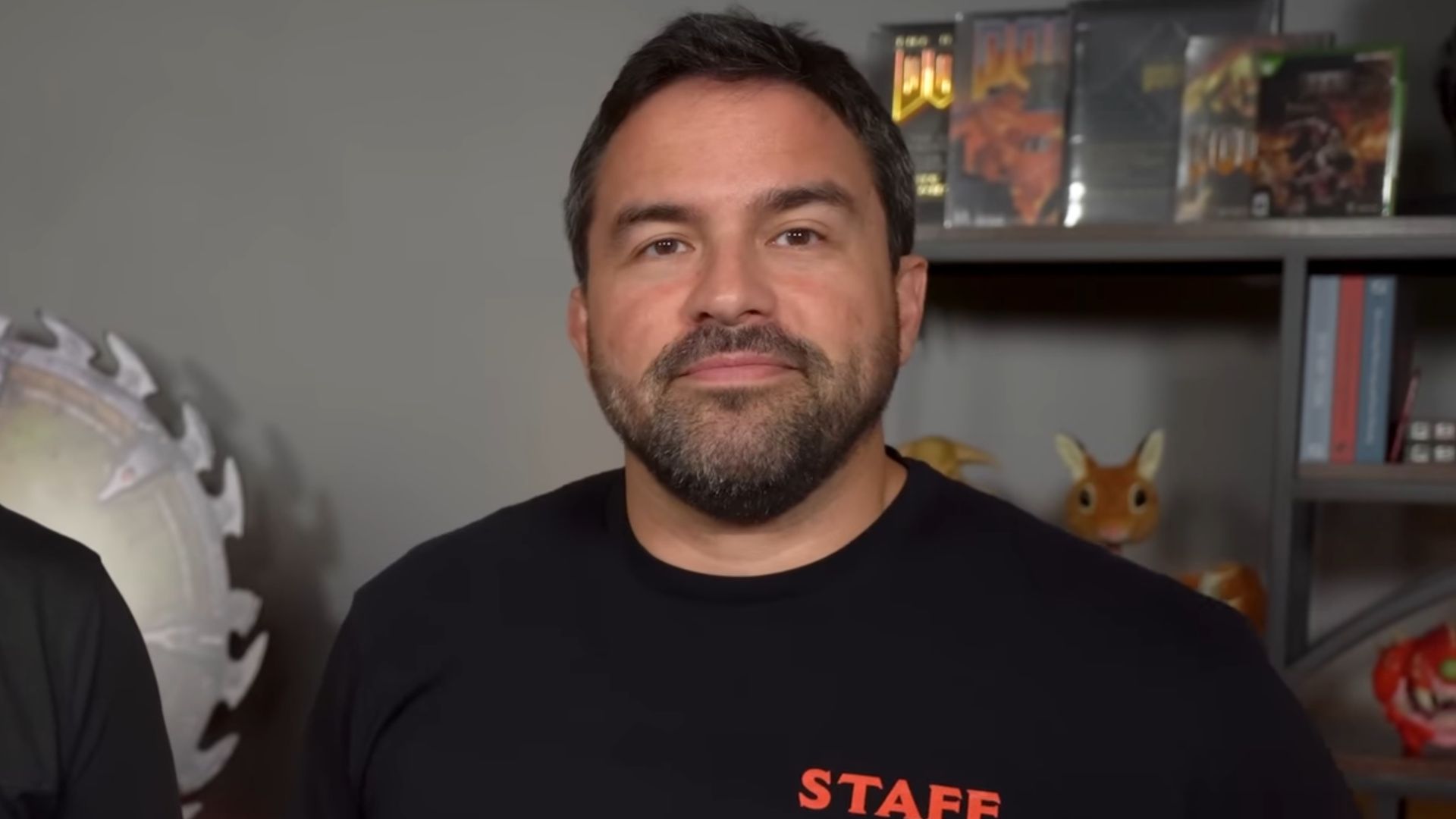
During a recent Slayers Club Live stream, studio director Hugo Martin addressed the community directly to dispel what he characterized as misinformation. Martin’s remarks were a calculated attempt to restore confidence in the studio’s output and its technical capabilities.
"Reports that we’ve been nerfed into the ground and gutted and we have 50 people remaining are not true," Martin stated. "We’re the size we were when we made Doom 2016, and idTech is very much alive and well."
Martin highlighted the collaborative nature of the studio’s engineering efforts, noting that idTech development is not isolated to the main campus but is supported by talent in Frankfurt and at MachineGames. "The idTech is there, the Doom team is here, and we’re excited to share with you guys more of what we’re working on in the future when it is appropriate and approved," he added.
However, the reality of the situation on the ground remains more nuanced. According to independent reports from Aftermath, the id Software office in Frankfurt—already a boutique team—saw its headcount cut in half, from 12 employees down to six. While the studio maintains that the "core" remains, the loss of specialized engineering talent in international hubs raises questions about the long-term support architecture for idTech.
The Tone-Deaf Discourse: Quality vs. Humanity
While Martin’s technical reassurances were designed to comfort investors and fans, his subsequent commentary sparked significant backlash. In attempting to contextualize the layoffs, Martin suggested that the success of the games themselves serves as a silver lining for those affected.
"The fact that we made a game that people like and is critically and commercially successful… that’s good for everyone," Martin remarked. "For the people at the studio, for the people who unfortunately we had to say goodbye to, I think that helps everyone."
Critics argue that this perspective ignores the fundamental reality of the modern gaming industry: that the pursuit of commercial and critical success does not protect developers from corporate restructuring. In the eyes of many industry observers, the idea that "the games are good" justifies the removal of the people who built them is a dangerous sentiment. It suggests that a product’s success is an abstract metric, detached from the labor and livelihoods of the teams responsible for its creation.
This rhetoric is particularly jarring when viewed against the backdrop of a "foolproof" way to get laid off in the industry: doing your job well. History has shown that even teams responsible for award-winning titles are not immune to the cold math of quarterly earnings reports and post-acquisition synergy targets.
The Broader Context: Bethesda’s Future-Proofing Strategy
The attempt to stabilize the narrative surrounding id Software comes at a time when parent company Bethesda is trying to project an image of robust growth. Simultaneously with the defense of id Software, Bethesda unveiled a massive roadmap for the Fallout franchise. This includes an official collaboration with Obsidian Entertainment, long-awaited remasters of Fallout 3 and Fallout: New Vegas, and the confirmation that Fallout 5 is currently in pre-production.
By pivoting the conversation toward future releases, Bethesda and Microsoft are attempting to reframe the current period as a "reset" rather than a decline. However, the juxtaposition of exciting product announcements with the erasure of seasoned industry talent highlights a growing rift in the gaming world: the difference between the brand’s output and the industry’s human infrastructure.
Implications for the Future of idTech and AAA Development
The core of the issue for id Software is not just headcount, but the preservation of institutional knowledge. idTech has long been the gold standard for optimization in the shooter genre. If the studio is indeed "right-sized" to 2016 levels, it faces a significant challenge: the industry in 2024 is vastly more complex than it was in 2016. The demand for higher fidelity, cross-platform stability, and live-service components requires more, not less, engineering overhead.
If the studio is stretched too thin, the risk is not just the loss of idTech, but a potential stagnation in the quality that fans expect from the Doom franchise. Furthermore, the reliance on internal collaboration across different studios—while efficient in theory—creates single points of failure. If one team is under-resourced, the ripple effects will be felt across the entire Bethesda catalog.
Conclusion: A Reckoning on the Horizon
The reassurances from Hugo Martin and the official communications from Bethesda are clearly designed to calm a nervous consumer base. For the average gamer, the primary concern is the release of high-quality titles. If the next Doom game is a masterpiece, the internal struggles of the studio will, for many, fade into the background.
However, the industry’s current trajectory suggests that focusing solely on the "game" and ignoring the "game-maker" is a path to systemic failure. As technology advances at an breakneck pace, the reliance on proprietary tech and the talent required to maintain it becomes more vital than ever. If companies continue to treat their most valuable asset—their employees—as a variable cost to be minimized, they may find that no amount of marketing spin or "proof of life" statements can protect them from the consequences.
The true impact of these layoffs will not be measured in press releases or live streams, but in the coming years of development. We will soon see if id Software can continue to push the boundaries of what is possible in gaming, or if the "right-sizing" of the studio has fundamentally altered its ability to define the next generation of the first-person shooter. Until then, the industry remains in a state of watchful waiting, cognizant that behind every critically acclaimed title is a workforce that remains increasingly vulnerable to the whims of corporate consolidation.

