

Introduction: The BlizzCon Reveal and the Sequel Question
At the heart of Blizzard Entertainment’s recent high-profile announcements lies a curious contradiction. World of Warcraft: Forever has captured the imagination of the MMORPG community, offering a complete, ground-up reimagining of the classic-era experience. Far from being a simple nostalgia trip like the Season of Discovery initiatives, Forever boasts modernized class trees, entirely new raid tiers, and sweeping mechanical overhauls. Yet, even as players pick apart the details—from optional transmogs to controversial content gating like the newly revealed $30 race expansions—a looming, existential question dominates community discourse: Why is Blizzard choosing to rebuild the past rather than build the future?
In an industry where franchises routinely iterate with numbered sequels—as seen with ArenaNet’s Guild Wars series moving smoothly toward Guild Wars 3—Blizzard’s stubborn commitment to a twenty-year-old codebase raises eyebrows. To understand this strategy, one must examine the intersection of engineering efficiency, technical debt, player psychology, and the very nature of modern massively multiplayer online design.
Main Facts: What is World of Warcraft: Forever?
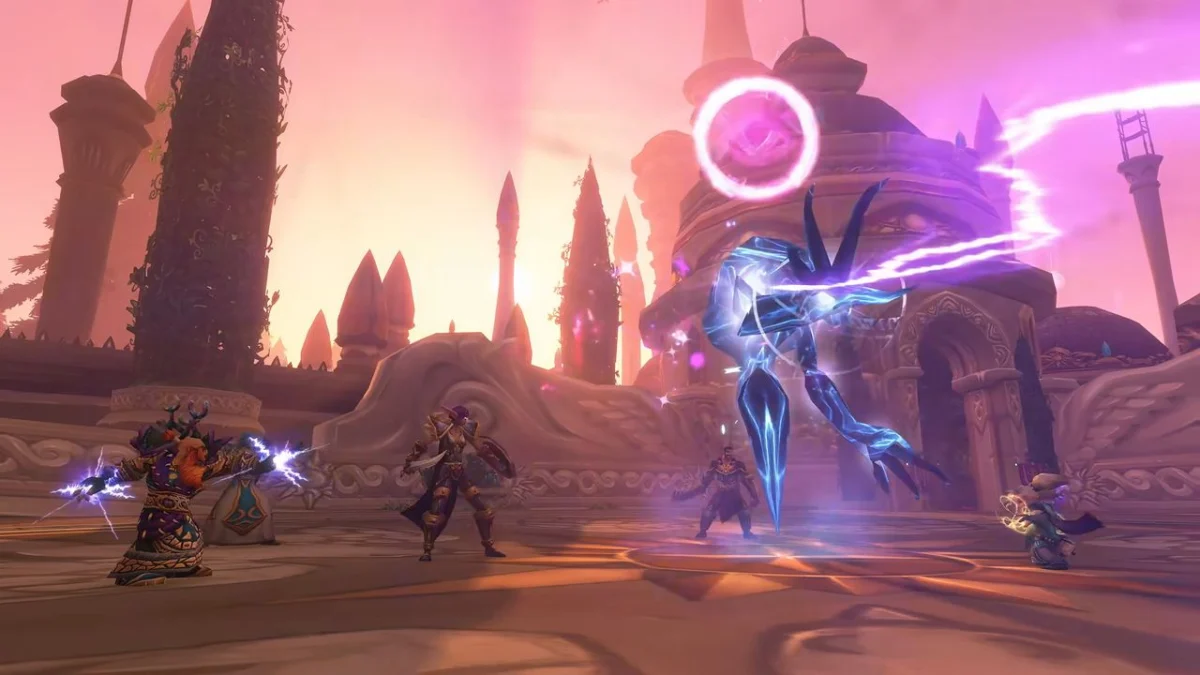
To evaluate Blizzard’s strategic direction, it is first necessary to understand what World of Warcraft: Forever actually entails. Unveiled at BlizzCon, Forever is positioned as a definitive, alternative-history reimagining of classic-era World of Warcraft.
Key features announced thus far include:
- Overhauled Class Design: Traditional trees are being entirely re-envisioned, bringing modern design philosophies, QoL adjustments, and pacing improvements to the original era.
- New Content Integration: Brand-new raids and zones tailored specifically to the classic framework.
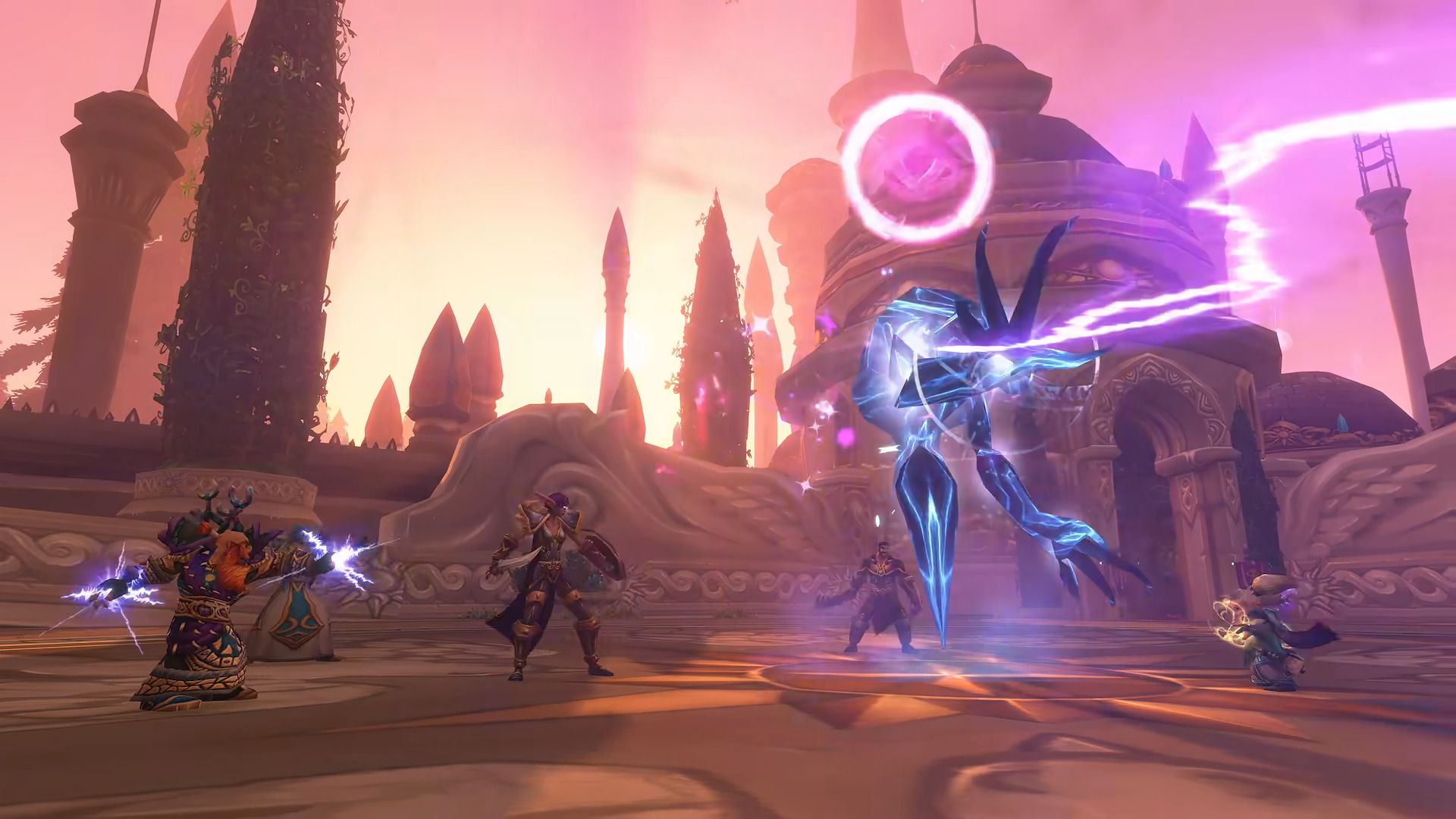
- Modernized Engine Benefits: Leveraging retail WoW’s twenty years of backend upgrades, including smoother server-tick rates, vastly superior lighting and rendering pipelines, and efficient asset streaming.
- Monetization and Access: Eschewing separate, isolated realms in favor of an integrated approach, though not without controversy regarding premium additions like locked race tiers.
Rather than fragmenting the player base across an entirely new engine or an untested conceptual framework, Forever seeks to weaponize the accumulated technological progress of "Retail" WoW to revitalize the game’s earliest, most beloved epoch.
Chronology: Two Decades of Iteration and Technical Debt
To appreciate why Blizzard refuses to pull the trigger on a theoretical World of Warcraft 2, one must look backward at the game’s historical trajectory. Launched in November 2004, World of Warcraft was built on an engine that, even then, carried lineage from the Warcraft III RTS framework.
- 2004–2010 (The Golden Age): Expansions like The Burning Crusade and Wrath of the Lich King pushed the original engine to its absolute limits, introducing vehicle combat, phased zones, and larger raid sizes.
- 2010–2018 (The Modernization Phase): As expansions piled up, Blizzard continuously retrofitted the engine. Character models were completely overhauled in Warlords of Draenor, lighting engines were updated, and backend server architecture was repeatedly rewritten to handle cross-realm interactions and dungeon finders.
- 2019 (The Classic Turning Point): Recognizing a massive demand for unspoiled history, Blizzard launched World of Warcraft Classic, proving that millions of players were eager to experience the game as it existed in 2004—albeit running on a modernized client infrastructure.
- The Present Day: Blizzard has transformed its flagship MMO into a multi-tiered ecosystem encompassing retail expansions, seasonal experiments, hardcore modes, and now, World of Warcraft: Forever.
This continuous modernization timeline forms the bedrock of Blizzard’s current development philosophy.
Supporting Data and Technical Realities: The Case Against a Sequel
When pressed on why Blizzard has repeatedly dodged the WoW 2 bullet, developers point directly to the sheer scale of the existing infrastructure. Speaking in an interview with IGN, Forever Principal Designer Kris Zierhut articulated the core argument against a clean-slate sequel.
"I think one of the things that’s singularly great about WoW is we have this game and this world and this design that has been continuously developed for the last 25 years. And we keep making it better. We made the graphics better, we made the rendering better, we made the lighting better; all that new stuff we showed on stage today."
Zierhut expanded on the engineering realities, highlighting the invisible mechanics that keep Azeroth running smoothly:
"We’ve also made the way the engine draws things move more efficiently. The way the server runs, handling players and moving them around, and all the things that handle spells and combat, all of that’s been made more efficient and better over the years. We have this incredible engine and server infrastructure driving the game that is second to none. Why would you throw that away and start over?"
The Counter-Argument: The Burden of Technical Debt
Despite Zierhut’s defense, proponents of a theoretical WoW 2 argue that retaining the original engine comes with crippling baggage. Decades of cumulative code manifest as severe technical debt.
A prime example occurred earlier this year when a routine patch aimed at fixing minor bugs inadvertently borked entire systems, including player housing mechanics, because developers were wrestling with code architecture—such as elevators—dating back over a decade. A direct sequel would grant Blizzard the ultimate luxury: the chance to wipe the slate clean, challenge fundamental assumptions about MMO combat, and adopt modern development paradigms—much like how ArenaNet’s Guild Wars series systematically evolves its combat and movement systems with each major installment.
Official Responses and Developer Perspectives
Blizzard’s leadership maintains a pragmatic view of the MMO landscape. Rather than viewing World of Warcraft as a finite product with an expiration date, they view it as a living digital ecosystem. The introduction of Forever demonstrates a willingness to look backward while utilizing forward-facing tools.
Furthermore, the studio is hyper-aware of the socio-technical challenges facing modern MMORPGs. In recent statements, Game Director Ion Hazzikostas and other key figures have acknowledged the immense pressure placed on developers by a hyper-optimized player base. The era of blind exploration in MMORPGs has largely vanished, replaced by datamining, alpha testing, and real-time community optimization.
By positioning Forever as a reimagined canvas rather than an exact historical replica, Blizzard hopes to inject a degree of unpredictability back into a formula that has been scrutinized, cataloged, and solved down to the microsecond.
Implications: What World of Warcraft: Forever Means for the Future of MMOs
The rollout of World of Warcraft: Forever carries profound implications not just for Blizzard’s flagship property, but for the broader MMORPG genre.
1. The Death of the Traditional Sequel Era
For years, the conventional wisdom of game development dictated that aging IPs required explosive, numbered sequels to reset graphics, attract new demographics, and shed obsolete design choices. Blizzard’s doubling-down on the WoW ecosystem suggests that live-service longevity trumps sequel disruption. If an engine can be successfully modernized over a quarter-century, building a sequel from scratch carries a financial and cultural risk that few publishers are willing to take.
2. Rewriting MMO Nostalgia vs. Modern Efficiency
Modern MMO players suffer from an interesting psychological split. On one hand, contemporary design principles—such as streamlined interfaces, quality-of-life finders, and balanced class synergies—have objectively improved the frictionless delivery of entertainment. On the other hand, as critics and players frequently note, modern games often strip away the "magic" of inefficiency.
As observed in broader MMO commentary regarding the loss of mystery, players often "love older games to death," optimizing the wonder out of them through exhaustive communal data analysis. If World of Warcraft: Forever succeeds, it will prove that players don’t necessarily want a brand-new game; rather, they want an alternate history of the game they already know, infused with modern technical stability but retaining the sprawling, time-consuming spirit of early digital worlds.
3. Economic Pressures and Monetization Models
The inclusion of premium gatekeeping—such as locking new races behind high-tier expansion purchases—signals that Blizzard is testing the boundaries of how much classic-adjacent content monetization the market will bear. The success or failure of Forever‘s monetization strategy will dictate how aggressively publishers attempt to extract revenue from nostalgic player bases in the years to come.
Conclusion
World of Warcraft: Forever is more than just another expansion or server type; it is a philosophical statement by Blizzard Entertainment. It asserts that twenty-five years of continuous development, technical refinement, and world-building are too valuable to abandon for the sake of a fresh box-art release.
While the specter of technical debt and the allure of a clean-slate WoW 2 will continue to haunt design discussions, Blizzard is betting its future on the durability of its past. Whether Forever manages to recapture the elusive magic of early Azeroth without succumbing to the hyper-optimization of modern gaming remains to be seen. But one thing is certain: in the world of MMORPGs, the past is no longer just history—it is the main event.

