

Nearly three decades after its initial release, id Software’s Quake continues to defy the typical lifecycle of digital media. While most entertainment properties from the mid-1990s languish in retro obscurity or survive solely through institutional preservation projects, Quake remains a living, breathing canvas for an intensely dedicated global community of level designers, coders, and artists.
The year 2026 has proven to be an astonishing milestone for this subculture. Driven by a blend of nostalgia, technical ingenuity, and a shared passion for classic first-person shooter design, the modding community has released a torrent of high-caliber content. From massive collaborative map jams like the Quake Brutalist Jam 3 and anniversary deathmatch packs to id Software’s own official additions—such as the recent Dawn of the Machine campaign—the game’s ecosystem is busier now than it was during some periods of its commercial prime.
Yet, even within this period of unprecedented creative output, creators continue to push boundaries. Released on a Friday that sent ripples through retro-FPS forums, the Quake Rooftops Jam stands as one of the most mechanically and aesthetically daring community undertakings in the game’s 30-year history, flipping the traditional conventions of id’s seminal corridor shooter entirely on their head.
Chronology of a Resurgence: 2026’s Landmark Quake Releases
To understand the magnitude of the Rooftops Jam, one must contextualize the extraordinary momentum that has built up around Quake mapping throughout 2026. The community’s calendar has been packed with monumental releases that showcase both technical mastery and stylistic diversity.
- Early 2026: The year kicked off with the release of Quake Brutalist Jam 3. This megalithic project, more than a year in the making, saw modders band together to deliver two full campaigns’ worth of stark, concrete-and-steel architectural wonderlands that challenged players’ spatial awareness and tactical movement.
- Mid 2026: As the shooter approached its landmark three-decade anniversary, the community flooded platforms like Slipseer and Quaddicted with a wave of specialized deathmatch and single-player map packs. Simultaneously, id Software dropped Dawn of the Machine, injecting official new life into the codebase and proving that the original creators still occasionally look back at their dark fantasy-sci-fi hybrid with fondness.
- Late 2026 (The Present): Breaking away from standard industrial hallways and cavernous gothic crypts, the community released the Quake Rooftops Jam on Friday, introducing 19 custom maps united by a single, vertically ambitious geographic motif: the tops of buildings.
Breaking the Mold: The Architectural Challenge of Quake Rooftops Jam
By its very nature, Quake is a corridor shooter. Engineered around the limitations and design philosophies of 1990s engine technology (specifically John Carmack’s revolutionary 3D BSP tree architecture), classic Quake maps rely on enclosed spaces, subterranean tunnels, dim lighting, and claustrophobic arenas. Combat encounters are traditionally horizontal, punctuated by verticality derived from elevators, jump pads, and stairwells rather than sprawling, open-air vistas.
Skittering across a virtual skyline—leaping from ledge to ledge while dodging plasma fire and rocket barrages—is a gameplay loop typically associated with immersive sims like Looking Glass Studios’ Thief: The Dark Project or Arkane Studios’ Dishonored. Bringing that philosophy into the engine that birthed the Shambler and the Fiend is an audacious design challenge.
Yet, the 19 creators behind the Quake Rooftops Jam embraced the constraint, producing a wildly diverse suite of levels that prove just how flexible the engine—and the mapper’s toolkit—truly remains.
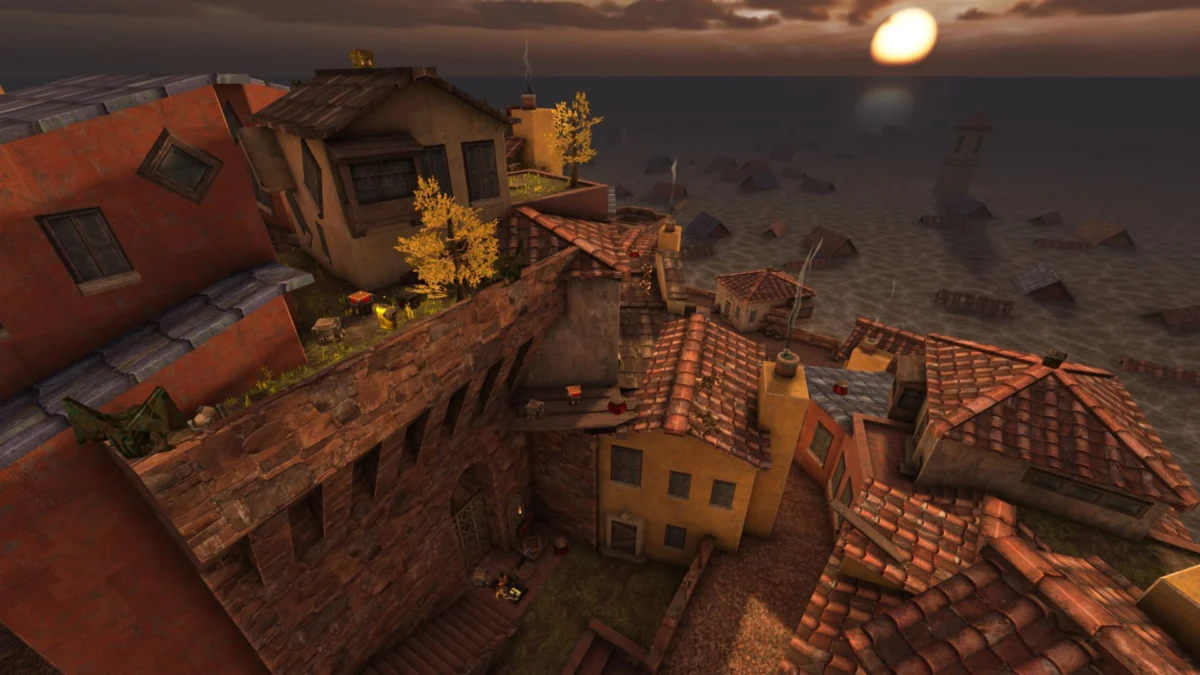
Among the standout entries is Robert Yang’s Mermaids in the Basement. Eschewing the traditional dark and dreary palette of the base game, Yang presents a sun-soaked, nonlinear Mediterranean coastal village that is semi-submerged in clear blue water. Players navigate between tiled roofs while keeping a wary eye on the aquatic depths below, offering a breezy, atmospheric contrast to the game’s typical industrial horror.
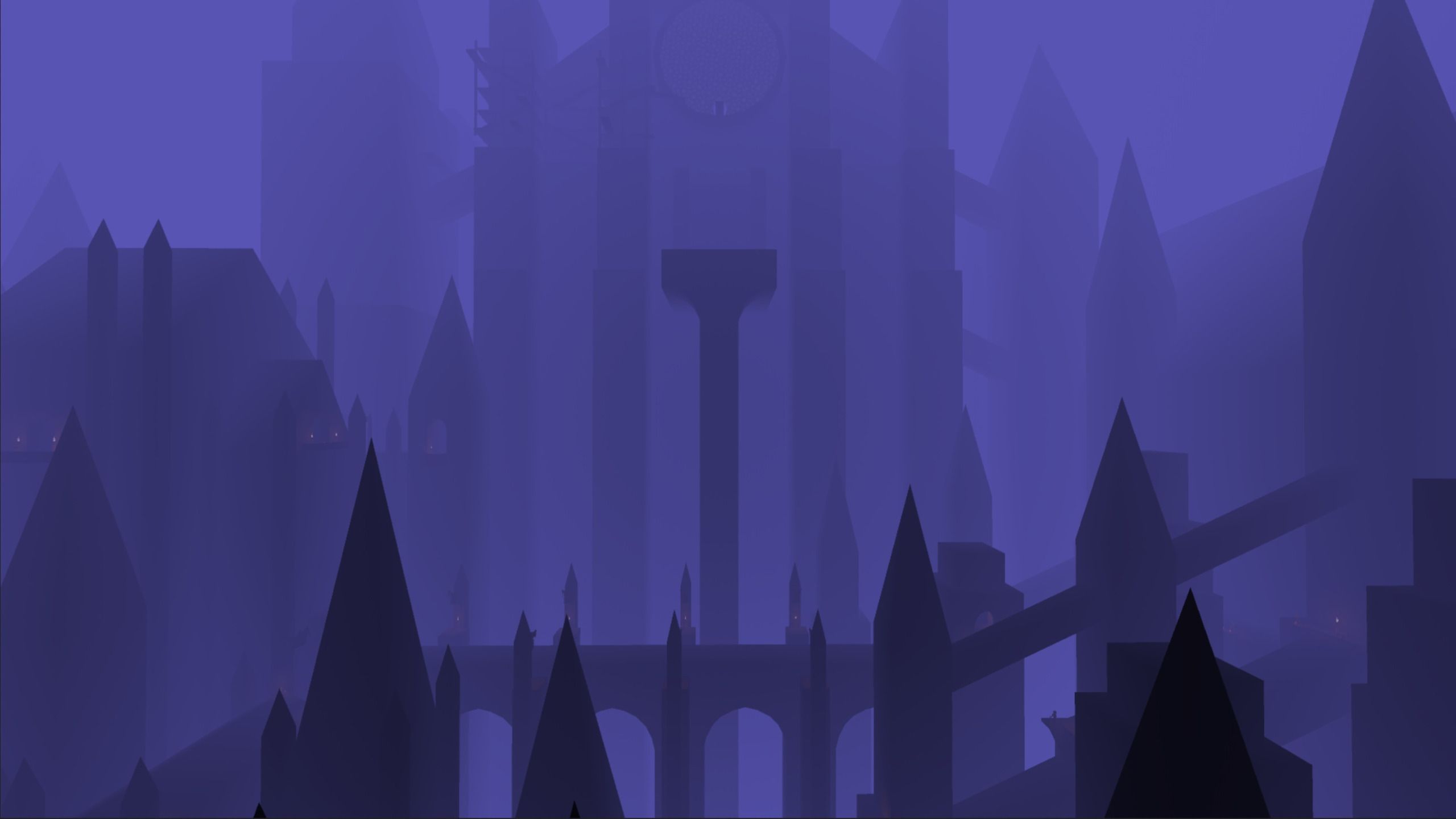
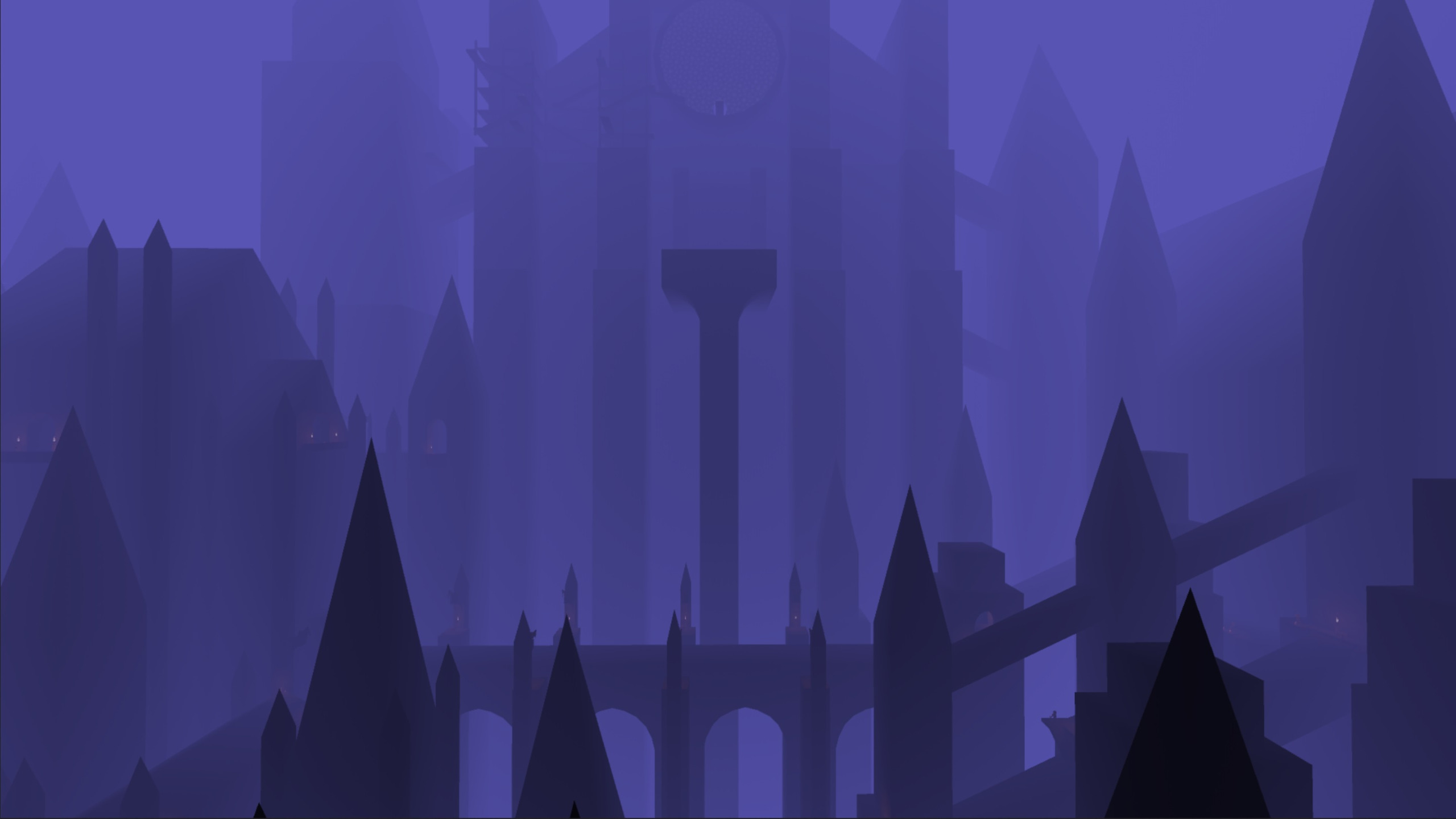
Other highlights push the envelope in entirely different directions. Once, But No More delivers a sprawling, multi-layered cityscape that fuses clashing architectural eras, forcing players to master precision platforming alongside frantic bunny-hopping and circle-strafing. Meanwhile, City of Traitors leans into classic dark fantasy tropes, offering a labyrinth of towering gothic spires draped in a haunting, atmospheric purple mist that stretches out into an infinite void.
Supporting Data: The Technical Ecosystem and Setup
For newcomers looking to dive into the Quake Rooftops Jam, the barrier to entry is remarkably low, thanks to the preservation and optimization efforts of the modern source-port community. Running these modern masterpieces requires minimal hardware, but it does demand specific software configurations.
Required Components:
- A Copy of Original Quake Data: Essential for the game assets (maps, textures, sounds).
- A Modern Source Port: Because original MS-DOS executables will not run natively on modern operating systems, players must utilize optimized source ports. Highly recommended options include:
- Ironwail: Praised for its accurate rendering and performance optimizations.
- vkQuake: Utilizing the Vulkan API for smooth modern framerates and graphical stability.
- The Mod Files: Available for download directly from community hubs such as Slipseer.
Installation Guide:
- Download the Quake Rooftops Jam archive from Slipseer.
- Locate your primary Quake installation directory (often found within Steam or GOG folders).
- Create a new folder within the root directory and name it
qrtjam. - Extract the contents of the downloaded mod archive directly into this
qrtjamfolder. - Create a desktop shortcut pointing to your chosen source port executable (e.g.,
ironwail.exe). - Right-click the shortcut, navigate to Properties, and append
-game qrtjamto the end of the Target command line. - Launch the game through the modified shortcut to access the full suite of 19 rooftop maps.
Official Responses and Industry Context
While the grassroots community continues to demonstrate boundless passion, the official corporate posture toward the Quake franchise remains complex and somewhat opaque.
Three decades after the original game fundamentally disrupted id Software—sparking internal creative friction that famously led to the departure of co-creator John Romero—the franchise’s future in the AAA space is difficult to read. Rumor mills have occasionally spun whispers that MachineGames, the studio behind the critically acclaimed Wolfenstein reboot series and Indiana Jones and the Great Circle, might be quietly incubating a Quake 6. However, industry insiders suggest that MachineGames’ immediate focus remains firmly pointed toward completing the trilogy with Wolfenstein 3.
On the multiplayer front, the landscape has also shifted. Quake Champions, the 2017 hero-shooter spinoff that attempted to modernize the franchise’s legendary fast-paced deathmatch mechanics with modern live-service monetization and character abilities, recently underwent a major structural shift. The game officially shed its live-service model, ending regular updates and transitioning into a straightforward, one-off paid title priced at roughly $10. While this effectively halts the injection of new official content for Champions, it preserves the game as a finished historical artifact for competitive purists.
Implications: The Immortal Legacy of id’s Engine
The enduring vitality of Quake highlights a fascinating sociological and technical phenomenon within video game development: the power of accessible, robust developer tools combined with a passionate, self-sustaining community.
When id Software released Quake in 1996, they did not just release a piece of software; they established a digital vernacular. By providing map editors and encouraging modification early in the genre’s lifecycle, the developers created an unintended incubator for future industry talent. Countless professional level designers, programmers, and studio heads cut their teeth building custom maps for Quake in their bedrooms during the late nineties and early noughties.
Projects like the Quake Rooftops Jam prove that this generational knowledge transfer is still occurring. Veteran mappers who have honed their craft for decades are working alongside newcomers discovering the idiosyncrasies of BSP geometry for the very first time.
As long as dedicated developers are willing to experiment—turning corridor shooters into vertical parkour playgrounds, submersing Mediterranean villages in water, or weaving gothic spires through purple mists—Quake will remain more than just a historical footnote. It will remain an active, vital frontier of digital art and level design, proving that great architecture, much like great gameplay, truly is timeless.

