

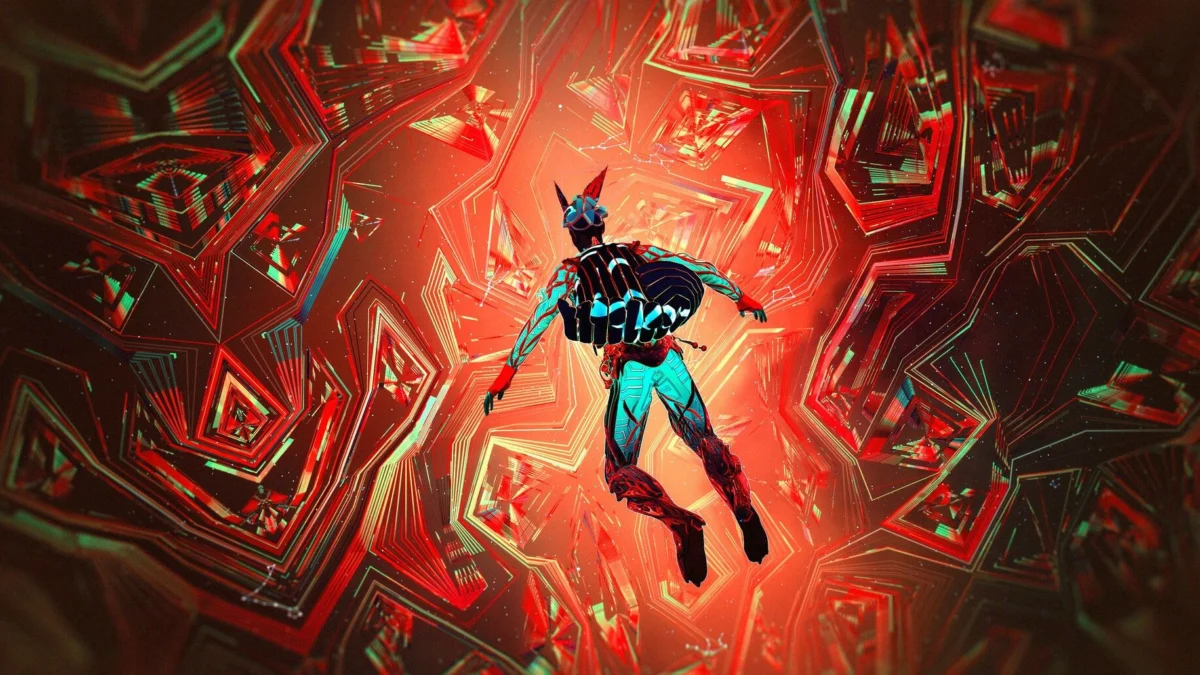
In an era where the industry’s "North Star" is often defined by the relentless pursuit of photorealism—where developers spend millions of dollars simulating the exact pores on a digital nose—it is becoming increasingly rare to be genuinely stopped in one’s tracks by an aesthetic choice. As graphical fidelity hits a point of diminishing returns, the true innovators are those who pivot away from reality to embrace the surreal. Enter Etre, the debut action-adventure title from Los Angeles-based developer Studio Lifeforms, which has arrived with a visual identity so striking it feels less like a video game and more like a fever dream captured in code.
The Premise: A Sentient Cityscape
At its core, Etre is a narrative-driven action experience that plunges players into the heart of Orbis. To describe Orbis simply as a "setting" would be a disservice; Studio Lifeforms characterizes the location as a "planet-scale alien mind on the brink of awakening." This is not a static world of rocks and trees, but a living, breathing, and potentially hostile entity.
The protagonist, Xyle, is a lone wanderer traversing this colossal, sentient cityscape. His motivation is deeply human in its simplicity: he is in search of his soulmate, Atel. This intimate, character-focused journey stands in stark contrast to the vast, incomprehensible scale of the world around him, creating an immediate sense of isolation and wonder that echoes the best of classic science-fiction literature.
Aesthetic DNA: The Graphic Novels of Yesterday
The visual language of Etre is its most immediate calling card. Studio Lifeforms has explicitly cited the graphic novels of the 1970s and 1980s as the primary inspiration for the game’s kaleidoscopic color palettes and jagged, dream-like geometry.
For those familiar with the history of the medium, the influence of legendary surrealist illustrators like Mœbius (Jean Giraud) or the psychedelic futurism of the era’s European sci-fi comics is palpable. The game utilizes vibrant, high-contrast shaders that make every frame feel like a hand-inked page from an avant-garde publication. In the landscape of contemporary gaming, Etre sits in a unique lineage alongside titles like Rez and Tetris Effect—games that prioritize the synesthetic experience, where the visuals and the player’s actions harmonize to create a hypnotic, almost meditative flow state.
Mechanical Foundations: Control as a Benchmark
While the art style draws from the past, the gameplay mechanics are rooted in the modern era of "weird" fiction and systemic action. Studio Lifeforms has openly identified Remedy Entertainment’s Control as a foundational influence.
This is a significant claim. Control was lauded not just for its brutalist architecture and supernatural mystery, but for its tactile, physics-driven combat system. In Etre, players can expect to navigate Orbis in a semi-open structure, where the environment is not merely a backdrop but a participant in the combat. Much like in Jesse Faden’s journey through the Oldest House, Xyle’s struggle against the "living geometry" and environmental anomalies of Orbis will require a deep integration of movement and telekinetic-style power usage.
The studio notes that player agency will play a critical role: the story is not a linear path but one shaped by the player’s actions and interactions with the sentient world of Orbis. This suggests a reactive narrative architecture where the player’s choice of traversal and combat style could influence how the city—the "alien mind"—responds to their presence.
The Challenge of Tactile Satisfaction
Despite the universal acclaim for the game’s announcement trailer, a critical question remains regarding the "game feel." The clips currently available on the Steam page showcase a world that is visually arresting, yet some observers have noted that the combat appears to lack a certain "weight."
This is the primary hurdle for any developer attempting to create an abstract or surreal action game: how do you make combat feel grounded when the enemies are made of shifting polygons and the setting is a mind-bending void? In Control, the satisfaction came from the sheer physics of smashing concrete pillars into Hiss soldiers. Etre cannot survive on its looks alone. If the combat is to succeed, it must translate its high-concept aesthetic into high-impact mechanical feedback. Without that tactile "crunch," the game risks being an incredible piece of digital art that is merely a mediocre experience to play.
Chronology of Development
While Studio Lifeforms has been relatively quiet about the specific timeline of Etre’s conception, the project has been in active development for several years.
- Initial Concept Phase: The studio focused on establishing the "living world" technology, ensuring that the planet-scale entity of Orbis could function both as a map and a character.
- Aesthetic Finalization: The team moved through several iterations of the 70s-inspired art style, refining the shaders to ensure they remained readable during the high-speed action sequences.
- Announcement: The debut trailer served as the public unveiling, marking the transition from a "skunkworks" project to a highly anticipated indie title.
- Current Status: The team is currently in the late stages of polish, focusing on balancing the movement-based combat and ensuring the narrative threads respond appropriately to player choice.
Implications for the Indie Sector
Etre represents a broader trend in the independent gaming sector: the "Aesthetic Pivot." As high-budget AAA titles struggle with the rising costs of photorealism, independent studios are finding that they can achieve higher levels of cultural penetration by adopting singular, stylized looks.
By leveraging the "weird" aesthetic, Etre is effectively insulating itself against the aging process. Photorealistic games often look dated within five to seven years as lighting technology improves. However, the art style of Etre—much like the art styles of Okami or The Legend of Zelda: The Wind Waker—is timeless. It is a bold, deliberate choice that prioritizes artistic intent over technological imitation.
Furthermore, the focus on "planet-scale" narratives suggests that players are hungry for more ambitious, high-concept storytelling. In a market saturated with military shooters and standard fantasy RPGs, a game about a man trying to save his soulmate from an awakening alien planet is a breath of fresh air.
Looking Ahead
Studio Lifeforms has yet to provide a concrete release date, though industry projections and the current state of the game’s promotional cycle point toward a 2025 launch. As the team at Studio Lifeforms moves toward the finish line, the gaming community will be watching closely to see if they can bridge the gap between their mesmerizing visuals and the necessary mechanical depth.
Etre is not just a game; it is a testament to the idea that the most interesting stories are often told in the margins of reality. If the developers can match their visual ambition with refined, satisfying gameplay, Etre could very well be one of the most significant indie releases of the coming year. For now, we wait, watching Xyle float through his kaleidoscopic void, wondering if he will find his soulmate—and if we, as players, will find the experience we’ve been waiting for.
Quick Facts: Etre
- Developer: Studio Lifeforms
- Platform: PC (Steam)
- Primary Influences: 70s/80s Graphic Novels, Control, Rez, Tetris Effect
- Key Mechanic: Movement-based combat, semi-open world exploration, player-influenced narrative.
- Anticipated Release: Expected 2025.

