

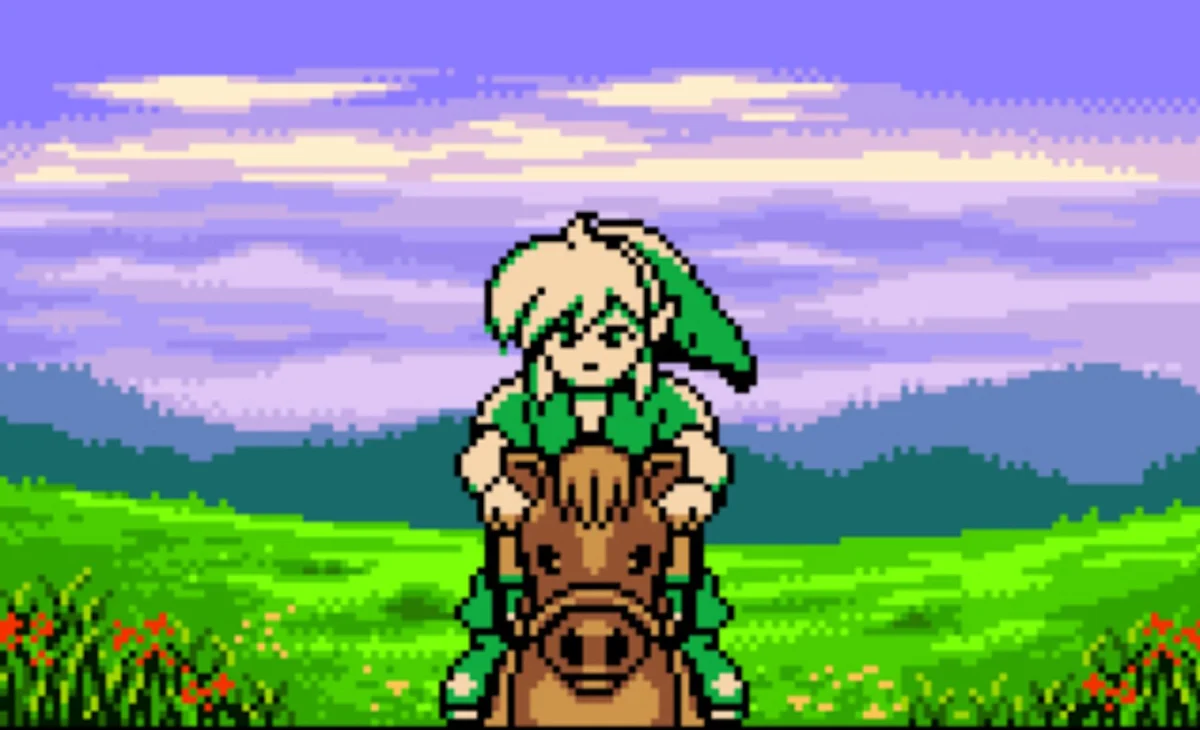
Twenty-five years ago, the Legend of Zelda series stood at a pivotal crossroads. Following the monumental success of Ocarina of Time, Nintendo found itself in a paradoxical position: they wanted to expand the franchise’s footprint to meet growing demand, but they were wary of diluting the brand’s prestige. The solution did not come from within the hallowed halls of Kyoto, but from a strategic partnership with Capcom—a collaboration that would result in Oracle of Ages and Oracle of Seasons, two of the most inventive and mechanically complex entries in the entire 2D Zelda canon.
The Genesis of a Partnership: A Third-Party Vision
In the late 1990s, Nintendo’s internal teams were stretched thin. The challenge was to create high-quality Zelda experiences that could appeal to a younger audience while maintaining the series’ high standards of puzzle design and exploration.
Enter Yoshiki Okamoto, a legendary screenwriter and producer at Capcom. Okamoto led a newly formed subsidiary named Flagship, a studio dedicated to high-level game narrative and design. Sensing an opportunity to bridge the gap between classic Zelda sensibilities and fresh, experimental mechanics, Okamoto approached series creator Shigeru Miyamoto with an ambitious, albeit slightly unorthodox, pitch.
The initial concept was grander than what eventually reached store shelves. The project, codenamed "Triforce Trilogy," was originally intended to be a trio of games that could be played in any order. However, the technical limitations of the Game Boy Color and the inherent challenges of development forced a pivot. After several years of iterative design and a significant trimming of the project’s scope, the vision crystallized into two distinct titles: Oracle of Ages and Oracle of Seasons. Released in 2001, these titles represent a unique anomaly in Nintendo’s history—a masterclass in cross-studio collaboration.
A Chronology of Innovation: From Development to Legacy
The development phase of the Oracle games was marked by a unique feedback loop. Unlike many outsourced titles, Nintendo maintained a heavy hand in the quality control process, ensuring that the "Zelda feel"—the precise movement, the satisfying chime of a secret revealed, and the weight of combat—remained intact.
- 1999–2000: The development team struggles with the scope of the "Triforce Trilogy." Faced with memory constraints and the complexity of the "linking" system, the third game is scrapped, and the remaining two are refined into their final forms.
- 2001: Oracle of Ages and Oracle of Seasons are released for the Game Boy Color. They are met with critical acclaim for their interconnectivity; players could use a password system to carry progress, items, and character relationships from one game to the other, culminating in a shared, epic finale.
- 2001–2026: Over the subsequent two and a half decades, the games maintain a cult status. While they are often overshadowed by the 3D titans like Ocarina of Time or the revolutionary Breath of the Wild, they are consistently cited by hardcore fans as the pinnacle of 2D Zelda design.
Supporting Data: Why the Oracle Duo Stands Alone
To understand the significance of Oracle of Ages and Oracle of Seasons, one must look at the density of their world-building. While games like A Link to the Past set the mechanical blueprint, the Oracle titles injected a sense of "lived-in" reality that was previously unseen.
Cultural Integration
In Holodrum and Labrynna, the world does not revolve solely around Link’s quest. The games feature a thriving ecosystem of characters, from the Goron tribes in the mountains to the Moblins constructing their own fortified outposts. The inclusion of Tingle—who made his debut in Majora’s Mask—further cemented these titles as part of a more eccentric, personality-driven era of the series.
Mechanical Depth
The mechanics of the games were designed to be distinct yet complementary:

- Oracle of Seasons: Utilized the "Rod of Seasons," allowing players to manipulate the environment by shifting the climate. This wasn’t just a gimmick; it fundamentally altered pathing and combat, requiring players to think about the terrain in four different states.
- Oracle of Ages: Focused on a time-travel mechanic, tasking players with swapping between the past and the present. This introduced complex "cause-and-effect" puzzles that required logical deduction and spatial awareness, making it arguably the more intellectually demanding of the two.
Official Perspectives: The Capcom-Nintendo Dynamic
The collaboration was a rare instance of Nintendo entrusting its crown jewel to an external party. In interviews conducted at the time, representatives from both companies emphasized that the goal was to capture the "soul" of the NES and SNES originals while pushing the technical envelope of the Game Boy Color.
Yoshiki Okamoto’s influence cannot be overstated. By focusing on a "non-destiny" narrative, Capcom allowed for a more grounded, human experience. In these games, Link is not necessarily the fabled hero born of prophecy; he is a traveler who happens to be in the right place at the right time. This lack of crushing, predetermined destiny allowed the player to form a more personal bond with the world, as the stakes felt localized and tangible rather than abstract and mythic.
The Implications for the Future of the Franchise
Looking back from the perspective of 2026, the Oracle games serve as a blueprint for how to evolve a franchise without losing its identity. They proved that the "Zelda formula"—dungeons, items, and exploration—could be transplanted into new environments with entirely different rules without breaking the experience.
The "Hybrid" Legacy
The Oracle games acted as a bridge between the traditional top-down Zelda and the more experimental, melancholic tone of Majora’s Mask. By fusing the classic dungeon-crawling loop with a world that felt like it had its own daily rhythm, Capcom set a standard for world-building that influenced later titles.
A Lesson in Interconnectivity
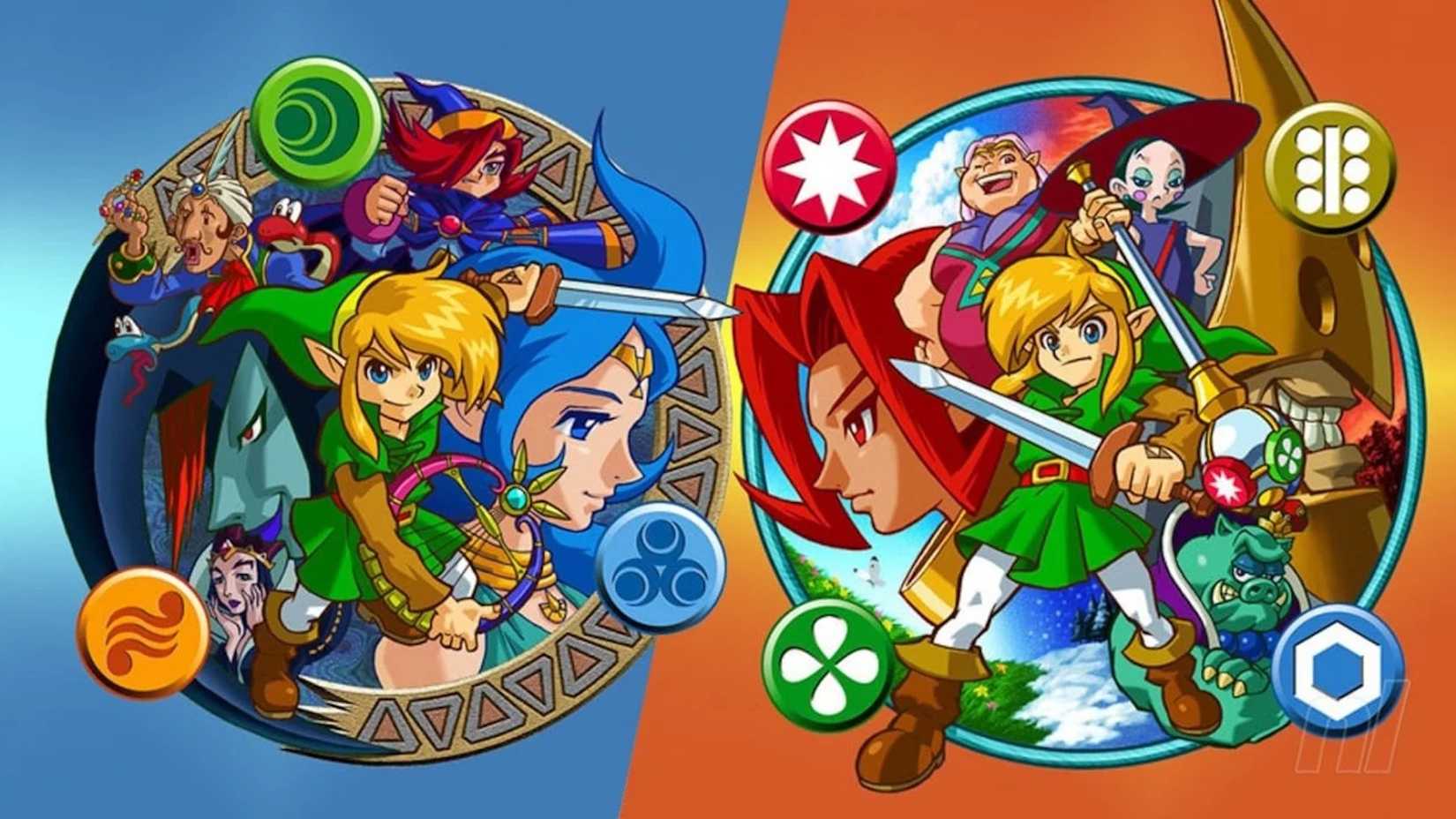
The "linked" game system remains a gold standard for sequels. The ability to watch a child grow up, see the direct consequences of actions taken in the first game, and unlock a true, canonical conclusion was a level of storytelling depth that many modern sequels still struggle to replicate. It provided a sense of continuity that rewarded players for their investment in both titles.
Conclusion: A Masterpiece of Collaborative Craft
As we celebrate the 25th anniversary of these titles, it is clear that Oracle of Ages and Oracle of Seasons were far more than just "fillers" to satisfy a demand for more content. They were, and remain, a bold experiment in design.
While the dungeon designs themselves may not hold the same nostalgic reverence as those in A Link to the Past, the world-building, the mechanics, and the sheer charm of the writing elevate them to a unique status. Capcom succeeded where many other developers would have failed: they honored the legacy of the Triforce while carving out a distinct, vibrant, and deeply memorable corner of the Legend of Zelda universe. They remind us that sometimes, the best way to move a series forward is to let an outsider take the wheel and drive it into entirely new, unexpected territory.
Twenty-five years later, the lands of Holodrum and Labrynna remain as inviting, challenging, and essential as ever. They stand as a testament to a time when risks were taken, and when two of the gaming industry’s biggest titans proved that even the most legendary series can benefit from a fresh perspective.

