

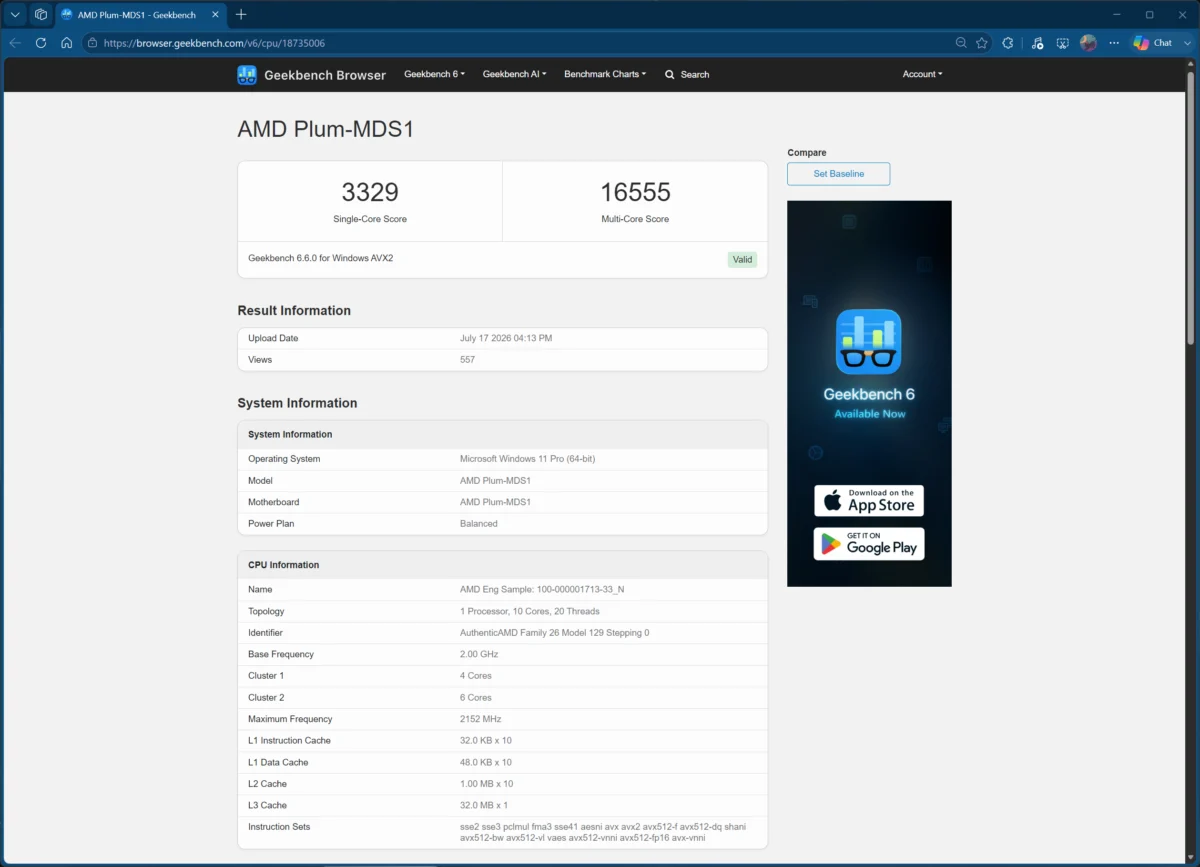
Taipei, Taiwan – AMD’s forthcoming mobile processors, part of the highly anticipated Ryzen AI 500 series and codenamed "Medusa Point," have sent ripples through the tech world with a leaked Geekbench benchmark that showcases unprecedented single-core performance. A 10-core engineering sample, expected to be a key player in the Zen 6 lineup slated for a 2025 refresh, has posted its strongest results yet, challenging the dominance of existing mobile chips and even approaching the performance of high-end desktop CPUs. This latest leak underscores AMD’s aggressive push into the AI PC era and sets a formidable precedent for the next generation of mobile computing.
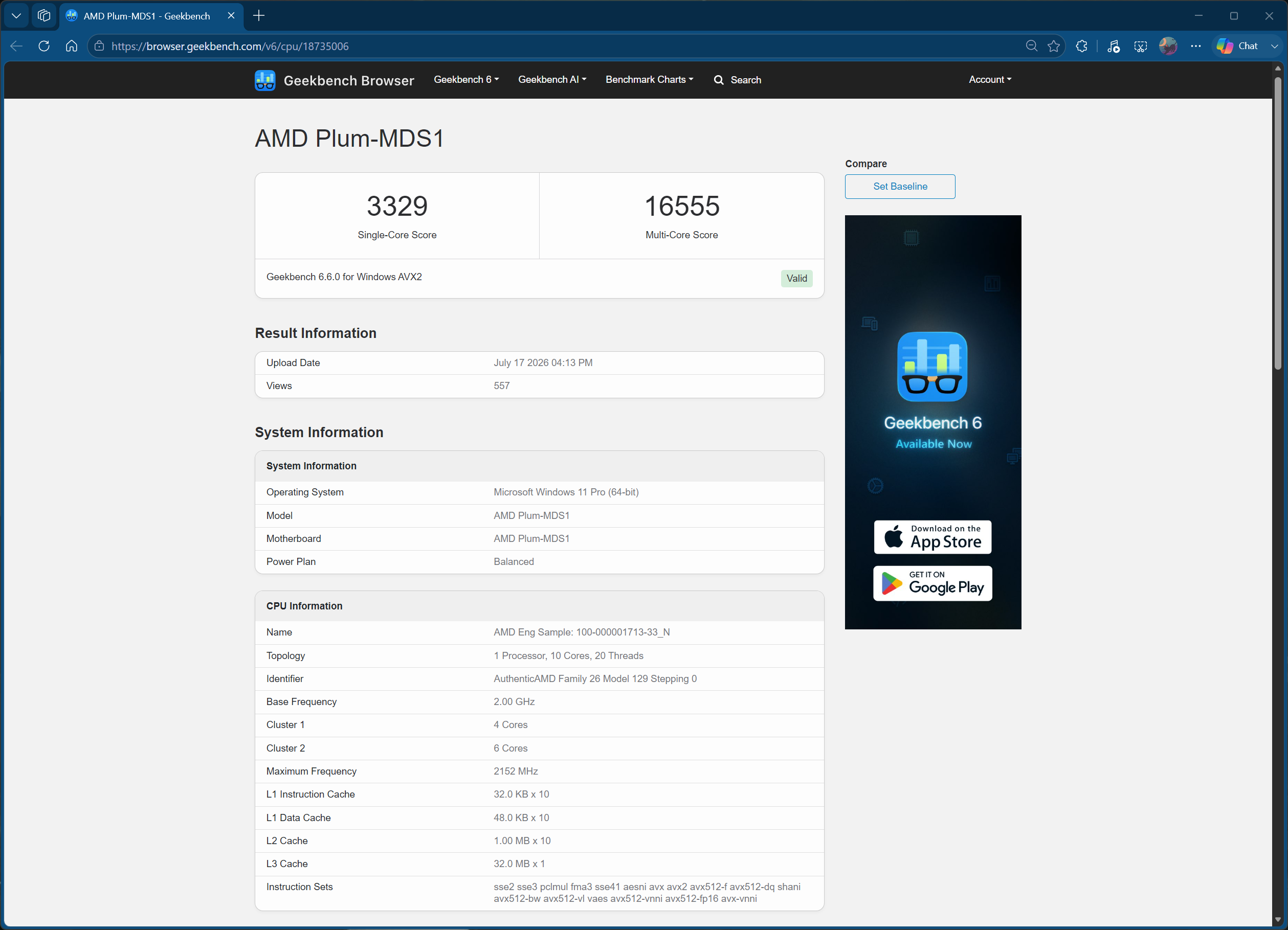
The benchmark data, appearing on Geekbench, reveals a significant leap for the "Medusa Point" SKU, identified as "AMD Eng Sample 100-000001713-33_N." With a single-core score of 3,329 and a multi-core score of 16,555, this 10-core mobile chip is poised to redefine expectations for performance in laptops and ultra-portable devices. While the single-core crown still narrowly belongs to Qualcomm’s new Snapdragon X2 Elite lineup, AMD’s latest showing puts it ahead of virtually every other mobile chip currently offered by both Intel and AMD, signaling a robust architectural advancement with its Zen 6 core.
A Chronology of AMD’s Mobile Ambitions and the Rise of Zen 6
AMD’s journey in the mobile processor market has been one of relentless innovation and increasing competitiveness. Over the past few years, the company has steadily chipped away at Intel’s long-held dominance, introducing a series of Ryzen mobile processors that offered compelling performance, efficiency, and integrated graphics capabilities. The introduction of the "Ryzen AI" branding marked a strategic pivot, emphasizing the growing importance of on-device AI acceleration and the Neural Processing Unit (NPU) as a critical component of modern computing.
The AI PC Era and AMD’s Vision:
The concept of the "AI PC" has become a central theme in the semiconductor industry, driven by the need for more efficient and powerful hardware to handle complex AI workloads directly on a user’s device. This includes everything from real-time language translation and advanced image processing to intelligent power management and personalized user experiences. AMD recognized this trend early, integrating NPUs into its Ryzen mobile processors, starting notably with the Ryzen 7040 series (Phoenix) and further enhancing them with the Ryzen AI 300 series (Strix Point and Strix Halo). These chips demonstrated AMD’s commitment to delivering robust AI capabilities, paving the way for more sophisticated implementations in future generations.
Evolution of Ryzen Mobile Architectures:
AMD’s mobile processor lineage has seen several significant architectural advancements. From the early Zen architectures that brought competitive multi-core performance to laptops, through Zen 2, Zen 3 (e.g., Cezanne), and Zen 4 (e.g., Phoenix, Hawk Point), each generation has refined performance per watt, improved integrated graphics (RDNA architecture), and enhanced overall system efficiency. The current generation, featuring Zen 5 cores in the Ryzen AI 300 series (Strix Point and Strix Halo), has already pushed boundaries with higher core counts, integrated RDNA 3.5 graphics, and powerful NPUs delivering up to 50 TOPS (Tera Operations Per Second) of AI performance.
The Zen 6 Roadmap and Medusa Point’s Place:
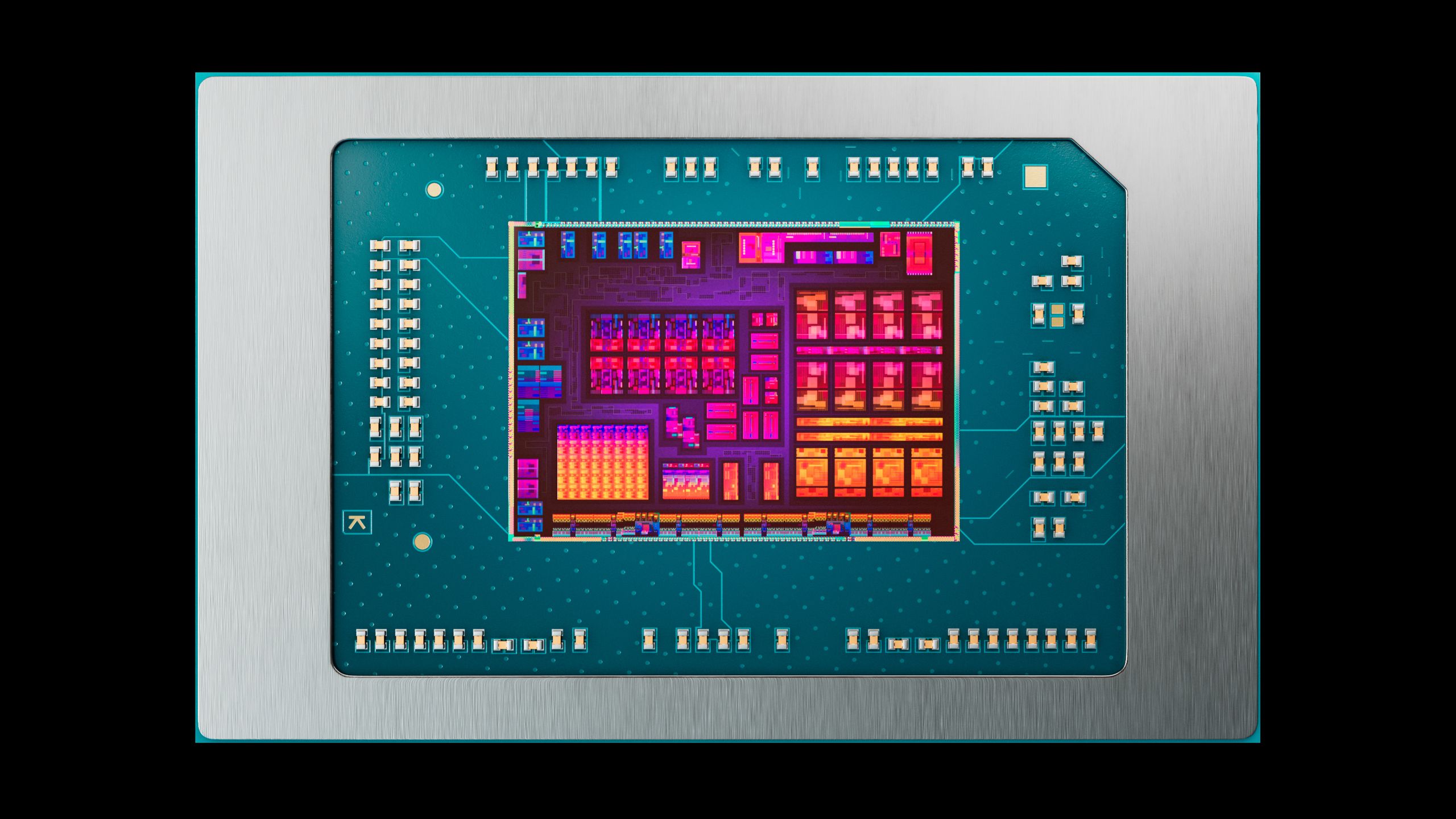
Looking ahead, AMD’s roadmap has teased the arrival of Zen 6, described as a "true next-generation leap" built on a cutting-edge 2nm process node and featuring "expanded AI features." This ambitious timeline projects Zen 6 to arrive around 2026, with refreshes to both desktop and mobile lineups expected next year. "Medusa Point," the codename for the Ryzen AI 500 series mobile family, is firmly positioned within this Zen 6 generation. It represents AMD’s mainstream mobile offering for the upcoming cycle, designed to be a direct competitor to Intel’s "Panther Lake" architecture.
Prior to this latest benchmark, the same 10-core Medusa Point SKU had surfaced on Geekbench a couple of times, each instance providing tantalizing glimpses into its potential. These earlier leaks, while promising, did not fully capture the chip’s capabilities. The consistency in the SKU identification ("AMD Eng Sample 100-000001713-33_N") and platform name ("AMD Plum-MDS1") across these listings strongly suggests we are tracking the evolution of the same engineering sample, now apparently reaching a more optimized state. The progression in scores from previous leaks to this latest one highlights ongoing refinement and optimization, which is typical for pre-release hardware.
Supporting Data: A Deep Dive into Medusa Point’s Benchmark Prowess
The recent Geekbench listing for the 10-core Medusa Point SKU offers concrete data points that solidify its position as a formidable contender in the mobile processor landscape. Analyzing these scores in detail and comparing them against current market leaders and even desktop counterparts reveals the extent of AMD’s engineering achievement with Zen 6.
Single-Core Performance: Challenging Desktop Powerhouses
The Medusa Point chip achieved an impressive single-core score of 3,329 points. This represents an almost 5% increase over its previous leaked score of 3,174, indicating significant performance tuning. What makes this score particularly remarkable is its proximity to high-end desktop CPUs.
- It nearly matches the AMD Ryzen 9 9900X (Desktop, 12C) and AMD Ryzen 7 9800X3D (Desktop, 8C), both of which scored 3,333 points. These are absolute powerhouses in the desktop segment, making Medusa Point’s mobile single-core performance truly exceptional.
- It also edges out the AMD Ryzen 5 9600X (Desktop, 6C) at 3,318 points, the Intel Core i9-14900KS (Desktop, 24C) at 3,226 points, and the Intel Core Ultra 9 285K (Desktop, 24C) at 3,195 points.
- In the mobile space, it comfortably surpasses AMD’s current top-tier mobile chips and Intel’s Core Ultra series.
The only mobile part that currently outpaces Medusa Point in single-core is the Qualcomm Snapdragon X2 Elite X2E-90-100 (Mobile, 18C), which scored 3,573 points. This highlights the fierce competition in the high-performance mobile segment, especially with the rise of ARM-based Windows devices. However, Medusa Point’s ability to compete at this level with fewer cores and potentially different power envelopes is a strong indicator of Zen 6’s efficiency and raw instruction per cycle (IPC) improvements. High single-core performance is crucial for responsiveness in everyday tasks, web browsing, and particularly for gaming, where many titles are still single-thread bound.
Multi-Core Performance: A Substantial Generational Leap
In the multi-core test, Medusa Point scored 16,555 points, a substantial 9.7% improvement over its previous leaked score of 15,092. This multi-core score places the 10-core SKU right alongside AMD’s Ryzen AI Max+ 390, which is part of the "Strix Halo" family and currently sits just below the top-end AI Max+ 395.
- Compared to the previous generation’s 10-core counterpart, the Ryzen AI 9 365 (from Strix Point), which has an average multi-core score of 12,410, Medusa Point’s offering is approximately 33% faster. This generational leap is significant, suggesting considerable enhancements in core architecture, interconnects, and cache design.
- While desktop chips like the Intel Core i9-14900KS (23,008) and AMD Ryzen 9 9950X3D (22,169) remain ahead due to their higher core counts (24C and 16C respectively), Medusa Point’s performance is still highly competitive for a mobile part. It comfortably outpaces the desktop AMD Ryzen 5 9600X (6C) which scores 14,742 points, and closes the gap on the Ryzen 7 9800X3D (8C) at 18,317 points. Multi-core performance is vital for demanding applications such as video editing, 3D rendering, scientific simulations, and advanced AI workloads.
Architectural and Specification Insights:
The Geekbench listing also provides more accurate clock speed information, with a base frequency of 2.0 GHz and a boost frequency now correctly marked at 5.37 GHz. This high boost clock is a key factor in achieving such strong single-core results, demonstrating Zen 6’s ability to scale frequencies effectively.
Furthermore, the cache configuration is detailed: 10MB of L2 cache and 32MB of L3 cache, totaling 42MB. This is a notable increase compared to the Ryzen AI 9 465 (likely "Gorgon Point" or a Strix Point refresh), which reportedly had a combined cache tally of 34MB. A larger and more efficient cache hierarchy is critical for CPU performance, reducing latency and improving data access, especially for complex workloads.
The inference that this 10-core part is likely the Ryzen AI 9 565 stems from AMD’s established naming conventions. The Ryzen AI 9 365 (Strix Point) and Ryzen AI 9 465 (Gorgon Point) are known to share similar 10-core configurations. Given Medusa Point is the successor, a Ryzen AI 9 565 designation for this 10-core variant seems logical.
Official Responses and the Nature of Leaks
As is typical with pre-release hardware and leaked benchmarks, AMD has not issued any official comments regarding the "Medusa Point" Geekbench results. Companies generally maintain silence on unannounced products and unofficial data to avoid confirming speculation or providing information that might not reflect the final product’s performance or specifications.
It is crucial to approach these leaked benchmarks with a degree of caution. Engineering samples are, by their nature, test units. Their performance can vary significantly from retail products due to factors like:
- Optimization: Drivers, firmware, and operating system optimizations are often incomplete for engineering samples. Final products benefit from extensive tuning.
- Clock Speeds: Reported clock speeds might not be finalized, or the sample could be running at non-standard frequencies for testing purposes.
- Power Limits: The thermal and power envelopes under which these tests are conducted might not reflect typical usage scenarios in shipping laptops.
- Specific Configuration: The exact configuration of the system (RAM, storage, cooling) can influence benchmark results.
Despite these caveats, repeated leaks of the same SKU showing improving performance generally indicate that the underlying architecture is solid and development is progressing well. The consistency in identification also lends credibility to the leaks, suggesting a genuine internal test unit. Official announcements from AMD typically occur at major industry events such as Computex, CES, or dedicated product launch events, where the company provides comprehensive details and performance figures.
Implications: Shaping the Future Mobile Landscape
The impressive performance of the "Medusa Point" engineering sample carries significant implications for the mobile computing market, AMD’s competitive standing, and the broader trajectory of AI PCs.
Reshaping the Competitive Landscape:
- Against Intel’s Panther Lake: Medusa Point is positioned as AMD’s mainstream mobile offering to compete directly with Intel’s upcoming "Panther Lake" processors. If these leaked benchmarks are indicative of retail performance, AMD could gain a significant competitive edge in the crucial mainstream laptop segment. Intel will need to deliver compelling performance and efficiency with Panther Lake to counter AMD’s Zen 6 advancements. The "AI PC" race is heating up, and both companies are vying for leadership in NPU performance and overall system integration.
- Challenging Qualcomm’s ARM Play: While Qualcomm’s Snapdragon X2 Elite currently holds a slight lead in single-core, Medusa Point’s strong showing demonstrates that x86 architectures are far from yielding ground. The emergence of powerful ARM-based Windows laptops adds another layer of complexity to the market, forcing both AMD and Intel to innovate relentlessly on performance per watt and integrated AI capabilities. Medusa Point’s efficiency and strong single-core performance will be vital in retaining market share against ARM’s perceived advantages in power efficiency.
- AMD’s High-End Strategy: The article notes that Medusa Point is AMD’s mainstream mobile offering, while "Nova Lake" (Intel’s high-end beyond Panther Lake) and AMD’s own "Gator Range" (Ryzen 10000 series) are reserved for high-end CPUs. This implies that AMD has even more powerful mobile architectures in the pipeline, suggesting a multi-tiered strategy to address various segments of the market, from ultra-portables to high-performance mobile workstations. Gator Range, with its expected Zen 7 architecture, promises even greater leaps, further solidifying AMD’s long-term mobile vision.
Impact on Laptop Design and User Experience:
- Performance in Thin-and-Light Devices: The ability of a 10-core mobile chip to deliver desktop-class single-core performance means that future thin-and-light laptops will no longer need to compromise significantly on raw processing power. This will enable more responsive applications, faster content creation, and a smoother overall user experience without sacrificing portability.
- Enhanced AI Capabilities: With Zen 6 explicitly promising "expanded AI features," Medusa Point is expected to integrate an even more powerful NPU than its predecessors. This will unlock new possibilities for on-device AI, from advanced noise cancellation and background blurring in video calls to real-time content generation and sophisticated security features, all while reducing reliance on cloud computing and improving privacy.
- Gaming on the Go: The strong single-core performance, coupled with AMD’s integrated RDNA graphics (likely RDNA 4 or an evolved RDNA 3.5 in Zen 6), promises a significantly improved gaming experience on mobile platforms. Casual and even some enthusiast-level gaming could become more accessible on laptops not traditionally designed for gaming.
- Battery Life and Efficiency: While raw performance numbers are exciting, real-world utility in mobile devices hinges on efficiency. Zen 6’s move to a 2nm process node, combined with architectural optimizations, should translate into excellent performance per watt, leading to extended battery life for users.
AMD’s Strategic Position:
This benchmark provides a strong indicator that AMD is executing well on its Zen 6 roadmap. By delivering significant generational performance improvements, especially in single-core throughput, AMD strengthens its position as a leading innovator in the CPU space. This will be crucial for securing design wins in the laptop market, attracting OEMs, and ultimately offering consumers compelling alternatives to Intel and the emerging ARM competitors. The focus on AI features further aligns AMD with the industry’s future direction, ensuring its processors are not just powerful but also intelligent.
In conclusion, the leaked Geekbench scores for AMD’s "Medusa Point" are more than just numbers; they are a strong declaration of intent. They herald a new era of mobile computing where performance, efficiency, and integrated AI capabilities converge to deliver an unparalleled user experience. As AMD prepares for its Zen 6 refresh, the tech world watches with bated breath to see how this promising mainstream mobile offering will reshape the competitive landscape and accelerate the adoption of the AI PC.

