

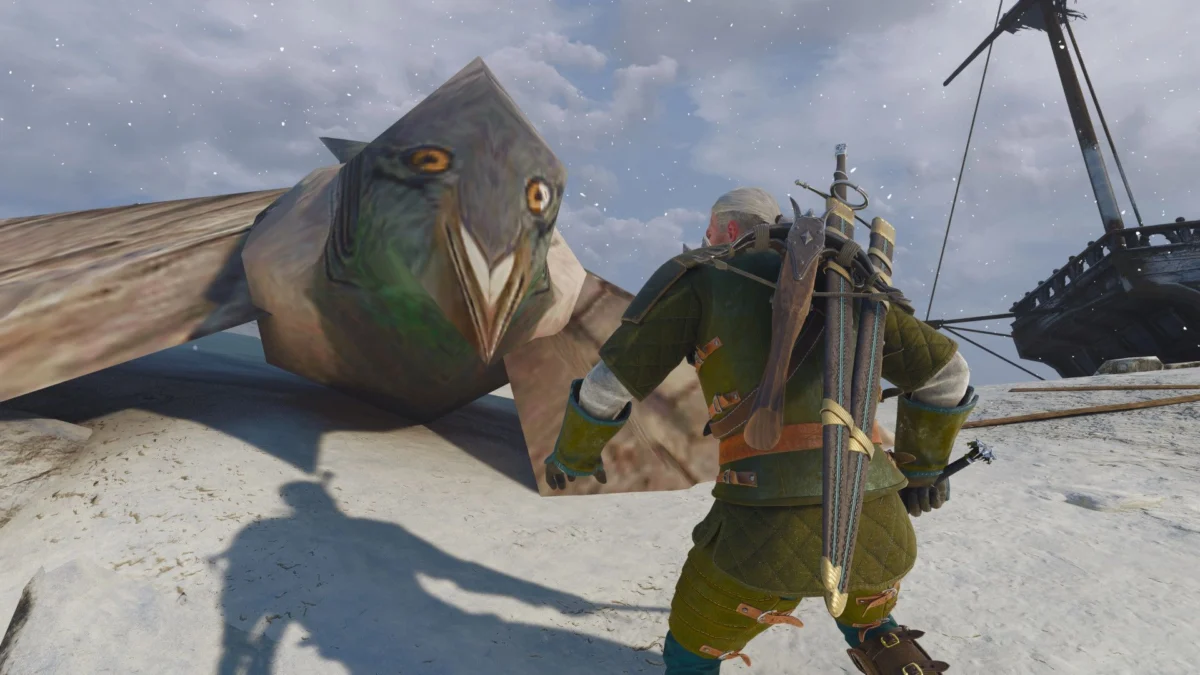
For over a decade, The Witcher 3: Wild Hunt has stood as a monolith of modern role-playing games. CD Projekt Red’s magnum opus is celebrated for its breathtaking vistas, complex moral dilemmas, and unparalleled attention to detail. Yet, tucked away in the sprawling geography of the Northern Realms, there exists an anomaly—a relic of a bygone era of game design that has captured the collective heart of the community.
It is a pigeon. But not just any bird. This specific NPC, characterized by its angular, low-poly geometry and jarringly simple textures, has become a cult icon. While Geralt of Rivia fights high-resolution monsters in a world of cutting-edge ray tracing, this blocky bird has remained stubbornly unchanged, effectively serving as a time capsule from the early 2000s. Now, thanks to the ingenuity of the modding community, this humble creature is no longer a laughingstock; it is an apex predator.
The Chronology of a Cultural Icon
To understand the phenomenon of the "Low-Poly Pigeon," one must look back to the game’s original release in 2015. Players wandering through the bustling markets of Novigrad or the war-torn villages of Velen quickly noticed that while the game’s main assets were pushing the boundaries of what the hardware of the time could achieve, certain background elements seemed to have been pulled from an entirely different generation of gaming.
The pigeon in question became an instant meme. Its distinct lack of polygons—making it look more like a jagged collection of shards than a living creature—stood in stark contrast to the photorealistic NPCs that surrounded it. Over the years, the pigeon became a community "mascot." It was the subject of countless Reddit threads, YouTube compilations, and Twitter jokes.
When CD Projekt Red announced the comprehensive "Next-Gen" remaster for The Witcher 3 in 2022, fans held their breath. Would the developers scrub this artifact from existence? Would they apply a high-definition skin to our beloved, jagged bird? To the delight of the fanbase, the remaster arrived, and the low-poly pigeon remained. It was a silent admission from the developers: some things are too iconic to change. The pigeon had survived 11 years of graphical evolution, and it was here to stay.
The Mod: "Low-Poly Pigeon – The Revenge"
While the pigeon was content to exist as a background fixture, the modding community had grander designs. Enter grapedia, a modder who decided that if the pigeon couldn’t be beautiful, it would instead be terrifying.
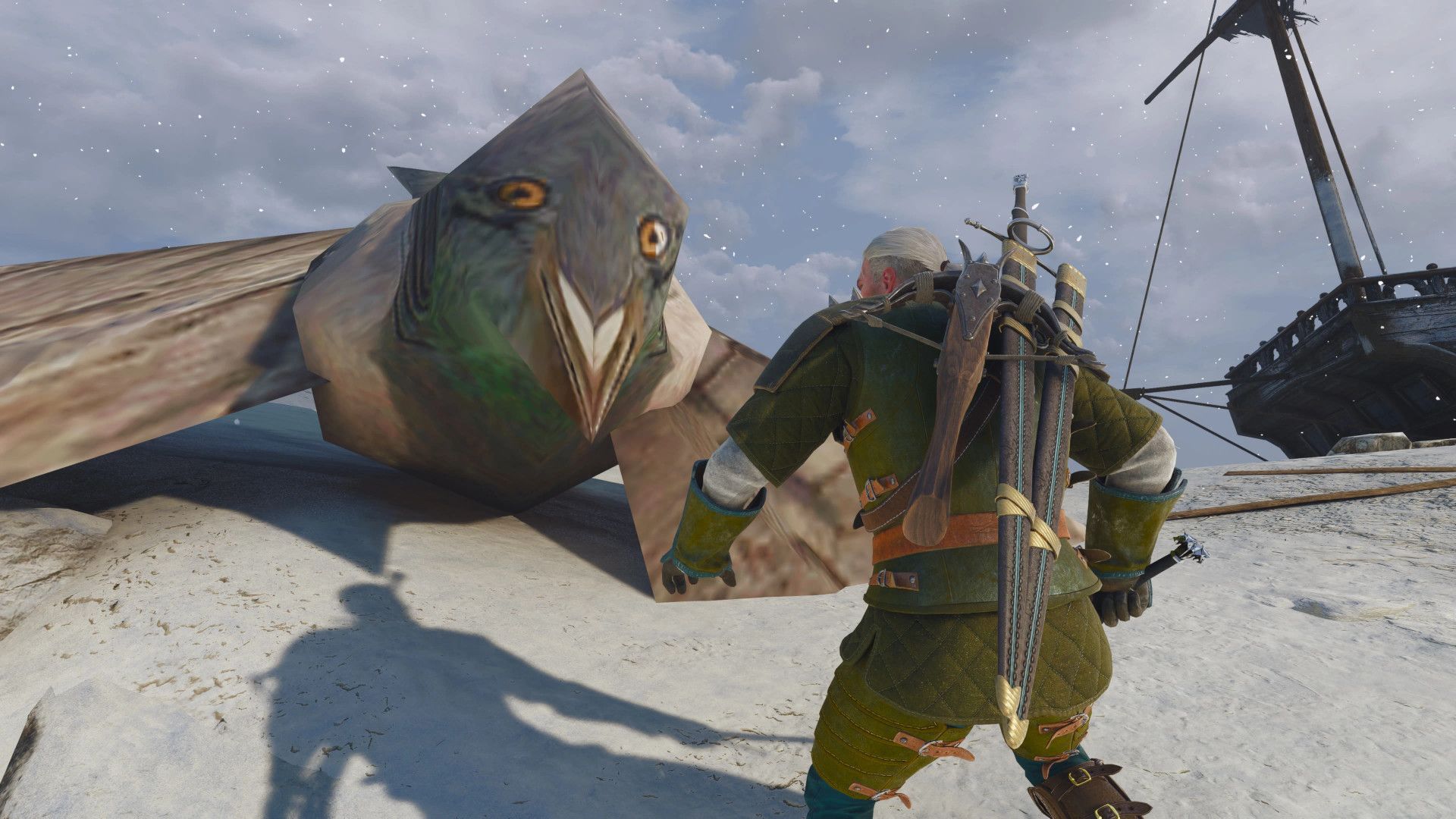
The mod, titled "Low-Poly Pigeon – The Revenge," is a masterclass in absurdist comedy. It does not simply add a new item or a minor cosmetic change; it fundamentally alters the hierarchy of the game’s ecosystem. The mod replaces every instance of the Griffin—the iconic, high-stakes monster that serves as one of the first major challenges for players—with the low-poly pigeon.
The result is a surrealist nightmare. The terrifying aerial screeches of the Griffin have been replaced with the gentle, rhythmic cooing of a pigeon. The massive, multi-staged boss battles that traditionally require potions, oils, and careful swordplay are now conducted against a bird that looks like it belongs on a PlayStation 2.
Implications for Game Design and Community Culture
The popularity of this mod highlights a fascinating facet of the gaming industry: the relationship between intentional design and emergent community humor. In an era where AAA games are increasingly scrutinized for graphical fidelity and "realism," the low-poly pigeon serves as a reminder that players often find more joy in the imperfections of a game than in its perfection.
The Power of Modding
Modding has always been the lifeblood of the PC gaming ecosystem, but "The Revenge" mod represents a specific subgenre of modding: the "shitpost" mod. These projects do not aim to improve the game’s performance or graphics; they aim to subvert the game’s tone. By taking a serious, dark-fantasy environment and populating it with an out-of-place, low-fidelity asset, the modder highlights the rigidity of the game’s engine and the player’s familiarity with its mechanics.
The "One-of-One" Problem
In the original game, the pigeon was a "one-of-one" anomaly. It felt lonely in its aesthetic simplicity. By multiplying the asset and granting it the stats and behavioral patterns of a top-tier predator, the mod effectively gives the pigeon a sense of agency. It is no longer just a background object; it is an active participant in the story. As the mod’s creator, grapedia, noted, "He could not stop the memes. But here, in the Northern Realms, things are different."
The Technical and Mechanical Shift
From a mechanical standpoint, the mod is a testament to the flexibility of the Witcher 3 REDengine. By swapping the creature models while maintaining the Griffin’s combat triggers and hit-point values, the mod provides a unique gameplay experience. Players who have memorized the attack patterns of the Griffin now find themselves having to dodge, parry, and cast Igni against a bird that is visually unsuited for such violence.
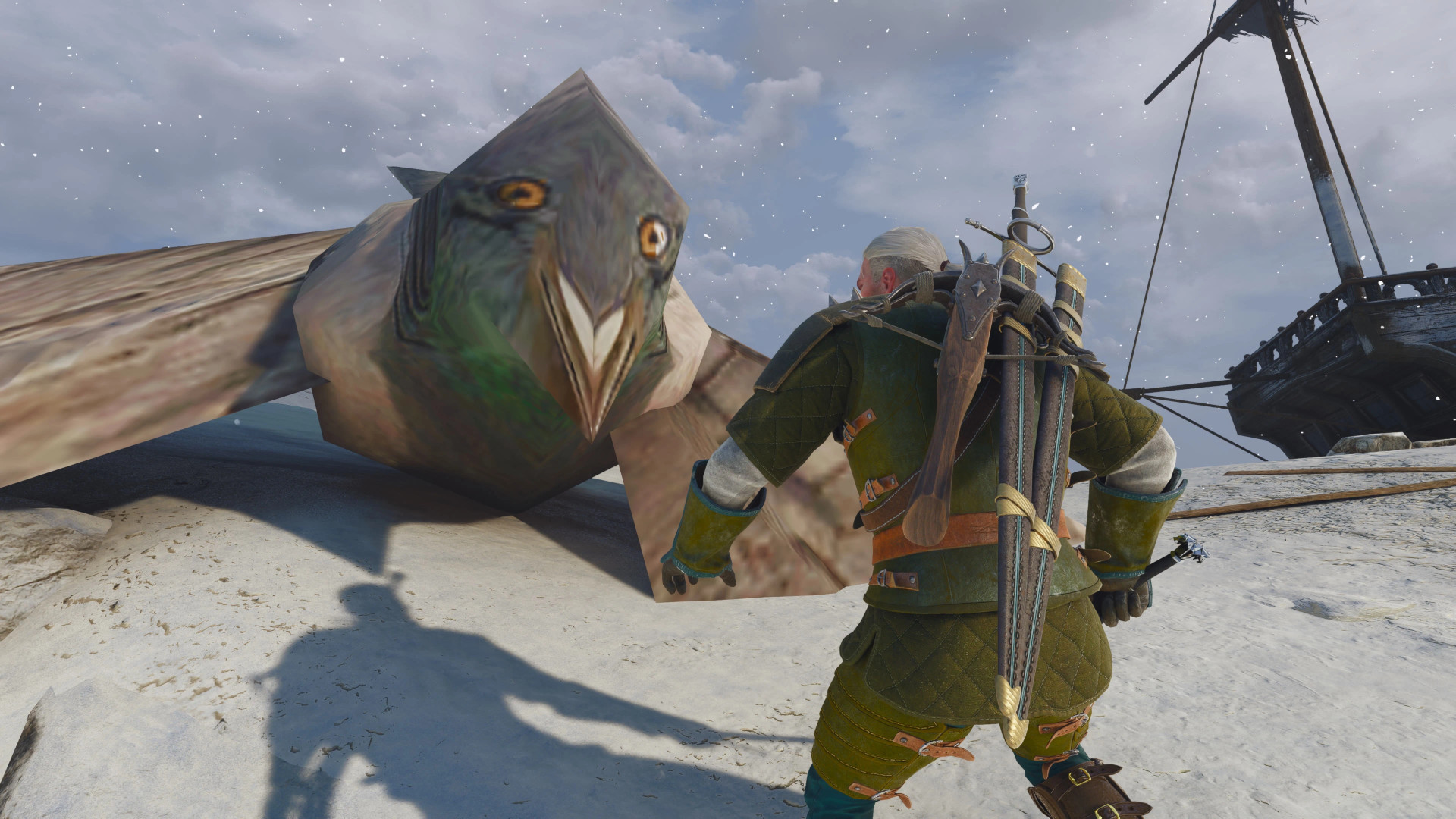
The cognitive dissonance created by fighting a "terrifying" creature that coos like a city bird is profound. It turns a serious gameplay loop into a comedic spectacle, effectively giving the game high "replayability" for those who have already completed the main narrative multiple times.
Official Responses and Industry Context
While CD Projekt Red has not issued a formal press release regarding the pigeon, their decision to leave the original asset in the remaster suggests an internal awareness of the community’s attachment to the bird. In the modern industry, developers are often forced to choose between total immersion and fan service. By leaving the pigeon, the studio opted for a "wink and a nod" to their most dedicated fans.
The ongoing support for the game, including recent hotfixes aimed at performance issues in the remastered version, demonstrates that the studio remains committed to the title. However, as the game matures, it is the modding community that continues to expand the game’s lifespan. Projects like "The Revenge" ensure that The Witcher 3 remains relevant in conversations about gaming culture, not just because of its narrative depth, but because of the weird, wonderful, and low-poly legacy it has fostered.
Conclusion: Why We Love the Pigeon
Why does a low-poly bird matter in a game with world-class writing and cinematic combat? Because it represents the human element of gaming. It represents the shared laughter of a community that has spent hundreds of hours in the same digital space.
When a player encounters a low-poly pigeon in the wild, they are not just seeing a graphical error; they are seeing a communal "in-joke." The mod takes that joke and elevates it to a full-scale invasion. It invites the player to engage with the game in a way that is entirely divorced from the original intent, proving that in the end, the player’s experience is what defines the game.
As we look toward the future of the Witcher franchise, one can only hope that the developers retain a sense of humor. If the next installment doesn’t contain at least one hidden, low-poly easter egg, it might feel like the end of an era. Until then, the pigeon remains in the Northern Realms—armed, dangerous, and perfectly, wonderfully blocky.

