

Since its inception in 2023, Adobe’s Firefly has undergone a radical transformation. What began as a bold entry into the generative AI space for the developers of Photoshop has rapidly matured into an expansive, all-in-one creative ecosystem. Today, Adobe is not merely a software provider; it is an orchestrator of a multi-model creative studio that bridges the gap between disparate workflows. By integrating its proprietary AI models with industry-leading third-party technology from Google, OpenAI, Runway, Kling AI, and Luma AI, Adobe is positioning Firefly as the central nervous system for modern digital production.
The most recent phase of this expansion focuses on a critical, often overlooked sensory dimension: sound. With the launch of a new suite of audio tools, Adobe is providing creators with an integrated, commercially safe method to generate original music, voiceovers, and sound effects.
The Sound of Innovation: A New Frontier for Firefly
Adobe’s foray into audio generation addresses one of the most persistent pain points in the creator economy. For years, video creators have navigated the treacherous waters of copyright law, spending countless hours scouring royalty-free libraries for tracks that fit the tone of their work without risking demonetization or legal takedowns.
“Sound is often the last thing you add and the first thing people notice,” Adobe noted in its recent announcement. By embedding audio generation directly into the Firefly studio, the company is attempting to eliminate the friction that causes momentum to stall during the final stages of production.
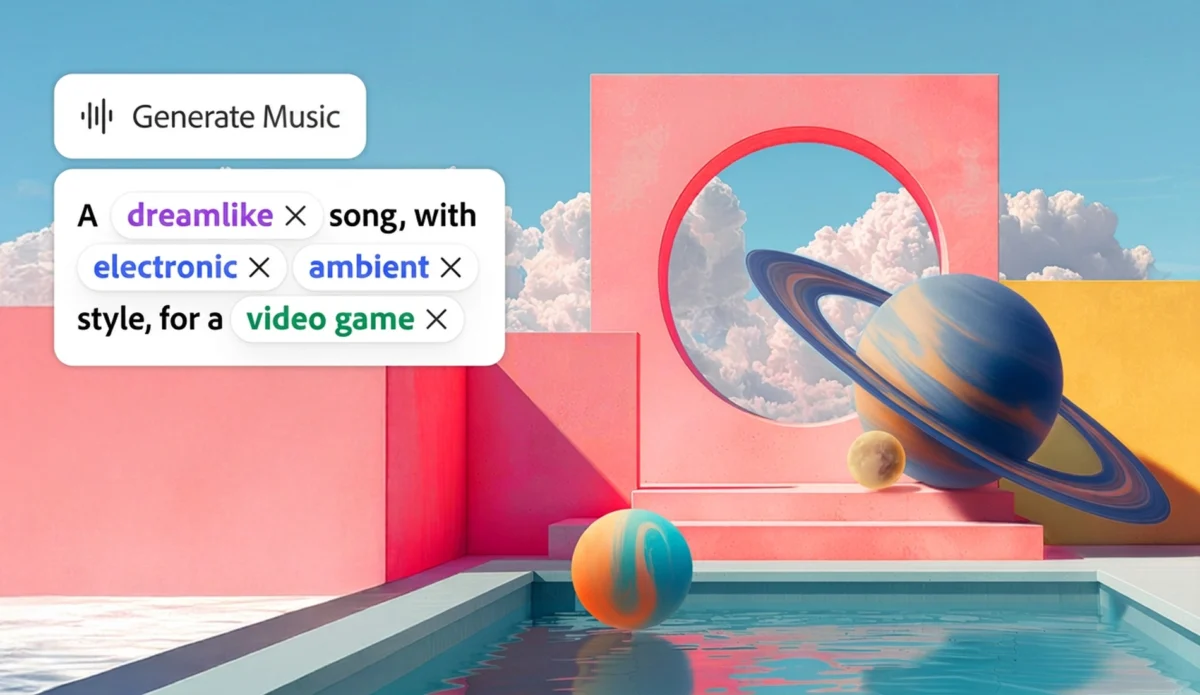
Meg Donovan, Adobe’s Senior Director of Product Marketing for Generative AI & Creators, emphasizes that this update is about more than just convenience; it is about empowerment. “One of our newest features in Firefly, Generate Music, is designed for exactly those moments when a creator needs original music tailored to a specific piece of content,” Donovan tells Tubefilter. “It provides the control to shape that track into exactly what they’re picturing in their imagination, with the confidence that it is licensed for use.”
Chronology: From Image Generation to Multimedia Mastery
The trajectory of Adobe’s AI strategy reveals a calculated, step-by-step expansion of capabilities:
- 2023: Adobe officially launches Firefly, initially focused on text-to-image generation. The primary value proposition was "commercially safe" AI, trained on Adobe Stock images to protect professional designers from copyright infringement.
- Early 2024: Adobe begins to integrate third-party AI models into the Firefly ecosystem, signaling a shift toward an "open" AI studio model. This allowed users to access a variety of engines—from OpenAI’s DALL-E to Runway’s video generation tools—all within the Adobe interface.
- Mid-2024: The introduction of the Firefly AI Assistant, a conversational, prompt-based agent, marks the transition from "tool-based" AI to "workflow-based" AI.
- August 2026: Adobe officially expands Firefly to include a robust suite of audio generation tools, encompassing music composition, voiceover synthesis, and sound effect creation.
This timeline reflects a strategic move from specific utility to holistic production. By absorbing the "side tasks" of creative work—finding music, writing prompts, or formatting storyboards—Adobe is aiming to become the indispensable backbone of the modern content creator’s workflow.
The Frictionless Workflow: Why Integration Matters
The professional creative industry is currently plagued by what can be described as "tool fatigue." As software stacks grow more complex, creators are forced to jump between dozens of tabs, platforms, and proprietary models. This constant context-switching is the enemy of creativity.
“Creators constantly tell us that the hardest part of their work isn’t coming up with ideas, it’s everything that gets in the way of finishing them,” Donovan explains. “The tab-switching, tool-jumping, model-switching—all those little moments where momentum slips away.”
For the modern influencer, the stakes are high. Esther Rehema (@soestherr), a fashion and lifestyle creator, highlights the crushing pressure of balancing high-frequency content production with educational or personal commitments. For Rehema, the ability to generate licensed music within the same window used for video editing is a "game changer."
“What used to take me hours and hours of searching for the right song can now take seconds,” Rehema notes. This time-saving is not merely for convenience; it is a vital component of sustainability for independent creators who operate without large production teams.
Implications for Brand Partnerships and Professionalism
Perhaps the most significant impact of Firefly’s new audio suite is on the professional standard of content delivered to brands. Creators who produce sponsored content are often held to strict legal standards regarding intellectual property.
Madeline Salazar (@immadsal), a creator specializing in Photoshop and VFX, notes that the uncertainty of licensing has historically been a hurdle in brand deals. “When I am making content for a brand, there is always the complication of licensing background music,” Salazar says. “Using Firefly’s Generate Music feature, I am able to create a soundtrack that is unique to the video I’m making, and it gives me peace of mind because I know the music is safe for commercial use.”
For professionals like Salazar, the value proposition lies in reputation management. Delivering a final project to a client requires an absolute guarantee that the assets are cleared for use. Firefly provides a "safety seal" that allows creators to put their names behind their work without fear of hidden liabilities.
The Firefly AI Assistant: A Creative Co-Pilot
Beyond audio, the expansion of the Firefly AI Assistant represents the next evolution of human-AI collaboration. This text-prompt-based agent acts as an interactive partner, guiding users through complex project requirements.
Data from the past few months indicates that two specific applications of the Assistant have risen to the top of user preference:
- Create Storyboard: Helping filmmakers and content leads visualize their narrative arcs before a single frame is shot.
- Create Brand Kit: Automating the generation of branded mockups, which ensures consistency across multi-channel campaigns.
These tools are designed to move creators from the ideation phase to the execution phase at record speeds. By automating the "grunt work" of branding and planning, Adobe is shifting the creative burden back toward high-level strategy and aesthetic choice.
Market Context and Economic Accessibility
Adobe’s approach to pricing is designed to capture both the amateur enthusiast and the high-volume professional. While the Firefly AI Assistant is now available for free with a limited number of daily generations, Adobe has tiered its offerings for power users. A subscription model, starting at $9.99 per month, grants users access to over 2,000 generative credits—a significant volume for creators producing daily content.
This strategy is a direct response to the "creator economy" mandate: produce more content, across more platforms, with a higher bar for quality than ever before. As Donovan points out, “Creators today are being asked to produce more content… all while the bar for standing out has never been higher.”
Conclusion: The Future of Creative Production
Adobe’s strategy with Firefly is clear: they are building a walled garden of creative tools that is so efficient and so legally robust that it becomes the default choice for the professional class. By solving the audio licensing crisis, streamlining the workflow with an AI Assistant, and providing a centralized hub for multiple generative models, Adobe is successfully insulating its users from the chaotic, fragmented landscape of modern AI.
As the industry continues to grapple with the ethics and technical requirements of generative AI, Adobe’s emphasis on "commercial safety" remains its strongest competitive advantage. For the creators of today, the tools provided by Firefly are not just features; they are a necessary infrastructure for survival in a highly competitive, fast-paced digital environment. The era of the "one-stop-shop" creative studio has arrived, and it sounds—and looks—exactly like the future Adobe has been engineering for the last three years.

