

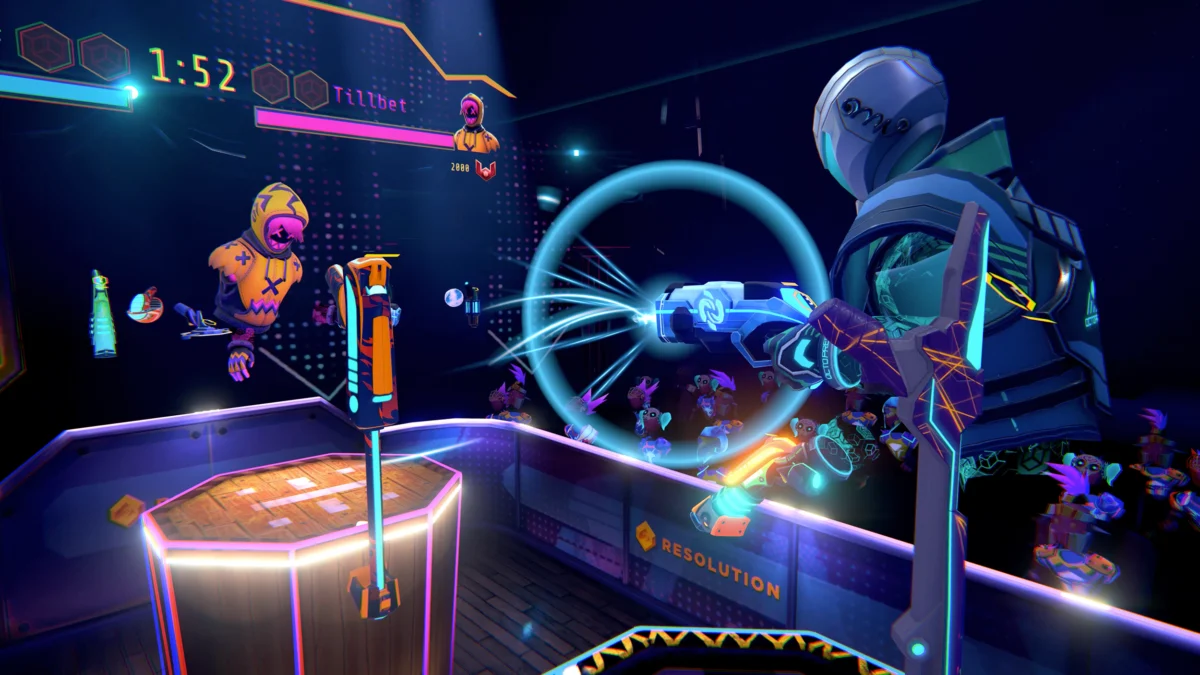
In the landscape of modern virtual reality, many titles prioritize high-fidelity visuals or sprawling open worlds. However, occasionally, a title emerges that strips away the fluff to focus on the raw, kinetic joy of movement and competitive strategy. Blaston, developed by Resolution Games, has quietly cemented itself as one of the most compelling experiences on the Oculus (Meta) Quest platform.
For those seeking a departure from traditional first-person shooters or narrative-heavy adventures, Blaston offers a visceral, high-stakes dueling experience that feels less like a video game and more like a high-intensity martial art.
The Core Concept: Tactical Dueling in Virtual Reality
At its heart, Blaston is a 1v1 competitive dueling simulator. Unlike traditional shooters where the focus is on aiming and trigger discipline, Blaston is a game of spatial awareness, resource management, and physical stamina.
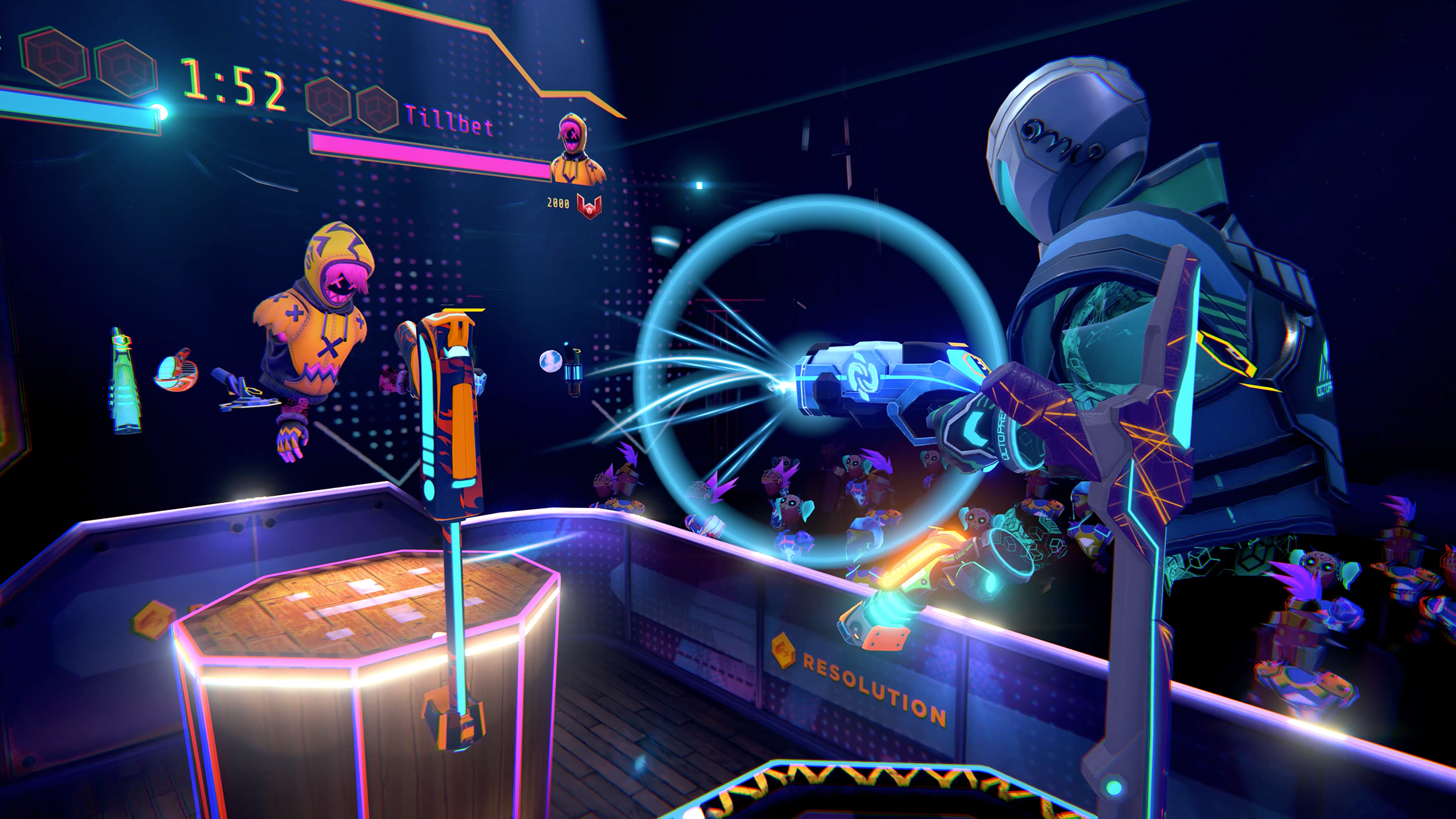
Players are placed on a small platform, standing opposite their opponent. The objective is deceptively simple: deplete your opponent’s health pool to zero. However, achieving this requires a sophisticated dance of defensive maneuvering and offensive planning. The game utilizes a unique mechanic where weapons do not sit in your inventory; instead, they spawn at randomized locations around the arena. This forces players to constantly scan their surroundings, physically lean, squat, and reach to grab their next tactical advantage.
Chronology of a Surprise Hit
While the title launched to positive reception, its status as a "must-play" title has been solidified through steady updates and a growing community.
- Initial Launch: Blaston arrived on the scene with a mission to prove that VR could handle competitive, fast-paced multiplayer without inducing motion sickness. By keeping the player stationary on a platform, Resolution Games cleverly solved the locomotion problem, focusing instead on "room-scale" movement.
- The Post-Launch Evolution: Throughout 2021, the game received numerous updates that introduced new weapons, balancing tweaks, and arena designs. These changes were critical, as the meta-game in Blaston is highly volatile; as players discover new ways to chain weapons together, the defensive counter-strategies must evolve in kind.
- The Current State: Today, the game has transitioned into a highly polished ecosystem. It is no longer just a "whim" purchase, but a staple for VR enthusiasts who use the platform for both competitive play and physical exercise.
Supporting Data: Why the Mechanics Work
The success of Blaston can be attributed to its "low floor, high ceiling" design philosophy.
The Weaponry and Spatial Control
In Blaston, there are no "best" weapons. Every piece of equipment serves a specific tactical purpose. One of the game’s most celebrated mechanics involves the use of electrical beams and area-of-effect (AoE) weapons. These tools are not just meant to deal direct damage; they are designed to dictate the flow of the duel. By placing a lingering beam of energy between you and your opponent, you effectively force them to relocate, potentially into the path of another incoming projectile.
Physicality as a Skill
Data from the VR fitness community suggests that Blaston is one of the most effective aerobic games on the market. Because the game tracks your physical body, you cannot win by sitting still. The necessity of dodging slow-moving projectiles—often referred to as "bullet hell" style combat—requires the player to squat, sway, and reach. It turns a standard gaming session into a legitimate cardiovascular workout.
Implications for the Future of VR Competitive Gaming
Blaston serves as a case study for the future of virtual reality eSports. It proves that the "killer app" for VR isn’t necessarily a game with 100 hours of story content, but rather a title with a perfectly balanced, repeatable, and physically engaging loop.
The Problem of Locomotion
One of the greatest barriers to entry in VR is motion sickness, which often occurs when the user’s eyes see movement that their inner ear does not feel. By anchoring the player to a platform, Blaston bypasses this entirely. This opens the game up to a wider audience, including those who are prone to simulation sickness. The implication is clear: competitive VR titles should prioritize stationary, high-intensity mechanics over artificial locomotion to maximize accessibility.
The Rise of "Active" eSports
We are seeing a shift in how we define a "gamer." With titles like Blaston, the line between professional gaming and amateur athletics is blurring. For players who treat the game as a nightly ritual, the experience provides the mental engagement of a chess match combined with the physical exhaustion of a squash game. This model is likely to be replicated by other developers looking to capture the "fitness-conscious" demographic of the VR market.
Official Perspectives: The Philosophy of Resolution Games
The development team at Resolution Games has been vocal about their desire to foster a "positive and fair" competitive environment. In various developer diaries, they have emphasized that the game’s balance is a living, breathing entity.
By frequently adjusting weapon spawn rates and damage profiles, they ensure that the "meta" remains fresh. This prevents the game from becoming stagnant, where one single strategy dominates the player base. This proactive approach to live-service management has kept player retention rates high, even long after the initial novelty of the game has worn off.
Conclusion: A Must-Have for Every Quest Owner
If you own an Oculus Rift 2 or a Meta Quest, Blaston is a quintessential addition to your library. It is rare to find a title that demands so much from the player while providing such immediate, visceral feedback.
Whether you are looking to climb the competitive leaderboards, or you are simply looking for an engaging way to burn calories after a long day at a desk, Blaston provides a perfect sanctuary. It is an exercise in focus, a test of reflexes, and, above all, a reminder of why we put on the headset in the first place: to escape the limitations of the physical world and immerse ourselves in a reality where our own movement is the ultimate weapon.
The beauty of the game lies in its simplicity. It does not ask you to learn complex button combinations or memorize deep lore. It asks you to stand your ground, anticipate your opponent, and move. In a year defined by digital fatigue, that level of engagement is not just a game—it is a relief.

