

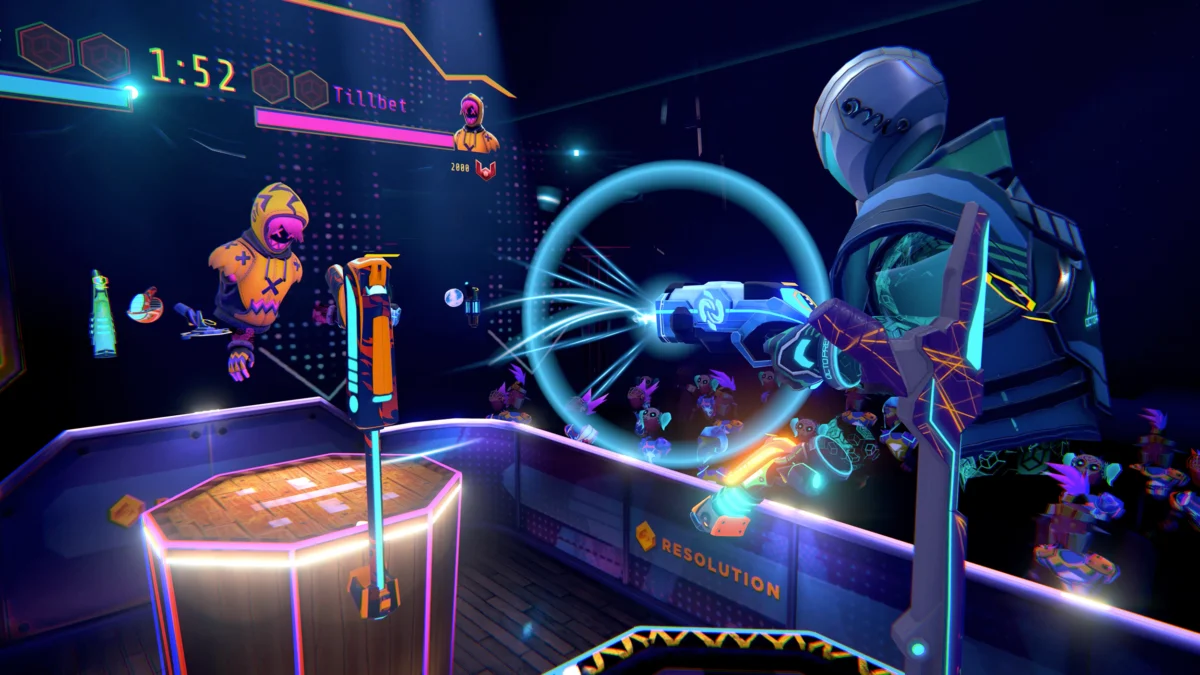
In an era where virtual reality (VR) hardware has become increasingly accessible, the software landscape often struggles to bridge the gap between "tech demo" and "meaningful experience." However, occasionally, a title emerges that transcends the novelty of the medium to provide a genuinely competitive, sweat-inducing, and deeply strategic experience. Blaston, the dueling phenomenon from Resolution Games, is precisely that title.
Following a recent surge in consumer interest—driven in part by the widespread adoption of standalone headsets like the Oculus Quest 2—Blaston has carved out a unique niche. By stripping away the bloated narratives of modern gaming and focusing on the primal intensity of a one-on-one duel, the game has redefined how we perceive movement and spatial awareness in a digital space.
The Genesis of the Dueling Phenomenon: Main Facts
At its core, Blaston is a tactical, slow-motion bullet-hell game designed specifically for virtual reality. Unlike traditional shooters that rely on twitch reflexes and aim-assist, Blaston is a test of endurance, rhythm, and spatial management.
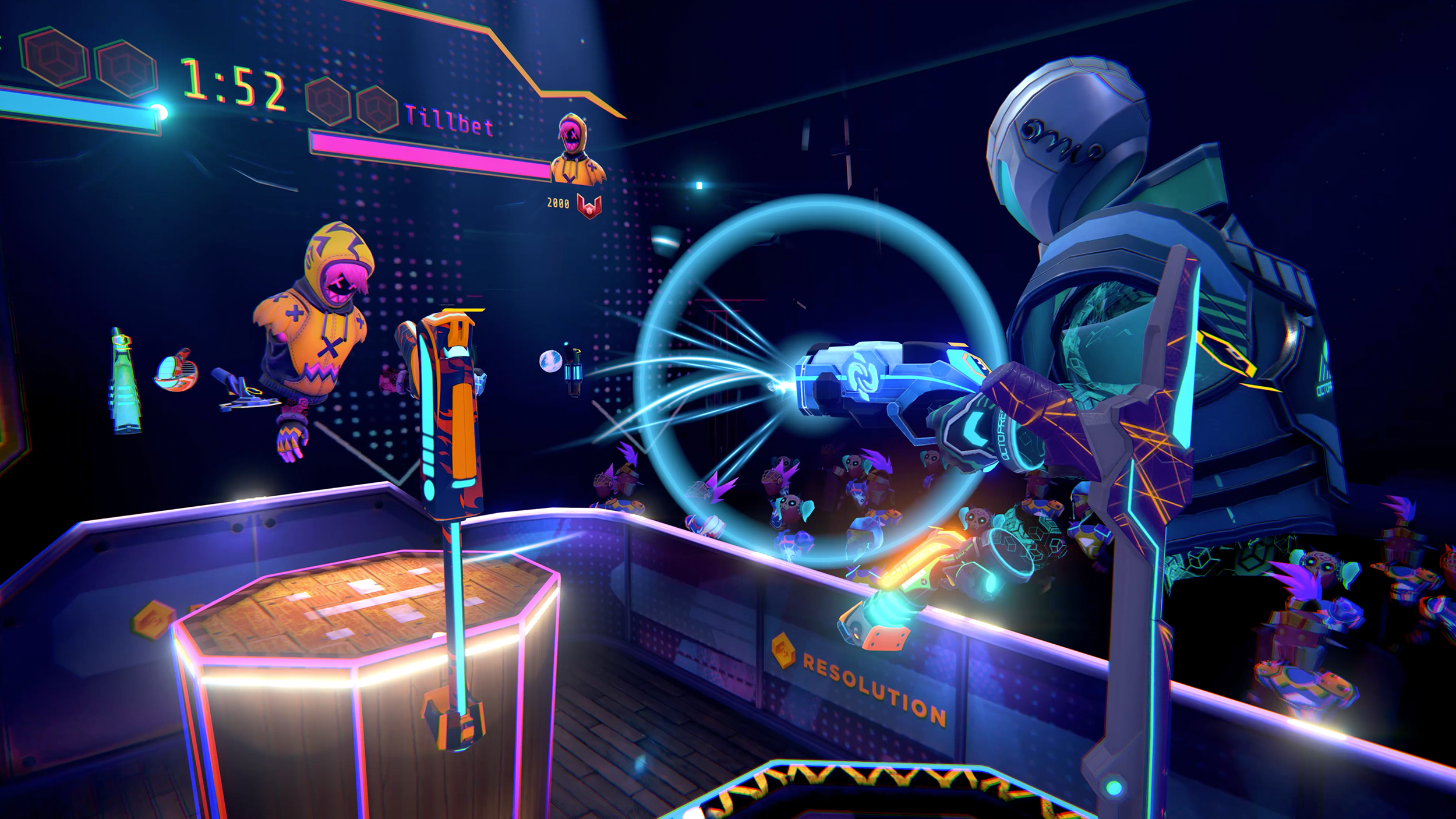
Players stand on elevated platforms, facing an opponent in a confined arena. The objective is deceptively simple: deplete your opponent’s health bar to zero before they do the same to you. However, the complexity lies in the mechanics. You do not carry a traditional loadout; instead, weapons spawn at predetermined locations around your play space.
Key facts regarding the game’s design include:
- Weapon Spawning: Weapons appear in six distinct nodes surrounding the player. This forces constant physical movement—crouching, leaning, and reaching—to claim the best tools.
- The "Bullet-Hell" Mechanic: Projectiles move at a speed that allows players to physically dodge them. It is not about hiding behind cover; it is about "matrix-style" movement.
- Strategic Loadouts: Players must curate their arsenal before entering the arena, choosing weapons that complement their playstyle, whether that be aggressive close-quarters combat or defensive area denial.
Chronology: From Indie Curiosity to VR Essential
The trajectory of Blaston is a testament to the power of word-of-mouth in the VR community. When it first launched, it was met with quiet curiosity. However, the game’s evolution has been rapid.
- Initial Launch (Late 2020): Resolution Games released Blaston with a focus on core mechanics, prioritizing smooth frame rates and low-latency netcode, which are essential for competitive VR.
- The Growth Phase (2021): Throughout 2021, the game saw consistent updates. The introduction of new weapon tiers and seasonal ranking systems transformed it from a casual "party game" into a serious esport contender.
- The Holiday Surge (December 2021): Following the massive influx of new VR users during the holiday season, Blaston saw a significant spike in daily active users. For many new headset owners, the game served as the "first contact" with truly immersive, high-intensity VR gaming.
- Post-2021 Maturity: Since its initial rise, the game has integrated social features, improved matchmaking, and refined its "Ozo Lounge"—a social hub where players can spectate matches and socialize outside of the heat of combat.
Supporting Data: The Mechanics of Mastery
Why does Blaston work when so many other VR shooters fail? The answer lies in the "physics of space."
The Geometry of Combat
In a standard desktop shooter, spatial control is achieved through keyboard inputs. In Blaston, you are the input. If you are standing upright, you are a target. If you are leaning to the left, you are dodging a volley of plasma bolts. This level of physical engagement means that the game is as much a workout as it is a tactical experience.
Weapon Variety and Loadout Dynamics
The game features an impressive array of weaponry, each designed with a specific tactical purpose:
- Area Deniers: Weapons like the electrical beam emitters that leave a persistent hazard on the map. These are not intended to land direct hits but to force the opponent into a corner where they are easier to target.
- Tracking Projectiles: These weapons require the opponent to constantly move or deploy a shield.
- Shields and Utilities: Defensive tools that require precise timing to activate, adding a layer of "parry" mechanics to the game.
Data from the competitive community suggests that the most successful players are not those with the fastest hands, but those with the best "map awareness." By predicting where an opponent will move to reach for a weapon, a player can effectively "gate off" parts of the arena, turning the match into a high-stakes game of chess.
Official Responses and Developer Philosophy
Resolution Games has been vocal about their design philosophy regarding Blaston. In various developer diaries and community Q&As, the team has emphasized that they wanted to avoid the "VR-sickness" associated with artificial locomotion.
By keeping the player anchored to a specific platform, they eliminate the disconnect between inner-ear perception and visual movement. This "stationary-but-active" design allows for longer play sessions—some users report playing for hours at a time—without the discomfort common in more open-world VR titles.
"Our goal," a spokesperson for Resolution Games noted, "was to make the player feel like a true duelist. We didn’t want the technology to get in the way of the instinct. When a projectile comes flying at your face, your instinct is to move. We wanted to make sure that move actually saved your life in the game."
Implications for the Future of VR Gaming
The success of Blaston carries several important implications for the future of virtual reality as a gaming medium:
1. The Decline of "Artificial Movement"
As developers move away from stick-based movement in competitive titles, we may see a rise in "room-scale focus" games. Blaston proves that you don’t need a massive virtual world to create a massive virtual experience. The intensity of a 10-foot-square arena is often greater than that of an open-world map.
2. VR as a Fitness Tool
Blaston is effectively a high-intensity interval training (HIIT) session disguised as a video game. As the health-tracking features on devices like the Quest 2 become more prominent, games that require physical exertion will likely lead the charts. Blaston has set the gold standard for how to integrate physical activity into competitive play without it feeling like a chore.
3. The Esports Potential
With its clear win/loss conditions and spectator-friendly design, Blaston is a natural fit for the burgeoning VR esports scene. Unlike titles like Beat Saber, which are largely individual, Blaston offers a direct, human-versus-human interaction that is inherently more compelling for live audiences.
Conclusion: Why You Should Enter the Arena
If you have recently acquired a VR headset, you are likely looking for an experience that justifies the hardware. While titles like Half-Life: Alyx offer unparalleled narrative immersion, Blaston offers something that no other medium can provide: the visceral, heart-pounding sensation of a true, skill-based duel.
It is a game that respects your intelligence, rewards your physical effort, and keeps you coming back for "just one more match." In a year that has been, for many, defined by a lack of agency and a sense of stagnation, the pure, unadulterated escapism of Blaston is more than just a diversion—it is a reminder of why we embraced VR in the first place. Whether you are a competitive gamer looking for your next obsession or a casual player looking to get your heart rate up, the arena is waiting. Just remember to clear your living room of furniture before you step in.

