

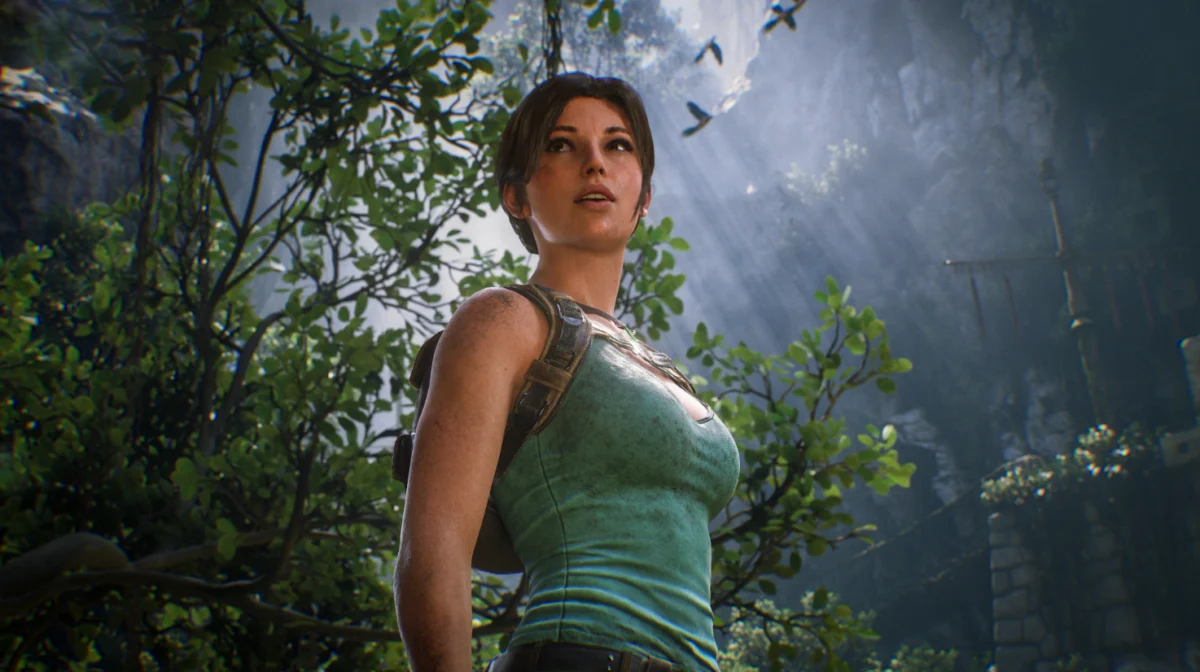
The landscape of modern gaming is currently defined by a profound paradox: the most exciting future for our favorite franchises often lies in their distant past. As the industry grapples with ballooning development costs and a craving for established IP, the "remake" has evolved from a simple graphical upscaling exercise into a sophisticated art form. At the heart of this cultural shift is Tomb Raider: Legacy of Atlantis, a bold reimagining of Lara Croft’s 1996 debut, currently being forged through an ambitious partnership between franchise stalwarts Crystal Dynamics and the action-specialist studio Flying Wild Hog.
The Foundation: A Dual-Front Strategy
The strategy for the Tomb Raider franchise is currently split into two distinct, yet thematically unified, pillars. In 2022, Crystal Dynamics sent ripples through the industry by announcing a new publishing agreement with Amazon Games. This collaboration was revealed to be Tomb Raider Catalyst, an ambitious, single-player, narrative-driven title built from the ground up in Unreal Engine 5. Positioned as the furthest point in the franchise’s timeline, Catalyst serves an integrative purpose: it aims to unify the disparate iterations of Lara Croft that have emerged over the last three decades.
However, the industry was blindsided at The Game Awards 2025 by the announcement of Legacy of Atlantis. While Catalyst looks toward the horizon, Legacy of Atlantis looks to the roots. By partnering with Flying Wild Hog—the Polish powerhouse behind the frenetic Shadow Warrior series—Crystal Dynamics is injecting a new, high-octane pedigree into the classic raiding formula. Slated for a February 2027 release following a brief period of refinement, the project represents a bridge between the foundational legacy of 1996 and the technical capabilities of the modern era.
A Chronology of Rebirth: From 1996 to 2027
To understand the significance of Legacy of Atlantis, one must look at the timeline of Lara Croft’s evolution. The original Tomb Raider (1996) did more than just introduce a gaming icon; it defined the 3D action-adventure genre.
- 1996: The original Tomb Raider is released by Core Design, revolutionizing the industry.
- 2007: Marking the 10th anniversary, Crystal Dynamics—having taken the reins from Eidos—released Tomb Raider: Anniversary, a reimagining developed alongside Buzz Monkey Software.
- 2013: The franchise underwent a "Survivor" reboot, grounding the character in gritty realism.
- 2025: Tomb Raider: Legacy of Atlantis is announced, marking the second time the original title has been revisited.
- 2027: The projected launch window for both Legacy of Atlantis and the forward-looking Catalyst.
This trajectory illustrates that Tomb Raider is not merely a brand, but a cyclical narrative. As Jeff Adams, the game’s experience director, aptly puts it, "We are coming up on the 30th anniversary of Lara Croft. We felt that there’s no better time for us to actually bring this story, this adventure back into that mainstream consciousness than right now."
The Philosophy of "Faithful Evolution"
The core challenge facing the team at Flying Wild Hog and Crystal Dynamics is avoiding the "uncanny valley" of remakes: the danger of being too faithful to the point of stagnation, or too innovative to the point of alienation.
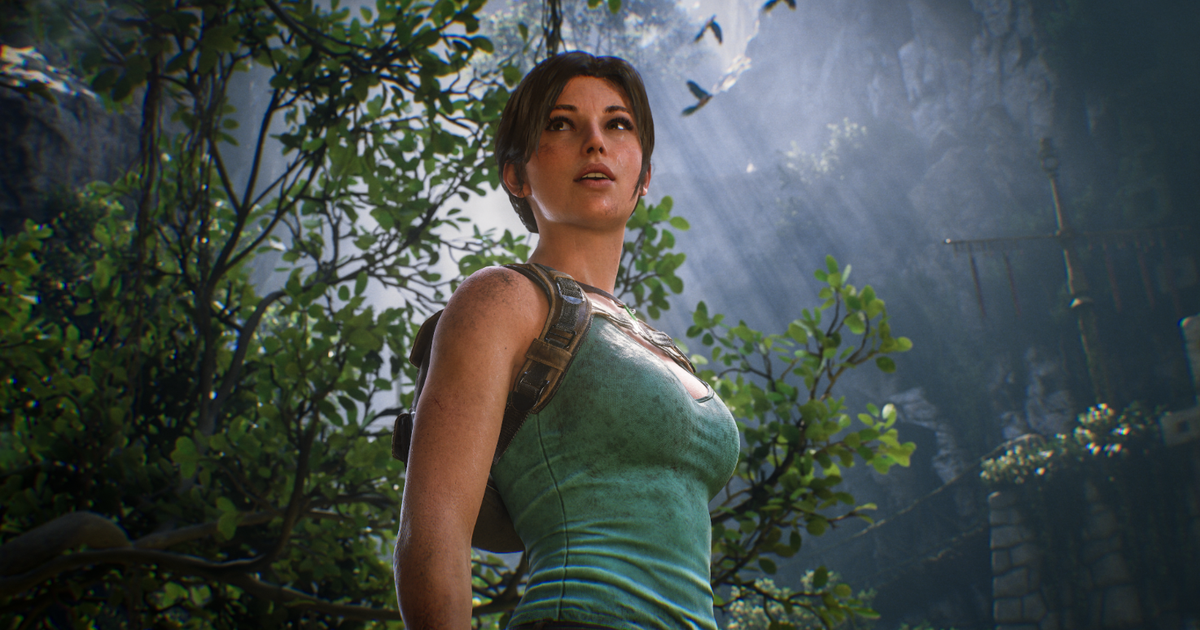
Art director Arek Tomaszewski emphasizes that the goal is not to replicate the exact pixels of 1996, but to replicate the feeling of those pixels. "We are trying to create similar memories that people had when they were playing the original Tomb Raider," Tomaszewski notes. "But for the new people who haven’t played that, they can just come in, enjoy the experience, and create the memories on their own."
This sentiment is echoed by Crystal Dynamics’ game director, Raul Siqueira. He describes the process as a delicate balancing act of "modernization versus preservation." Siqueira explains that while the original geometry and iconic set pieces of Peru, Greece, and Egypt remain the structural skeleton, the "skin" of the game—the traversal, the puzzle mechanics, and the environmental interaction—is being built to satisfy the expectations of a player accustomed to the fluidity of modern titles.
Expanding the Macro and the Micro
One of the most significant advantages of modern development is the ability to expand the scope of exploration. Siqueira describes the team’s approach as a "macro versus micro" view. "Peru is in the original game," Siqueira says. "Is our Peru exactly one-to-one? No, but all the iconic locations are there. Because we have more technology, more things are available to us now. That allows us to color between the lines and change things about a specific puzzle contextually."
This expansion includes the integration of secondary objectives and environmental storytelling that was technically impossible in the mid-90s. The team is carefully introducing new collectibles and puzzle layers that feel native to the environment rather than "tacked on." As the developers suggest, Legacy of Atlantis is intended to be a "love letter"—a document of respect that treats the source material as a starting point rather than a prison.
The Controversies and the Modern Toolkit
No discussion of modern development is complete without addressing the integration of AI. Crystal Dynamics has faced scrutiny regarding its use of generative tools. Addressing these concerns, Jeff Adams has maintained a firm stance: AI is utilized strictly for early-stage prototyping and conceptual exploration. The finalized content, including assets, dialogue, and level design, remains a human-led endeavor. This ensures that while the workflow may be augmented by technology, the soul of the game remains firmly within the hands of the creative team.
The Renaissance of Remakes: A Competitive Landscape
The "renaissance of remakes" mentioned by Siqueira is not merely a trend—it is a transformation of the industry. With titles like Resident Evil: Code Veronica and Halo: Campaign Evolved making waves, the bar for excellence has been raised significantly.

"So many good franchises have found a way of both getting what is core to their fan base, but modernizing it," Siqueira observes. "You see the Final Fantasy series, Resident Evil… I can go on for hours about how many good touch points we have for what a good remake is."
This competitive environment pushes the Legacy of Atlantis team to ask difficult questions:
- What are the core pillars that made the original experience resonate?
- How do we maintain that "Lara Croft" identity while competing with modern, high-fidelity action games?
- Can we add enough value to justify a return to a story that has been told before?
Implications for the Industry
The success or failure of Legacy of Atlantis will likely dictate the future path for long-standing franchises. If the team succeeds in blending the nostalgic "aha!" moments of the 90s with the high-production values of the 2020s, it proves that a brand does not need to reinvent itself to remain relevant—it merely needs to be reminded of why it was great in the first place.
Flying Wild Hog’s contribution here is pivotal. By bringing a studio known for visceral, high-impact gameplay into the fold, Crystal Dynamics is signaling that Legacy of Atlantis will not be a slow-paced museum piece. It will be an active, breathing, and dangerous world.
As we look toward 2027, the dual release of Legacy of Atlantis and Catalyst represents a massive gamble for the franchise. It is a bet that the audience is large enough to appreciate both the history of the character and her future. For now, the developers remain focused on the task at hand: honoring the legacy of Lara Croft while ensuring that, three decades later, she remains the undisputed queen of the tomb-raiding genre.
Disclosure: Alex Forbes-Calvin has previously worked with Crystal Dynamics on the ‘Chronicles of the Tomb Raider’ project.

