

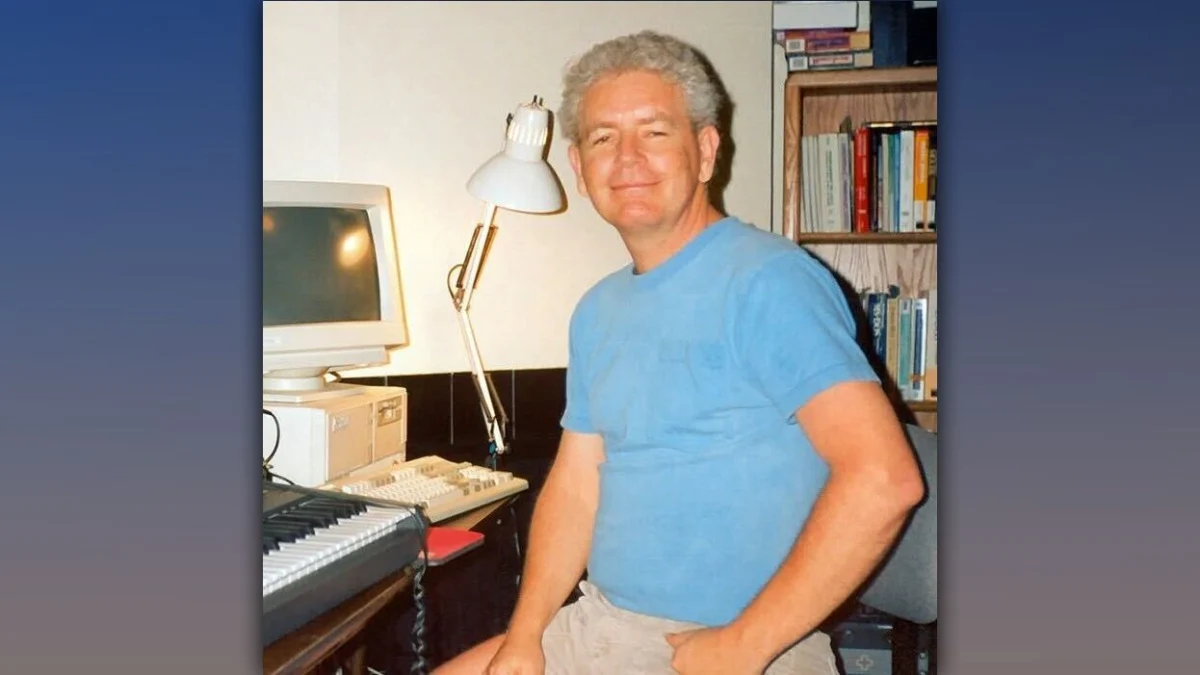
The landscape of video game history is built upon the pillars of code, art, and sound. While programmers and game designers often take the spotlight, the sonic identity of the medium—the visceral, driving pulse of the early PC era—owes an immeasurable debt to Robert Caskin Prince III. Known to the world simply as "Bobby Prince," the legendary composer and sound designer passed away on June 16, 2026, at the age of 81. His death marks the end of an era for the golden age of PC gaming, leaving behind a legacy that transformed how we perceive the synergy between gameplay and music.
A Life Defined by Creativity and Humility
The news of Prince’s passing was confirmed through an obituary posted to Legacy, which painted a portrait of a man whose professional brilliance was matched only by his personal warmth. "Those closest to Bobby knew him not only for his extraordinary accomplishments but for his kindness, humor, humility, generosity, creativity, and deep love of family," the obituary noted.
For those who knew him, Prince was more than a technical wizard; he was a mentor and a beacon of positivity. "Whether composing music, telling stories, playing guitar, sharing laughter, or offering encouragement, he approached life with gratitude and an open heart," the statement continued. This ethos of openness defined his approach to the burgeoning industry of the early 1990s, where he helped define the sonic language of the PC gaming revolution.
The Sound of the 90s: A Chronological Impact
Bobby Prince’s career trajectory is inseparable from the rise of the PC gaming giants of the late 20th century, particularly id Software, Apogee, and 3D Realms.
The Foundation: The Commander Keen Years
Prince’s influence began in earnest during the early 1990s. While the industry was still experimenting with MIDI-based audio, Prince brought a sense of melody and structure that elevated humble platformers. His work on Commander Keen showcased a playful, adventurous spirit that served as a precursor to his later, more aggressive compositions.
The Metal Revolution: Doom and Wolfenstein 3D
If there is a singular body of work that cemented Prince’s immortality, it is his score for Doom (1993) and its sequel, Doom II. Heavily influenced by the burgeoning heavy metal scene of the era, Prince’s compositions were saturated with the DNA of bands like Metallica, Judas Priest, and Diamond Head.
His ability to translate the high-octane energy of thrash metal into the limited constraints of early PC sound cards (like the Sound Blaster and AdLib) was nothing short of miraculous. The Doom soundtrack became more than just background noise; it became a catalyst for player aggression, an essential component in the game’s loop of carnage. So profound was its impact that the soundtrack was eventually inducted into the US Library of Congress’ National Recording Registry—a rare and prestigious honor that acknowledges his music as a vital piece of American cultural heritage.
The Mid-90s Expansion: Duke Nukem 3D and Beyond
As the decade progressed, Prince continued to evolve. His collaborations with composer Lee Jackson on titles such as Rise of the Triad and Duke Nukem 3D showed a composer at the height of his powers. During this period, Prince’s work became synonymous with the "shareware era," where his music played on loop for millions of gamers across the globe. Lesser-known gems like Blake Stone and Bio Menace further highlighted his versatility, proving that he could switch between eerie atmospheric tension and high-energy electronic hooks with ease.
Technical Mastery and Mentorship
Prince’s role was never strictly that of a "composer." He was a master of sound design who understood the architecture of the games he worked on. His deep understanding of the technical limitations of 1990s hardware allowed him to push software to its absolute limit.
Reflecting on their time together, composer Lee Jackson, who worked alongside Prince on multiple seminal titles, shared his grief on the social platform Bluesky. "He was a teacher, a mentor, and a friend," Jackson wrote. "We worked together so well on Duke Nukem 3D that we could anticipate what the other was going to do next. If it weren’t for him, I’d probably be stuck in a tech room somewhere still. Au revoir, Bobby. You’re definitely missed."
This sentiment of mentorship is a recurring theme among those who worked with him. Prince was not a man who guarded his techniques; he was a man who wanted to lift the entire medium up with him.
Tributes from Industry Titans
The outpouring of grief from the industry underscores just how integral Prince was to the success of his contemporaries. Tom Hall, a co-founder of id Software and a key creative force behind many of the games Prince scored, was among the first to pay tribute.
"His music legacy will live on, making inspired music for Commander Keen, Wolfenstein 3D, Doom, and countless others," Hall stated. "A true legend. And such a nice man, a great musician, a wonderful, fun-loving man—nothing but happy memories of him. A loss to the world."
The official account for Romero Games also issued a poignant statement: "Everyone at Romero Games is deeply saddened to learn of the passing of Bobby Prince. He left an incredible mark on games and on my life."
The Enduring Implications of His Legacy
The passing of Bobby Prince serves as a poignant reminder of the fragility of the pioneers who built the foundation of modern gaming. As the medium continues to mature and push toward photorealism and cinematic orchestral scores, the "Prince style"—characterized by raw, loop-based, melody-driven MIDI—remains a touchstone of authenticity.
Why His Music Still Matters
Prince’s work stands the test of time because of its inherent "hummability." In an era where many game soundtracks aim for cinematic background ambiance, Prince’s music stood front and center. It demanded to be heard. It matched the player’s heartbeat to the rhythm of the game.
His influence is still felt in the modern "boomer shooter" renaissance. Indie developers today explicitly cite Prince’s work as the gold standard for how to create a "vibe" that keeps players engaged for hours. The aggressive guitar riffs of Doom and the catchy, synth-heavy melodies of Duke Nukem aren’t just artifacts; they are blueprints for successful game design.
A Cultural Icon
Beyond the code and the industry accolades, Bobby Prince represented a specific, optimistic time in the history of personal computing. He was part of that small, tight-knit community of developers who, working out of small offices and spare rooms, fundamentally changed the way the world consumed entertainment.
The fact that his work reached the Library of Congress proves that the distinction between "game music" and "high art" is an artificial one. Prince elevated the medium by treating his compositions with the same seriousness and artistic integrity as any film score or studio album.
Conclusion: The Soundtrack Plays On
Bobby Prince’s career was a testament to the idea that passion is the most important tool in any creative endeavor. Whether he was experimenting with sound effects for an early platformer or crafting the iconic, adrenaline-fueled heavy metal riffs that would define an entire generation of shooters, he never wavered in his commitment to the experience of the player.
As we look back at the history of the PC, we see the faces of many legends, but the sound of that history belongs to Bobby Prince. He leaves behind a library of work that will continue to be discovered by new generations of gamers, and a legacy of kindness that will be remembered by all who had the pleasure of knowing him.
The music hasn’t stopped; it has simply become the permanent background hum of the digital world he helped create. Rest in peace, Bobby. Your contribution to our collective culture is, and will always remain, legendary.

