

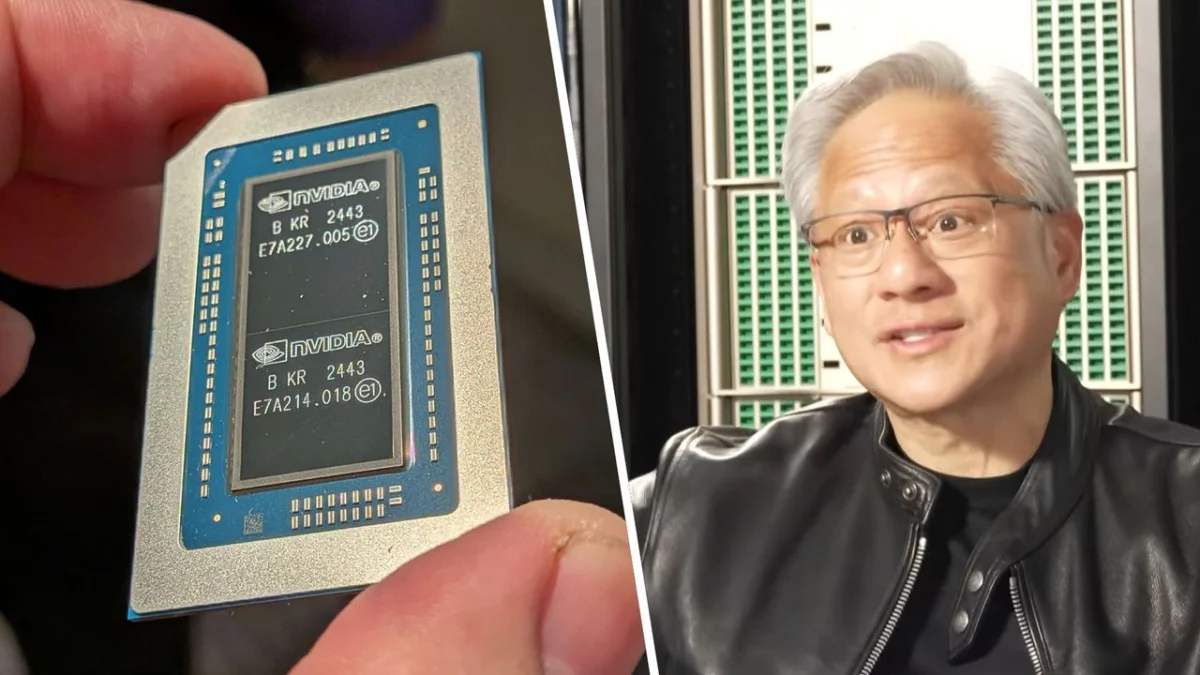
In the rapidly evolving landscape of artificial intelligence, Nvidia CEO Jensen Huang has emerged as a central, if somewhat polarizing, figure. While his company remains the undisputed powerhouse fueling the global AI revolution, Huang is now pivotally positioning himself as a social philosopher, advocating for a systemic overhaul of how humanity interacts with emerging technologies.
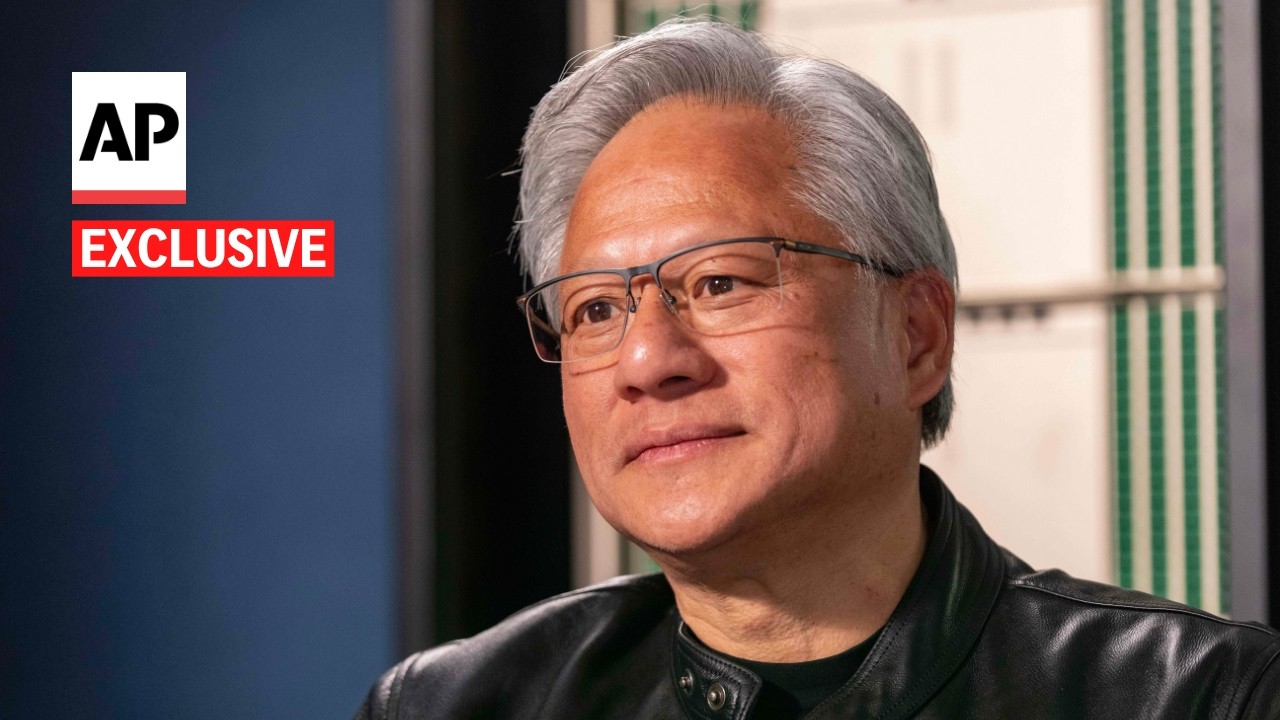
During a high-profile appearance at Computex Taiwan, Huang pivoted from technical specifications and GPU roadmaps to address the broader, more existential concerns surrounding AI. When pressed by the Associated Press on whether the public anxiety surrounding AI stems from the technology itself or a failure of our social structures to keep pace with rapid innovation, Huang offered a candid, albeit simplified, assessment: the solution lies in the adoption of entirely new social norms.
The Main Facts: An Advocate for Ubiquitous AI
Jensen Huang’s thesis is rooted in the belief that societal friction is a natural byproduct of technological evolution. By drawing a historical parallel to the advent of the automobile, Huang argues that humanity has navigated such disruptions before. Just as we established speed limits, crosswalks, and traffic laws to integrate the car into daily life, he posits that we are currently in the "wild west" phase of the AI era, waiting for the necessary regulatory and behavioral frameworks to catch up.
However, when questioned on the specifics of these "new norms," Huang’s answer was strikingly direct: "The first thing is that I would advocate that everybody use AI. Just go engage it." This call to action serves as the cornerstone of his philosophy. To Huang, familiarity breeds the necessary cultural adaptation; the more we normalize AI in our daily workflows, the faster the social contract will naturally stabilize around its presence.
A Chronology of the AI Surge
The timeline of AI integration over the last 24 months has been nothing short of unprecedented, a trajectory that has placed immense pressure on social and regulatory institutions:
- Late 2022: The public release of ChatGPT triggers a global awakening, shifting AI from an enterprise back-end tool to a consumer-facing utility.
- Early 2023: Nvidia’s market valuation begins a meteoric ascent as hyperscalers (Microsoft, Google, Meta) race to secure H100 and Blackwell-class hardware.
- Mid-2023: Governments worldwide begin formal discussions regarding AI safety frameworks, with the EU AI Act leading the charge in legislative rigor.
- Early 2024: AI integration becomes a standard expectation in software suites, from coding assistants to creative tools, forcing labor markets to confront the reality of automation.
- Present Day: Jensen Huang moves the goalposts from pure technological output to societal integration, suggesting that the "problem" of AI is not the code itself, but the lack of an entrenched social usage culture.
Supporting Data: The Hidden Costs of "Free"
While Huang advocates for mass adoption as the pathway to social normalization, the economic and environmental reality is far more complex. The narrative that AI is a "free" utility for the consumer masks a massive, capital-intensive infrastructure.
- The Energy Tax: The environmental toll of training and running large language models is staggering. Recent reports from the U.S. Department of Energy highlight a massive surge in electricity demand from data centers. The training of a single frontier model consumes the energy equivalent of thousands of homes over a year.
- Market Inflation: The current AI boom is being sustained by an immense influx of venture capital and corporate spending. Critics, including global banking leaders, have noted that the "AI bubble" is currently inflated by speculative investment rather than proven, sustainable profitability for the firms buying the hardware.
- The Subsidy Model: The "free" access provided to consumers is, in reality, a loss-leader strategy. These costs are subsidized by enterprise tiers and, ultimately, by the massive capital expenditure (CapEx) of tech giants betting that the future economy will rely entirely on their proprietary stacks.
Official Responses and Industry Perspectives
Huang’s comments have sparked a wide array of reactions. Supporters within the tech industry view his "just use it" approach as a pragmatic dismissal of Luddite-style fear-mongering. They argue that the sooner the general public understands the limitations and capabilities of LLMs, the sooner we can move past the hyperbolic "AI will destroy us" narratives and into a productive phase of human-machine collaboration.
Conversely, ethicists and regulators are wary of the "automotive analogy." Critics point out that the automobile took decades to become standardized, and even then, it required heavy government intervention to reach modern safety standards. By advocating for mass adoption before those standards exist, Huang is effectively asking society to "test" the vehicle while it is still on the assembly line. Furthermore, there is a lingering concern that by pushing for ubiquitous usage, Nvidia is prioritizing market share for its hardware over the deliberate, cautious development of safety-aligned AI.
Implications: The Long-Term Societal Shift
The implications of Huang’s vision are profound. If we accept the premise that we must "use AI" to normalize it, we are effectively consenting to a massive, uncontrolled experiment in human-AI interaction.
The Economic Gamble
Nvidia’s profitability is intrinsically tied to the success of its customers. If companies stop buying chips because they haven’t found a way to make AI profitable for their own end-users, Nvidia’s growth could stall. Therefore, Huang’s advocacy for widespread AI usage is not merely social philosophy—it is a strategic necessity. If the public refuses to engage with the technology, the entire enterprise-grade AI market risks a significant correction.
The Regulatory Void
Huang’s call for "new social norms" is an acknowledgment that regulation is currently lagging. However, there is a fundamental tension here: can social norms be manufactured by adoption, or must they be imposed by policy? If we wait for social norms to evolve organically, we risk allowing harmful behaviors—such as mass misinformation, privacy erosion, and intellectual property theft—to become entrenched as "standard practice."
The Cultural Divide
Finally, there is the risk of a widening digital divide. If AI becomes the new "norm" for professional and academic success, those without access or the inclination to adopt these tools may find themselves marginalized. The push for total adoption ignores the valid concerns of those who see AI as a threat to creative autonomy and professional integrity.
Conclusion: A Delicate Balance
Jensen Huang’s message is one of optimism, but it is an optimism born of corporate necessity. While he is correct that society will eventually adapt to AI, the path to that adaptation is fraught with challenges that "just using the technology" cannot solve.
As we look toward the future, the integration of AI will likely require more than just user adoption; it will require a transparent dialogue between the builders of the hardware and the society that inhabits the world they are creating. Whether we arrive at a future where AI is a helpful co-pilot or a disruptive force depends less on the raw power of the GPUs in our servers, and more on our collective ability to establish boundaries that protect the human element in an increasingly automated world. We are not just upgrading our software; we are attempting to rewrite the operating system of human society, and that is a process that requires far more than just "engaging" with a chatbot.

