

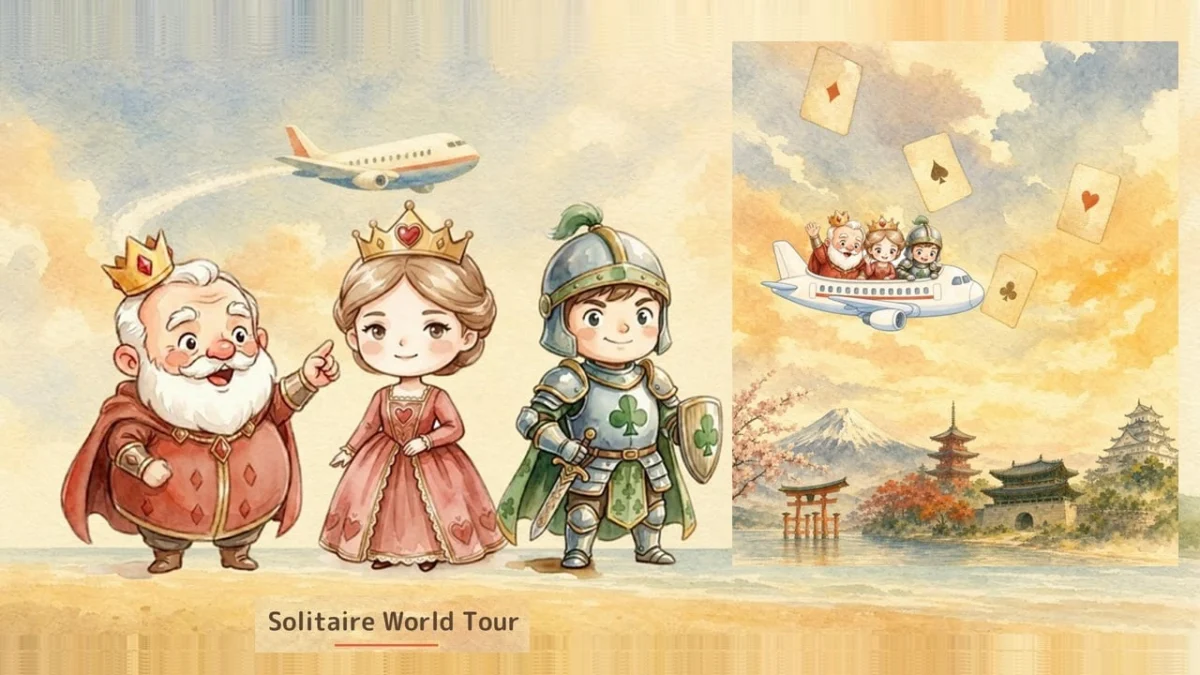
In an era where mobile gaming is often dominated by aggressive monetization, "battle pass" fatigue, and high-octane competitive shooters, solo developer oneWheat has taken a refreshing detour. With the release of Solitaire World Tour: Klondike on the Android platform, the Japan-based creator has managed to transform the world’s most ubiquitous card game into an immersive, meditative travelogue. By blending the classic mechanics of Klondike Solitaire with a sprawling virtual tour of Japan and Korea, oneWheat has crafted a title that prioritizes relaxation, discovery, and aesthetic charm over high-pressure stakes.
The Core Concept: Redefining a Classic
At its heart, Solitaire World Tour: Klondike remains true to its namesake. Players engage in traditional solitaire gameplay, organizing cards by suit and rank in a classic tableau. However, the game transcends its genre through a meta-layer of progression that ties every successful match to a broader journey.
Players begin their adventure in Tokyo. As they play, they earn virtual coins—a currency that serves as a travel fare. By accumulating these coins, users can purchase tickets to traverse a network of 34 cities spanning Japan and Korea. What sets this apart from typical "level-based" games is the seamless integration of the travel theme into the UI; each city serves as a distinct, hand-drawn watercolor backdrop for the solitaire board, transforming the sterile look of a traditional card game into a moving gallery of regional art.
A Chronology of Discovery: From Tokyo to Busan
The journey is structured to encourage sustained engagement through a sense of place. The progression system is intentionally paced to mirror a real-life trip, albeit one conducted from the comfort of a smartphone screen.
The Beginning: Setting Off
The journey commences in the bustling heart of Tokyo. Upon launching the game, players are greeted by the first of many watercolor vistas. As they clear hands, the game tracks their progress toward local landmarks, represented by digital postcards and passport stamps. This creates a tactile sense of achievement that goes beyond simply winning a round of cards.
The Middle Game: Expanding the Horizons
As players master the mechanics, they unlock the ability to fly to new destinations. The game features 22 cities in Japan and 12 in Korea. The travel logic is governed by distance and cost: the further the destination, the higher the fare. This economic model introduces a light layer of strategy; players must decide whether to linger in a current location to "collect" all available trivia or to save their coins for a long-haul flight to a distant, exotic city.
The Legacy: Mapping the Journey
Once a city is visited, it remains marked on the global map. The game keeps a running log of the player’s flight path, allowing them to look back at their trajectory. This cartographic element transforms the game from a repetitive cycle into a coherent narrative of travel, where the player is not just a solitaire player, but a globetrotter documenting their path through East Asia.
Supporting Data: The Depth of the Experience
While many casual mobile games offer surface-level aesthetic changes, Solitaire World Tour: Klondike distinguishes itself through the sheer volume of educational content. The game acts as a virtual guide, offering a rich repository of information that rewards curiosity.
Trivia and Cultural Education
One of the most impressive features of the game is its trivia library. Each of the 34 cities holds 10 unique pieces of information, totaling 340 facts about local history, culture, and geography. Crucially, this content is presented in both English and Japanese, making it an excellent tool for language learners or those interested in cross-cultural nuances.
- Total Cities: 34 (22 in Japan, 12 in Korea)
- Total Trivia Entries: 340
- Accessibility: Fully bilingual (English/Japanese)
- Collection Mechanics: Postcards, passport stamps, and city-specific trivia logs.
The Role of Court Cards
To provide a sense of narrative structure, oneWheat has introduced three distinct characters based on the court cards (Jack, Queen, and King). These characters act as guides, narrating the experience and acting as the "hand-off" points for the player’s collected postcards. This narrative touch adds a layer of personality to what would otherwise be a solitary experience.
Official Design Philosophy: A "No-Pressure" Environment
In an interview-style breakdown of the game’s mechanics, it is clear that oneWheat designed Solitaire World Tour: Klondike with a specific philosophy in mind: the removal of artificial stress.
Removing the Friction
Unlike the vast majority of digital solitaire titles that utilize timers, score-chasing, or "lives" systems that restrict gameplay, Solitaire World Tour offers a purely zen experience.
- No Timers: There is no ticking clock to pressure the player.
- No Scoring: The focus is on the journey, not the high score.
- Unlimited Assistance: Both "Hints" and "Undo" functions are unlimited, ensuring that players never feel stuck or penalized for a mistake.
- Offline Capability: Recognizing that travel often involves intermittent internet access, the game is built to function entirely offline.
Monetization and Accessibility
The game is free to download and play on the Google Play Store. Notably, it avoids the common pitfalls of modern mobile gaming—there are no in-app purchases (IAPs). The monetization is handled exclusively through non-intrusive ads. Furthermore, the game is optimized for one-handed, portrait-mode play, acknowledging the reality of mobile usage patterns on public transit or while waiting in line.
Implications: The Future of Casual Gaming
The release of Solitaire World Tour: Klondike highlights a growing trend in the mobile market: the "Slow Gaming" movement. As users become increasingly weary of aggressive retention tactics, there is a clear appetite for titles that respect the player’s time and mental health.
Impact on the Solo-Developer Landscape
The success of oneWheat serves as a blueprint for other indie developers. By leveraging a classic, public-domain game mechanic and wrapping it in a high-quality, culturally rich aesthetic, a single developer can create a product that competes with larger studios in terms of user engagement. It proves that a well-crafted, thoughtful experience can be more valuable than a high-budget, microtransaction-heavy title.
A New Standard for Educational Games
By integrating 340 pieces of trivia into a card game, oneWheat has effectively gamified cultural literacy. Players are not merely playing cards; they are absorbing facts about the regional history of Japan and Korea. This approach could influence future educational software, suggesting that learning is most effective when it is tethered to a relaxing, low-stakes hobby.
Conclusion: A Must-Play for the Mindful Gamer
Solitaire World Tour: Klondike is a testament to the idea that even the simplest games can be transformed into something profound with the right vision. By stripping away the competitive edge of modern gaming and replacing it with the beauty of watercolor art and the thrill of exploration, oneWheat has created an essential addition to the mobile library.
Whether you are a solitaire enthusiast looking for a change of pace, a lover of Japanese and Korean culture, or simply someone seeking a quiet way to pass the time on a commute, this game offers a unique, stress-free escape. With its commitment to a "no-pay-to-win" model and its generous inclusion of cultural trivia, it stands as a shining example of what a solo developer can achieve when they prioritize the player’s experience over profit.
The game is currently available for download on the Google Play Store, inviting players to pick up their virtual passports and begin their own, personal world tour. As the mobile gaming landscape continues to shift, oneWheat’s latest release provides a much-needed reminder: sometimes, the best way to move forward is to sit down, deal the cards, and enjoy the view.

