

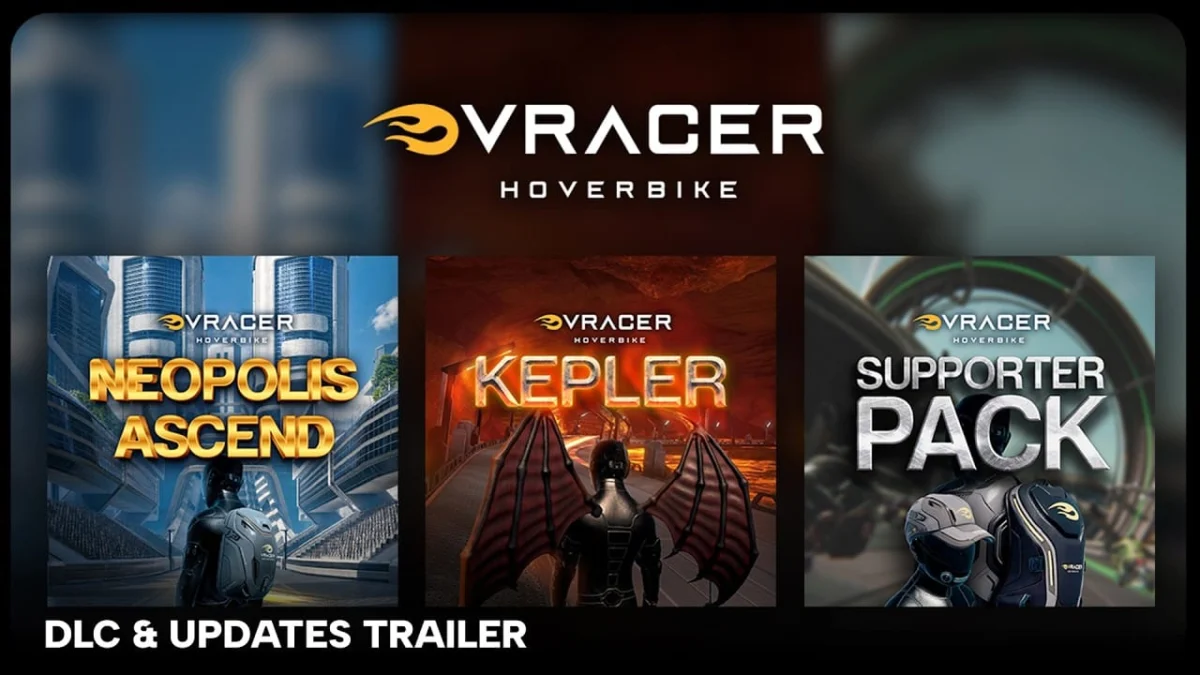
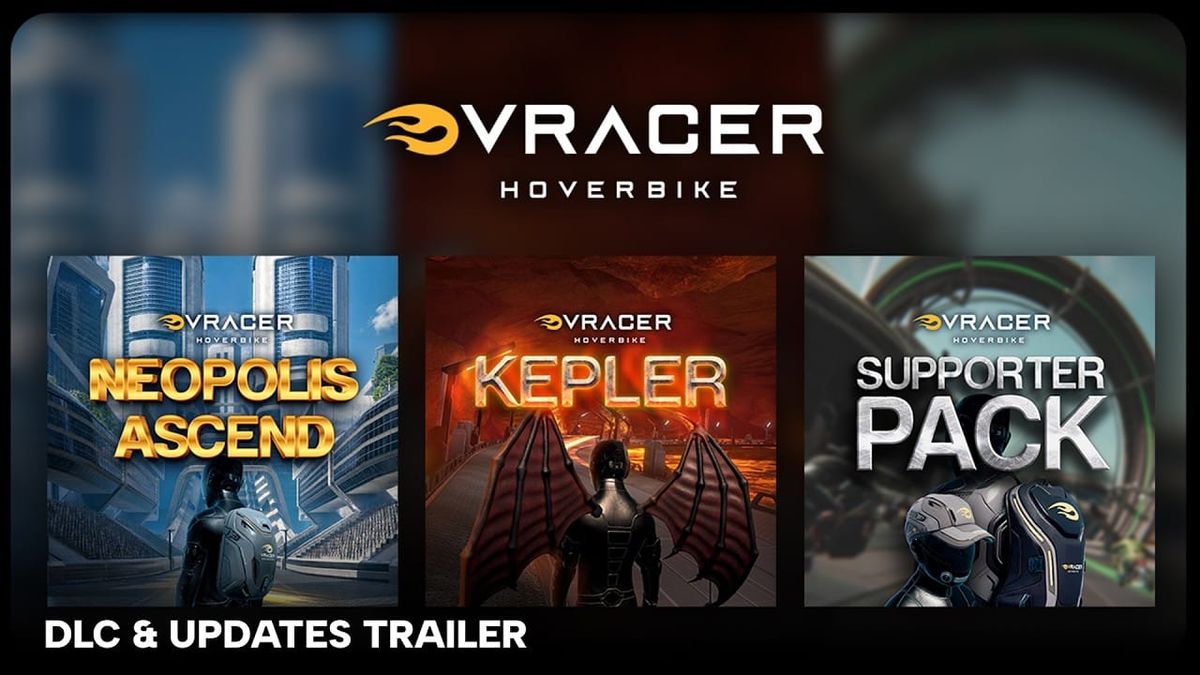
The high-octane world of virtual reality racing is set to receive a significant injection of adrenaline. During the latest VR Games Showcase, publisher Impact Inked and developer VertexBreakers pulled back the curtain on an expansive content roadmap for their flagship title, VRacer Hoverbike. The announcement, delivered via an electrifying new trailer, confirmed a tripartite strategy to revitalize the game’s competitive ecosystem: a substantial free content update, the implementation of organized multiplayer meetups, and the rollout of the game’s first wave of paid downloadable content (DLC).
For a title that has already carved out a niche as one of the most immersive arcade-style racers in the VR space, this expansion marks a pivotal moment in its lifecycle, promising to keep players pinned to their virtual handlebars for seasons to come.
The Roadmap: What’s Coming to the Tracks
The core of the announcement centers on a three-pronged approach to player engagement. The upcoming free update is designed to polish the existing user experience while introducing quality-of-life improvements requested by the community. Perhaps most significantly, the developers are introducing "Scheduled Multiplayer Meetups." By formalizing the competitive calendar, VertexBreakers hopes to solve the common VR dilemma of empty lobbies, ensuring that racers can find high-stakes competition at designated times.
The paid DLC, meanwhile, represents the first major infusion of aesthetic and mechanical variety since the game’s transition out of Early Access. Players can look forward to:
- Next-Generation Hardware: A new fleet of hoverbikes, each featuring unique handling characteristics and flight dynamics.
- Circuit Expansion: New, gravity-defying tracks that push the limits of VR comfort and speed.
- Customization: A suite of new cosmetic gear, allowing pilots to personalize their rider avatars and machine liveries with greater depth than ever before.
A Chronology of Speed: Eight Years in the Making
To understand the significance of this update, one must look at the long, winding road VRacer Hoverbike has traveled. The project began its life on Steam Early Access a staggering eight years ago. In an industry where titles often vanish or are abandoned, VertexBreakers’ persistence is a rarity.
The Early Access Era (2018–2024)
The initial release served as a sandbox for refining the game’s signature "virtual handlebar" control scheme. While many developers opted for standard thumbstick navigation, VertexBreakers insisted on a tactile, motion-based approach that required players to mimic the physical act of steering a bike. This decision polarized early adopters but ultimately defined the game’s identity as a skill-based simulator rather than a mere arcade button-masher.
The Full Launch and Quest Expansion (June 2025)
Last June, the game finally shed its Early Access skin. The full release was accompanied by a robust port to the Meta Quest platform, which introduced the title to a wider, standalone audience. Critics were quick to praise the transition, with many reviews highlighting the game’s uncanny ability to blend intense speed with sophisticated haptic feedback.
The PS VR2 Evolution (November 2025)
The most recent milestone occurred in November 2025, when the game launched on PlayStation VR2. This version became the gold standard for the franchise, leveraging the hardware’s unique capabilities. Features such as dynamic foveated rendering, headset rumble, and the nuanced resistance of adaptive triggers transformed the experience from "playing a game" to "feeling the machine." The inclusion of cross-platform multiplayer was the final piece of the puzzle, unifying the fragmented player base across PC, PS VR2, and Quest.
Supporting Data: Why VRacer Hoverbike Resonates
The longevity of VRacer Hoverbike is not accidental. It relies on a balanced ecosystem of gameplay modes that cater to different player profiles. Currently, the title boasts seven distinct modes:
- Career Mode: A structured progression system that allows players to earn currency and unlock upgrades.
- Time Trials: The bedrock of the competitive scene, where players shave milliseconds off their lap times.
- Weekly Challenges: A rotating suite of tasks designed to test specific skills and encourage mastery of different tracks.
- Combat Mode: A fan-favorite inclusion that changes the dynamic from a pure race to a survival gauntlet, featuring missiles, drone swarms, and EMP bursts.
The game’s technical architecture is equally impressive. By supporting both traditional controller inputs and the immersive virtual handlebar system, the developers have successfully navigated the "comfort vs. immersion" debate that plagues many VR developers. Data from the game’s community hubs suggests that players who master the virtual handlebar system report a significantly higher "flow state" experience, often citing the haptic integration as the primary reason for their sustained interest.
Perspectives from the Cockpit: Official Responses
In a joint statement following the showcase, the teams at Impact Inked and VertexBreakers emphasized that the community’s input was the primary architect of this new update.
"We have spent the last year listening to our players," noted a representative from VertexBreakers. "The feedback regarding the need for more structured social play led directly to the development of the scheduled meetups. We want to move away from the ‘find-a-game’ frustration and toward a ‘community event’ structure where racers can build rivalries and friendships."
Regarding the paid DLC, the publisher clarified that the decision was made to ensure the sustainability of the game’s servers and to fund future technical updates. "We are committed to the longevity of the platform," said the Impact Inked spokesperson. "The paid packs are optional, but they provide the resources for us to keep the servers running and to continue optimizing the game for newer, more powerful headsets as they hit the market."
Implications: The Future of VR Racing
The success of VRacer Hoverbike carries broader implications for the VR industry. For years, skeptics argued that VR racing would be confined to "seated" experiences like Gran Turismo or iRacing. VRacer challenges this by proving that high-speed, motion-intensive, arcade-style gameplay can thrive in a VR environment without causing excessive motion sickness for the average user.
Competitive Viability
With the introduction of scheduled meetups, VRacer is positioning itself to become a staple of the burgeoning VR eSports scene. If the developers can successfully integrate a spectator mode or deeper integration with streaming platforms, the game could serve as a blueprint for how VR titles can foster professional-grade competitive leagues.
Hardware Longevity
The game’s ability to scale across vastly different hardware—from the mobile-based chipsets of the Quest to the high-fidelity processors of the PS VR2 and PC VR—demonstrates a masterful level of optimization. As new VR hardware continues to emerge, VRacer Hoverbike has proven that it is not a "static" product, but a living service capable of evolving alongside the technology it runs on.
Conclusion: The Horizon Ahead
As the gaming community looks toward the next quarter, the anticipation for the VRacer Hoverbike updates is palpable. By balancing free content that rewards the existing player base with optional paid expansions that fund the future, the developers have struck a rare, sustainable chord.
Whether you are a veteran pilot who has been flying since the Early Access days of 2018 or a newcomer looking for the ultimate test of your VR reflexes, the track ahead looks faster and more treacherous than ever. With the combination of new gear, refined multiplayer, and the unwavering support of its developers, VRacer Hoverbike is not just maintaining its position on the grid—it is surging into the lead.
The update is scheduled for release in the coming weeks across all platforms. Racers are encouraged to keep an eye on the official channels for exact deployment times, as the next season of competitive hovering is about to begin.

