

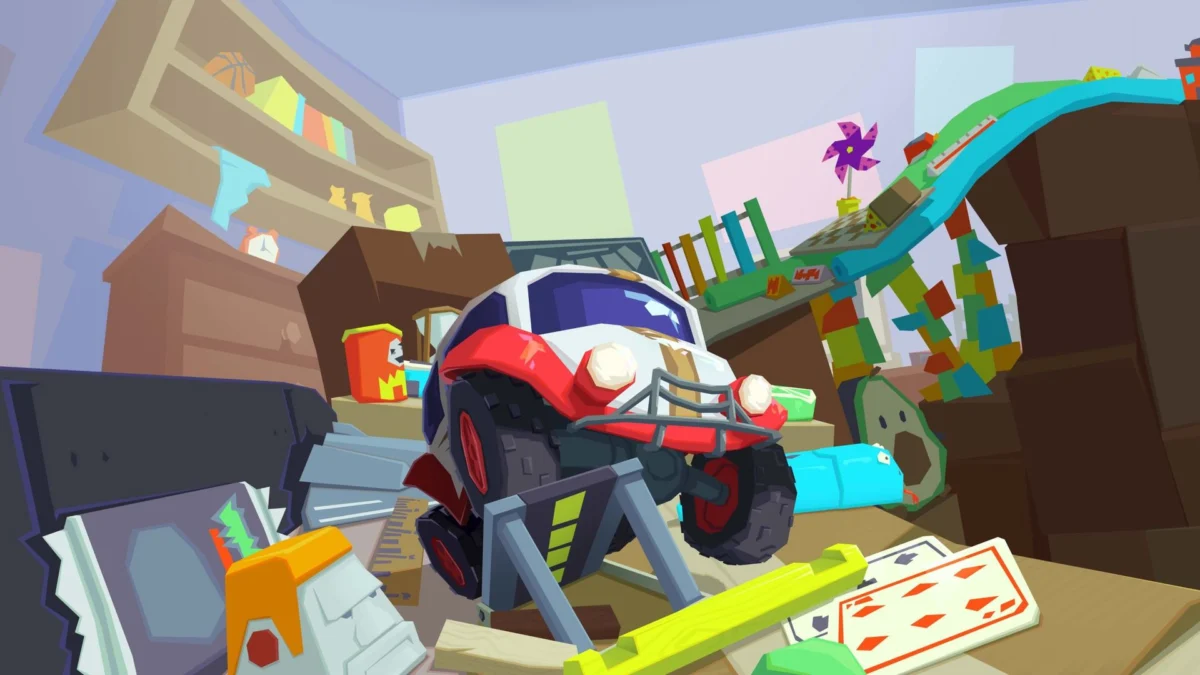
For many, the most formative years of imaginative play involved transforming the mundane landscape of a bedroom into a sprawling, high-stakes racetrack. The floor was not merely a floor; it was a rugged mountain range of discarded laundry, a treacherous canyon of scattered building blocks, and a dense forest of plush toys. Today, developer and publisher Arcane Ermine is looking to capture that specific, tactile nostalgia with their upcoming title, Obstacle Overdrive. Announced during the PC Gaming Show 2026, the game promises to turn the domestic chaos of a 1990s childhood into a precision-based physics playground.
With an official release date set for October 2, 2026, Obstacle Overdrive is poised to offer a refreshing departure from the high-octane, competitive racing titles that dominate the market, opting instead for a meditative, skill-based experience centered on the intimate joy of radio-controlled (RC) exploration.
The Core Concept: Miniature Physics in a Macro World
At its heart, Obstacle Overdrive is a physics-driven traversal game. Unlike traditional racing titles that demand split-second reflexes to beat an opponent to a finish line, Arcane Ermine’s latest project prioritizes the relationship between the player, the vehicle, and the environment. The premise is disarmingly simple: the player controls a miniature RC car within the confines of a meticulously detailed, era-appropriate bedroom.
The game’s design philosophy hinges on the "macro" perspective. By placing the player at the scale of a toy car, everyday objects become colossal obstacles. A computer keyboard is no longer a tool for communication, but a series of tectonic plates to be navigated. A stack of books becomes a sheer cliff face, and a pile of plush toys serves as a soft, unstable terrain that requires careful throttle management to conquer.
Chronology of Development and the Reveal
The journey of Obstacle Overdrive from concept to its imminent launch has been characterized by a focused development cycle. Arcane Ermine, a studio known for its attention to environmental detail, began teasing the project’s aesthetic late last year, focusing on the "cozy" appeal of 90s-era nostalgia.
The official reveal at the PC Gaming Show 2026 served as the definitive pivot point for the game’s marketing. The trailer showcased a variety of environments—ranging from under-bed shadows to the sprawling landscape of a desk—demonstrating the diversity of the terrain. The announcement was accompanied by the confirmation that a playable demo is currently available on Steam, allowing prospective players to test the game’s physics engine ahead of its October release.
Technical Specifications and Gameplay Mechanics
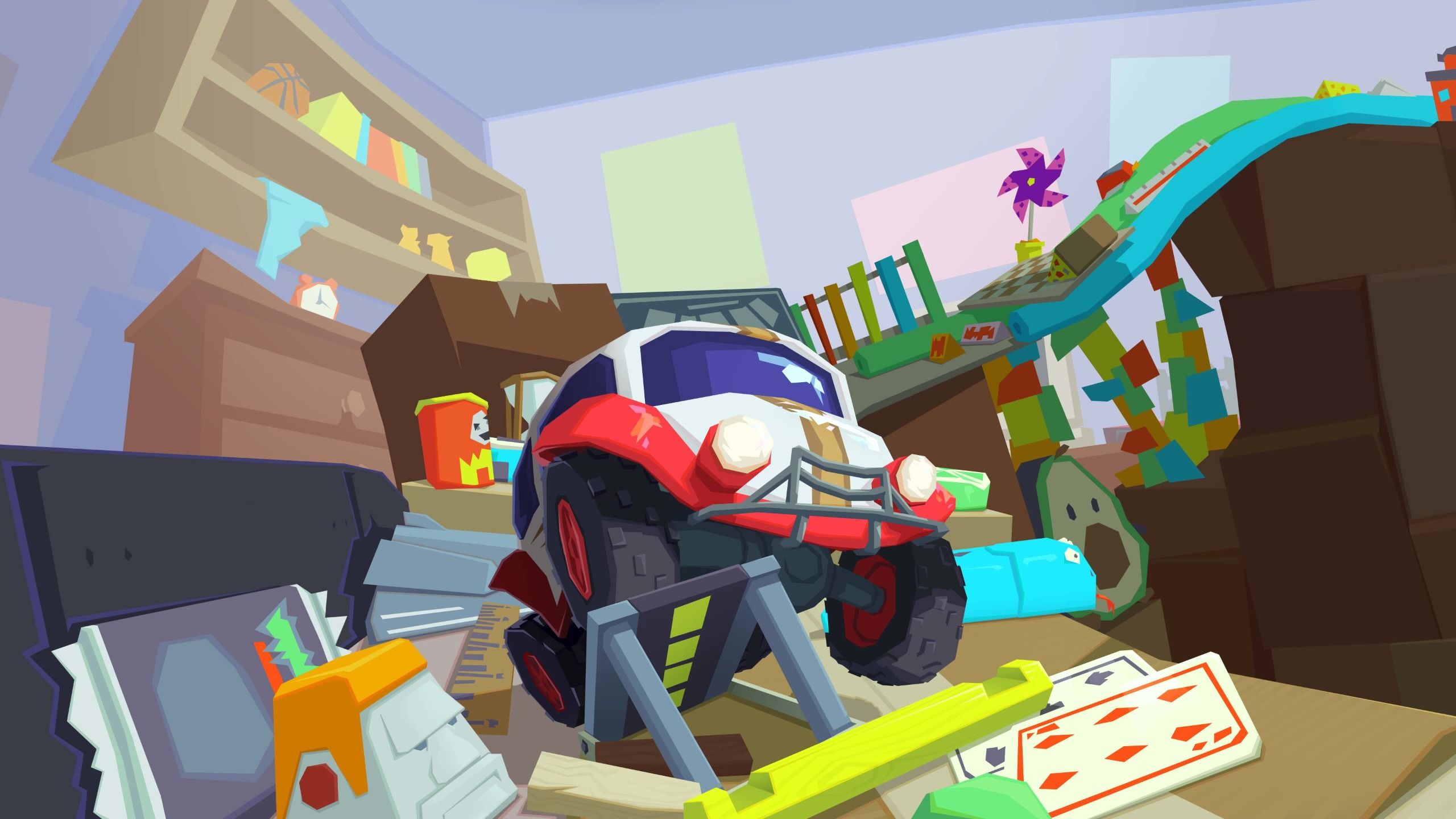
Understanding Obstacle Overdrive requires a shift in mindset from "speed" to "control." The game features a roster of five distinct RC vehicles, each tuned with specific handling characteristics, suspension stiffness, and torque.
Mastering the Five Vehicles
Each of the five cars in the game offers a unique mechanical profile. Some are built for climbing, featuring high-friction tires and low-gear ratios that allow them to scale near-vertical surfaces. Others are built for speed and agility, better suited for the flat, carpeted plains of the bedroom floor or the smooth surfaces of a wooden desk. Mastering these differences is not just a suggestion; it is a necessity. Players will find that a car perfectly suited for a mountain of soft toys may struggle immensely on the slick, plastic surfaces of a toy bin.
A Non-Competitive Philosophy
Perhaps the most notable aspect of Obstacle Overdrive is its lack of traditional competition. There are no rival drivers, no rubber-banding AI, and no timer-based pressure to finish in first place. Instead, the game encourages a "Zen" approach to play. It is a puzzle-solving experience where the environment itself is the adversary. The goal is to reach the end of the course, or perhaps to find a hidden collectible, through patience and careful observation of the terrain.
The Aesthetic of Nostalgia
The visual identity of Obstacle Overdrive is inseparable from its 1990s setting. The environment design reflects a time before the ubiquity of smartphones and tablets, featuring chunky CRT monitors, classic video game cartridges, and the iconic patterns of that decade’s interior design.
This attention to detail serves a functional purpose as well: it provides a familiar but scaled-up geography for the player. By using objects that the player recognizes in the real world, the game effectively communicates the scale of the obstacles. The developers have leaned heavily into the "toy" aesthetic, ensuring that the cars feel like genuine RC models—complete with the distinct whine of electric motors and the jerky, responsive steering characteristic of the real-world counterparts.
Customization and Progression: The Collectible Chase
While the game is not a competitive racer, it offers a rewarding progression loop centered on exploration and customization. Players can hunt for hidden "hats"—cosmetic items that can be equipped to their vehicles.
These collectibles are often placed in the most difficult-to-reach areas of the map, requiring the player to utilize the unique capabilities of their chosen vehicle to the fullest. Whether it requires a daring jump across a gap between two VHS tapes or a slow, steady climb up a fabric mountain, the hunt for these accessories adds a layer of depth to the gameplay. It encourages players to revisit completed courses with different vehicles, effectively extending the replayability of the game without relying on multiplayer modes.
The Role of the Demo and Community Feedback
Arcane Ermine’s decision to release a robust demo alongside the game’s announcement at the PC Gaming Show 2026 was a strategic move aimed at community engagement. The demo allows players to get a feel for the physics, which the developer describes as "weighty and reactive."
By inviting player feedback during this pre-launch window, the studio has been able to fine-tune the suspension models and camera behavior—two critical components for a game where the player is constantly looking up at the world from the perspective of a small object. This collaborative approach ensures that the final product on October 2 will be as polished as possible.
Implications for the Racing Genre
Obstacle Overdrive represents a sub-genre that has been largely dormant: the "micro-racer" or "traversal-puzzle" game. By eschewing the standard tropes of racing games—such as drifting, speed-boosting, and track memorization—Arcane Ermine is carving out a niche for players who want to engage with a game’s mechanics in a lower-stress, higher-tactile environment.
If the game succeeds, it could signal a shift in developer interest toward "cozy" simulation games. The success of titles that emphasize relaxation and atmospheric exploration suggests that players are increasingly looking for games that function as a digital sanctuary. Obstacle Overdrive fits perfectly into this paradigm, offering a playground that is both physically challenging and mentally restorative.
Looking Ahead: A October Release
As the clock ticks down to October 2, 2026, the anticipation for Obstacle Overdrive continues to build within the simulation and indie gaming communities. For those who grew up driving toy cars over whatever surfaces were available, this game promises to be more than just a piece of software; it is a time machine.
For those interested in securing their copy, the game is currently available for wishlisting on Steam. With its unique premise, focus on physics-based traversal, and charming aesthetic, Obstacle Overdrive is set to be one of the most delightful experiences of the late 2026 gaming calendar.
Whether you are looking to master the handling of all five vehicles, hunt for every hidden hat, or simply enjoy the quiet, methodical process of navigating a bedroom turned into an obstacle course, Obstacle Overdrive offers a welcome break from the breakneck pace of modern gaming. It invites you to slow down, look at the world from a new angle, and remember that sometimes, the greatest adventures happen right on your own floor.

