


The market for standalone webcams has evolved dramatically over the last few years. What was once an afterthought peripheral reserved primarily for casual video callers or remote customer service agents has transformed into a high-performance category driven by content creators, remote executives, and hybrid professionals who demand studio-quality video and crystal-clear audio.
Dell is no stranger to this landscape, but its latest entry aims higher than the standard utilitarian office peripherals of the past. The Dell Pro 7 is a compact, feature-rich device capable of pushing stunning 4K video at 60 frames per second (fps). According to expert testing by Tom’s Hardware, it is a device designed to make users look exceptionally sharp and sound even better. However, entering the $199.99 market segment means going head-to-head with some of the most dominant and well-reviewed heavyweights in the industry.
Main Facts
At its core, the Dell Pro 7 is built to bridge the gap between high-end content creation specs and corporate functionality.
- Pricing and Availability: The Dell Pro 7 launches at an MSRP of $199.99, placing it squarely in the premium tier of consumer and professional webcams.
- Video Capabilities: It supports a maximum resolution of 4K at 60 fps, offering a significantly smoother and faster frame rate than what is typically required for standard enterprise communication.
- Key Features: Beyond its raw resolution, the Pro 7 includes advanced utility features such as Windows Hello compatibility for secure facial recognition login, proximity-based presence detection, smart AI-driven image enhancements, and dual beam-forming microphones.
- The Competition: At the $199 price point, it faces direct, fierce rivalry from established market alternatives like the Logitech MX Brio and the Insta360 Link 2 4K.
Chronology: The Evolution of Dell’s Peripherals and the 4K Standard
To understand where the Dell Pro 7 fits into the market, it helps to examine the timeline of how PC peripherals have adapted to hybrid work and streaming culture.
1. The Pre-2020 Baseline: 720p and 1080p Stagnation
For over a decade, built-in laptop webcams and external USB cameras hovered stubbornly around 720p or basic 1080p resolutions at 30 fps. Manufacturers treated webcams as functional tools rather than high-fidelity optical devices, resulting in poor low-light performance and compressed audio.
2. The Remote Work Boom (2020–2022)
The global shift toward remote work and virtual meetings catalyzed a massive surge in demand for external webcams. Consumers quickly realized that cheap, legacy sensors could not handle hours of continuous video conferencing. Brands began pushing 1080p sensors with improved sensors and wider fields of view, but 4K remained rare and prohibitively expensive.
3. The 4K Mainstream Push (2023–Present)
As components shrank and image-processing chips became more efficient, manufacturers began packing 4K sensors into smaller form factors. Competitors like Logitech, Insta360, and Elgato introduced high-resolution cameras targeted at both professional streamers and enterprise users. Dell’s entry into this high-refresh 4K space with the Pro 7 marks a natural evolution, signaling that even traditional enterprise hardware giants must cater to high-performance demands.
Supporting Data: Specs, Limitations, and Real-World Utility
While numbers on a spec sheet look impressive, the practical applications of a 4K/60fps webcam require a closer look—especially when evaluated against the realities of modern software infrastructure.
The Resolution Dilemma: Who Actually Needs 4K/60fps?
The most prominent question surrounding the Dell Pro 7 is the utility of its headline specifications. Capturing video at 4K resolution running at 60 fps demands immense processing power and bandwidth. However, there is a fundamental bottleneck: most popular video conferencing applications—including Zoom, Microsoft Teams, and Google Meet—cap outgoing video streams at 1080p (or lower) to conserve server bandwidth and maintain stable connections across varying global internet speeds.
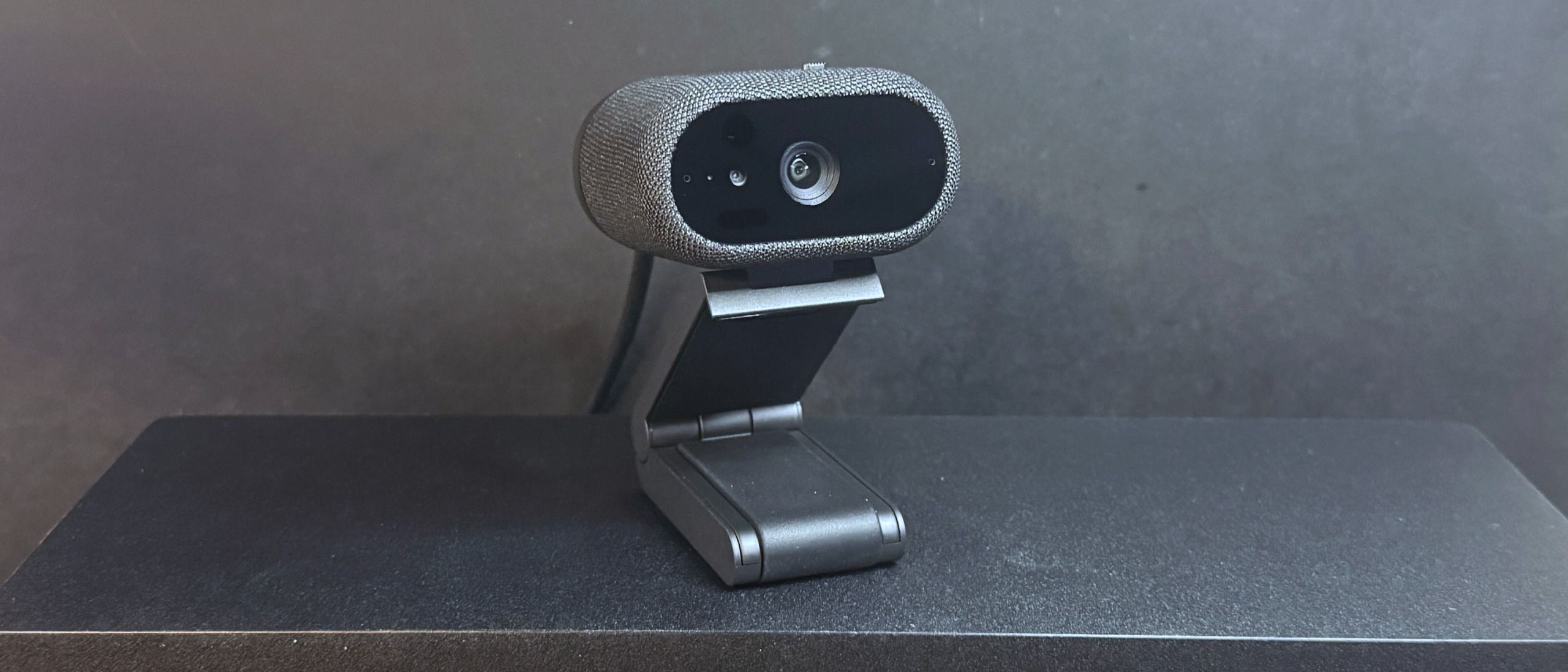
For the average corporate professional, streaming an ultra-high-definition 4K feed to a client or coworker who is receiving a heavily compressed 1080p downscale offers diminishing returns. These specifications are primarily beneficial for:
- Content Creators: Streamers and video producers who record locally onto their machines or capture footage directly for YouTube and editing timelines.
- Future-Proofing: Users who want a peripheral that will remain relevant as streaming platforms gradually upgrade their backend codecs and bandwidth allowances to support higher-resolution feeds natively.
Audio Performance: Breaking the Built-In Mic Curse
One of the historical weaknesses of standalone webcams has been their built-in microphones. Historically, even expensive webcams featured tinny, omnidirectional mics that picked up too much room echo and mechanical keyboard clatter, forcing users to invest in a dedicated USB microphone or headset.
The Dell Pro 7 attempts to break this mold by incorporating built-in dual beam-forming microphones. According to Tom’s Hardware’s testing, these microphones manage to buck industry trends, emerging as some of the very first integrated webcam mics that reviewers can genuinely recommend for daily professional use without forcing an immediate upgrade to a dedicated desktop mic.
Security and Smart Features
Convenience and security are major selling points for enterprise buyers. The Pro 7 includes:
- Windows Hello Support: Allowing users to sign into their Windows operating systems securely and instantaneously using facial recognition, bypassing passwords and PINs.
- Presence Detection: The camera can intelligently sense when a user steps away from their desk or approaches, helping automate screen locking and power management.
- Smart Image Enhancements: AI-driven adjustments dynamically manage exposure, white balance, and framing to ensure subjects look their best regardless of shifting indoor lighting conditions.
Official Responses and Market Positioning
Dell has positioned the Pro 7 as a versatile device that bridges enterprise reliability with consumer-grade visual fidelity. By integrating advanced privacy features alongside high-end optics, the company aims to capture the attention of corporate IT departments as well as independent remote workers who value a clean, uncluttered desk setup.
However, industry analysts note that branding and ecosystem loyalty will be major factors in its success. Competitors like Logitech enjoy immense brand recognition among remote workers, while Insta360 has carved out a dedicated following with innovative gimbal-tracking features. Dell’s strategy relies heavily on the Pro 7’s well-rounded feature set—combining secure authentication, smart detection, and surprisingly capable audio into a single, compact chassis.
Implications for Consumers and the Peripheral Market
The launch of the Dell Pro 7 has several notable implications for the broader tech market:
- The Death of Bad Built-In Audio: With Dell proving that dual beam-forming microphones can deliver usable, high-quality voice capture directly from a webcam chassis, competing manufacturers will face increased pressure to improve their own audio hardware rather than relying on cheap secondary sensors.
- Standardization of Smart Features: Features once reserved for specialized security cameras or ultra-premium enterprise gear—such as Windows Hello and presence detection—are rapidly becoming baseline expectations for any peripheral touching the $200 price point.
- Tougher Choices for Buyers: At $199.99, consumers are spoiled for choice. Buyers must weigh whether Dell’s execution of smart enhancements and beam-forming audio outweighs the specialized mechanical tracking of the Insta360 Link 2 or the established software suite of the Logitech MX Brio.
Verdict Summary
Ultimately, the Dell Pro 7 is a compact, beautifully engineered peripheral that accomplishes what it sets out to do: it makes the user look sharp and sound remarkably good. While its 4K/60fps capabilities may outpace the current compression limits of standard video conferencing software, its robust suite of intelligent features, reliable Windows Hello integration, and surprisingly capable microphones ensure it holds its own against formidable competition. For professionals willing to invest in their home office or remote setup, it is a contender well worth considering.

