By Laura Mingail Published in collaboration with immersive tech and gaming analysts
Main Facts
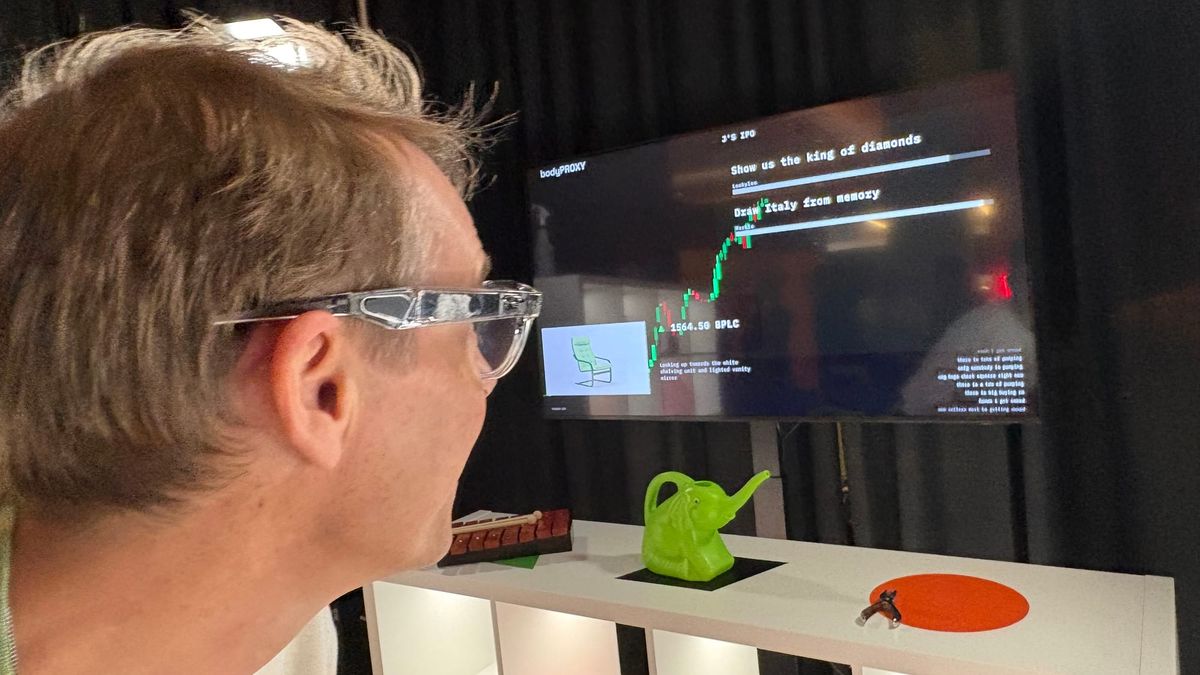
Imagine stepping into a real-world room wearing a pair of Ray-Ban Meta smart glasses. Your objective? Impress a fictional, highly demanding startup AI by accomplishing a series of bizarre, nonsensical physical challenges that artificial intelligence cannot yet perform on its own.
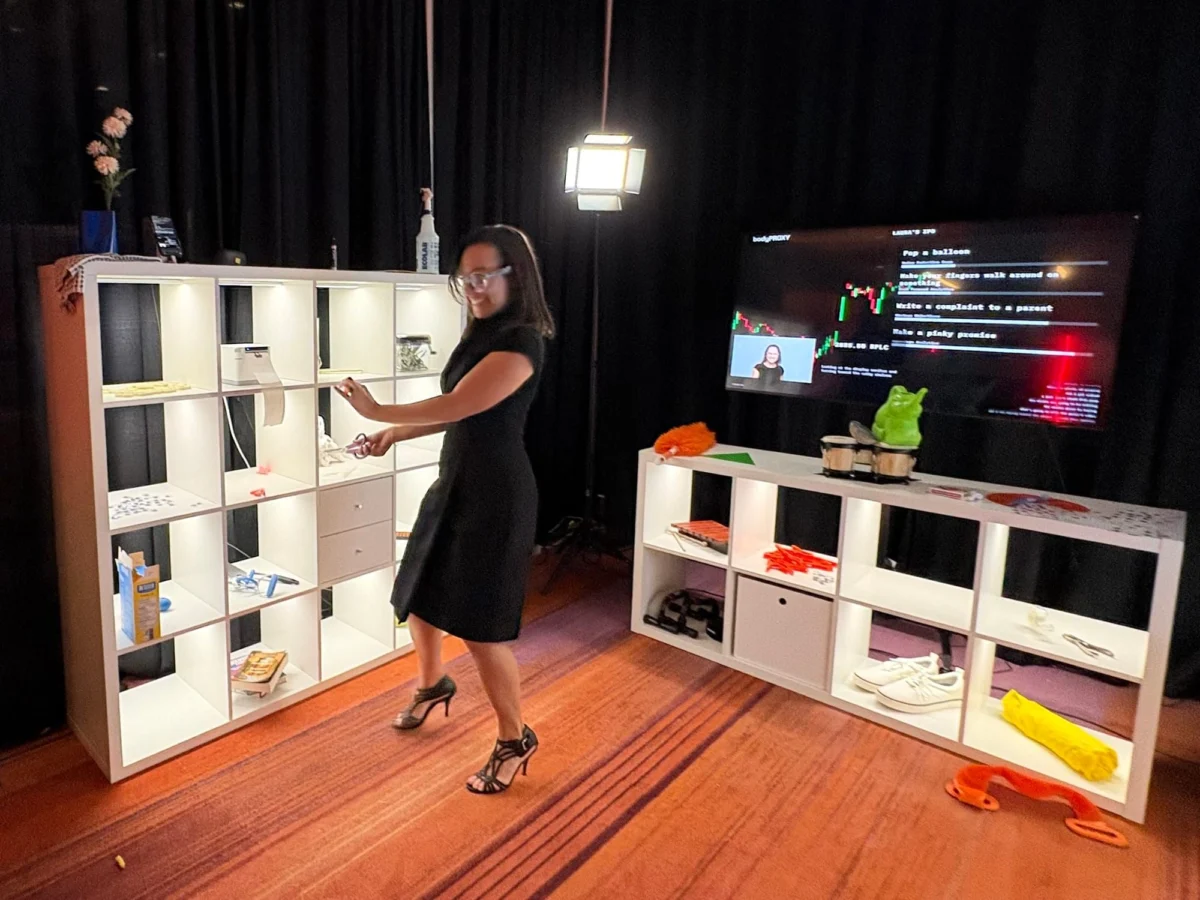
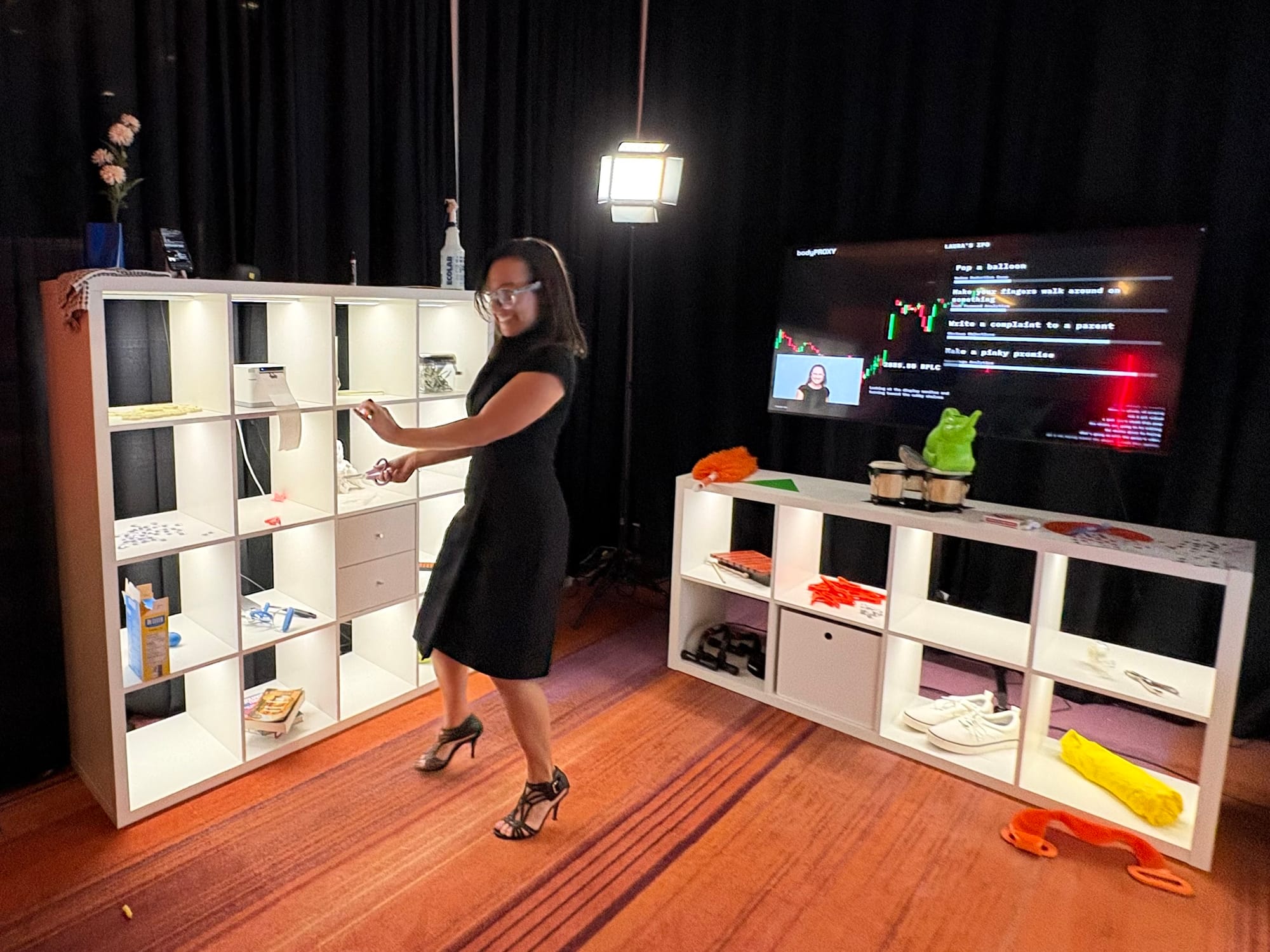
This is the core premise of Body Proxy, a groundbreaking location-based immersive game developed by the award-winning studio Tender Claws. Utilizing the built-in cameras, microphones, and speakers of AI-enabled smart glasses, Body Proxy blends the physical world with narrative-driven gameplay. Rather than relying on traditional virtual reality (VR) headsets or heavy digital screens, the experience uses the player’s immediate physical environment—and the objects within it—as the canvas for a live-action, game-show-style competition.
The title has already garnered critical acclaim, taking home the SXSW 2026 XR Experience Jury Award and securing an official selection at TIFF: The Market 2026. Co-created by studio co-founders Danny Cannizzaro and Samantha Gorman, Body Proxy represents a massive leap forward in how smart glasses can be leveraged for narrative entertainment, pointing toward a future where everyday hardware serves as a portal into interactive theater.
Chronology
The journey toward Body Proxy has been years in the making, reflecting Tender Claws’ ongoing evolution as a studio dedicated to pushing the boundaries of extended reality (XR) hardware.
Pre-2024 (The Foundation): Tender Claws establishes itself as a pioneer in immersive storytelling, crafting acclaimed projects such as Virtual Virtual Reality, The Under Presents: Tempest, Face Jumping, and Stranger Things VR. The studio consistently builds a reputation for exploiting unique hardware capabilities—such as eye-tracking and live interactive theater—to pull audiences into deeply realized story worlds.
Late 2024 – 2025 (The AI Hardware Shift): With the rise of multimodal AI agents and consumer-ready smart glasses like the Ray-Ban Meta line, Tender Claws begins conceptualizing a new kind of experience. Moving away from enclosed VR headsets, the creators look to immersive physical theater—such as the legendary production Sleep No More—for inspiration on how to merge minimal technology with maximal narrative engagement.
Early 2026 (Festival Circuit & Critical Acclaim):Body Proxy makes its official public debut. The project captures the SXSW 2026 XR Experience Jury Award, establishing it as a festival darling. Shortly after, it is named an official selection for TIFF: The Market 2026.
Current Operations and Future Tours: The studio showcases Body Proxy across select industry events and festivals. Concurrently, co-director Danny Cannizzaro and producer J Noland confirm that new iterations of the project—including free-roaming variations and web-based setups—are actively in development for national and international exhibition throughout 2026 and 2027.
Supporting Data
To understand why Body Proxy resonates so deeply with players and festival-goers, it helps to look at the mechanics, metrics, and technical design driving the installation:
The Challenge Pool: The current iteration of the game features a rotating catalog of approximately 100 randomized tasks and numerous variations. These challenges change dynamically depending on the physical objects available at a given installation site.
Hardware Utilization: The experience relies entirely on Ray-Ban Meta glasses, turning their native audio-visual capture capabilities into a real-time tracking engine for AI judgment.
The Spectator Loop: While one player navigates the physical space wearing the glasses, onlookers view a dedicated physical screen displaying the player’s digital avatar, live performance metrics, and a constantly updated list of active challenges.
Post-Play Analytics: Every playthrough concludes with a uniquely generated, satirical video report that analyzes the player’s performance, offering behavioral insights into what their chaotic problem-solving says about their value as a "body proxy."
Expansion Footprint: Beyond the flagship hardware installations, Tender Claws has confirmed development variants capable of running off standard smartphones and webcams, democratizing access to the experience.
Official Responses and Creative Vision
The creative minds behind Tender Claws have been vocal about the philosophy and technical aspirations driving Body Proxy.
Co-director Danny Cannizzaro explains that the team deliberately avoided the isolated nature of traditional VR in favor of a format rooted in immersive physical theater:
"Something like Sleep No More is highly immersive with minimal technology. We’ve framed Body Proxy as a kind of narrative recruiting and onboarding process for this fictional company… Everything the user does happens within the context of this narrative experience, in which they take on a role and become part of the story. You are still completely interacting with a digital system, but for a large part of the experience, there is no screen at all."
Cannizzaro also notes that the project is scaling outward:
"There are versions of Body Proxy being developed for free-roaming across a variety of spaces, with plans to tour it at more events this year and next. We are also building versions of the project running off phones and webcams as well."
Producer J Noland highlights the sheer unpredictability of human behavior when subjected to the game’s absurd constraints:
"One of the joys of watching lots of people play Body Proxy is seeing the creative and innovative ways they approach the same task. You may see the same task completed dozens of times over the course of a festival, and then someone approaches it in a completely new and surprising way."
Reflecting on the public’s reaction to the installation’s game-show aesthetic, Cannizzaro adds:
"The installation itself has a vaguely Taskmaster, game-show-esque vibe to it that always attracts a crowd."
Implications
Body Proxy is much more than a clever festival installation; it carries profound implications for the future of consumer AI, entertainment design, and human-computer interaction.
1. Redefining Mixed Reality Without Headsets
For years, mixed reality (MR) has been synonymous with bulky pass-through headsets that project digital holograms directly into a user’s field of view. Body Proxy proves that mixed reality can be achieved through ambient computing. By using smart glasses merely as a sensory bridge—allowing an AI to watch, listen, and speak while leaving the user’s natural vision entirely unobstructed—Tender Claws achieves deep psychological immersion without digital fatigue. The physical world is the graphics.
2. Rewarding Human "Unessentialism" in an AI Era
As artificial intelligence increasingly automates systematic, logical, and day-to-day human labor, anxiety surrounding human obsolescence grows. Body Proxy subverts this anxiety brilliantly. The game does not reward predictable, high-probability solutions; instead, it demands playfulness, absurdity, and raw human creativity under pressure. By forcing players to act in ways an AI cannot easily compute, the game reframes human idiosyncrasy not as a flaw, but as our ultimate competitive advantage.
3. The Rise of Smart Glasses as Entertainment Platforms
Thus far, consumer smart glasses have largely been marketed around productivity utilities—taking photos, answering phone calls, streaming music, and querying multimodal assistants on the go. Body Proxy demonstrates that these lightweight wearable devices are primed to become powerful entertainment platforms. By turning everyday physical environments into stages for interactive theater, Tender Claws has unlocked a blueprint that other storytellers, game developers, and intellectual property holders can follow across multiple genres.
Whether Body Proxy serves as a satirical warning about our corporate-automated future or simply provides the most fun one can currently have with a pair of smart glasses, it marks a watershed moment for location-based entertainment. Proving your value to an AI has never been so hilariously, brilliantly human.