

When Larian Studios released Baldur’s Gate 3 in 2023, the critical and commercial juggernaut fundamentally rewrote the rules of engagement for tabletop-adapted video games. Sweeping nearly every Game of the Year accolade available, it established a towering benchmark for modern role-playing games, defined by sprawling systemic depth, staggering player agency, and a reactive world that bent to every whim of a player-created avatar.
Consequently, when Invoke announced its upcoming open-world title, Warlock: Dungeons & Dragons, the gaming community immediately reached for the Baldur’s Gate 3 yardstick. Sharing little more than a corporate license and a rich fictional universe, both projects carry the prestigious Dungeons & Dragons banner. Yet, according to the developers at Invoke, drawing mechanical or narrative parallels between the two titles is a fundamental misunderstanding of what Warlock aims to achieve.
As early hands-off previews from events like Gamescom begin to paint a clearer picture, it is increasingly evident that Warlock is not attempting to out-Larian Larian. Instead, it is charting an entirely separate course—one defined by a singular, pre-written protagonist, an intimate narrative scope, and an open world designed to evoke the organic wonder of old-school exploration.
Main Facts: Deconstructing the Comparison
To understand Warlock, industry observers must first strip away expectations cultivated by Larian’s masterclass in choice-driven sandbox design. While Baldur’s Gate 3 prioritizes total freedom, player-sexual romance options, wildly branching narrative paths, and a customizable main character accompanied by a diverse ensemble of recruitable origin companions, Warlock operates on a radically different axis.
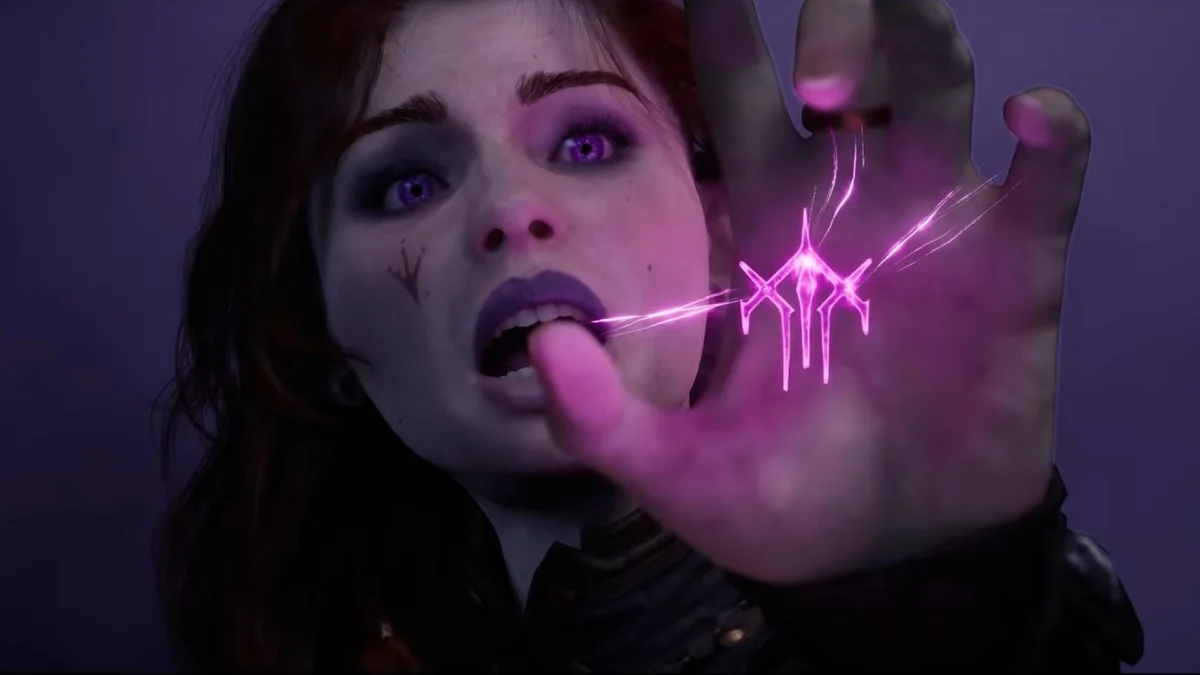
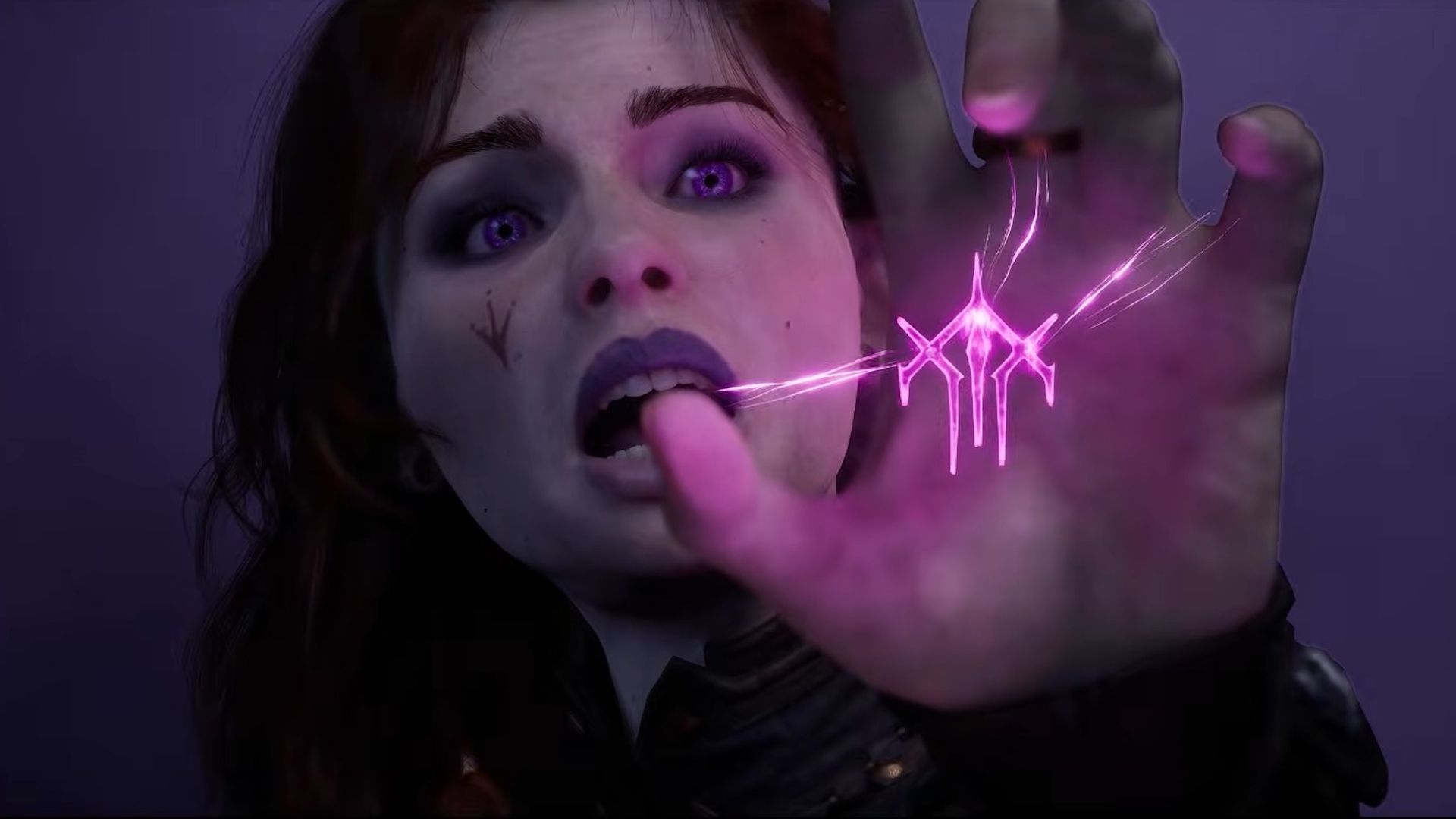
- A Singular Protagonist: Unlike the blank-slate custom avatars of traditional Western RPGs, Warlock anchors its entire experience to a fixed, pre-written protagonist named Kaatri.
- A Linear Narrative Spine: While player choices will certainly shape micro-moments, the macro-narrative is authored rather than reactive. Players will experience the same core narrative milestones regardless of their playstyle.
- Focused Companion Dynamics: Rather than managing a rotating cast of party members with competing personal quests, Kaatri’s journey focuses heavily on a tightly wound "found family" dynamic, spearheaded by her loyal imp companion, Skev.
- Exploration Without Hand-Holding: Eschewing modern AAA convention, the open world of Warlock deliberately rejects cluttered user interfaces and standardized map waypoints, opting instead for organic discovery driven entirely by player curiosity and action.
Chronology: The Journey From Tabletop Giants to Digital Frontiers
The trajectory of Dungeons & Dragons in the video game space has experienced a remarkable renaissance over the past decade, characterized by distinct eras of development philosophy.
The Pre-2023 Landscape
For years, digital adaptations of Dungeons & Dragons struggled to capture the lightning-in-a-bottle magic of the tabletop experience while pushing modern technical boundaries. Games like Neverwinter Online leaned heavily into MMORPG structures, while tactical CRPGs like Solasta: Crown of the Magister successfully replicated fifth-edition rulesets but lacked the blockbuster production value required to capture mainstream cultural consciousness.
The Larian Phenomenon (August 2023)
The landscape shifted irrevocably with the August 2023 launch of Baldur’s Gate 3. By combining cinematic fidelity, deep turn-based mechanics, and unprecedented narrative branching, Larian Studios proved that a complex, high-fantasy CRPG could capture a massive global audience. The game’s cultural footprint instantly became the gold standard against which all future fantasy RPGs—particularly those bearing the D&D trademark—would be measured.
The Emergence of Invoke’s Warlock (2024–Present)
As development on Invoke’s Warlock: Dungeons & Dragons ramped up, the studio faced a unique communication challenge. Recognizing that the gaming public would inevitably view their project through the lens of Baldur’s Gate 3, Invoke leadership began proactively managing expectations. Through preview cycles at events like Gamescom, the studio started pulling back the curtain on its distinct design pillars, emphasizing action-oriented gameplay, a singular authored protagonist, and environmental exploration that favors intuition over interface clutter.
Supporting Data and Design Philosophy
A deeper look into Invoke’s development choices reveals a conscious pivot away from sandbox ubiquity in favor of curated storytelling and atmospheric immersion.
Narrative Architecture vs. Sandbox Chaos
In Baldur’s Gate 3, a player can choose to murder key NPCs in Act 1, drastically altering the socio-political landscape of Act 3. The narrative engine is built to accommodate nearly infinite permutations. Warlock, conversely, treats its story like a novel or a structured module run by a strict Dungeon Master.
As Invoke General Manager Dominique Guay articulated in interviews, Kaatri is an established persona within the world. Players are stepping into her shoes to experience her specific struggle, rather than projecting an idealized version of themselves onto a blank canvas. This allows the writers to craft tightly focused emotional beats, specific character arcs, and deep interpersonal conflicts that might otherwise be diluted by the infinite permutations of a fully reactive sandbox.
Reimagining Open-World UI
Another crucial data point distinguishing Warlock from its contemporaries is its approach to user interface and navigation. Modern open-world design is frequently criticized for turning gameplay into a chore of clearing check-lists, navigating "mini-maps" choked with thousands of icons, and following literal trails of breadcrumbs via glowing GPS lines.
Warlock deliberately rejects AAA-standard waypoints. The development team wants to cultivate a sense of genuine discovery. When a player uncovers a hidden grove, a forgotten ruin, or a rare magical artifact, Invoke wants the psychological reward to stem entirely from the player’s own observational skills and actions, rather than because a compass marker told them to walk three hundred meters north.
Official Responses and Developer Insights
The distinction between Invoke’s vision and Larian’s masterpiece has been a primary talking point for the game’s leadership team as they introduce the title to the public.
"We’re being very clear on that," stated Invoke General Manager Dominique Guay during discussions with industry press. "Kaatri is a written character, so it’s not like you can play evil or good Kaatri. Nothing like that. The main narrative moments you’re going to go through are written down, and you’re going to go through the same moment as someone else."
This transparency is a deliberate strategy to curb misplaced expectations. By establishing early on that Warlock is not an open-ended role-playing sandbox where players write their own destiny from scratch, Invoke is inviting players to evaluate the game on its own merits as a narrative-driven action RPG.
Critical reception from early previews has responded warmly to this candor. Following a hands-off demonstration at Gamescom, trade reviewers noted that the game successfully escapes the long, intimidating shadow of Baldur’s Gate 3. Observers noted that by leaning into a distinct identity—focusing on intimate companion dynamics, such as Kaatri’s evolving relationship with her imp companion Skev—Warlock feels less like an imitator and more like a confident sibling exploring a different corner of the vast D&D multiverse.
Implications for the Future of D&D Gaming
The divergence between Baldur’s Gate 3 and Warlock: Dungeons & Dragons carries profound implications for how Wizards of the Coast licenses its intellectual property to video game developers moving forward.
1. Diversification of Genre Approaches
The success of Baldur’s Gate 3 proved that turn-based, party-managed CRPGs have massive commercial viability. However, the multi-faceted nature of the Dungeons & Dragons brand means it cannot—and should not—be confined to a single genre template. By allowing studios like Invoke to pursue action-oriented, narratively focused, single-protagonist experiences, Wizards of the Coast ensures that the D&D digital ecosystem remains diverse, appealing to action gamers, lore enthusiasts, and explorers alike.
2. Managing Audience Expectations in the Post-BG3 Era
Warlock serves as a case study in expectation management for modern game development. In an era where a single genre-defining masterpiece can skew public perception for a decade, developers following in the wake of a giant must be proactive, transparent, and unapologetic about their unique design pillars. By explicitly defining what Warlock is—and crucially, what it is not—Invoke is carving out a safe harbor where its game can be judged fairly upon its release.
3. The Power of Intimate Storytelling
While systemic complexity and infinite choice will always have a revered place in RPG design, Warlock’s commitment to a fixed protagonist and a authored narrative underscores the enduring power of a well-told, focused story. Sometimes, players do not want the burden of deciding the fate of nations; sometimes, they simply want to walk alongside a well-crafted character like Kaatri, uncover the mysteries of an unmapped world, and watch a unique friendship grow alongside a mischievous imp named Skev.
As development on Warlock: Dungeons & Dragons continues, the gaming community will undoubtedly keep a watchful eye on how Invoke executes its bold vision. Far from cowering beneath the colossal legacy of Baldur’s Gate 3, Invoke is rolling its own dice—and early indications suggest it’s a gamble well worth taking.

