

Main Facts
The personal computer hardware ecosystem stands at a complex and tumultuous crossroads. As industry analysts, enthusiasts, and market researchers look ahead to the technological horizons of 2027, discourse has increasingly centered on Intel’s upcoming desktop processor architecture, colloquially and officially known through various leaks as Nova Lake. For years, the desktop CPU landscape has been fiercely contested, defined by a technological arms race between Advanced Micro Devices (AMD) and Intel.
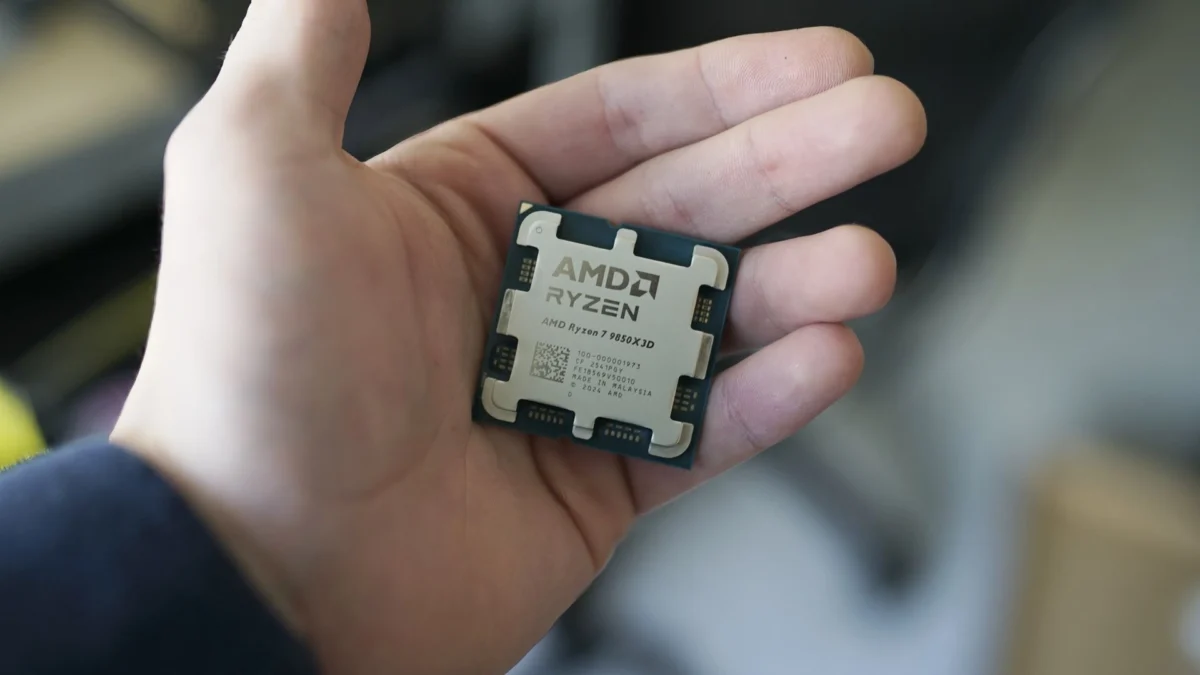
At the heart of the current industry debate is the undisputed dominance of AMD’s X3D processor line. Utilizing innovative 3D V-Cache technology, AMD has consistently commanded the gaming benchmark charts, leaving rival silicon vulnerable in the specific, high-visibility metric of enthusiast-tier gaming performance. While online community forums and industry commentators—such as user usertests—have argued that AMD’s repeated victories at the top of the performance charts represent an "intolerable" pressure point for Intel, a deeper analysis reveals a far more nuanced market reality.
Today, the core strategic priorities for major chip vendors extend far beyond the enthusiast gaming segment. Enterprise data centers, artificial intelligence acceleration, cloud infrastructure, and enterprise computing dictate the vast majority of research and development expenditure, as well as revenue generation. Within this macro environment, desktop gaming represents a vital yet secondary consideration.
Consequently, the impending arrival of Intel’s Nova Lake architecture is being scrutinized through multiple lenses. Questions regarding its market positioning, pricing viability amidst an inflated components market—driven by high costs in RAM, solid-state drives (SSDs), and graphics processing units (GPUs)—and its ultimate viability as a mass-market product have taken center stage. Furthermore, speculation is mounting that Nova Lake could manifest as a limited release or a "paper launch," serving primarily as an architectural stepping stone toward more transformative future microarchitectures, such as the rumored Razor platform slated for 2028.
Chronology
To understand the current skepticism surrounding Intel’s 2027 desktop roadmap, one must trace the historical evolution of desktop CPU architectures, naming conventions, and competitive milestones over the past decade.
The Rise of Multi-Core Wars and Cache Innovations (2017–2022)
- 2017: AMD introduces the Ryzen architecture, revitalizing the x86 desktop market and forcing Intel to accelerate its core-count scaling roadmaps.
- 2020–2021: Intel launches its hybrid architecture (Alder Lake), introducing Performance-cores (P-cores) and Efficient-cores (E-cores) on an Intel 7 process node, successfully reclaiming gaming leadership temporarily.
- 2022: AMD fires back with the Ryzen 7 5800X3D, pioneering consumer-grade 3D V-Cache. The massive cache expansion proves revolutionary for gaming workloads, fundamentally shifting the benchmark paradigm. Subsequent generations solidify AMD’s uncontested lead in gaming efficiency and frame-time consistency.
The Transition to Modern Naming and Architecture Shifts (2023–2025)
- 2023: Intel abandons its legacy "Core i" branding in favor of the Core Ultra nomenclature, restructuring its desktop and mobile tiers.
- 2024: Arrow Lake (Core Ultra 200 series) launches on external foundry nodes. While offering impressive power efficiency and architectural modernization, its gaming performance fails to decisively dethrone AMD’s X3D chips, leading to mixed critical and enthusiast reception.
- 2025: Rumors solidify around Intel’s post-Arrow Lake roadmap. Industry leaks begin pointing toward Nova Lake as the next major architectural overhaul for desktop platforms, accompanied by anticipated shifts in socket design and core configurations.
The 2026–2028 Horizon: Anticipation and Retrenchment
- Late 2026: Industry supply chain reports indicate persistent cost pressures across memory (DRAM/NAND) and discrete GPUs, dampening enthusiast upgrade sentiment.
- 2027 (Projected): Nova Lake is slated for introduction. Hardware observers debate whether the architecture will see full-scale retail availability or be relegated to a specialized, niche rollout.
- 2028 (Projected): Expectations build toward subsequent platform iterations, such as Razor, which many analysts view as the true maturation point for Intel’s next-generation desktop strategy.
Supporting Data
Evaluating the viability of a 2027 desktop CPU launch requires examining macroeconomic factors, component pricing trends, and historical performance metrics.
Component Cost Projections for 2027
The health of the DIY (Do-It-Yourself) PC market is intrinsically tied to the pricing and availability of complementary hardware components. Market intelligence forecasts indicate that structural supply chain constraints, raw material costs, and high manufacturing expenses for advanced packaging will keep prices elevated for crucial components:
- RAM (DDR5 and beyond): High-density memory kits required for high-performance desktop platforms continue to experience price volatility, driven by enterprise demand for AI server memory.
- SSDs: NAND flash pricing cycles point toward sustained plateaus, limiting the affordability of high-speed PCIe 5.0 storage solutions for average consumers.
- GPUs: Flagship graphics cards—such as hypothetical or current generational hardware like the NVIDIA GeForce RTX 5090—command astronomical price points. When a complete system build featuring top-tier components approaches or exceeds luxury consumer goods pricing, the addressable market for enthusiast processors contracts significantly.
Performance Saturation in Gaming
A central argument among hardware analysts is the question of diminishing returns in consumer gaming workloads.
- The X3D Benchmark Baseline: AMD’s X3D processors have consistently demonstrated that they provide more than sufficient computational oomph to saturate high-end GPUs, even at high refresh rates and resolutions.
- The Bottleneck Shift: In modern gaming scenarios paired with high-end GPUs (e.g., the RTX 5090 class), performance bottlenecks are overwhelmingly dictated by the graphics processor or memory bandwidth rather than raw CPU instruction-per-clock (IPC) deficiencies. Consequently, the consumer demand for a drastic, urgent leap in gaming CPU performance is arguably far lower than the demand for GPU advancements.
Naming Convention Evolution
Intel’s shifting naming conventions have also drawn scrutiny. Reports indicate a move toward a new four-digit or revised multi-digit naming structure, shedding the transitional "teens" identifiers of recent generations. Industry insiders suggest that incorporating placeholder suffixes (such as trailing zeros) provides necessary headroom for future SKU expansions, mirroring historical naming methodologies while attempting to simplify consumer understanding.
Official Responses
While official corporate roadmaps are tightly guarded, statements from Intel executives, foundry partners, and AMD representatives over recent product cycles illuminate the strategic thinking guiding the industry.
Intel’s leadership has repeatedly emphasized a dual mandate: restoring undisputed process technology leadership via the Intel Foundry strategy while delivering competitive products across client, data center, and edge computing markets. During financial earnings calls and architectural deep-dives, Intel representatives have pointed to the modularity of their upcoming platforms and the integration of advanced packaging technologies as key long-term differentiators.
Regarding the desktop segment specifically, Intel executives have acknowledged that consumer behavior has shifted. The traditional desktop enthusiast market, while culturally vital for brand prestige, operates under different economic rules than enterprise or mobile markets. Corporate communications have stressed that future architectures like Nova Lake are designed with scalable IP blocks capable of addressing low-power mobile devices up to enthusiast desktops, ensuring that R&D investments yield returns across multiple verticals rather than depending solely on DIY desktop builders.
Meanwhile, competitors at AMD maintain a confident stance on their cache-centric design philosophy. AMD spokespersons have consistently highlighted that their focus on power efficiency, architectural longevity on existing sockets (such as AM5), and 3D V-Cache innovation directly addresses the primary pain points of gamers and content creators alike, reducing the impetus for consumers to migrate to unproven competing platforms.
Implications
The convergence of architectural transitions, macroeconomic realities, and changing consumer habits carries profound implications for the PC hardware ecosystem as it approaches 2027.
1. The Redefinition of the "Enthusiast" Market
If component pricing for RAM, storage, and GPUs remains stubbornly high throughout 2027, the traditional DIY PC building community may experience a prolonged contraction. High-end platforms risk becoming luxury items reserved strictly for professional creators, enterprise developers, and ultra-enthusiasts with discretionary income. For the average gamer, hardware lifecycles will likely extend significantly, with users opting to retain existing platforms (such as AM5 or older Intel generations) rather than undertaking costly ground-up system overhauls.
2. The Strategic Reality of "Paper Launches"
The suspicion that Nova Lake might debut as a limited or "paper launch" underscores a growing industry trend: chip vendors prioritizing enterprise volume and mobile efficiency over immediate retail saturation of desktop parts. For hardware media outlets, a high-profile desktop launch provides vital engagement and click-through traffic in an online environment otherwise dominated by sensationalist discourse. However, if retail availability fails to match launch hype, consumer disillusionment could follow.
3. Stepping Stones to 2028 (The Razor Horizon)
Viewing Nova Lake primarily as a bridge—a necessary infrastructural stepping stone toward the more revolutionary Razor architecture projected for 2028—recalibrates expectations. Just as early implementations of hybrid architectures or initial process nodes served to iron out software schedulers and manufacturing kinks, Nova Lake may act as the foundational testbed for new interconnects, packaging methods, and socket standards. For savvy consumers and market observers, writing off 2027 as a transitional year in favor of the more mature 2028 ecosystem may prove to be the most pragmatic financial and technological strategy.
Ultimately, while the corporate rivalry between Intel and AMD for benchmark supremacy will continue to capture headlines, the broader health of the PC hardware market will depend less on fleeting crown-taks in gaming frames-per-second and more on affordability, systemic efficiency, and real-world value in an increasingly complex global economy.

