

Main Facts
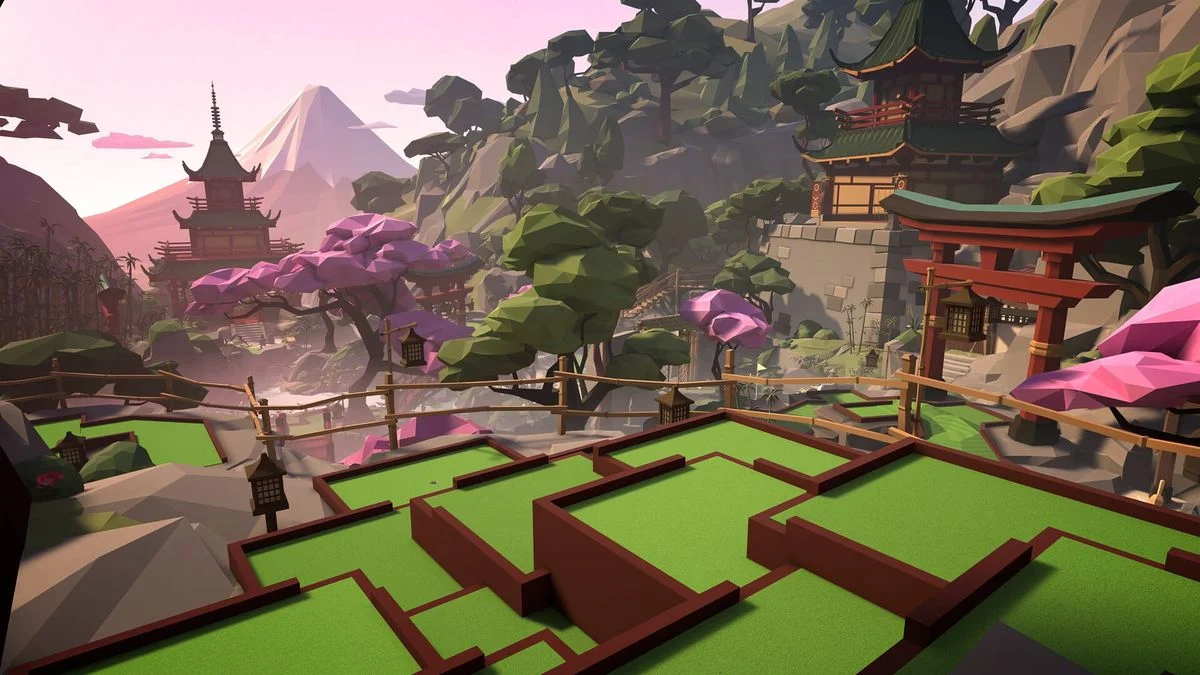
Mighty Coconut, the independent studio behind the critically acclaimed virtual reality hit Walkabout Mini Golf, has announced its second round of layoffs. Affecting ten employees, the downsizing was revealed concurrently with the announcement of the game’s upcoming space-themed DLC course, Escape from Planet Xylodon.
Studio founder Lucas Martell shared the difficult news via an open letter on LinkedIn, citing a contraction in the broader virtual reality market, stagnant hardware adoption, and a shifting investment landscape as the primary catalysts for the reduction. This latest workforce reduction follows an earlier restructuring at the beginning of the year, which saw the studio shed approximately 25 percent of its staff and bump the price of its paid downloadable content (DLC) courses from $3.99 to $4.99.
Despite the cuts, Martell assured the dedicated Walkabout community that the core game is not going anywhere. The studio intends to keep the servers active, continue releasing new courses—albeit at a potentially slower cadence—and push forward with the development of alternative titles such as Walkabout Dungeon Golfer and the flatscreen lawn-mowing simulator Grass. To support the departing staff, Mighty Coconut has established a reverse-recruiting list to help the ten affected developers find new homes within the games industry.
Chronology of Events: The Trajectory of Mighty Coconut and the VR Market
To fully understand Mighty Coconut’s current operational pivot, it is necessary to examine the timeline of events that have shaped the studio and the VR ecosystem over recent years.
The Rise of a VR Staple
Walkabout Mini Golf launched to widespread acclaim, rapidly establishing itself as a premier title for standalone and PC VR headsets. Its accurate physics, relaxing social atmosphere, and frequent, highly detailed course expansions made it a gold standard for virtual reality gaming. For years, the studio enjoyed a stable growth trajectory, bolstered by a passionate community and a steady stream of content updates.
The First Signs of Strain (Early 2024–2025)
As broader economic pressures began impacting the tech and gaming sectors, the VR industry experienced a cooling-off period. Venture capital and major tech investments began pivoting heavily toward artificial intelligence, leaving virtual reality hardware and software developers to fend for themselves on slowing consumer adoption rates.
Mighty Coconut felt these ripples acutely. At the beginning of 2026, the studio executed its first major contraction, laying off a quarter of its workforce. To offset shrinking profit margins, the studio also implemented a price hike on its DLC packs, raising them by one dollar, and expanded monetization avenues to include cosmetic avatar packs, ball trails, and hole celebrations. Additionally, the studio scaled back its core course release schedule from previous highs to six per year, though it occasionally surprised fans with unique collaborative drops, such as the Homestar Runner distraction pack over the summer.
The October 2026 Announcement
On the exact day Mighty Coconut publicized its next major interstellar course, Escape from Planet Xylodon, Martell published his frank assessment of the studio’s viability. Acknowledging that the team had previously fared better than many competitor studios—many of which have shuttered completely—Martell admitted that even Walkabout could no longer sustain its previous operational scale in the face of declining new user influxes.
Supporting Data and Industry Context
The struggles at Mighty Coconut do not exist in a vacuum. They are emblematic of a systemic correction sweeping through the extended reality (XR) medium.
Metrics Tell the Story
Every modern game studio monitors telemetry closely: concurrent player counts, new user registration trends, daily active users, and content attach rates. According to industry analysts, while existing VR enthusiasts remain deeply engaged, the influx of new hardware owners has slowed down considerably compared to the explosive growth seen during the pandemic-era peaks of standalone headsets.
When user acquisition flatlines, games reliant on recurring revenue—even those with robust ecosystems like Walkabout Mini Golf—begin to feel the squeeze. Mighty Coconut attempted to mitigate this by diversifying its average revenue per user (ARPU) through cosmetic add-ons and marginal price increases. However, basic mathematics dictates that if the top-of-funnel player base fails to expand at a healthy rate, auxiliary monetization can only carry a studio so far.
A Wider Pattern of Studio Closures and Layoffs
Mighty Coconut’s situation mirrors a broader, multi-year contraction across the independent and mid-tier VR development landscape. High-profile casualties have piled up across the sector:
- nDreams: The veteran VR developer announced significant layoffs and the closure of multiple internal studios amid shifting publisher priorities.
- Polyarc Games: The beloved studio behind the critically acclaimed Moss series ultimately shut its doors, demonstrating that even universal critical acclaim and platform-seller status do not guarantee long-term financial security in the current market climate.
These closures highlight a harsh reality: making great games is no longer enough. Studios must navigate treacherous capital markets, volatile platformholder subsidies, and lengthening hardware upgrade cycles.
Official Responses and Statements
The transparency exhibited by Mighty Coconut leadership has earned widespread respect within the gaming community, even as fans mourn the loss of talented developers. Below are key excerpts and contextual breakdowns of Lucas Martell’s public statement.
On the Market Realities of VR
"For anyone who has been following the games industry, VR in particular is going through a very rough time. I am confident that VR will continue to be an amazing medium, but it is going through a massive and rapid shift as funding, hardware and press attention have largely been diverted elsewhere. While we already downsized last January, I failed to anticipate just how rapidly and deeply this trajectory would continue."
Martell’s admission highlights a critical miscalculation common among mid-sized independent developers: expecting the post-pandemic VR market to stabilize into a predictable growth curve. Instead, macroeconomic shifts and the gold rush toward generative AI diverted venture capital and media spotlight away from spatial computing hardware.
On the Sustainability of Operations
"Without a steady stream of new players coming into VR and Walkabout, the scale at which we’ve been operating is no longer sustainable… While incredibly painful, this is the only course of action that allows us to keep the game alive, the servers active, and hold on to as much of our team as possible."
By acknowledging that their previous scale was untenable, Martell frames the layoffs not as a failure of the game itself, but as a defensive retreat to ensure corporate and creative survival.

Reassuring the Community and Outlining the Future
"For our fans, I just want to continue to reassure you that Walkabout isn’t going anywhere. We will continue to release courses, although these might be a little less often due to the reduced team size that returns us to the small and scrappy way we started. We also plan to continue work on Walkabout Dungeon Golfer and Grass…"
Crucially, the studio is returning to its roots—operating with a "small and scrappy" mindset reminiscent of its earliest days. Furthermore, diversification remains a core strategy. By keeping development active on Walkabout Dungeon Golfer (a project born from an April Fool’s joke that turned into reality) and assisting with the flatscreen lawn-mowing simulator Grass, Mighty Coconut is attempting to insulate itself against single-platform dependency.
Implications for the Future of Virtual Reality Gaming
Mighty Coconut’s second round of layoffs carries profound implications for the independent VR development ecosystem.
1. Slower Content Cadence for Walkabout
Fans of the franchise should expect a longer wait between future course drops. While Martell and his team previously noted that content schedules were mapped out well in advance—with plans extending through 2027—the physical man-hours required to design, test, and polish these virtual worlds will inevitably stretch thin with ten fewer team members on board. The shift back to a leaner production pipeline means quality may remain high, but frequency will drop.
2. The Perils of Platform Dependency
Independent studios building exclusively for virtual reality continue to walk a tightrope. Without substantial platform funding or hardware subsidies from giants like Meta, Sony, or Valve, pure indie developers are entirely at the mercy of consumer hardware adoption rates. If hardware sales plateau, software developers face an immediate ceiling on their addressable market.
3. Diversification as a Survival Mechanism
Mighty Coconut’s pivot toward non-VR or adjacent projects like Grass underscores an emerging survival strategy for virtual reality pioneers: hedging bets. Studios that once pledged absolute allegiance to spatial computing are increasingly exploring multi-platform releases or flatscreen adaptations to capture broader revenue pools.
Conclusion
The downsizing at Mighty Coconut is a sobering reminder of the hurdles facing the virtual reality industry. Yet, through brutal honesty, strategic pruning, and a steadfast commitment to keeping Walkabout Mini Golf alive and operational, the studio is fighting to weather the storm. As the VR landscape continues its painful evolution, the resilience of indie developers like Mighty Coconut will test whether the medium can outlast its current growing pains and emerge on the other side.

