

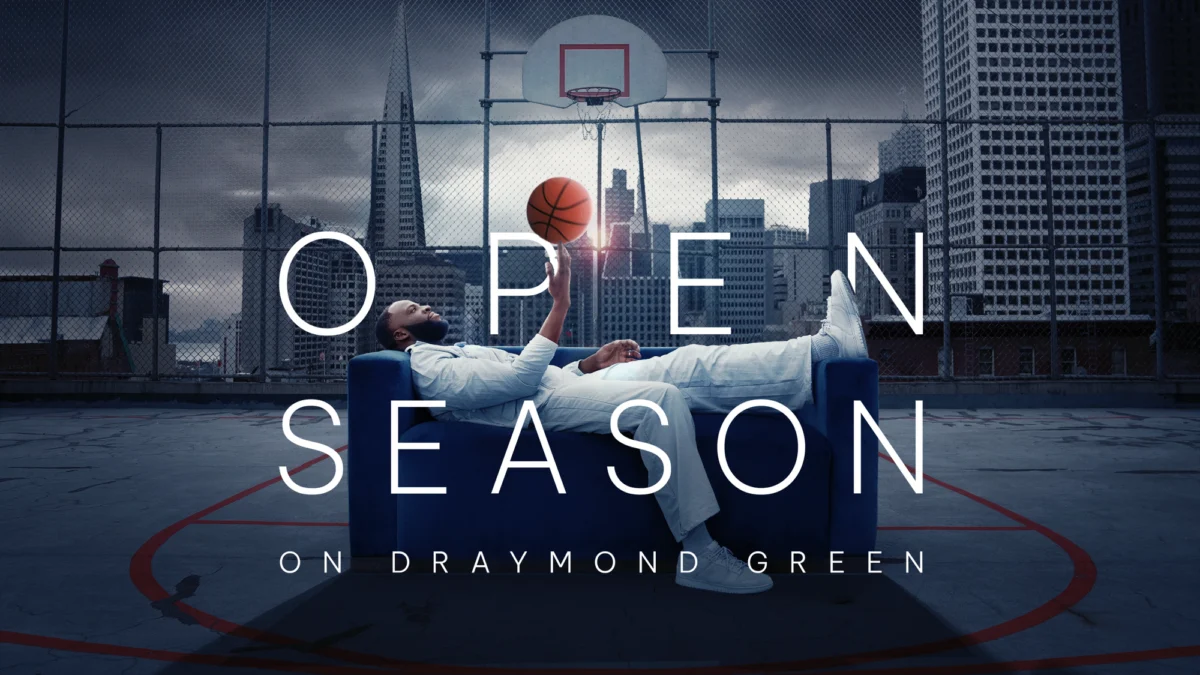
Meta is doubling down on its vision for spatial computing and virtual reality media, kicking off a bold new era of original immersive programming. The tech giant has officially pulled back the curtain on its new "Meta Presents" banner, launching its flagship production: Open Season, a groundbreaking documentary series that places viewers directly inside the therapy sessions of four-time NBA champion Draymond Green.
Captured across the 2025–26 NBA season, the six-part unscripted series offers an unprecedented, intimate look at the psychological landscape of a polarizing professional athlete. Produced in high-end stereoscopic 3D 180-degree VR, Open Season aims to redefine how audiences consume documentary storytelling by bridging the gap between observer and participant.
As Meta prepares for the spring 2026 commercial rollout of its next-generation lightweight VR hardware, Open Season serves as a technological and cultural litmus test for the viability of deep, emotional, and long-form immersive video.
Main Facts: What is Open Season?
At its core, Open Season is a departure from traditional sports documentaries. Rather than relying on archival game footage, talking-head retrospective interviews, and dramatic post-production editing, the series chronicles Green’s internal life in real time.
The production follows the Golden State Warriors forward through six actual therapy sessions with renowned sports psychologist Dr. Carrie Hastings. These sessions were recorded at various strategic points during the grueling 2025–26 NBA season, capturing Green as he navigates intense professional scrutiny, personal challenges, and the mental toll of maintaining an elite athletic career.
The project is a collaborative effort between Skydance Sports, Green’s own production banner The New Media, and Meta. Notably, the series is entirely unscripted. Green does not recount past trauma or historical controversies with the benefit of hindsight; instead, viewers watch him process high-pressure situations, emotional friction, and personal growth as they happen.
The technical execution of the project is equally ambitious. Open Season was shot specifically for virtual reality using professional Blackmagic URSA cameras configured for stereoscopic 3D 180-degree video. Rather than positioning the viewer in a traditional auditorium seat or behind a camera crew, the VR perspective places the audience directly in the room with Green and Dr. Hastings. Viewers sit alongside them, enveloped in the spatial audio and physical intimacy of a clinical therapist’s office, creating a sense of psychological proximity that standard flat screens cannot replicate.
Chronology: The Road to Meta Presents and Open Season
The journey toward Open Season and the broader "Meta Presents" initiative reflects a multi-year pivot by Meta toward high-end immersive entertainment, media consumption, and spatial storytelling.
The Evolution of Meta’s VR Media Strategy
For years, Meta’s virtual reality strategy—anchored by its Quest ecosystem—focused heavily on interactive gaming, social virtual reality spaces like Horizon Worlds, and enterprise productivity tools. While 360-degree video formats existed, they often suffered from low resolution, flat stereoscopy, and a lack of narrative depth, relegating them to niche tourism clips or promotional stunts.
However, advancements in camera sensor technology, higher-density display panels, and spatial audio processing allowed Meta to rethink its entertainment roadmap. Recognizing that consumers increasingly look to headsets for cinematic and episodic media consumption, leadership greenlit the creation of "Meta Presents" to curate and fund premier, high-production-value immersive content.
The 2025–26 Season Production Window
Production on Open Season coincided precisely with the 2025–26 NBA season—a high-stakes period for Draymond Green and the Golden State Warriors as they navigated the latter half of Green’s storied career. Choosing this active window was a deliberate creative choice by the filmmakers and Dr. Hastings, ensuring that the psychological material discussed was raw, immediate, and directly tied to the daily pressures of professional sports.
The Meta Connect Breakthrough
The broader context of Open Season’s launch was solidified at the annual Meta Connect conference. During the keynote presentations, Meta executives outlined an aggressive slate of immersive entertainment partnerships designed to bolster the value proposition of its hardware ecosystem.
Alongside the unveiling of Open Season, Meta announced:
- A major partnership bringing 3D movies directly to Disney+.
- Next-generation immersive sports broadcasts featuring ultra-sharp 8K streaming and 180-degree stereoscopic views.
- The upcoming National Geographic: Beyond app, featuring breathtaking 180-degree 3D footage of remote global environments.
- An exclusive 3D concert film adaptation of Billie Eilish’s Hit Me Hard and Soft: The Tour, slated for a Quest-exclusive release in November.
Release and Hardware Horizon
Open Season makes its official debut on September 29, accessible globally to Quest headset owners through the dedicated Meta TV app.
The launch serves as a crucial bridge to Meta’s hardware roadmap, specifically the upcoming debut of the newly announced Meta VR Glasses slated for release next spring. By positioning lightweight, consumer-friendly form factors as premier devices for media consumption, Meta is signaling that immersive video—exemplified by projects like Open Season—is no longer a secondary feature, but a primary pillar of its hardware ecosystem.
Supporting Data and Technical Specifications
To fully understand why Open Season represents a milestone in documentary filmmaking, one must examine the hardware, software, and production metrics underpinning the project.
Technical Specifications Matrix
| Feature | Specification / Detail |
|---|---|
| Format | Stereoscopic 3D 180-Degree VR Video |
| Camera Rig | Blackmagic URSA specialized VR camera systems |
| Audio | Spatial audio capturing room acoustics and dialogue fidelity |
| Episode Count | 6 unscripted real-time therapy sessions |
| Key Subjects | Draymond Green (NBA Player), Dr. Carrie Hastings (Sports Psychologist) |
| Production Partners | Skydance Sports, The New Media, Meta |
| Release Date | September 29 |
| Platform / App | Meta Quest (via Meta TV app) |
The Mechanics of 180-Degree Stereoscopic 3D
Traditional 360-degree video often forces viewers to look around constantly, frequently missing the narrative action taking place behind them while suffering from stretched pixels and monoscopic flatness. By contrast, 180-degree stereoscopic 3D video focuses the viewer’s attention on a hyper-detailed, incredibly immersive frontal hemisphere.
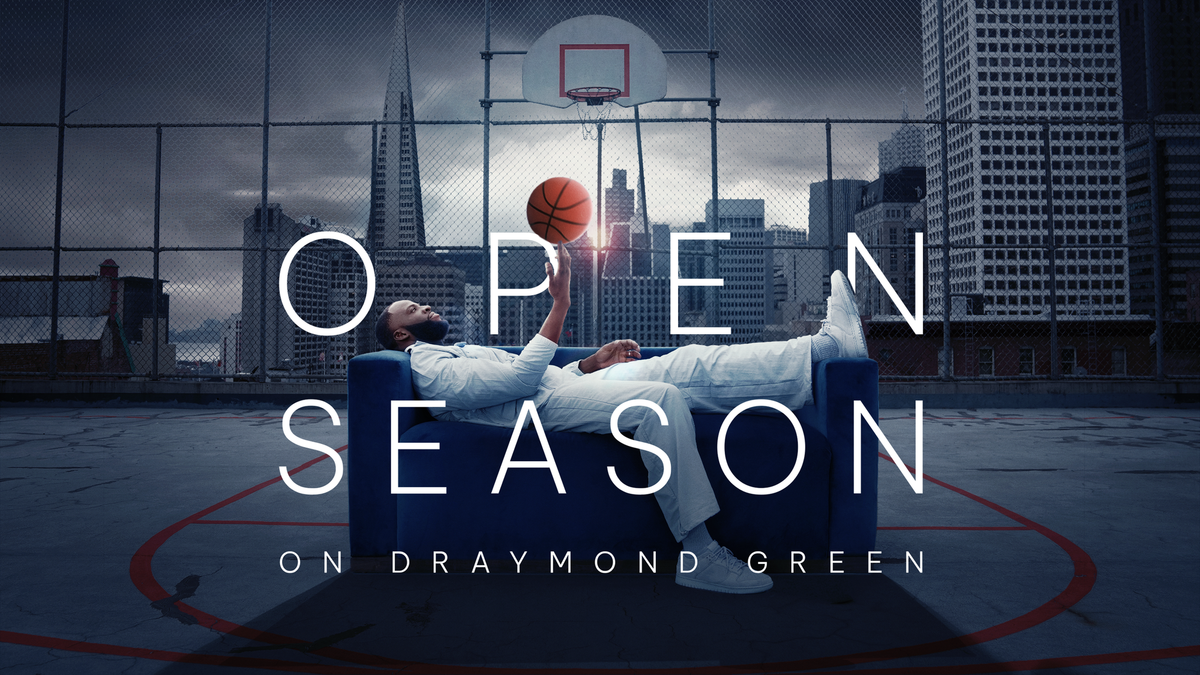
Utilizing Blackmagic URSA camera arrays, the production captured separate left-eye and right-eye video feeds at exceptionally high resolutions. When viewed through a Meta Quest headset, this creates true depth perception—objects, furniture, and human subjects appear with correct volumetric scale. Viewers can perceive the subtle shifts in Draymond Green’s posture, the expressions on Dr. Hastings’ face, and the spatial dimensions of the room as if they were sitting on the couch opposite them.
Official Responses and Industry Perspectives
The announcement of Open Season and the launch of Meta Presents have generated significant commentary from media analysts, sports insiders, and the creative teams involved.
Creators and Producers
Producers from Skydance Sports and Green’s production company, The New Media, emphasized that the project was designed to strip away the veneer of celebrity and athletic invulnerability.
"We didn’t want to make a highlight reel or a public relations fluff piece," noted a production representative close to the series. "Draymond opened himself up in a way that very few active professional athletes have ever dared to do. Putting that in virtual reality changes the contract between the subject and the audience. You cannot look away from the human being in front of you."
Meta’s Vision for Immersive Media
Meta executives have framed Open Season as the vanguard of a new storytelling medium. During strategy briefings surrounding Meta Connect, company leadership stressed that the future of spatial computing relies as much on empathy, documentary integrity, and emotional resonance as it does on gaming and productivity.
By securing exclusive content like Open Season, Disney+ integrations, and Billie Eilish concert films, Meta is actively attempting to solve the "content moat" challenge that has historically slowed adoption rates for consumer VR headsets. By offering experiences that cannot be replicated on a traditional television screen, Meta aims to convince mainstream consumers that owning a spatial headset is essential for experiencing modern media.
Implications: What Open Season Means for VR and Sports Media
The launch of Open Season carries wide-ranging implications for the future of documentary filmmaking, professional sports media culture, and the virtual reality industry at large.
1. Redefining Athletic Vulnerability and Public Image
Professional athletes are routinely subjected to intense public scrutiny, media soundbites, and social media commentary. However, public perception is often filtered through team PR departments and sports journalism tropes.
By inviting an immersive camera crew into the clinical space of therapy, Draymond Green has broken a long-standing taboo in professional sports regarding mental health disclosure. If Open Season succeeds in humanizing a famously intense and controversial competitor, it could pave the way for other high-profile athletes to utilize immersive media for transparent, unvarnished storytelling rather than traditional image rehabilitation.
2. The Evolution of VR from Novelty to Narrative Medium
For years, skeptics dismissed virtual reality video as an expensive novelty—good for roller coaster simulators and brief nature documentaries, but incapable of sustaining deep dramatic or emotional engagement.
Open Season challenges this assumption directly. A six-part psychological documentary relies entirely on pacing, dialogue, emotional tension, and human connection. By demonstrating that a stationary, 180-degree stereoscopic format can hold an audience’s attention through raw dialogue and clinical introspection, Meta and its production partners are proving that VR is a viable medium for serious, prestige non-fiction programming.
3. Hardware Sales and the Content Ecosystem
As Meta prepares for the spring 2026 launch of its lightweight VR glasses, the success of content pipelines like "Meta Presents" will be critical. Consumers buy hardware based on the software experiences available to them.
If Open Season, alongside upcoming offerings like National Geographic’s immersive apps and exclusive 3D concert films, drives high engagement within the Meta TV app, it validates Meta’s strategy of funding high-end, exclusive cinematic content. This could trigger a broader industry shift, encouraging competing hardware manufacturers to invest heavily in original stereoscopic 3D programming.
4. Ethical and Privacy Considerations in Immersive Documentary
The intimate nature of Open Season also raises fascinating ethical questions for the future of documentary filmmaking in VR. When a viewer is placed inside a therapist’s office in true stereoscopic 3D, the feeling of intimacy is so profound that it blurs the line between public media consumption and private observation.
As filmmakers continue to push the boundaries of spatial computing, industry ethicists will likely debate the psychological impact on both subjects—who must process vulnerability in the presence of hyper-advanced recording technology—and audiences, who may grapple with unprecedented levels of voyeurism.
Conclusion
Open Season represents a watershed moment for Meta’s entertainment ambitions and a bold leap forward for virtual reality storytelling. By pairing one of the NBA’s most compelling and scrutinized figures with pioneering 180-degree stereoscopic 3D technology, Meta has crafted a project that is as technically ambitious as it is emotionally provocative.
As the series premieres on September 29 via the Meta Quest TV app, all eyes will be on how audiences respond to this new frontier of immersive non-fiction. Whether Open Season becomes a blueprint for future prestige documentaries or remains a unique technological experiment, it has already achieved one major milestone: proving that the future of virtual reality is just as much about exploring the human heart and mind as it is about exploring virtual worlds.

