

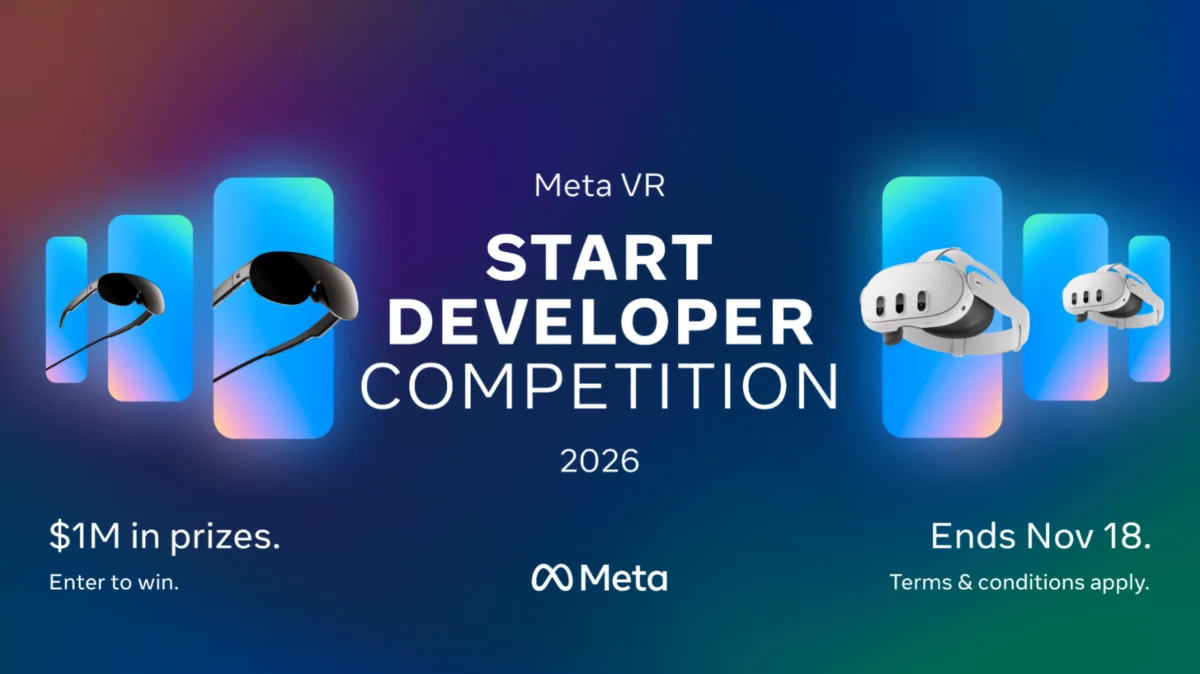
SAN FRANCISCO — During the marquee Developer State of the Union address at Meta Connect 2026, tech giant Meta officially launched the Meta VR Start Developer Competition 2026. Offering a total prize pool of $1 million distributed across 20 distinct awards—with individual payouts reaching up to $100,000—the competition is designed to incentivize the creation of cutting-edge, natively intuitive applications for both the Meta Quest ecosystem and Meta’s newly unveiled standalone VR Glasses.
This year’s event places a heavy emphasis on "hands-first" interactions, signaling a strategic pivot toward natural, controller-free gestures that promise to make virtual and mixed reality experiences more immersive and accessible than ever before.
Main Facts: The 2026 Developer Competition at a Glance
The Meta VR Start Developer Competition 2026 represents one of the most lucrative initiatives yet launched by Meta to bolster its software ecosystem ahead of next-generation hardware rollouts.
- Total Prize Pool: $1 million, split across 20 winning tiers.
- Maximum Single Prize: Up to $100,000 per winning submission.
- Eligible Platforms: Meta Quest headsets and the newly announced Meta VR Glasses.
- Core Focus: "Hands-first" applications, natural user interaction, intuitive gameplay, and productivity tools spanning entertainment, gaming, and lifestyle categories.
- Eligible Projects: Brand-new builds or significantly adapted/updated existing applications.
- Submission Deadline: November 18, 2026.
- Submission Portal: Devpost (applicants must be members of the Meta VR Start program).
The competition follows closely on the heels of Meta Connect 2026 announcements, which included the surprising debut of Meta’s ultra-lightweight VR Glasses—a device that heavily relies on eye and hand-tracking paradigms rather than traditional hardware controllers.
Chronology of the Initiative: From Oculus Start to Meta VR Start 2026
To understand the weight of the 2026 competition, it is helpful to trace the evolution of Meta’s developer incubation programs over the years.
The Early Days: Oculus Start
Originally established as Oculus Start, Meta’s developer support initiative began as a grassroots effort to nurture indie developers building virtual reality software. At a time when VR was still finding its commercial footing, the program offered direct lines of communication to Meta’s engineering teams, early access to hardware development kits, and software credits to alleviate the high costs of independent development.
The Horizon Era and Late 2025 Competition
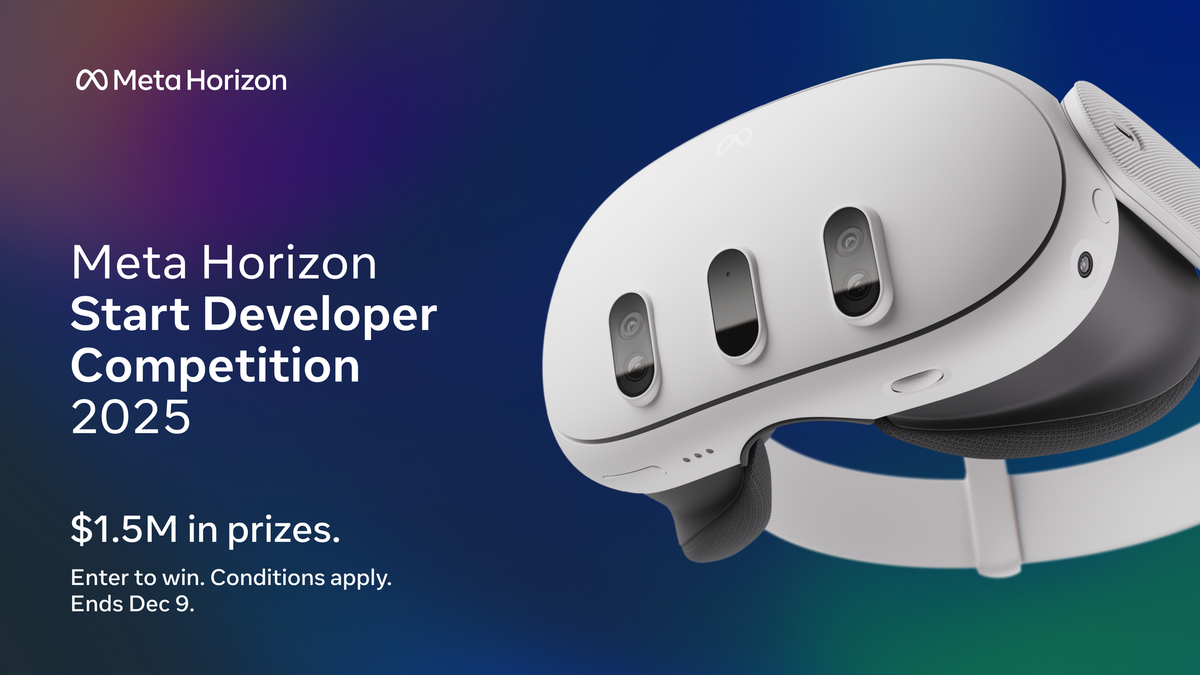
As the platform rebranded around the "Horizon" moniker, the program transitioned into Meta Horizon Start. In late 2025, Meta launched a massive $1.5 million developer competition that awarded 32 prizes of up to $100,000. That iteration focused broadly on entertainment, lifestyle, and gaming apps designed for the Quest platform, laying the technical groundwork for richer, more polished standalone VR experiences.
The Present: Meta Connect 2026 and the Shift to "Hands-First"
Rebranded once more as Meta VR Start, the program reached a critical milestone at Meta Connect 2026. During the Developer State of the Union, leadership outlined the roadmap for the next generation of spatial computing. Recognizing that the future of spatial interaction relies on shedding cumbersome peripherals, Meta structured the 2026 competition specifically to challenge developers to abandon traditional control schemes in favor of raw hand gestures and eye tracking.
Supporting Data and Technical Requirements
Developers looking to claim a share of the $1 million prize pool must navigate a specific set of guidelines and technical benchmarks.
What Qualifies as an Entry?
Meta is casting a wide net, accepting both ground-up creations and substantial overhauls of existing titles. According to competition guidelines, qualifying updates and adaptations include, but are not limited to:

- Native Hand-Tracking Implementation: Introducing robust, reliable hand interactions as a core feature rather than a secondary input method.
- Multiplayer Integration: Adding seamless co-op or competitive multiplayer infrastructure to single-player experiences.
- Mixed Reality (MR) Modes: Building innovative passthrough capabilities that blend digital assets seamlessly into physical living spaces.
- User-Generated Content (UGC): Introducing accessible creation tools that empower communities to build and share their own content within the app.
Program Benefits Beyond the Prize Money
Participation in the competition requires enrollment in the Meta VR Start program. Beyond the potential cash prizes, members gain access to a robust support ecosystem:
- Direct access to Meta developer relations staff.
- An exclusive, highly active community Discord server.
- Invitations to private Meta developer events and hackathons.
- Advanced technical education and community-led mentorship programs.
- Ongoing software credits and go-to-market strategic guidance.
Interested creators must apply for the Meta VR Start program first via the official Meta Developer portal before submitting their finalized projects to Devpost by November 18, 2026.
Official Context: The Paradigm Shift of Meta VR Glasses
The launch of the 2026 developer competition is inextricably tied to the hardware announcements made during Meta Connect 2026, most notably the official unveiling of the Meta VR Glasses.
Slated to ship in spring 2027 with a retail price of $1,300, the Meta VR Glasses represent a radical departure from traditional gaming-centric headsets. Weighing in at a mere 100 grams and featuring crisp 2.4K micro-OLED displays powered by a tethered compute puck running Qualcomm’s Snapdragon Reality Elite chipset, the device is engineered for all-day comfort, productivity, and media consumption.
Crucially, the Meta VR Glasses do not ship with physical controllers by default. Instead, the hardware relies almost entirely on sophisticated eye and hand-tracking sensors. While the device maintains optional backward compatibility with the Touch Plus controllers introduced with the Quest 3 and Quest 3S, Meta is aggressively steering developers toward controller-free UI design.
"The future of spatial computing isn’t about holding plastic controllers in an empty room; it’s about interacting with the digital world as naturally as you interact with the physical one," noted industry analysts following the Connect 2026 keynote. "By tying this $1 million competition directly to ‘hands-first’ design, Meta is essentially forcing the developer ecosystem to catch up with their hardware vision for 2027."
Strategic Implications for the XR Industry
The announcement of the Meta VR Start Developer Competition 2026 carries profound implications for independent developers, larger studios, and the broader Extended Reality (XR) landscape.
1. Accelerating Controller-Free UI Standards
For years, hand tracking in virtual reality has been viewed as a secondary or novelty input—useful for casual menu navigation, but largely unreliable for high-speed gaming or intricate productivity work. By injecting $1 million into projects that prioritize hands-first mechanics, Meta is providing the financial runway developers need to solve complex tracking occlusion, gesture latency, and fatigue issues. If successful, this competition could establish new universal UX standards for hand-based spatial computing.
2. Priming the App Ecosystem for Spring 2027
Hardware launches live or die by their software libraries. With the Meta VR Glasses scheduled to hit the market in spring 2027, Meta faces the challenge of ensuring a robust, optimized catalogue of applications are ready on day one. A November 2026 submission deadline gives winners and runners-up roughly four months to polish their software for the hardware rollout, guaranteeing that consumers unboxing their $1,300 glasses in 2027 are greeted by a mature ecosystem of productivity apps, games, and entertainment software built specifically for the form factor.
3. Strengthening Developer Loyalty
In an increasingly competitive spatial computing market—contended by Apple, Google, and various enterprise-focused hardware manufacturers—retaining developer mindshare is vital. Programs like Meta VR Start act as a powerful retention tool. By offering direct mentorship, technical backing, and substantial cash prizes, Meta cultivates a loyal cadre of creators who are economically and creatively invested in the Quest and VR Glasses platforms.

Looking Ahead
As the November 18, 2026 submission deadline approaches, independent studios and enterprise developers alike are rushing to adapt their pipelines to meet Meta’s rigorous standards. Whether these financial incentives will successfully bridge the gap between controller-based gaming and fluid, natural hand-tracking remains to be seen—but one thing is certain: the race to define the next era of human-computer interaction is officially underway.

