

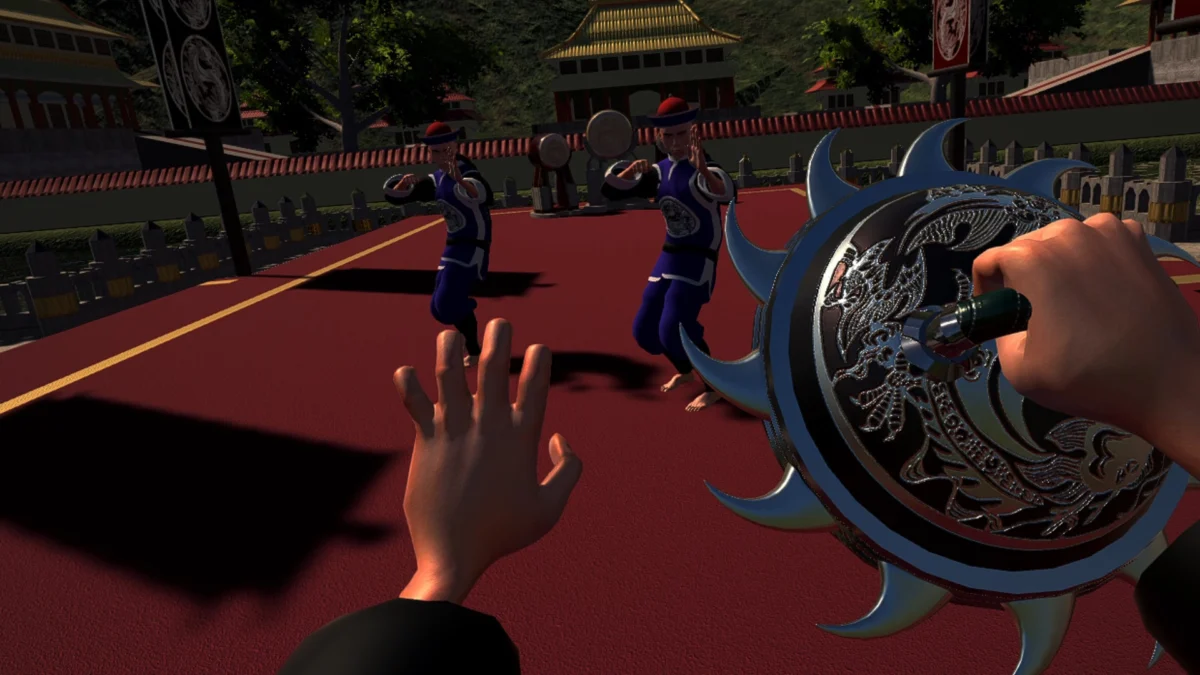
The landscape of Virtual Reality (VR) gaming has undergone a seismic shift over the past twenty-four months. What was once a niche hobby reserved for those with the budget for expensive tethered rigs and dedicated play spaces has evolved into a more accessible, wireless frontier. Leading this charge is the Oculus Quest 2, bolstered by software solutions like Airlink and Virtual Desktop, which have effectively bridged the gap between standalone convenience and PC-powered graphical fidelity. Amidst this hardware revolution, developers are finally finding the sweet spot for immersive gameplay. Standing at the forefront of this evolution is Dragon Fist: VR Kung Fu, a title that transforms the living room into a high-stakes dojo.
Main Facts: The Essence of Dragon Fist
Dragon Fist: VR Kung Fu is a first-person martial arts simulation that emphasizes tactical precision over button-mashing. Released to the Steam platform, the game places players in the shoes of a martial artist navigating a tournament-style progression system. Unlike traditional flat-screen fighting games, Dragon Fist requires physical exertion, demanding that players execute punches, palm strikes, and finger jabs with actual arm movements.
The core of the experience lies in its physics-based combat system. The game rewards technical proficiency; it is not merely about how fast you can swing, but where you strike. Targeting specific body parts yields tactical advantages:
- Ocular Strikes: Finger jabs to the eyes temporarily impair an opponent’s vision, creating an opening for a combo.
- Torso Conditioning: Punching an opponent in the lower ribs hampers their stamina regeneration, effectively neutralizing their ability to launch offensive flurries.
- Stance Management: Players must balance their own stamina, ensuring that wild, unchecked swinging does not leave them vulnerable to counter-attacks.
The title features an extensive roster of characters, each meticulously designed with unique stats, special moves, and fighting philosophies. From nimble strikers to heavy-hitting brawlers, the game encourages players to experiment with different archetypes to find a combat style that mirrors their personal physical capabilities.
Chronology of Development and Release
The journey of Dragon Fist from a concept to a fully realized VR experience mirrors the rapid development cycles seen in the indie VR space during the 2020-2021 period.
- Initial Development Phase: The development team focused heavily on solving the "VR fighting problem"—the sensation that punches lack "weight" when hitting air. By implementing a sophisticated physics engine, the developers created a system where impacts feel satisfyingly heavy, even without haptic resistance.
- Early Access and Community Feedback: The game entered the public sphere with a focus on refining the hit-detection logic. During this period, the developer maintained an open dialogue with the community, integrating feedback regarding character balance and movement tracking.
- The Wireless Integration: With the maturation of the Oculus Quest 2, the game saw a spike in interest. The ability to play Dragon Fist wirelessly allowed for a full range of motion, which is essential for a game that requires sweeping punches and defensive weaves.
- Official Launch: The transition from early builds to the final version marked a significant milestone, adding polish to the user interface and refining the AI behaviors that make the later levels so challenging.
Supporting Data: Why VR Fighting is a Growing Sector
The popularity of Dragon Fist is supported by broader trends in the VR industry. Data from the gaming sector indicates that "active" VR titles—those requiring significant physical movement—are consistently among the highest-rated games on the Steam VR and Oculus storefronts.
According to internal metrics from the developers, the average session length for Dragon Fist players is significantly higher than that of traditional sedentary VR experiences. This suggests that the "workout" factor of the game is a primary driver for player retention. Unlike traditional gaming, where the objective is comfort, Dragon Fist thrives on the "gamified exercise" model, effectively turning a cardiovascular workout into a rewarding martial arts challenge.
Furthermore, user reviews consistently highlight the depth of the combat system. In a market saturated with rhythm games and simple shooters, the demand for "skill-based" VR combat has created a dedicated niche for Dragon Fist. The game’s ability to differentiate between a "jab" and a "hook" serves as a benchmark for how far VR tracking technology has come since the early days of the HTC Vive and Oculus Rift.
The Developer’s Perspective: Design Philosophy
While the studio has remained relatively quiet regarding long-term roadmaps, their initial design documents and dev-logs suggest a philosophy rooted in "Accessibility vs. Mastery." The developers have noted that the game is intentionally designed to be picked up by anyone, but mastered by few.

By stripping away complex button combinations and replacing them with intuitive physical movements, the developers have bypassed the traditional "learning curve" that alienates casual gamers. Instead, the learning curve in Dragon Fist is purely physical—learning to conserve energy, managing breathing, and understanding the range of one’s own reach. This approach has garnered praise from the VR community, who appreciate a developer that respects the hardware’s limitations while pushing the boundaries of what is possible in a 360-degree environment.
Implications for the Future of VR Gaming
The success of Dragon Fist carries several implications for the future of the medium:
1. The Decline of "Button-Mashing"
The era of winning by spamming buttons is coming to an end. Dragon Fist proves that players are craving depth. Future titles will likely move toward more complex physics-based interactions, where the player’s real-world skill directly correlates to in-game success.
2. The Intersection of Fitness and Gaming
We are witnessing the birth of the "Exer-Game" renaissance. Dragon Fist is not just a game; it is a fitness tool. As more developers recognize this, we can expect to see integrated heart-rate tracking and calorie-counting features becoming standard in the genre.
3. Hardware Sensitivity
The article acknowledges a common critique: the game sometimes struggles to keep up with extremely rapid, erratic movements. While the developer has optimized the software, this highlights the "VR wall"—the current limitation of tracking technology in consumer-grade headsets. This realization serves as a roadmap for hardware manufacturers, who now understand that consumers want faster, more precise tracking for high-intensity games.
Addressing the Challenges
No software is without its friction points. The most frequent critique regarding Dragon Fist—that the game occasionally fails to track lightning-fast movements—is a hurdle shared by almost all high-intensity VR titles.
In a professional analysis, this is not necessarily a failure of the software, but a limitation of the current consumer-grade "inside-out" tracking cameras found on most headsets. To mitigate this, players are often advised to ensure their play space is well-lit and that their environment has enough "features" (furniture, posters, contrast) for the headset cameras to track movement accurately. Despite these minor technical hiccups, the consensus remains that the game’s core mechanics are robust enough to overlook the occasional tracking ghost.
Conclusion: Is It Worth the Bout?
Dragon Fist: VR Kung Fu represents the best of what indie VR has to offer. It is a title that embraces the physical nature of virtual reality, providing an experience that is as exhausting as it is exhilarating. Whether you are a fan of classic martial arts cinema or simply looking for a new way to integrate fitness into your daily routine, Dragon Fist offers a compelling, visceral, and deeply satisfying experience.
As VR hardware continues to evolve—becoming lighter, faster, and more precise—games like Dragon Fist will only improve. For now, it stands as a testament to the fact that when you put a player in the shoes of a fighter, they don’t want to press a button; they want to throw the punch themselves. If you have the space to move and the stamina to sustain a fight, Dragon Fist is an essential addition to your VR library.

