

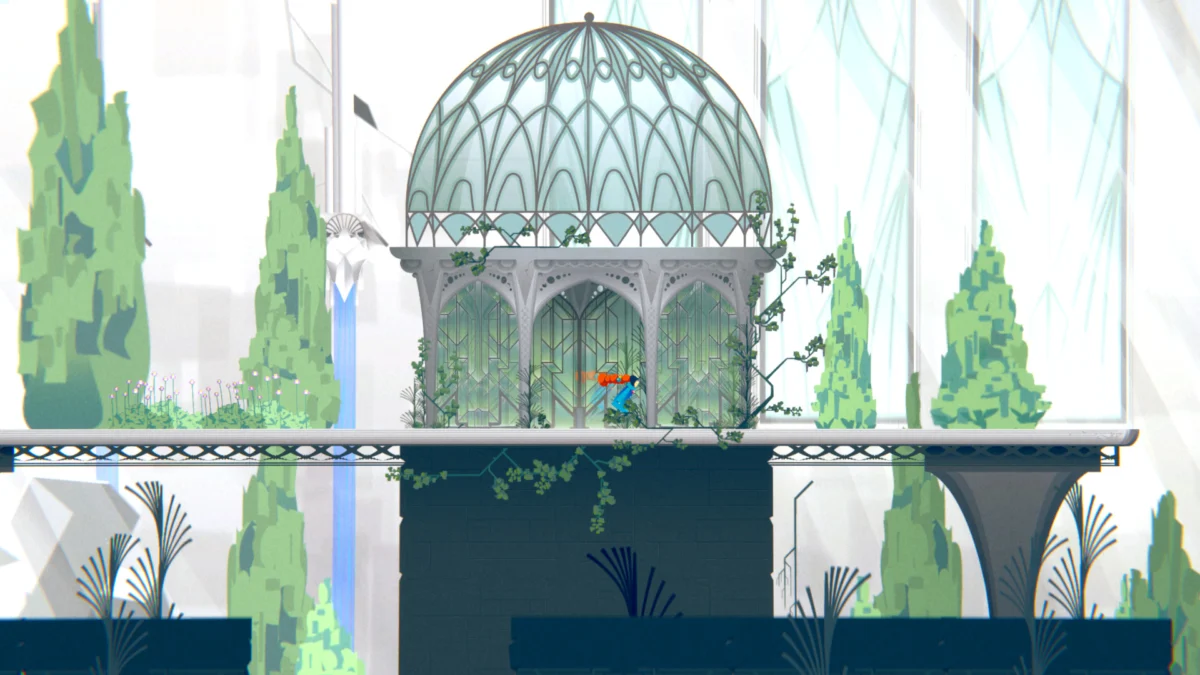
In the crowded landscape of indie gaming, the term "story-rich" has become a ubiquitous descriptor, often applied to titles with more ambition than execution. Among these is Aspire: Ina’s Tale, a 2D puzzle-platformer developed by Wondernaut Studio. Upon its release in late 2021, the title promised a poignant, narrative-driven journey through a mystical, dream-infused Tower. However, despite its visual splendor and moments of mechanical ingenuity, the game struggles to distinguish itself from a sea of similar titles, ultimately serving as a case study in the perils of prioritizing aesthetic polish over thematic substance.
Main Facts: The Narrative Framework
Aspire: Ina’s Tale casts the player as Ina, a character who awakens within the confines of a massive, sentient structure known simply as "the Tower." As the designated "Heart of the Tower," Ina is tasked with navigating the surreal architecture to secure her freedom and return to her home, Kamiura.
The game follows a familiar archetype: the spindly, vulnerable protagonist exploring a vast, alien environment to uncover the secrets of their own existence. Throughout her journey, Ina interacts with various NPCs and evades spectral threats, all while navigating a world designed by an enigmatic "Architect." The narrative is framed by themes of destiny, memory, and the dichotomy between light and shadow. Yet, the core conflict—a chosen-one narrative—feels derivative, echoing the beats of titles like Gris, Hoa, and Minute of Islands.
Chronology of the Experience
The player’s journey through Aspire is structured into distinct thematic regions, each introducing new mechanical variations.

- The Awakening: Ina begins in the lower levels of the Tower, where the player is introduced to the core movement mechanics and the basic premise of light-based interaction.
- The Mid-Game Complexity: As the player ascends, the puzzles evolve from simple traversal to complex manipulation of environmental elements, such as scaling objects or interacting with specific light sources to manipulate machinery.
- The Climactic Ascent: By the final act, the game demands high-precision platforming and timing. It is here that the intersection of the game’s control scheme and its level design creates a significant friction point for the player, often leading to a sense of resignation rather than narrative resolution.
Supporting Data and Mechanical Analysis
From a design perspective, Aspire operates as a pure puzzle-platformer devoid of traditional combat. Instead, players must navigate around hostile entities, often using light-emitting power sources to repel them.
Mechanical Strengths
- Checkpoint Frequency: The game is remarkably forgiving with its checkpoint system. Without this frequent saving, the more punishing platforming segments would likely prove insurmountable for many players.
- Visual Fidelity: The art direction is objectively strong. From the crisp rendering of light reflecting off ancient armor to the detailed reflections in crystal shards, the visual presentation provides a polished veneer that initially draws the player in.
Mechanical Frustrations
- Control Precision: While the developers clearly aimed for a fluid experience, the actual movement of Ina is frequently described as "stiff." Specifically, the rope-swinging physics and the jump arc demand a level of precision that the input mapping does not always support, particularly on platforms like the Nintendo Switch.
- Trial and Error: A significant portion of the game’s difficulty is derived from "Goldilocks-style" experimentation, where the player must find the exact pixel-perfect position to trigger a platform or switch. This creates a loop of repetitive failure that feels unearned given the game’s narrative stakes.
Official Perspectives and Industry Context
Wondernaut Studio has positioned Aspire: Ina’s Tale as a labor of love, focusing on the atmospheric storytelling and the "dream-logic" of the Tower. While the studio has received praise for the game’s technical polish, the critical reception has been divided.
Critics often point to the "Tower" setting as a metaphor for the developer’s own creative constraints—beautifully rendered, yet ultimately confining. The industry-wide trend of "waif-like" protagonists in atmospheric platformers has led to a saturation of the market, where Aspire finds it difficult to assert its own unique identity. Unlike Gris, which uses its lack of dialogue to elevate its emotional resonance, Aspire attempts to ground its story in traditional tropes that feel tired by comparison.
The Implications of "Story-Rich" Saturation
The disappointment felt by many players of Aspire highlights a growing rift in the indie gaming community between "atmosphere-first" design and "narrative-depth" expectations.
The Problem of Derivative Storytelling
The narrative’s reliance on the "pure, innocent character with impaired memories" trope is perhaps the game’s greatest weakness. While minimalist storytelling can be powerful, it requires a unique hook or a daring shift in perspective. Aspire repeatedly asks the player to sympathize with the plight of the Tower and its inhabitants, yet it fails to provide a compelling reason to care. By framing the world’s conflict through the eyes of a "chosen one" tasked with maintaining a system they do not understand, the game misses an opportunity to subvert player expectations.
The Impact on Platforming Expectations
There is a fundamental mismatch between the game’s pacing and its mechanics. When a game advertises itself as a narrative-rich experience, players generally expect the gameplay to serve the story. In Aspire, the gameplay frequently interrupts the narrative flow with frustrating, high-difficulty platforming sections that offer no narrative payoff. This "ludonarrative dissonance"—where the player feels frustration at the controls rather than engagement with the story—breaks the immersion that the art style works so hard to build.
Conclusion: A Beautiful, If Flawed, Ascent
Aspire: Ina’s Tale is not a failure, but it is an illustration of the limits of aesthetic appeal. It is a game that is easy on the eyes but often difficult on the nerves. For players who value visual artistry and are willing to endure significant trial-and-error in their platforming, it offers a functional experience. However, for those seeking a story that justifies the frustration of its mechanics, Aspire falls short of its own ambitions.
As the indie landscape continues to evolve, the lesson of Aspire is clear: polish is not a substitute for personality. To truly stand out in a genre defined by high-concept atmosphere, a game must offer more than just a beautiful world; it must offer a world that feels as distinct as the art that depicts it. Aspire: Ina’s Tale succeeds in building a beautiful tower, but it fails to provide a compelling reason for the player to reach the top. Whether the game is viewed as a relaxing visual experience or a frustrating mechanical hurdle depends entirely on the player’s patience, but for most, the climb is ultimately not worth the view.

