

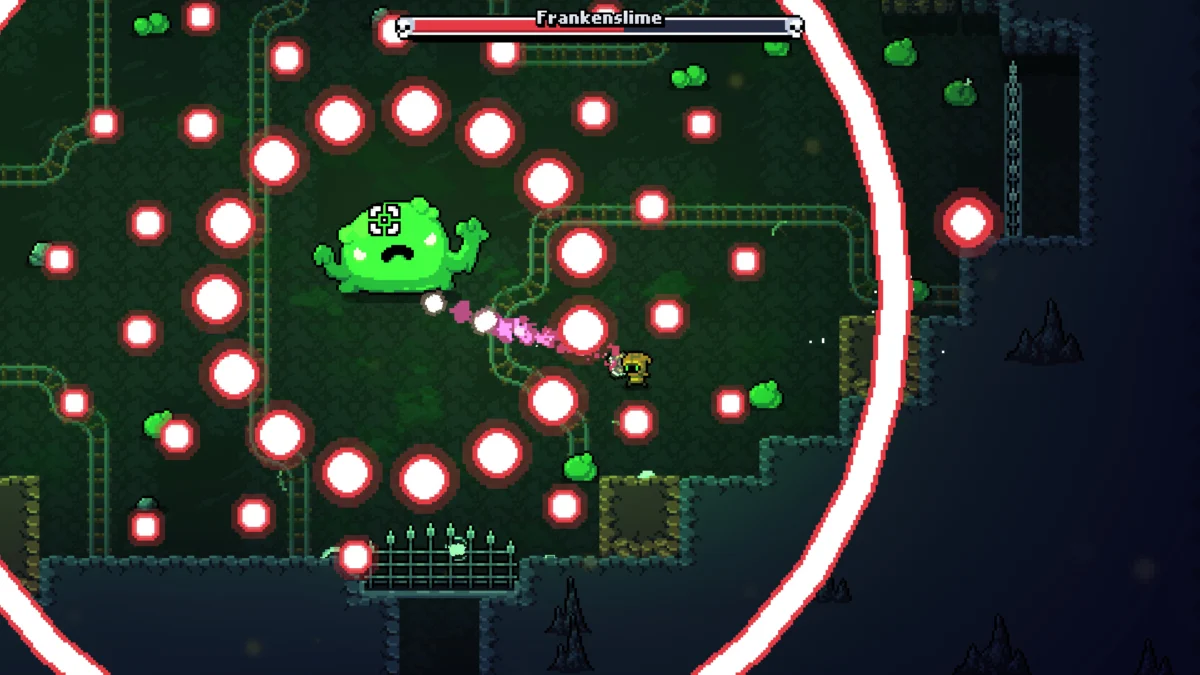
As the curtain closes on what many analysts have dubbed the "Golden Age of Indie Gaming," it is clear that 2021 stood out as a landmark year for experimental design. While major AAA studios often rely on safe, iterative sequels, the independent sector has been busy shattering expectations. Among the late-year surprises that captured the imagination of the gaming community is Archvale, a title that defies simple categorization. By seamlessly fusing the deep, progression-oriented mechanics of an RPG with the high-octane, precision-based intensity of a bullet-hell shooter, Archvale has carved out a unique space in the market.
Main Facts: The Anatomy of a Genre Hybrid
Archvale is a testament to the idea that disparate game genres can coexist, provided they are balanced with intentionality. At its core, the game presents a vibrant, top-down world reminiscent of classic 16-bit adventures, yet it functions as a fast-paced action game.
The premise is deceptively simple: players assume the role of a lone hero tasked with dismantling the legacy of a tyrannical king whose influence still permeates the land. The primary objective is to recover the scattered pieces of the legendary "Arch" to gain entry into the final confrontation. However, the game’s primary allure is not merely its narrative, but its systemic depth. Players are granted an immense degree of freedom, allowing them to explore the world’s various biomes in almost any order. This non-linear approach is balanced by a difficulty curve that demands mastery of the "bullet-hell" combat system, where dodging complex patterns of projectiles is just as important as swinging a sword or firing a projectile.
Chronology: The Journey to Launch
The development and eventual release of Archvale serve as a microcosm of the modern indie development lifecycle.
- Early Development (2019-2020): The project began as a vision to combine the satisfaction of loot-driven progression with the mechanical rigor of shooters like Enter the Gungeon or Touhou. Developers focused on creating a "build-crafting" system that would remain fluid throughout the game.
- Public Awareness (Mid-2021): As word of mouth grew within the indie community, the game garnered attention during various online showcases and Steam "Next Fest" events, where its vibrant pixel art and challenging gameplay loop drew significant praise.
- The Launch (December 2021): Archvale officially arrived on PC and consoles in late December, arriving just in time to cap off a year defined by strong independent releases.
- Post-Launch Reception: Upon release, the game was noted for its polished mechanics, with critics highlighting the unusual but effective "Frog Chef" NPC—a quirky detail that became a mascot for the game’s charm—and the overall tightness of its controls.
Supporting Data: Why Archvale Resonates
The success of Archvale is backed by several key design choices that appeal to modern player demographics:
The Build-Crafting Paradigm
Unlike traditional RPGs that force players into rigid classes early on, Archvale encourages experimentation. Players can switch between a wide array of weapons—ranging from magical staves to ballistic firearms—on the fly. This flexibility is supported by an extensive loot system. As players defeat bosses, they uncover new gear, allowing them to iterate on their "build" to counter specific projectile patterns.
The Difficulty-Reward Loop
The game is notoriously difficult, a hallmark of the bullet-hell subgenre. However, it avoids the "punishing" stigma by offering fair, telegraphed attacks. The data suggests that players who engage with the game’s core combat loop—the "sidestep-and-strike" rhythm—experience high levels of dopamine release, as the game rewards mechanical mastery with substantial power spikes.
Visual and Auditory Aesthetics
The game utilizes a distinct, high-fidelity pixel art style that avoids the "clutter" often associated with bullet-hell games. By keeping the visual space clean, the developers ensured that players could track enemy fire, a crucial design requirement that many larger studios often overlook.
Official Perspectives: The Philosophy of Design
While the developers have remained humble, interviews during the game’s promotional cycle highlighted a clear philosophy: accessibility through mastery.

In a statement regarding the game’s design, the development team noted: "We wanted to create a game that felt like a journey, not a grind. By allowing players to tackle regions in any order, we shifted the pressure from the game forcing a path to the player choosing their own level of challenge."
This design philosophy directly addresses the player agency that is currently trending in the industry. By removing the "gated" progression found in many RPGs, Archvale treats the player’s skill as the ultimate key to the world. If you can dodge the bullets, you can progress; if you cannot, the game provides the tools (via gear and stats) to make the attempt easier.
Implications for the Future of Indie Gaming
Archvale represents a significant shift in how indie developers are approaching hybrid design. We are seeing a move away from "genre purity." In the past, a game was either an RPG or an Action game; today, the lines are increasingly blurred.
The Rise of "Micro-Genre" Blending
The success of titles like Archvale proves that audiences are hungry for "niche-blending." When a developer takes the loot-addiction of a game like Diablo and combines it with the twitch-reflex requirement of a bullet-hell, they create a market niche that previously did not exist. This encourages other developers to take risks with unlikely combinations.
The Longevity of Pixel Art
The continued success of Archvale reinforces the fact that "high-fidelity" is not synonymous with "high-polygon." As hardware prices fluctuate and accessibility becomes a priority, pixel art remains a powerful tool for indie developers to deliver high-quality, readable, and beautiful gameplay without the astronomical overhead of 3D modeling.
Player Agency as a Retention Strategy
Finally, the game serves as a masterclass in non-linear progression. Modern players are increasingly busy; they value titles that respect their time by offering choice. By allowing players to wander, explore, and "find their own way" through the map, Archvale ensures that the player feels like the hero of their own story, rather than a passenger on a scripted ride.
Conclusion: A Must-Play for the Discerning Gamer
As we look back at the landscape of 2021, Archvale stands as a reminder that the best games are often those that refuse to stay in their lane. It is a title that challenges the player, rewards their curiosity, and provides a level of mechanical satisfaction that is rarely seen in titles of this scope.
Whether you are a fan of traditional RPG progression, a seasoned veteran of the bullet-hell genre, or simply someone who appreciates a well-crafted, charming adventure, Archvale deserves a place in your library. With its tight controls, extensive build variety, and a world brimming with secrets—and, of course, the ever-important Frog Chef—it is more than just a game; it is an experience that defines the ingenuity of the independent gaming scene.
If the last few years have taught us anything, it is that the most impactful games are often those that surprise us. Archvale does exactly that, proving that even in a saturated market, there is always room for a project built with genuine passion and an eye for creative, genre-defying mechanics.

