

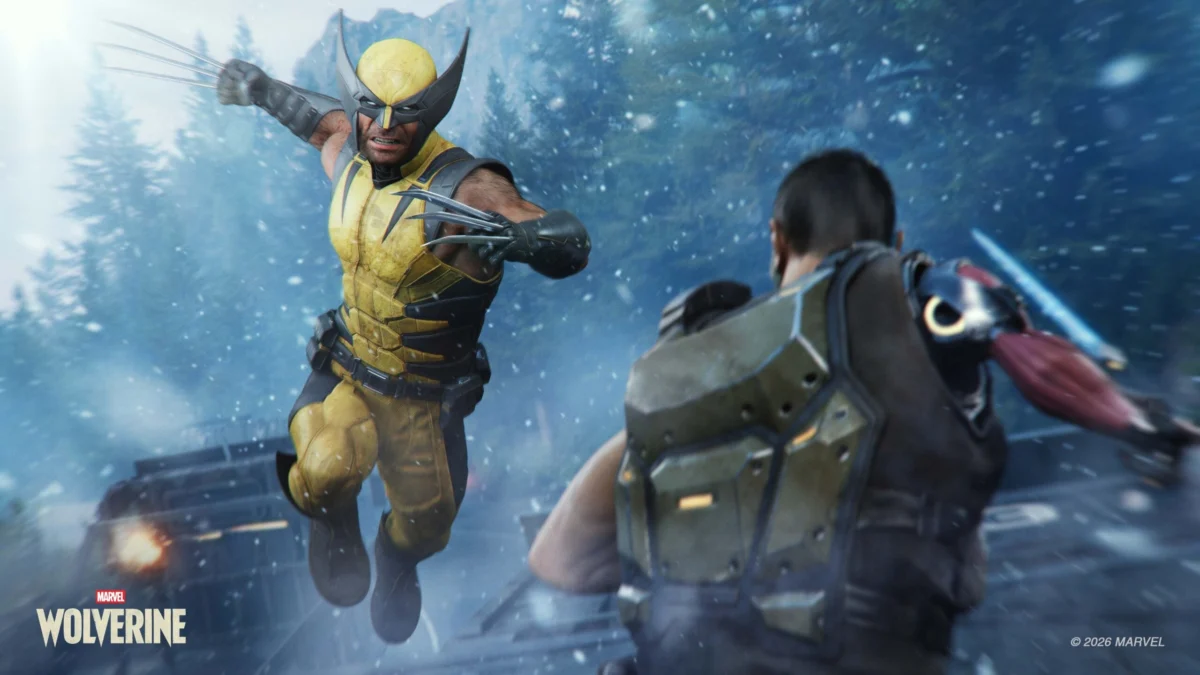
After three years of anticipation, immense internal turbulence, and the weight of one of pop culture’s most iconic anti-heroes, Insomniac Games has finally released Marvel’s Wolverine. Positioned as a premier PlayStation exclusive, the title was intended to be the jewel in the crown of Sony’s current generation. Instead, it has arrived amidst a landscape of corporate controversy and critical hesitation, serving as a stark reminder that even the most legendary characters are not immune to the pitfalls of dated design and development instability.
Chronology: A Stormy Path to Release
The trajectory of Marvel’s Wolverine has been anything but smooth. Since its initial announcement in 2021, the project has served as a lightning rod for the broader challenges facing Insomniac Games and its parent company, Sony Interactive Entertainment.
The most significant blow to the game’s development occurred in 2023, when Insomniac Games fell victim to a massive ransomware attack. The breach resulted in the exfiltration of 1.67 terabytes of internal data. For the public, this provided an unprecedented, albeit unauthorized, look into the studio’s kitchen. Leaked materials included early gameplay footage, narrative beats, level design documents, and sensitive character details. This breach did more than just strip away the mystery of the project; it fundamentally altered the development environment, forcing the team to navigate the scrutiny of a public that had already seen the "rough drafts" of their work.
Beyond the breach, the launch coincides with a tumultuous era for the PlayStation brand. The company has faced intense criticism over a series of strategic pivots, including the 2018 discontinuation of physical disc production and the high-profile fracturing of their relationship with industry visionary Hideo Kojima, which led to the cancellation of the Physint project. Against this backdrop, Marvel’s Wolverine was expected to be a morale-boosting "win" for the studio. Instead, with a Metacritic score currently sitting at 78, the game has arrived to a lukewarm reception that reflects a company seemingly out of sync with modern player expectations.
The Combat Conundrum: Style Over Substance
At the heart of the critique is the game’s combat system—the very element that should have been the most visceral and satisfying aspect of a Wolverine title. Critics have been largely unified in their disappointment, describing a loop that, while visually flashy, lacks the depth and mechanical evolution required to sustain a full-length campaign.
Keith Stuart of The Guardian encapsulated this sentiment in his 3/5 review, describing the protagonist as an "unreconstructed brawler." While Stuart praised the inclusion of a rage-meter—which offers a momentary sense of god-like power—he argued that the system lacks the creative freedom found in Insomniac’s own Spider-Man series. "The character’s grace, his web-throwing, the three-dimensional nature of his movement, all encourage you to fight beautifully," Stuart noted, contrasting it with the "bludgeoning production line" of Wolverine, which he likened to a relic of the PS3 era.
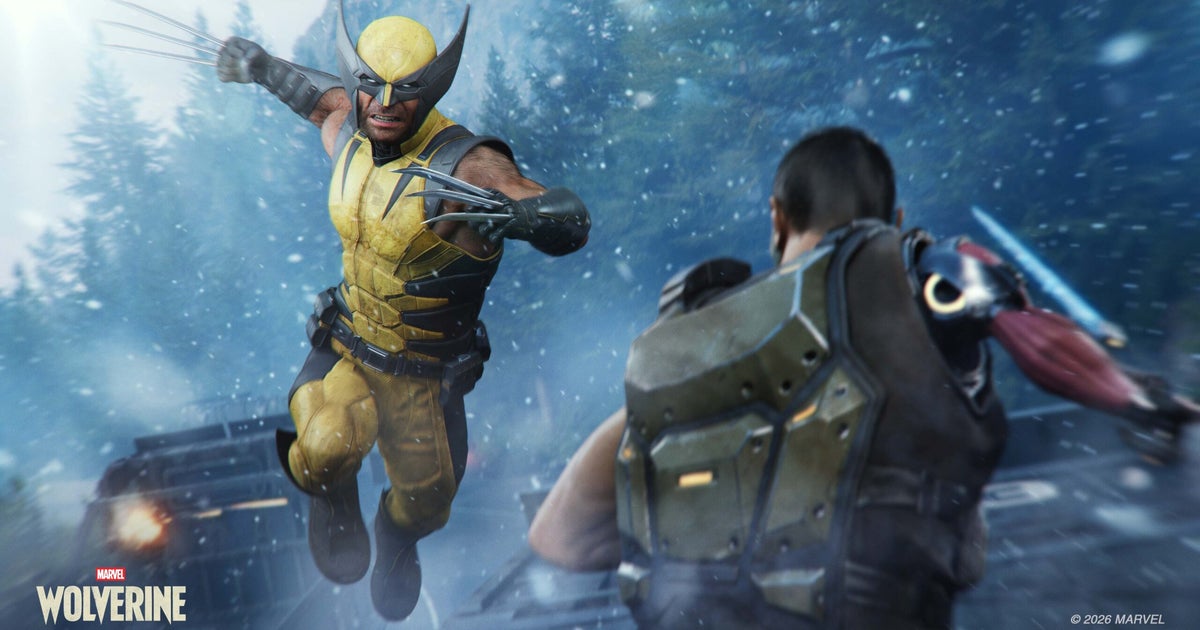
The criticism deepened with Eurogamer’s Chris Tapsell, who lamented a lack of invention. "There’s all the inherent satisfaction of a good parry-counter," Tapsell wrote, "it’s just there’s also a sense—that only builds over time—that it’s all slightly too one-note and one-pace." For Tapsell, the monotony of the combat loops—repeated waves of enemies with identical parry cadences—led to a feeling of detachment, where players eventually begin to "glaze over" during what should be adrenaline-fueled encounters.
Perhaps the most damning assessment came from Jordan Middler at VGC, who argued that the game fails to make the player feel like the formidable Logan. "I don’t feel like Wolverine is using claws; it feels like he’s got blunt kitchen knives on the ends of his fists," Middler wrote. He pointed to an ineffective skill tree and spongey, repetitive enemy archetypes that turn combat from a power fantasy into a tedious chore. By the end of his playthrough, the thrill of the claws had been replaced by a weary desire to simply see the story progress.
Linear Limitations: A World Too Small
The decision to move away from the open-world format utilized in Spider-Man was a strategic choice, but one that has left reviewers divided. While some argued that a linear, curated experience would allow for tighter narrative pacing, many felt the execution failed to live up to the promise.
IGN’s Simon Cardy noted that the linearity often forced the game into a predictable rhythm: "missions taking the form of a series of corridors opening up into arenas where getting ambushed is a predictable probability." The world, despite being visually stunning in locations like Tokyo or Madripoor, feels like a "theatrical backdrop"—a set piece that is fundamentally untouchable. This lack of interactivity contrasts sharply with the vibrant, lived-in metropolis of Insomniac’s Spider-Man, leading to a sense of claustrophobia that detracts from the scale of a global Wolverine adventure.
However, VGC’s Jordan Middler offered a counter-perspective, suggesting that the tech powering the Spider-Man games was effectively distilled for these smaller, more focused hubs. He argued that the linear design allowed for more environmental density, even if the "invisible walls" frequently reminded players of the game’s inherent restrictions.
Character-Driven Narrative: A Saving Grace?
If the gameplay is the game’s Achilles’ heel, its narrative and character work serve as its backbone. Reviewers generally agreed that the chemistry between Logan and Jean Grey, alongside Troy Baker’s performance as Nathanial Essex, constitutes the game’s strongest asset.

Yet, even here, the execution is uneven. Critics pointed to a persistent issue where Logan feels like a "passenger in his own story." Tapsell noted the irony of a character defined by his quest for identity and the struggle against inner demons being sidelined in favor of external conflict. Furthermore, the handling of Logan’s trauma felt, to some, like a missed opportunity. Stuart criticized the game for relegating the exploration of Logan’s PTSD to "mini-challenges such as timed parkour runs and horde battles," arguing that such an approach trivializes the weight of the character’s past.
The pacing of the narrative is also hindered by "needless bloat." Cardy pointed out that the quiet moments—meandering through rooms to inspect photo frames or listen to audio logs—often feel like filler rather than meaningful character development. While the cutscenes are high-quality, the "glue" that binds them together lacks the interactivity needed to make the player feel like they are truly inhabiting Logan’s skin.
Implications for Insomniac and Sony
The reception of Marvel’s Wolverine carries significant implications for both Insomniac Games and Sony Interactive Entertainment. As the industry shifts away from the traditional, high-budget linear action-adventure in favor of live-service or highly experimental formats, Wolverine feels like a product caught between two worlds. It is a "prestige" project that relies on the established mechanics of a decade ago, struggling to justify its existence in an era that demands more innovation.
For Sony, the mixed critical performance of a key first-party title—especially one featuring a Marvel character—raises questions about the company’s internal quality control and their ability to pivot from the success of the Spider-Man template. If Insomniac’s "formula" is beginning to show cracks, the studio may need to re-evaluate how it approaches its upcoming projects.
The "fine" nature of the final product—a game that is functional and occasionally spectacular, but ultimately forgettable—is perhaps the most stinging verdict. As Middler aptly summarized, the tragedy of Marvel’s Wolverine isn’t that it is a bad game; it is that it fails to capture the ferocity and depth of its protagonist. It is a polished, high-budget experience that, once the controller is put down, leaves the player feeling almost nothing at all.
As Insomniac moves forward, the lessons from Wolverine will be vital. In a market where competition is fierce and player attention is a premium commodity, "just fine" may no longer be enough for a studio that once defined the gold standard of modern action gaming. Whether this serves as a wake-up call for the studio to break its own mold, or a sign of deeper structural fatigue, remains to be seen. For now, Logan’s debut in his own standalone title remains a missed opportunity—a set of sharp claws that, unfortunately, never quite found their mark.

