

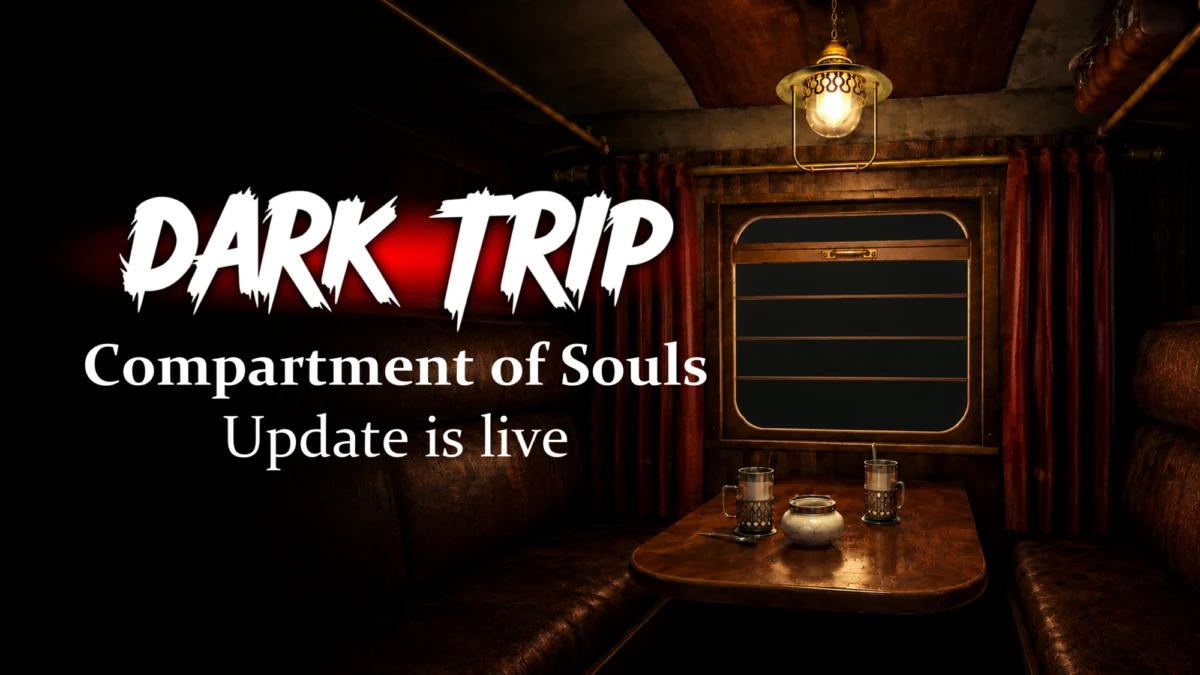
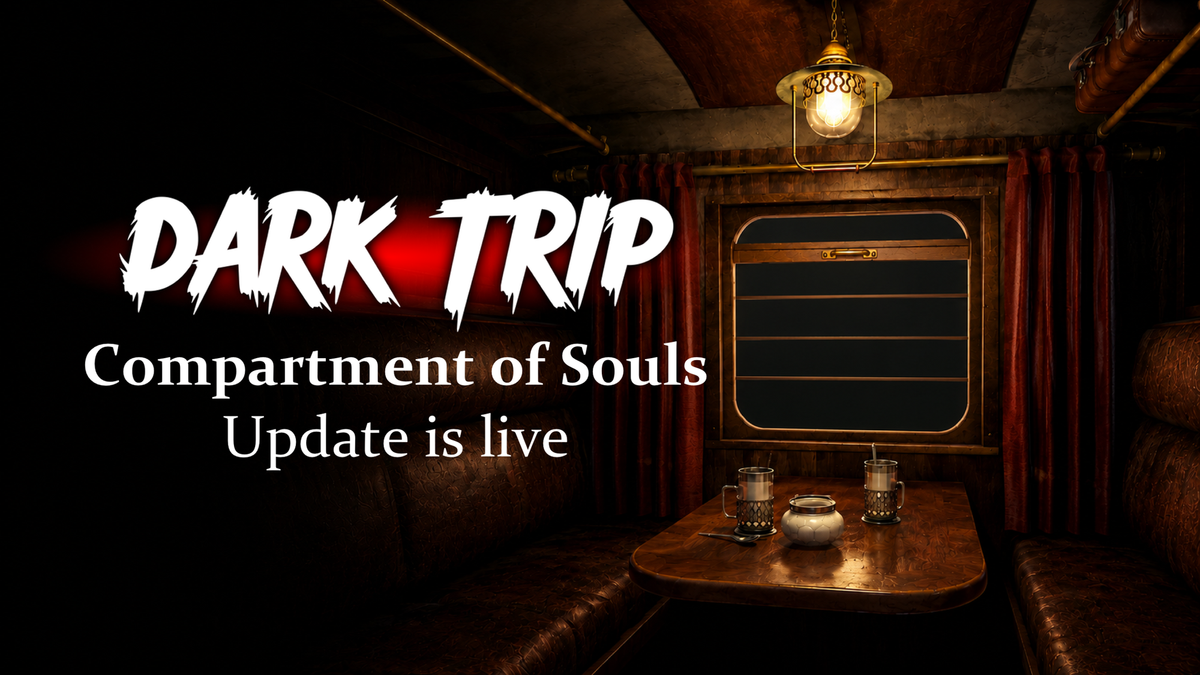
The boundaries between reality and nightmare continue to blur as Dark Trip, the ambitious psychedelic horror escape room title, takes a significant leap forward. During the latest UploadVR Showcase, developers announced the arrival of the game’s 15th escape room, a haunting new chapter titled “Compartment of Souls.” This update represents the most substantial content injection since the game entered Early Access on the Meta Quest platform in February 2025, signaling a pivotal moment in the title’s development cycle.
As the VR landscape continues to seek experiences that blend mechanical puzzle-solving with high-concept atmospheric storytelling, Dark Trip has carved out a niche for itself by leaning into the surreal. By forcing players to navigate both the physical world and the shifting, hallucinatory landscapes triggered by in-game consumables, the game offers a sensory experience that challenges the conventions of the escape room genre.
Main Facts: Unveiling the 15th Chamber
The "Compartment of Souls" update is not merely a cosmetic addition; it is an expansion of the game’s core loop. The 15th room introduces complex environmental storytelling and intricate puzzle mechanics that demand a heightened level of perception from the player.
For those unfamiliar with the premise, Dark Trip casts the player as a private investigator tasked with a grim assignment: locate the missing daughter of a retired, enigmatic businessman. The investigation leads directly to a derelict, abandoned laboratory—a setting that serves as the primary canvas for the game’s claustrophobic and often disturbing puzzles.
Key features of the update include:
- The 15th Room: A new, expansive area that increases the total playtime and narrative depth of the Early Access experience.
- Enhanced Psychedelic Mechanics: The update refines the "hallucination" system, where players ingest specific items to alter the physical properties of their surroundings, unlocking new paths and clues that remain hidden in a sober state.
- Platform-Specific Optimizations: With the update live on Meta Quest, developers have implemented new lighting and texture shaders to better accommodate the standalone hardware while maintaining the game’s signature aesthetic.
A Chronology of Development: From Concept to Early Access
The journey of Dark Trip from a concept to a playable Early Access title has been marked by a rigorous, iterative development process. Understanding this timeline is essential to appreciating the scale of the "Compartment of Souls" release.
Q1 2025: The Launch
In February 2025, Dark Trip officially landed on the Meta Quest store in Early Access. At launch, the game featured a limited suite of rooms designed to establish the core mechanics: item interaction, spatial reasoning, and the unique "drug-induced" perspective shift. The initial reception was marked by praise for its unique tone, though players were eager for more content.
Spring 2025: The Iteration Phase
Between February and May 2025, the developers maintained a consistent cadence of minor updates. These patches focused primarily on quality-of-life improvements, such as fine-tuning physics interactions—crucial for an escape room game—and optimizing the lighting engine to ensure the psychedelic sequences were as jarring and effective as intended.
June 2026: The Steam Expansion
June 4, 2026, marked a significant milestone as the game moved beyond the Meta ecosystem. A closed playtest was launched on Steam, introducing PC VR support and, notably, a "flat" control scheme. This decision to incorporate traditional controls is a strategic move to broaden the game’s accessibility, allowing those without VR hardware to engage with the narrative and puzzles, albeit through a different lens.
The Present: The UploadVR Showcase
The announcement of the 15th room during the UploadVR Showcase serves as the culmination of over a year of sustained community feedback and technical development. It marks the transition of Dark Trip from a niche VR experiment to a robust, content-heavy title.
Supporting Data: The Mechanics of Terror
Dark Trip functions on a dual-layer logic system. To progress, the player must effectively manage two states of being:
1. The Physical State
In the standard, non-hallucinatory state, the laboratory is a place of static decay. Players interact with mechanical locks, document-based clues, and environmental physics. The puzzles here are grounded, requiring logical deduction and observational skills.
2. The Hallucinatory State
The "psychedelic" core of the game is triggered by specific consumables. When active, the environment shifts. Static walls may become permeable, light sources may take on sentient qualities, and audio cues become distorted. This mechanic is not merely for visual flair; it is the primary tool for progression. Data from early playtests suggests that players often find the transition between these two states to be the most satisfying part of the gameplay, as it forces them to re-examine the same room from two entirely different realities.
Official Responses and Developer Philosophy
While the studio behind Dark Trip has remained relatively reserved, their communications during the recent showcase underscored a commitment to "psychological immersion."
"We didn’t want to build just another escape room," a lead developer noted during the showcase presentation. "We wanted to build a space where the player feels their own perception is being challenged. With the 15th room, ‘Compartment of Souls,’ we wanted to push the boundaries of how far we can warp the environment before the player loses their sense of direction. It’s about making the environment a character itself."
The developer’s focus on the "Compartment of Souls" suggests that this particular level is designed to be the most narrative-heavy yet, providing more concrete answers regarding the missing girl and the true nature of the laboratory’s former experiments.
Implications: The Future of VR Horror
The trajectory of Dark Trip offers several implications for the VR industry at large.
The Rise of Hybrid Accessibility
By bringing Dark Trip to Steam with both VR and flat-screen support, the developers are participating in a growing trend of hybrid game design. As the VR market continues to evolve, the ability to bridge the gap between "enthusiast" VR gamers and a broader PC audience is becoming a vital strategy for long-term sustainability. This move allows the game to reach a wider demographic, potentially creating a larger community for feedback and development.
The Viability of the "Evergreen" Escape Room
The success of Dark Trip during its Early Access phase proves that the escape room genre, when executed with high production values, can sustain a "live service" model. By consistently adding rooms, the developers keep the community engaged, turning a singular experience into an evolving series. This model may encourage other indie studios to adopt similar roadmaps, prioritizing consistent, high-quality content drops over singular, massive, and potentially buggy launches.
Advancing Psychedelic Aesthetics in Gaming
Finally, Dark Trip is contributing to a growing conversation about the use of "altered states" as a gameplay mechanic. Unlike traditional horror games that rely on jump scares, Dark Trip leverages the discomfort of the uncanny. The implication here is that future VR titles may rely more heavily on psychological disorientation as a means of building tension, moving away from simple combat mechanics toward more cerebral, perception-altering challenges.
Conclusion: A Deepening Mystery
As the "Compartment of Souls" update settles into the hands of players, the community is already buzzing with theories regarding the game’s true conclusion. With 15 rooms now available and a clear roadmap for the future, Dark Trip stands as a testament to the power of dedicated development.
Whether you are a VR enthusiast exploring the haunting corridors of the laboratory on a Meta Quest headset, or a newcomer preparing to experience the mystery via the upcoming Steam release, the game offers a unique, chilling descent into the unknown. The laboratory is no longer just a place to escape; it is a complex web of memories, chemicals, and secrets waiting to be uncovered. As the developer continues to refine the experience, one thing is certain: the deeper you go into Dark Trip, the less you can trust what you see.
For those who enjoy the thrill of the investigation, the doors are open—but in the Compartment of Souls, finding the exit may prove to be the most difficult challenge yet.

