


By Issy van der Velde
Deputy Editor, PC Gaming Show
Main Facts
The veil has finally been lifted on one of the most anticipated supernatural action-RPG sequels in recent memory. Remedy Entertainment has fully declassified its behind-the-scenes documentary following an exclusive visit by the PC Gaming Show team to the developer’s studios in Finland. The focus of this deep dive is Control Resonant, the upcoming follow-up to the critically acclaimed 2019 hit Control.
Slated for a September 24 release—with pre-orders already live on Steam—Control Resonant shifts the supernatural narrative away from the cramped, Brutalist corridors of the Federal Bureau of Control’s (FBC) headquarters, the Oldest House, and into the sprawling, warped concrete canyons of Manhattan, New York.
This time, players step into the shoes of Dylan Faden—the troubled, immensely powerful brother of newly appointed FBC Director Jesse Faden. Awakening from a prolonged coma, Dylan discovers that the parasitic, interdimensional entity known as the Hiss has breached containment and flooded the streets of New York. Compounding this nightmare is a secondary, reality-fracturing anomaly dubbed "the Patterning," an otherworldly algorithm that is violently rewriting the laws of physics, warping architecture, and twisting everyday citizens into monstrous, biomechanical abominations.
Unlike its predecessor, Control Resonant embraces a more open-world design philosophy, allowing players unprecedented freedom in navigation, combat encounters, and boss progression. Featuring gravity-defying traversal mechanics, a mathematical musical score built on Fibonacci sequences, and heavily surrealist art direction, Control Resonant is shaping up to be Remedy’s most visually and mechanically ambitious project to date.
Chronology: From the Oldest House to the Streets of Manhattan
To fully understand the stakes of Control Resonant, one must trace the timeline of the FBC universe and the trajectory of the Faden siblings.
The Prelude (2019–2024)
During the events of the original Control, Dylan Faden spent the majority of the game locked inside a high-security containment cell within the Oldest House. Having been previously corrupted by the Hiss, Dylan served as a psychological antagonist and a tragic vessel for the entity’s chaotic manifestation. While his sister Jesse ascended to the role of Bureau Director by the game’s conclusion, Dylan’s fate remained shrouded in uncertainty as he slipped into a comatose state following the containment breach.
The Finnish Summit (May 2024)
In May, members of the PC Gaming Show team traveled to Finland to meet with Remedy’s creative leadership. The goal was to peel back the curtain on the studio’s next major title. While a brief teaser trailer aired during the June PC Gaming Show, the complete, unedited documentary was officially declassified, giving fans a comprehensive look at the philosophy, engineering, and artistic risks driving the development of Control Resonant.
The Road to Launch (2026)
Following months of iterative playtesting and fine-tuning—particularly around its unconventional open-world structure and non-linear abilities—Remedy locked in a September 24 release date. Ahead of the game’s launch, publisher communications have ramped up, including scheduled presentations like the upcoming PC Gaming Show Tokyo Direct on September 20, designed to spotlight global engagement with the franchise.
Supporting Data: Mechanics, Mathematics, and Artistic Influence
Remedy is renowned for its commitment to high artistic and technical standards, and Control Resonant pushes these boundaries through unconventional design choices.
The Geometry of Madness
Rather than drawing inspiration from contemporary video games—a trap creative teams often fall into, leading to homogenized experiences—Remedy’s art department looked entirely outside the medium. Art director Elmeri Raitanen and his team studied the impossible, paradoxical geometry of M.C. Escher lithographs. They paired these visual motifs with surrealist and folk-horror cinematic touchstones, such as Ben Wheatley’s mind-bending period thriller A Field in England and Satoshi Kon’s visionary anime film Paprika.
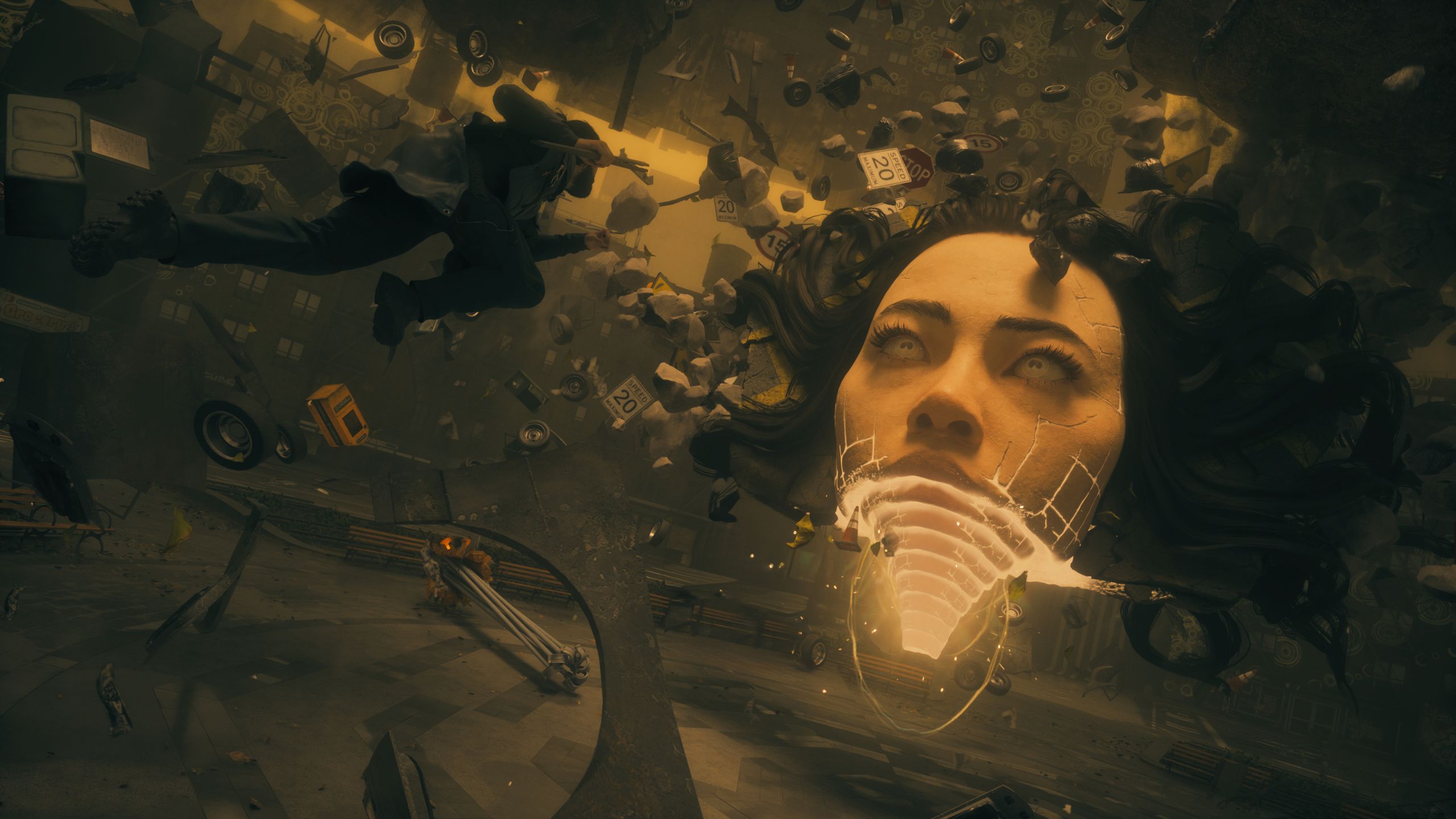
The result is a Manhattan where light, time, and space refuse to behave. Gravity is no longer a constant; Dylan possesses the intrinsic ability to invert gravitational pull, casually strolling along walls and ceilings as skyscrapers twist and fold inward.
Algorithmic Audio: The Fibonacci Score
The game’s audio design is as mathematically rigorous as its visual presentation. Composer Petri Alanko crafted the score for one of the game’s standout boss fights—a graceful, deadly Resonant who was a professional dancer when the Patterning struck—using fundamental mathematics.
Working alongside real-world dancers to capture fluid, haunting choreography, Alanko built the fight’s musical rhythm entirely on Fibonacci numbers (1, 1, 2, 3, 5, 8, 13, 21, and so on). This mathematical progression mirrors the relentless, organic growth of the Patterning anomaly. Furthermore, Dylan’s auditory identity evolves alongside his character arc. Because he is recovering from the psychological trauma of Hiss possession, his character is effectively reborn. His early thematic soundscapes are constructed entirely from pure sine waves—the most primitive form of sound. As Dylan evolves and unlocks new combat proficiencies, his audio profile incorporates increasingly complex frequencies, textures, and tonal layers.
Dynamic Open-World Encounters
Lead level designer Anne-Marie Grönroos explained that Control Resonant breaks away from strict linear progression by introducing optional, highly reactive boss battles against "Resonants"—humans utterly consumed and mutated by the anomaly.
While players must defeat a requisite number of these monstrous entities to advance the main campaign, the game world features significantly more Resonants than required. Because players can tackle them in nearly any order, Remedy cannot predict what abilities a player will possess at any given milestone. During internal playtesting, this freedom yielded unexpected emergent gameplay; one tester managed to progress quite far into the game without unlocking the gravity-shifting ability, fundamentally altering their tactical approach to exploration and combat.
Official Responses: Insights from Remedy’s Creative Leadership
Remedy’s leadership has been transparent about the creative risks they are taking to ensure Control Resonant carves out its own distinct identity within the broader "Connected Universe."
-
On the Scale of the Threat:
Creative Director Mikael Kasurinen emphasized that the Patterning is not merely an environmental hazard, but a fundamental assault on human reality. "It’s not simply a matter of ordering things in a predictable way, it’s affecting the people," Kasurinen said during the developer interview. "It affects time, it affects light."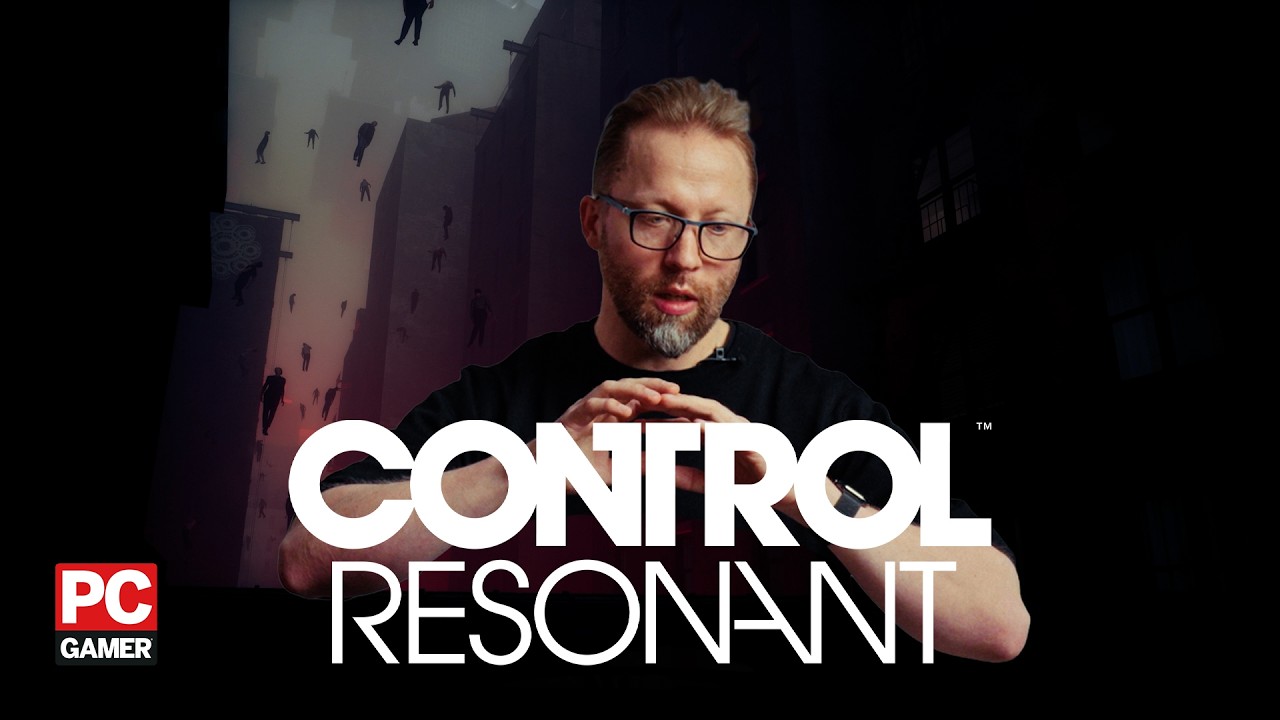
-
On Avoiding Creative Stagnation:
Explaining the decision to look toward classical art and cinema rather than competing titles, Art Director Elmeri Raitanen noted: "There’s this tendency of people not taking risks, and games start to resemble each other quite a lot." By breaking away from industry tropes, Remedy aims to deliver an aesthetic experience that feels genuinely alien. -
On Expanding the Universe Beyond a Single Family:
Addressing fan concerns that the narrative might become overly insular by focusing heavily on the Faden bloodline, Kasurinen drew comparisons to tabletop roleplaying games. He stated that he envisions a vast, systemic world governed by rigid supernatural rules, but populated by diverse perspectives and intersecting stories. The goal is to build a universe where characters experience these cosmic anomalies from entirely different walks of life, rather than restricting the narrative spotlight to a single household.
Implications: What Control Resonant Means for the Future of Remedy
The release of Control Resonant on September 24 marks a critical juncture for Remedy Entertainment. As the studio continues to refine its interconnected storytelling framework—linking Control, Alan Wake, and future projects—Control Resonant proves that Remedy is willing to decentralize its narratives.
By moving out of the bureaucratic confinement of the Oldest House and into the vibrant, chaotic ruins of an open-world Manhattan, the studio is testing its technical capabilities on a much grander scale. The integration of emergent boss progression, non-linear ability acquisition, and avant-garde artistic inspirations signals that Remedy is shedding safe design paradigms in favor of systemic player freedom.
For the action-RPG genre, Control Resonant offers a fascinating template: a game where narrative weight, mathematical precision, and surrealist world-building intersect to create an environment that feels genuinely unpredictable. Whether players choose to hunt down every single twisted boss—from lava-spitting titans to tragic, balletic horrors—or speedrun through the main narrative, Control Resonant promises to leave a lasting mark on the supernatural thriller landscape when it arrives on Steam this fall.

