

Main Facts: The Intersection of Corporate Culture and Dark Fantasy
Hidetaka Miyazaki, the visionary president of FromSoftware and the mastermind behind genre-defining masterpieces such as Dark Souls, Bloodborne, Sekiro: Shadows Die Twice, and Elden Ring, has cultivated a reputation for crafting some of the most uniquely horrifying and psychologically oppressive enemies in modern gaming. However, the genesis of these twisted abominations may not stem entirely from dark folklore, cosmic horror, or feverish nightmares.
According to Miyazaki himself, a surprising source of inspiration for these grotesque adversaries comes from a world far removed from fantasy: the corporate boardrooms of the video game industry.
Following his promotion to president of FromSoftware in 2014—just ahead of the launch of the critically acclaimed PlayStation 4 exclusive Bloodborne—Miyazaki found himself thrust into an entirely different socioeconomic strata. Gone were the days of simply staring at a monitor and coding pixels; he was now rubbing shoulders with chief executive officers, corporate board members, and high-ranking executives from across the global technology and entertainment sectors.
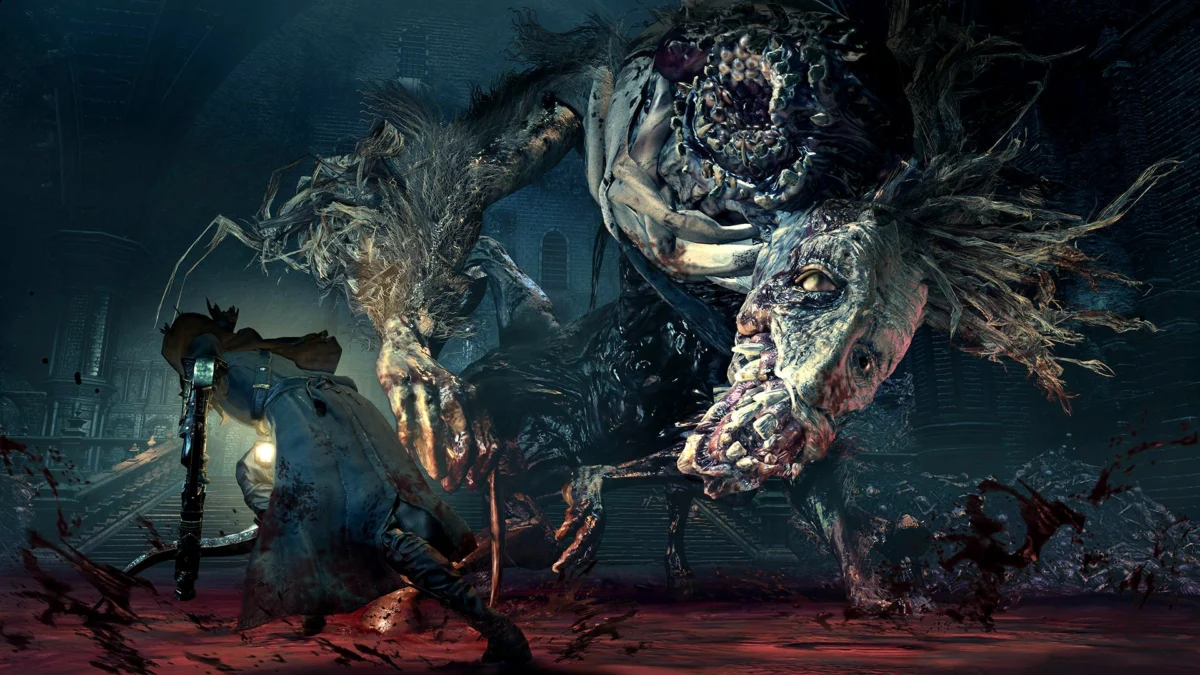
In a revealing interview conducted shortly after Bloodborne‘s release, Miyazaki admitted that his elevation to executive status exposed him to a peculiar breed of humanity. The idiosyncratic behaviors, bizarre eccentricities, and surreal personalities of contemporary corporate leaders left a lasting impression on the director. Blurring the line between satirical observation and genuine creative fuel, Miyazaki noted that these interactions provided fresh psychological archetypes—archetypes that would eventually find their way into the grotesque pantheon of FromSoftware’s notorious enemy rosters.
Chronology: From Programmer to President and the Evolution of Design
To understand how a corporate promotion could influence the design of digital monsters, it is necessary to trace the trajectory of Miyazaki’s career and the evolution of FromSoftware’s philosophy.
The Early Years: Building Worlds from Agony
When Miyazaki joined FromSoftware in 2004 as a humble game planner, the company was a niche developer known primarily for cult-classic titles like Armored Core. Miyazaki initially worked on Armored Core: Last Raven before pitching a radical high-fantasy action-RPG that would eventually become Demon’s Souls (2009).
During this foundational era, Miyazaki’s creative influences were deeply rooted in literature, European history, personal childhood nightmares, and architectural dread. Monsters like the towering executioners, grotesque gargoyles, and decaying undead were born from classic dark fantasy tropes filtered through an uncompromising design philosophy centered around overcoming insurmountable despair.
The 2014 Pivot: Stepping into the Boardroom
The pivotal turning point occurred in 2014 when Miyazaki was named president of FromSoftware, succeeding Naotoshi Zin. This promotion coincided with the final development stages of Bloodborne, a gothic-Victorian nightmare steeped in cosmic dread inspired by the works of H.P. Lovecraft.
Suddenly, the game director was required to attend high-level business summits, corporate negotiations, and industry gatherings. The transition from a reclusive creator focused purely on code and concept art to a corporate executive introduced Miyazaki to an ecosystem he had previously been insulated from. The bizarre social dynamics, inflated egos, and uncanny behavioral patterns of elite executives provided a stark contrast to the grounded, passionate developers he was accustomed to working alongside.
The Post-Presidential Output
Following his ascension to the presidency, Miyazaki oversaw the release of Dark Souls III (2016), Sekiro: Shadows Die Twice (2019), and the monumental open-world epic Elden Ring (2022). Across all these titles, enemy design evolved to incorporate increasingly complex, uncanny, and sometimes deeply unsettling human-like mutations. While traditional dragons and beasts remained staples of the studio’s catalog, the humanoid bosses and creeping abominations gained a distinct psychological complexity—one that critics and fans alike noted felt increasingly grounded in genuine human peculiarities.
Supporting Data: The Philosophy of Beauty, Tragedy, and Grotesque Art
While Miyazaki’s remark about basing enemy characters on "weird" company presidents was delivered with a heavy dose of tongue-in-cheek humor, it aligns neatly with his broader, well-documented philosophy regarding monster design and aesthetic juxtaposition.
FromSoftware’s approach to art direction has never relied on cheap jump scares or standard-issue monsters. Instead, the studio champions a delicate balance between tragedy, revulsion, and profound melancholy. A prime example of this philosophy is Miyazaki’s legendary directive regarding the Undead Dragon in the original Dark Souls.

Reflecting on that famous design mandate years later in an interview with PC Gamer, Miyazaki explained his rationale:
"I think what I’m trying to do is depict something beautiful, at the end of the day. How you interpret beautiful is obviously in the eye of the beholder; it doesn’t necessarily have to be something physically charming or outwardly beautiful. It can be something inside that lets you empathize with them on a deeper level."
This duality—pairing something magnificent or noble with a slow, tragic descent into ruin—is a hallmark of FromSoftware lore. When applied to his observations of corporate executives, the joke takes on a fascinating subtext. In the hyper-capitalist landscape of modern entertainment, high-ranking executives often project an aura of immaculate success, power, and prestige (the "beautiful beast"). Yet, behind closed doors, the psychological toll, ruthless decision-making, and surreal disconnect from everyday reality can render them figures of profound tragedy or uncanny repulsion.
By translating these observations into his work, Miyazaki bridges the gap between high-society absurdity and primordial terror.
Official Responses and Industry Reactions
Miyazaki’s candid and often deadpan remarks have long been a source of amusement within the gaming community, sparking endless speculation, memes, and analysis across forums like Reddit and ResetEra.
When the initial interview with The Guardian was published, industry observers immediately began playing a guessing game: Which specific corporate archetypes inspired which bosses?
- Could the grotesque, over-ambitious hoarding seen in various treasure-guarding beasts represent corporate greed?
- Does the uncanny, unnerving movement of certain humanoid bosses mirror the rigid, performative postures found in corporate boardrooms?
While Miyazaki has never explicitly named names or pointed fingers at specific CEOs—such as Take-Two Interactive CEO Strauss Zelnick or figures from Sony’s high command—the gaming public has gleefully run wild with the premise. Industry analysts note that Miyazaki’s ability to find creative inspiration in the most mundane or bizarre aspects of his daily life highlights his unique perspective as an auteur. Unlike executives who view game development purely through spreadsheets and profit margins, Miyazaki remains fundamentally an artist, viewing even the corporate elite through the lens of dark fantasy world-building.
Implications: What This Tells Us About Modern Game Development
Miyazaki’s anecdotal revelation offers a rare, illuminating glimpse into the psyche of one of the industry’s most influential creators. It highlights several key implications for the state of game development and corporate leadership:
1. The Isolation of the C-Suite
The fact that a veteran game director finds corporate presidents so fundamentally "weird" speaks volumes about the insular nature of corporate leadership. When individuals reach the upper echelons of massive entertainment conglomerates, their daily realities diverge wildly from those of everyday employees, consumers, and even the developers making the games. To an artist like Miyazaki, this detachment can manifest as something inherently unnatural—effectively turning the corporate lifestyle into fertile ground for cosmic horror.
2. Auteur Vision Uncompromised by Corporate Realities
In many major gaming studios, corporate executives often meddle in creative decisions, forcing design changes to maximize marketability or monetization. At FromSoftware, however, the dynamic appears inverted: rather than corporate metrics dictating creative output, the studio’s president is actively studying the peculiar behaviors of his fellow executives and weaponizing those observations into horrifying boss fights. It is a poetic subversion of corporate power dynamics.
3. The Human Element in Monstrosity
Ultimately, the most enduring monsters in fiction are those that reflect real human flaws, anxieties, and societal structures. By drawing inspiration—however jokingly—from real-world figures of power and authority, Miyazaki ensures that FromSoftware’s antagonists remain anchored to psychological truths. Whether players are battling corrupted knights, eldritch horrors, or twisted lords, they are fighting manifestations of human hubris, decay, and power run amok.
As FromSoftware continues to push the boundaries of action-RPG design, fans can rest easy knowing that wherever Miyazaki goes—whether traversing ancient ruins for inspiration or sitting through high-stakes corporate meetings—his sharp creative eye is always at work, turning the strange realities of the modern world into unforgettable digital nightmares.

