

By Investigative Tech Desk
In a bizarre and brazen security breach that reads more like a dark comedy than a federal crime, a Customs and Border Protection (CBP) IT supervisor has been arrested and charged by the FBI. Terry “Jiajia” Liu, stationed at a border facility in Calais, Maine, stands accused of orchestrating a systematic hardware-theft ring targeting government-issued computers. Over a span of more than a year, Liu allegedly harvested high-end components—including cutting-edge Intel processors, memory modules, and hard drives—from dozens of Department of Homeland Security (DHS) machines, replacing them with inferior parts and cashing out the loot through a major online retailer’s trade-in program.
The case highlights critical vulnerabilities not just in physical cybersecurity protocols, but also in internal asset management within sensitive government installations. As federal investigators continue to comb through transaction logs, surveillance footage, and agency inventory lists, the true cost of Liu’s clandestine hardware swaps is staggering, threatening both federal taxpayers and the operational integrity of border security nodes along the Maine-Canada frontier.
Main Facts of the Case
According to federal reports and investigative affidavits stemming from the initial discovery by The Maine Wire, Terry “Jiajia” Liu faces serious federal charges including the theft and destruction of government property. Liu’s role within the CBP facility in Calais was ostensibly limited to information-technology support. However, rather than maintaining the equipment entrusted to his care, Liu allegedly treated the agency’s hardware inventory as a personal supply depot.
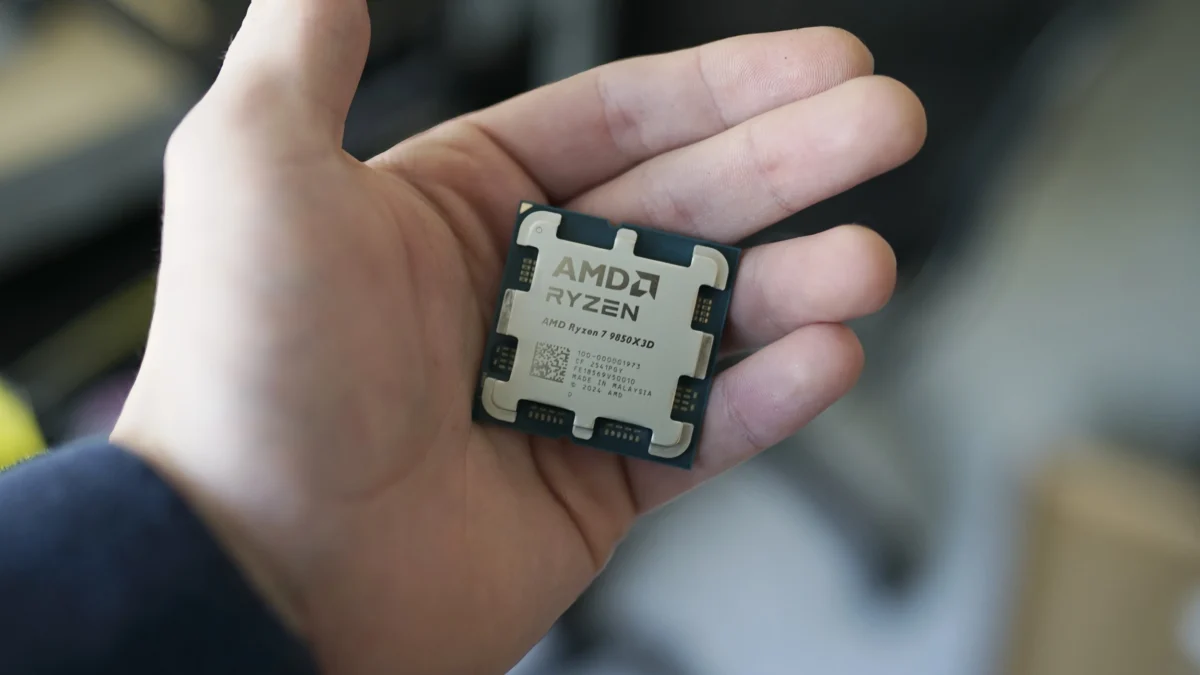
The scope of the operation is vast. Investigators discovered that at least 46 Department of Homeland Security computers spread across three separate border facilities in Maine had been compromised. From these machines, Liu systematically extracted high-performance components—predominantly Intel 14th Generation "Raptor Lake Refresh" Core i7 processors, alongside various RAM modules and solid-state or mechanical hard drives.
To mask the thefts from casual observers, Liu did not leave the motherboards empty. Instead, he executed a sophisticated "shell game," substituting the high-end components with vastly inferior hardware. In many instances, modern multi-core processors were downgraded to legacy chips, such as older Pentium processors, while high-capacity memory and storage modules were swapped out for stripped-down alternatives.
Rather than offloading the stolen state-of-the-art hardware through shadowy black-market channels, peer-to-peer marketplaces, or local pawn shops, Liu chose a surprisingly mainstream liquidation method: the Newegg Trade-In program. By funneling the stolen components through the prominent PC hardware retailer, Liu converted high-tier government processors into store credit, successfully bridging the gap between federal property and personal financial gain.
Chronology of the Operation
The unfolding of the scheme spans a 14-month window, characterized by methodical execution during the quietest hours of federal border operations.
The illicit enterprise began as early as May 2025 and continued uninterrupted until July 2026. Operating primarily during the graveyard shift, Liu exploited the reduced staffing levels at the Calais border stations. Surveillance cameras hidden within the facilities captured the supervisor red-handed.
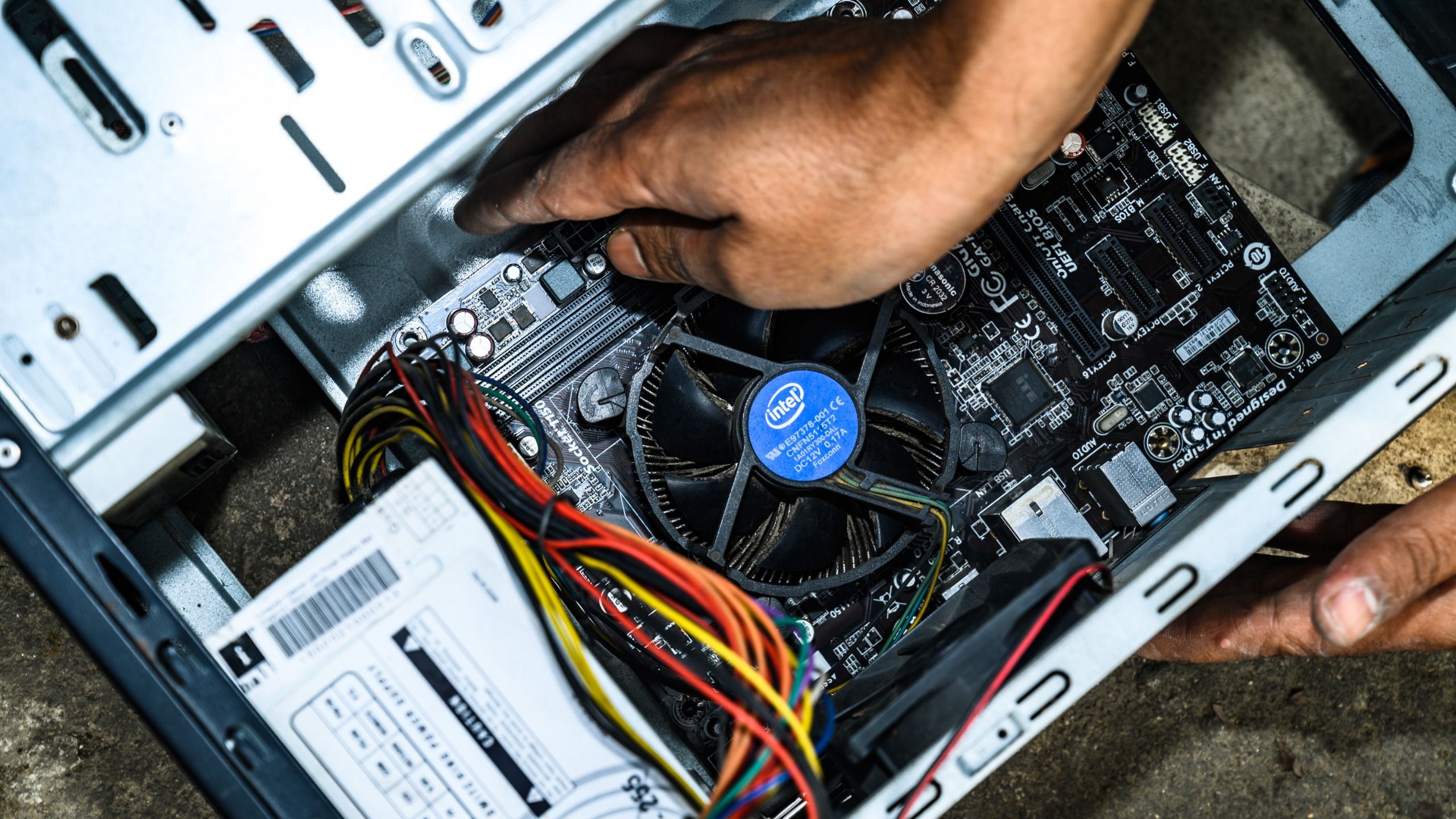
Footage from the midnight shifts showed Liu unlocking and opening government computer chassis and moving the systems into a designated training room to carry out the physical modifications away from prying eyes. In one particularly damning video clip recovered by investigators, Liu is seen meticulously scraping thermal paste off a processor with a screwdriver before extracting the chip and installing a lower-tier replacement. Another sequence captured Liu sliding a high-performance memory module directly out of a machine and stashing it away into his personal desk drawer.
Despite clear administrative boundaries, Liu operated with apparent impunity. Port Director Theodore Cummings had previously issued an explicit, written directive to Liu regarding hardware handling, stating bluntly: "Please do not move any computers or computer parts." Unfortunately for the agency, the warning fell on deaf ears.
The scheme finally unraveled as federal investigators traced a digital paper trail linking Liu’s personal communications to official CBP channels. Authorities uncovered a series of 13 specific emails shuttled between Liu’s personal account and his official government email address. These electronic missives contained vital shipping labels and trade-in receipts explicitly matching the exact processor models and serial brackets missing from the DHS hardware inventory.
Confronted by federal investigators during a formal interview, Liu initially attempted to spin a narrative of benevolence, claiming that the hardware swaps were executed out of a misguided desire to "improve" the computers’ performance and reduce repair turnaround times. However, as the mountain of forensic evidence mounted, Liu ultimately confessed to swapping the components with lower-tier parts purchased out-of-pocket from Amazon and Newegg, and subsequently submitting the government-owned plunder to Newegg’s trade-in platform.
Supporting Data and Financial Breakdown
The forensic audit conducted by the FBI paints a precise and damning picture of the hardware affected and the financial mechanics behind Liu’s liquidation strategy.
A rigorous physical inspection of the compromised machinery across the three Maine border facilities revealed the following breakdown of stolen and swapped components:
- Processors (CPUs): 39 machines suffered processor extractions, transitioning from high-end Intel 14th Generation Raptor Lake Refresh chips down to inferior hardware, including legacy Pentium chips.
- Memory (RAM): 6 machines had their high-speed memory modules swapped for lower-capacity or slower sticks.
- Storage (Hard Drives): 8 machines experienced hard drive substitutions, diminishing the storage capacity and potential reliability of the systems.
The financial laundering of the stolen CPUs through Newegg’s Trade-In program followed a consistent pattern. Transaction records and corporate disclosures obtained from the U.S. retailer revealed that Newegg’s trade-in valuation for the targeted processors ranged consistently between $200 and $210 per unit.
Investigative records show that Liu successfully traded in Core i7 Raptor Lake Refresh chips a total of 16 times over the 14-month span. This digital footprint was further corroborated by financial forensics matching American Express records, which uncovered at least three distinct $200 store credit allocations originating directly from Newegg and deposited into accounts tied to Liu.
While the immediate return on investment for the rogue IT worker was modest—yielding a few thousand dollars in retail store credit—the collateral damage inflicted upon government infrastructure is exponentially higher. According to preliminary government assessments:
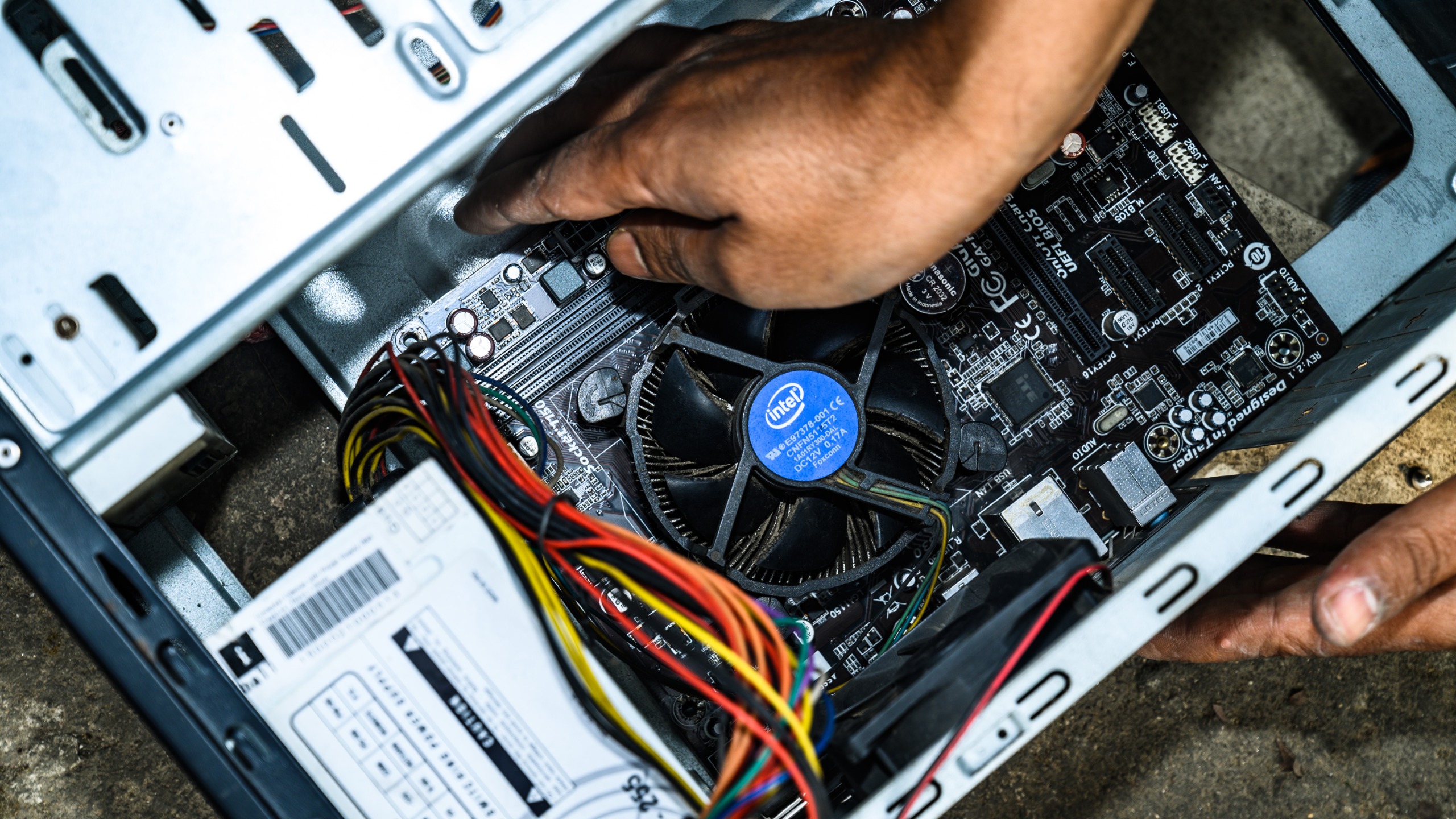
- Hardware Restoration Cost: Simply acquiring the necessary replacement parts to restore the 46 compromised machines to their original specifications is estimated to cost approximately $20,460.
- Total System Replacement Cost: Purchasing entirely new, equivalent hardware systems to replace the compromised fleet outright would run an estimated $105,800.
Crucially, these figures do not account for the extensive human labor hours required by specialized IT personnel to securely wipe, re-configure, test, and redeploy each system back into a secure government network environment, which will push the ultimate taxpayer-funded remediation bill even higher.
Official Responses and Administrative Fallout
The revelation that a trusted IT supervisor within the Department of Homeland Security could systematically cannibalize operational computers has sent shockwaves through federal management circles in New England.
Customs and Border Protection leadership has moved swiftly to distance the agency from the incident, emphasizing that internal controls and automated auditing protocols ultimately aided law enforcement in identifying the anomalies. Port Director Theodore Cummings, whose explicit written orders were flagrantly ignored by Liu, has cooperated fully with the ongoing federal probe.
In public statements, federal prosecutors have underscored the severity of the breach. Beyond the financial loss of government property, the implications of unauthorized individuals tampering with federal law enforcement hardware—especially in sensitive border zones—raise critical questions about chain-of-custody protocols for sensitive IT infrastructure.
Newegg, the retailer inadvertently caught in the middle of the trade-in scheme, has not yet faced regulatory blame, though the incident has cast a sharp spotlight on the security vulnerabilities inherent in consumer-facing trade-in and buyback programs. Industry analysts point out that while retail trade-in platforms excel at verifying basic hardware specifications and functionality, they lack the capability to cross-reference serial numbers against government asset tags or corporate procurement databases—a loophole that bad actors like Liu appear to have consciously exploited.
Broader Implications for Federal IT Security
Beyond the specific criminal charges facing Terry Liu, the Calais border station incident serves as a cautionary tale for enterprise and government IT security departments worldwide.
For decades, cybersecurity frameworks have concentrated heavily on defending networks against external digital threats—such as malware, ransomware, and remote hacking attempts. However, the Liu case vividly demonstrates the persistent danger of the insider threat, particularly when individuals are granted physical access to hardware without adequate oversight or secondary verification controls.
Key takeaways from the incident include:
- Physical Security vs. Logical Access: Even if an IT employee lacks network clearance or administrative privileges to alter software, physical access to machine chassis provides an immediate vector for hardware-level tampering.
- Inventory Auditing Deficits: The fact that 46 machines could be systematically looted over a 14-month period before triggering a formal federal investigation points to a glaring need for more rigorous, randomized hardware audits across remote government outposts.
- Traceability in Secondary Markets: The reliance on consumer trade-in programs highlights a blind spot in asset recovery. As second-hand tech markets boom, tightening the verification requirements for high-value processor and component trade-ins may become a necessary regulatory hurdle to deter corporate and governmental theft.
As the legal proceedings against Terry “Jiajia” Liu advance through the federal court system, the Department of Homeland Security is expected to roll out sweeping mandatory reviews of hardware inventory tracking and physical security protocols across all northern border stations. For now, the Calais facility is left footing a hefty repair bill—and reminding all staff that written directives from port directors are non-negotiable mandates, not mere suggestions.

