


By Tech Wire Daily
Updated: September 2026
Main Facts
The consumer networking landscape in the United States has faced unprecedented regulatory turbulence throughout 2026. Responding to tightening national security mandates, the Federal Communications Commission (FCC) has placed severe restrictions on foreign-manufactured consumer routers, issuing strict import bans and heightened compliance oversight for major hardware vendors.
Amid this regulatory crackdown, major Taiwanese hardware manufacturer Asus has successfully secured a vital lifeline. According to an official FCC notice, Asus has been granted "conditional approval" for its comprehensive lineup of wireless networking products, clearing the hardware vendor’s portfolio for import and sale within the United States.
The clearance, issued this week, acts as a formal determination by national security agencies that Asus-manufactured devices do not present an unacceptable risk to U.S. national security. This temporary exemption shields the company from the sweeping import block that has crippled competitors, granting a reprieve that extends through March 6, 2028—precisely 18 months from the date of issuance.
This development arrives at a critical juncture for Asus. The company is preparing to spearhead the industry-wide consumer transition from Wi-Fi 7 to the next generation of wireless connectivity: Wi-Fi 8. With early hardware releases already unveiled, maintaining unimpeded access to the lucrative U.S. market is essential for Asus to stay competitive against rival brands.
Chronology of Events
The regulatory friction governing the U.S. networking market has escalated rapidly over the past several years, culminating in a turbulent 2026 for router and mesh system manufacturers.
- Late 2024 – 2025: Increasing geopolitical tensions and scrutiny over foreign supply chains prompt federal lawmakers to pressure the FCC regarding potential backdoors and vulnerabilities in consumer-grade networking hardware. Regulators begin reviewing foreign-made technology under stricter interpretations of the "Covered List" framework.
- Early 2026: The FCC implements sweeping import restrictions on consumer routers not manufactured within the United States or lacking rigorous security certifications, citing unacceptable national security risks to U.S. citizens.
- January 2026: During the Consumer Electronics Show (CES), Asus boldly showcases its technological roadmap, debuting the concept ROG NeoCore Wi-Fi 8 router, promising vast improvements in range and latency for gamers and smart homes.
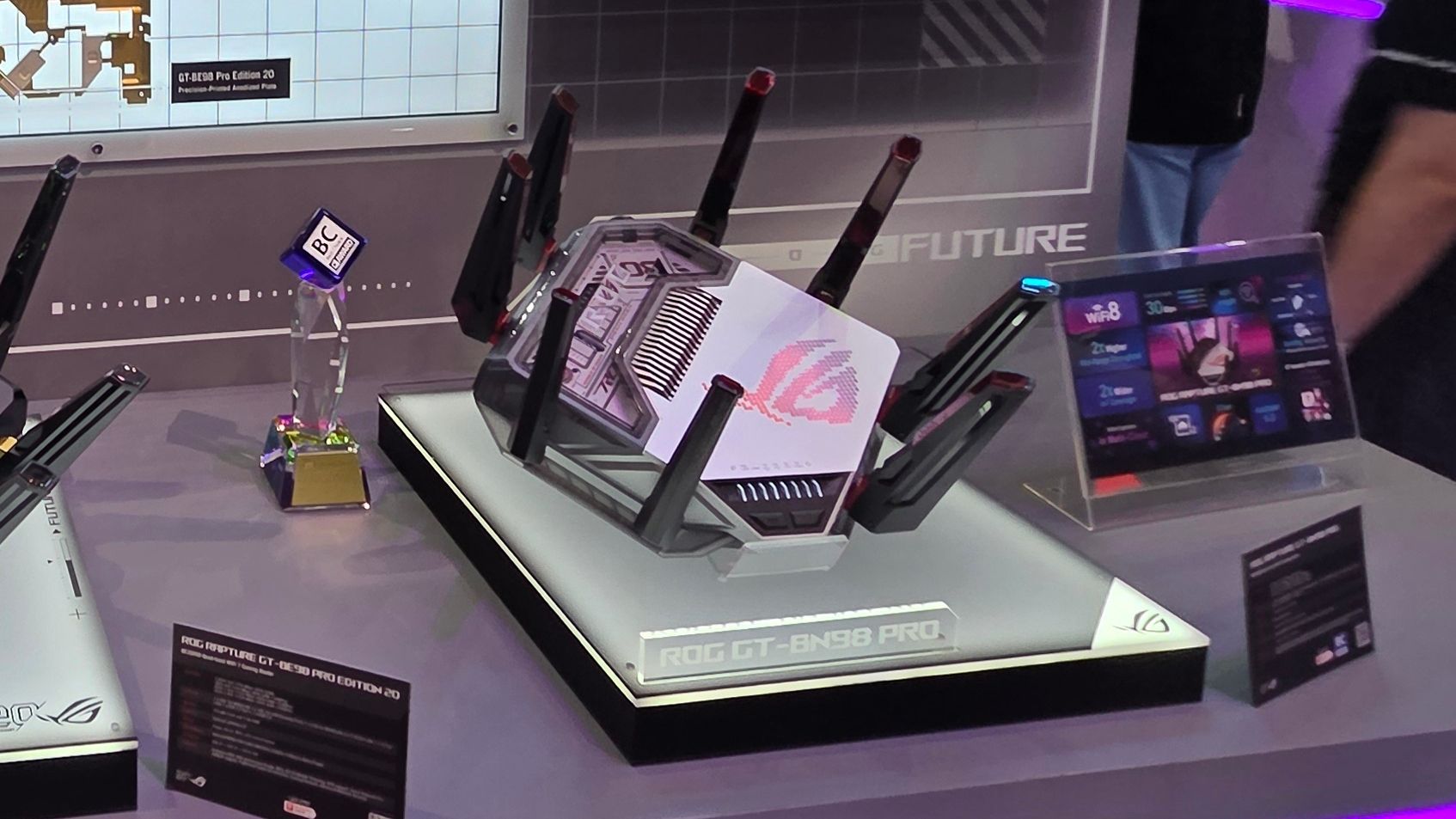
- June 2026: Asus officially unveils its first consumer-facing Wi-Fi 8 router, the ROG Rapture GT-BN98 Pro, boasting up to a 2x real-world throughput uplift over current-generation Wi-Fi 7 devices.
- Mid-2026: Competitors such as Netgear and Amazon (spanning its Eero and Leo product lines) successfully navigate the compliance process, securing their own 18-month conditional approvals to bypass the ongoing router bans.
- September 2026: The FCC issues a formal notice confirming that Asus has satisfied compliance requirements, granting its networking portfolio conditional approval through March 2028. Meanwhile, major players like TP-Link remain stalled due to unresolved scrutiny over corporate transparency and international ties.
Supporting Data and Portfolio Impact
The regulatory exemption covers the breadth of Asus’s high-performance consumer hardware ecosystem. Known widely for its Republic of Gamers (ROG) gaming routers and ZenWiFi mesh systems, Asus relies heavily on uninterrupted logistics chains to deliver cutting-edge silicon and firmware directly to North American consumers.
Key Technical Milestones and Hardware Pipeline:
- Wi-Fi 8 Standardization: The upcoming generation of wireless architecture focuses less on raw theoretical speed maximization and heavily on stability, deterministic latency, and spatial efficiency.
- ROG Rapture GT-BN98 Pro: As the flagship consumer rollout for Asus’s next-gen ecosystem, this hardware promises double the real-world throughput of high-end Wi-Fi 7 routers, making it a pivotal product for high-bandwidth home environments, professional creators, and competitive esports players.
- Conditional Window: The 18-month duration of the FCC waiver gives Asus a guaranteed operational runway until early 2028. This timeframe provides stability for engineering teams to plan long-term product lifecycles without the immediate threat of border seizures or sudden customs blocks.
Official Responses and Regulatory Stance
The FCC’s official documentation outlines the strict evidentiary bar required for foreign entities to achieve compliance. In its public notice regarding Asus, the commission stated:
"We find that each of the Conditional Approvals constitutes ‘a specific determination’ by [defense and security agencies] that such devices do not pose risks to U.S. national security."
While the FCC has maintained transparency on approved vendors, the rationale behind the approvals underscores a dual-track regulatory approach. Companies willing to submit to comprehensive source-code audits, supply chain transparency reports, and structural compliance checks can earn temporary reprieves.
Conversely, vendors unable or unwilling to completely satisfy federal inquiries face severe market exclusion. The starkest example of this dichotomy is TP-Link. As the largest player in the U.S. wireless router market by volume, TP-Link remains completely unapproved by the FCC. The agency’s ongoing hesitation stems directly from unresolved concerns and uncertainties regarding the company’s corporate structure and whether its manufacturing operations maintain ties to foreign governments or military bodies. As a result, TP-Link has been forced to indefinitely delay the U.S. release dates of its newly announced Wi-Fi 8 "Ultra" router series, throwing its American product roadmap into disarray.
Market Implications and Future Outlook
The conditional approval of Asus’s networking portfolio—alongside similar waivers granted to Netgear and Amazon Eero—reshapes the competitive dynamics of the American smart home and gaming networking sectors.
1. Stabilization for Premium Brands
For Asus, securing this waiver prevents a catastrophic loss of market share in North America. Consumers relying on high-end gaming routers and mesh networks would otherwise have faced severe hardware shortages, driving them toward domestic alternatives or forcing stagnation on aging Wi-Fi 6E/7 hardware.
2. A Diverging Market Landscape
The U.S. router market is effectively split into two distinct tiers: cleared brands (Asus, Netgear, Amazon Eero) that can freely market and iterate upon upcoming Wi-Fi 8 technologies, and restricted brands (such as TP-Link) that are locked out of the world’s most lucrative consumer tech market. This regulatory chokehold could trigger long-term market consolidation, forcing budget-oriented brands to either restructure operations or forfeit significant U.S. retail shelf space.
3. The Acceleration of Wi-Fi 8
With regulatory compliance temporarily secured, Asus can focus on what matters most: out-innovating the competition. The transition from Wi-Fi 7 to Wi-Fi 8 represents a major leap in home networking infrastructure. By ensuring that products like the ROG Rapture GT-BN98 Pro can legally cross U.S. borders, Asus is well-positioned to capture early-adopter enthusiasm and set the performance benchmark for the late 2020s.
As the March 2028 expiration date approaches, hardware manufacturers will undoubtedly be expected to convert these temporary waivers into permanent, unconditioned compliance—or face the prospect of transitioning their manufacturing hubs entirely onto domestic soil. For now, however, Asus consumers and retail partners can breathe a collective sigh of relief as the next generation of wireless speed clears customs.

