

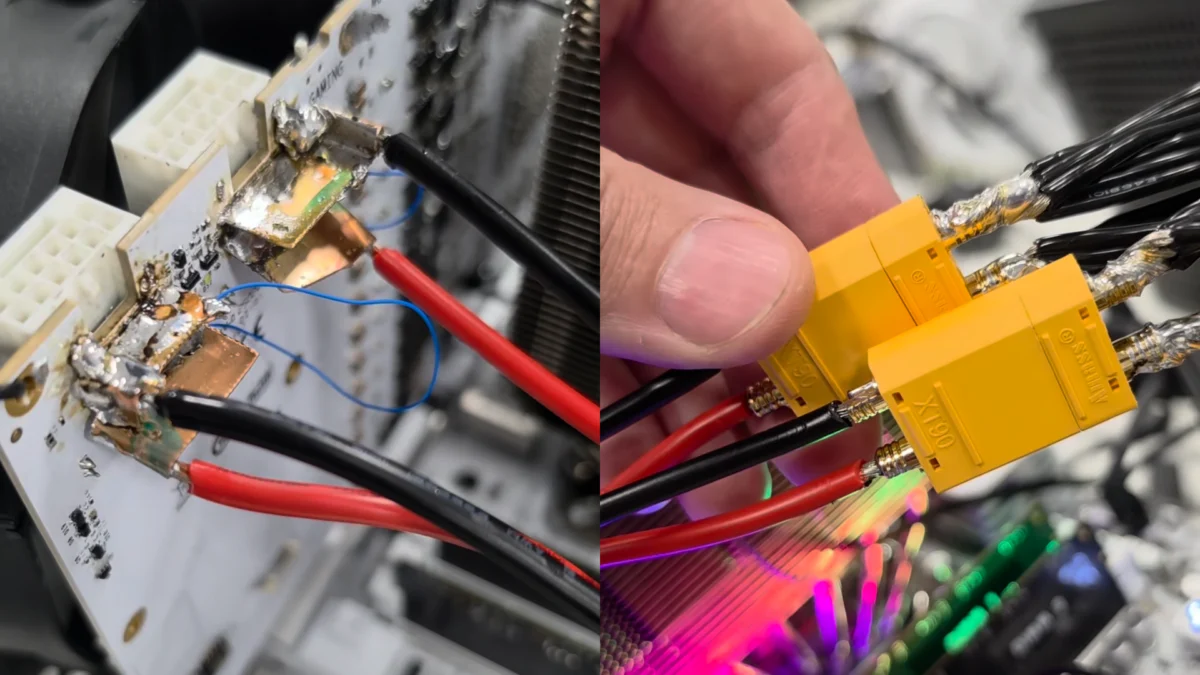
The high-end PC enthusiast community has once again found itself grappling with the persistent anxieties surrounding high-wattage power delivery connectors. As flagship graphics cards push power consumption to unprecedented heights, hardware reliability has taken center stage. Recently, a Reddit user shared an inventive hardware modification designed to combat overheating on the controversial 12VHPWR connector of an Nvidia GeForce RTX 5090.
While the mod showcases ingenuity in addressing a deeply frustrating engineering hurdle, it also shines a light on broader industry concerns regarding warranty support, third-party accessories, and the ongoing saga of high-power connector integrity.
Main Facts
The core of the recent development centers on a post shared in the popular online community r/pcmasterrace by Reddit user u/DallasGrave. The user showcased a custom-built power distribution module physically screwed onto the back of an Nvidia GeForce RTX 5090—widely regarded as one of the most powerful and demanding graphics cards on the market.
- The Problem: High current loads running through standard 12VHPWR configurations can lead to localized electrical resistance, excessive heat, and, in worst-case scenarios, melting connectors and damaged hardware.
- The Solution: The custom module acts as a specialized power distributor. By splitting the incoming electrical current load across a greater number of physical wires, the device successfully lowers operating temperatures at the vulnerable connector interface.
- The Commercial Angle: u/DallasGrave is linked to GRAVEPC.com, a boutique hardware outfit primarily known for engineering custom cooling solutions tailored for small form-factor (SFF) personal computers.
- The Warranty Claim: Addressing community concerns regarding hardware modifications and manufacturer policies, the creator claimed a formal partnership with GPU manufacturer PNY, suggesting that specially modified PNY-branded cards featuring similar power-distribution architecture will soon be sold directly with full warranty backing.
Chronology of Events
To understand how the 12VHPWR connector debate reached this juncture, it is helpful to trace the timeline of high-power connector issues and the subsequent emergence of grassroots hardware fixes.
The Rise of High-Power Delivery Standards
When high-wattage architectures were first introduced to support next-generation GPUs, the 12VHPWR (and later 12V-2×6) connector standard was adopted to streamline power delivery into a single, compact interface capable of handling massive electrical draws. Almost immediately, early adopters reported incidents of thermal degradation, where poor seating or high resistance caused connectors to melt.
The Modder’s Intervention
As hardware enthusiasts sought out preventative measures—ranging from right-angle adapters to specialized sense-pin modifications—independent engineers began looking deeper into the root causes of the thermal spikes. Recognizing that current crowding within standard cabling was a primary culprit, developers at outfits like GRAVEPC began prototyping hardware-level load-balancing solutions.
The Reddit Reveal
The issue entered the mainstream enthusiast spotlight when u/DallasGrave published his post detailing the RTX 5090 modification. Accompanied by photographic evidence of the custom-engineered distribution module mounted directly to the rear of the flagship GPU, the post quickly gained traction. Commenters immediately began dissecting the design, questioning its thermal efficiency, installation complexity, and—crucially—its impact on manufacturer warranties.
Supporting Data and Technical Context
The 12VHPWR connector was designed to deliver up to 600 watts of power through a relatively compact footprint. However, physics dictates that packing such immense electrical current into tight spaces leaves very little margin for error.
Current Crowding and Thermal Resistance
In a standard 12VHPWR setup, twelve power pins and four sideband pins manage communication and power delivery. If a connector is even slightly misaligned, or if contact resistance increases due to manufacturing tolerances or thermal expansion, current can begin to crowd into fewer active pins. This localized concentration of electrical current rapidly escalates temperatures, occasionally exceeding the melting point of the plastic housing.
How Power Distribution Modules Help
The mod showcased by u/DallasGrave attempts to mitigate this specific failure point through load dispersion. By intercepting the power delivery before it hits the single standard header and routing it through an expanded array of conductors, the effective current density per wire is reduced. Lower current density directly correlates with a reduction in Joule heating ($I^2R$ losses), keeping the connector operating well within safe thermal thresholds even under sustained, heavy loads associated with high-end rendering, AI training, or extreme gaming workloads.
Official Responses and Warranty Realities
One of the most contentious aspects of hardware modifications—particularly those involving high-voltage power delivery—is how they affect manufacturer warranty protection.
The Manufacturer Stance and PNY’s Track Record
When queried about whether modified cards would void standard consumer protections, u/DallasGrave stated: "We’re a PNY partner. You’ll be able to buy a PNY-specific card with a similar modification directly from us with a full warranty."
Despite this assurance, caution is widely advised across the hardware community. PNY, like many major hardware vendors, has historically enforced strict guidelines regarding unauthorized modifications and the use of third-party power cables.
This hesitation is further compounded by recent high-profile incidents. For instance, reports recently surfaced regarding prebuilt gaming systems utilizing high-end GPUs where melted connectors led to denied warranty claims. Manufacturers and system integrators have frequently pointed to expired coverage windows or the deployment of third-party cables as grounds for rejecting repair or replacement requests. Consequently, prospective buyers looking at boutique modifications must weigh manufacturer-backed partnerships against general industry skepticism regarding liability when high-power components fail.
Implications for the PC Building Community
The emergence of custom power-distribution mods for flagship GPUs like the RTX 5090 carries significant implications for the future of PC hardware design, consumer rights, and aftermarket modification.
1. A Market Demand for Redundancy
The fact that independent engineers are designing external modules to fix thermal issues highlights a persistent anxiety among high-end consumers. Enthusiuses spending upwards of two thousand dollars on a graphics card expect robust, foolproof engineering out of the box. If thermal management at the connector remains a bottleneck, boutique solutions addressing physical load balancing may transition from niche experiments to sought-after commercial products.
2. The Gray Area of Custom Warranties
While partnerships between boutique modders and major manufacturers like PNY could offer a bridge for consumers wanting customized safety features without sacrificing support, the broader ecosystem remains murky. Clear documentation, transparent terms of service, and explicit written guarantees will be vital if these solutions are to gain mainstream acceptance.
3. Future Connector Evolution
Nvidia and the PCI-SIG consortium have continuously iterated on high-power standards—moving from early 12VHPWR designs to the refined 12V-2×6 specification featuring recessed spring contacts. However, as power requirements for upcoming GPU generations continue to climb, innovations in load management, active monitoring, and physical distribution will likely remain a critical frontier for both official manufacturers and independent hardware developers alike.
Conclusion
The custom power distributor showcased by u/DallasGrave represents both the ingenuity of the PC enthusiast community and the ongoing hardware challenges of high-wattage computing. While it offers a technical workaround to the well-documented thermal hurdles of the RTX 5090’s power delivery system, consumers must navigate the complex landscape of warranties and manufacturer policies carefully. As the industry looks toward future hardware iterations, innovations in thermal and electrical management will undoubtedly remain a focal point for builders, modders, and manufacturers alike.

