

LOS ANGELES — For millions of veteran MMORPG players, the phrase "Blackrock Depths" (BRD) evokes a very specific mix of awe, exhaustion, and fond nostalgia. Sprawling beneath the burning slopes of Blackrock Mountain, the original 15-to-20-boss subterranean dwarven city was less of a traditional video game dungeon and more of a living, breathing urban ecosystem—a sprawling labyrinth where groups could easily spend four hours getting lost, fighting for high-end gear that rivaled raid-tier drops, and mapping out complex shortcuts.
Now, it appears Blizzard Entertainment is looking to capture that exact lightning in a bottle once more.
Recent social media teases from World of Warcraft: Forever Senior Game Designer Josh Greenfield have set the community ablaze, hinting that the upcoming project will feature a massive, old-school "mega-dungeon" reminiscent of WoW’s classic era. The announcement has sparked widespread discussions across gaming forums, analyzing what a true BRD-style experience could mean for the future of Blizzard’s legacy-driven initiatives.
Main Facts: The Tease, Blackmaw Hold, and Greenfield’s Vision
The excitement began when Greenfield took to social media to respond to community discussions surrounding dungeon design in World of Warcraft: Forever. Quoting a fan’s desire for a "’good BRD-like mega dungeon,’" Greenfield playfully answered the call with a succinct challenge: "Hold our beer(s)."
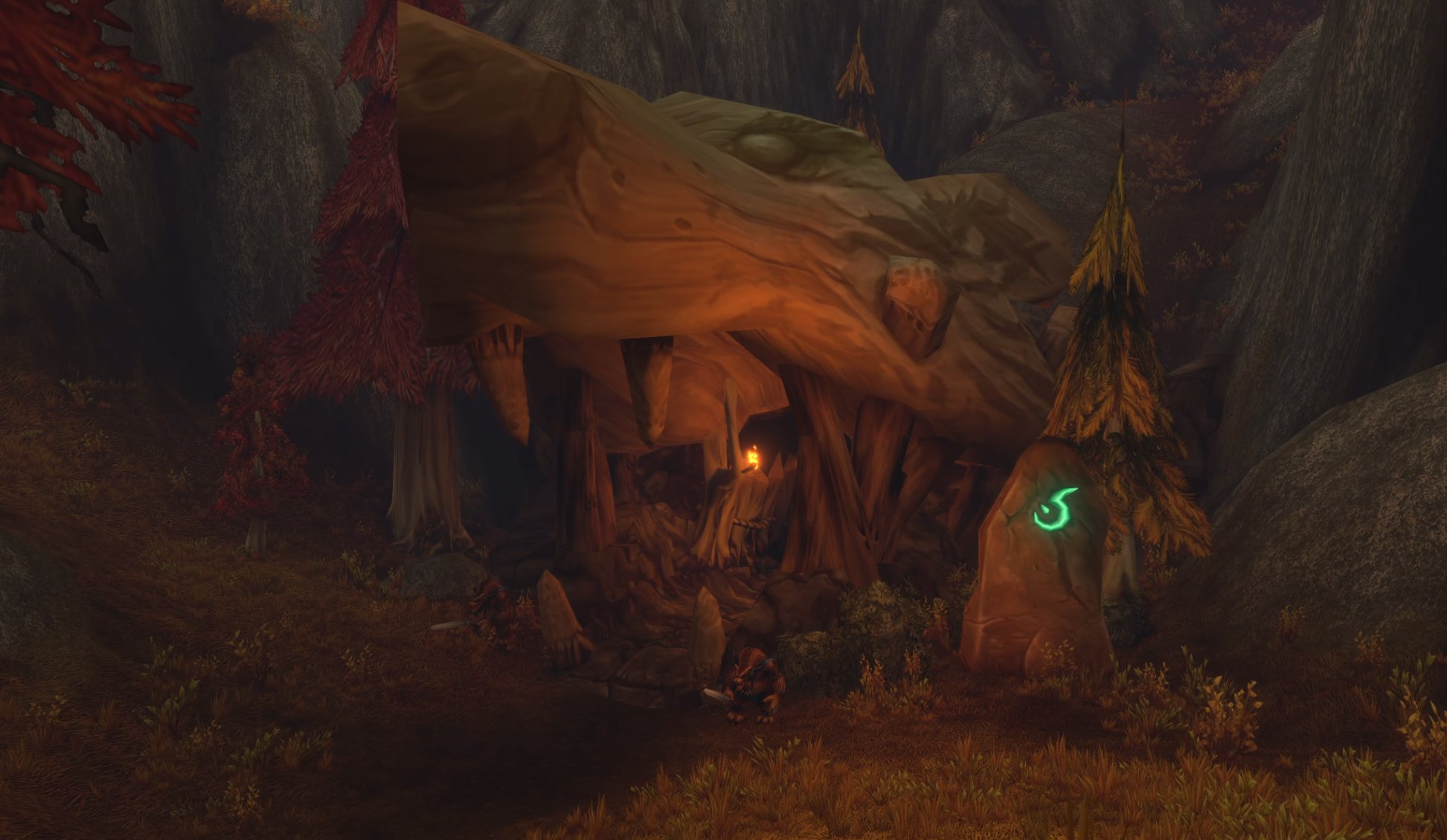
Accompanying the developer hype was a revealing environmental screenshot showing a distinctive architectural feature: a mountain face carved into the likeness of a massive wooden bear snout, its maw agape to form a dark, foreboding entrance.
This visual lines up directly with reveals from BlizzCon, where Blizzard initially showcased an upcoming high-level instance tentatively titled Blackmaw Hold, tailored for players level 55 and above. While initial convention presentations focused primarily on standard instance parameters, Greenfield’s recent social media activity strongly implies that Blackmaw Hold—associated with the lore-rich Timbermaw furbolg tribe—may transcend typical modern dungeon boundaries to offer a labyrinthine, multi-layered experience.
Unlike modern World of Warcraft design paradigms, which prioritize streamlined, tightly paced, linear paths optimized for competitive seasonal loops and Mythic+ keystone timings, a true mega-dungeon is defined by its sheer scale. These massive zones mimic the time investment and spatial complexity of full raids while remaining tuned exclusively for five-player parties.
Chronology of an MMO Phenomenon: From Blackrock Depths to Modern Design
To understand why Greenfield’s tease is causing such a massive stir within the community, it is essential to trace the evolution of dungeon design over the two-decade lifespan of World of Warcraft.
Phase 1: The Vanilla Era and the Era of Labyrinths (2004–2006)
In the original launch version of World of Warcraft, dungeons were designed with architectural authenticity in mind rather than mere efficiency. Instances like Maraudon, Sunken Temple, and most notably Blackrock Depths were treated as localized adventure zones. BRD featured multiple wings, hidden quest triggers, a functioning prison block, a bar populated by hostile and neutral patrons (the Grim Guzzler), and a literal raid-tier-adjacent boss encounter at the Emperor’s seat. Players had to master intricate route-planning, crowd-control strategies, and corpse-run navigation just to survive.
Phase 2: Streamlining and the Linear Shift (2008–2016)
As the game matured through expansions like Wrath of the Lich King and Cataclysm, Blizzard pivoted toward faster-paced gameplay loops. Dungeon finders, automated matching systems, and the removal of complex pathing reduced instances into straightforward corridors. While this made queuing for content easier and more accessible for casual players, it largely killed the sense of exploration and immersion that defined early MMO experiences.
Phase 3: The Mythic+ Era and Competitive Loops (2016–Present)
In modern retail WoW, dungeons serve primarily as a baseline gear treadmill anchored to seasonal mechanics. Every pull is calculated down to the second, and accidental stray pulls are heavily penalized. There is little room for narrative exploration, hidden secrets, or getting "lost" in the architecture.
Phase 4: The WoW: Forever Paradigm Shift (Present)
Enter World of Warcraft: Forever. By carving out a specialized space dedicated to preserving and reinterpreting the slower, more exploratory philosophies of classic-era game design, Blizzard has unlocked a creative sandbox. The introduction of a dedicated mega-dungeon like Blackmaw Hold represents a deliberate step backward into what made early MMORPG exploration magical, entirely divorced from the frantic pacing of contemporary seasonal metas.
Supporting Data & Community Perspectives: The Appeal of Non-Linear Design
The appetite for massive, non-linear content is surprisingly robust among both veteran and younger player cohorts. Industry analysts and community polling indicate that while modern convenience drives daily active user retention, player memorability—the stories players tell years down the line—disproportionately stems from chaotic, open-ended spaces.
- The Scale Factor: Blackrock Depths historically contained over 20 distinct boss encounters, rivaling contemporary 40-player raids in sheer boss variety and environmental footprint.
- Alternative Progression Loops: In unofficial and private legacy servers over the years, massive dungeons have frequently been repurposed by the player base not just for gear, but as dynamic leveling hubs, social gathering spots, and exploration sandboxes.
- Lore Integration: The Timbermaw tribe has been a staple of World of Warcraft lore since 2004, residing in the disputed tunnels between Felwood, Winterspring, and Moonglade. Giving them a dedicated, mega-dungeon-scale fortress satisfies years of untapped narrative potential.
For players who missed out on vanilla WoW during its heyday—experiencing Blackrock Depths only years later as an over-leveled tourist or a private-server leveling grid—the prospect of tackling a modern-built equivalent with contemporary balance and graphical fidelity offers a compelling proposition.
Official Responses and Developer Intent
Blizzard has remained tight-lipped regarding the exact release timeline and specific mechanical systems governing Blackmaw Hold within World of Warcraft: Forever. However, comments from the development team indicate a conscious effort to break away from the hyper-linear constraints that dominate modern MMO design.
Senior designers have noted that developing for WoW: Forever grants them a unique license to experiment with legacy architecture. By removing the pressure to constantly feed a synchronized seasonal content treadmill, the team can focus on verticality, environmental storytelling, and spatial secrets.
Whether Blackmaw Hold will incorporate non-combat interactions—such as specialized gathering nodes for rare ores, hidden fishing spots, or immersive social hubs akin to WoW: Midnight’s celebrated Arcantina—remains to be seen. However, developer enthusiasm strongly suggests that Blizzard is thinking well outside the traditional box of "kill boss, loot chest, exit instance."
Implications for the Future of the Franchise
The development and reception of World of Warcraft: Forever and its incoming mega-dungeon initiative carry several profound implications for Blizzard Entertainment and the broader MMORPG market:
- Dual-Track Game Design: Blizzard is effectively validating the viability of running concurrent philosophies under the same brand umbrella. While retail WoW continues to cater to fast-paced, high-octane competitive raiders and Mythic+ runners, WoW: Forever carves out a lucrative, deeply loyal niche for players seeking patience, social friction, and immersive world-building.
- Re-Evaluating "Inconvenience": For years, game design trends across the industry have aggressively eliminated friction, travel time, and navigational complexity in the name of accessibility. Greenfield’s enthusiasm for a BRD-style mega-dungeon proves that strategic friction—getting lost, planning routes, and investing hours into a single run—remains a powerful tool for forging emotional connections between players and virtual worlds.
- The Power of Nostalgia-Driven Innovation: Rather than simply remastering old code, Blizzard is applying modern design sensibilities, encounter mechanics, and visual fidelity to classic structural concepts. If Blackmaw Hold successfully bridges the gap between old-school exploration and modern encounter polish, it could establish a new blueprint for how live-service games handle legacy content moving forward.
As World of Warcraft: Forever continues its development cycle toward release, all eyes will be fixed on Blizzard’s mountain strongholds. If the team delivers on the promise of a true, uncompromised mega-dungeon experience, players may soon find themselves packing torches, stocking up on potions, and getting happily lost in the dark once again.

