

By: Editorial Staff
Published: October 2026
Main Facts
In the ever-evolving landscape of video game development, artificial intelligence has steadily forced its way into the spotlight, igniting fierce debates over copyright, creativity, and intellectual property. The latest flashpoint in this ongoing cultural war involves a browser-based, AI-generated project titled Fallout: New York. Created by developer and digital creator Chris First using Claude Opus 5.5 and a network of autonomous AI agents, the project promised a complete, text- and code-generated role-playing experience set in a post-nuclear version of New York City, complete with working dialogue trees, quests, and a functional Pip-Boy interface.
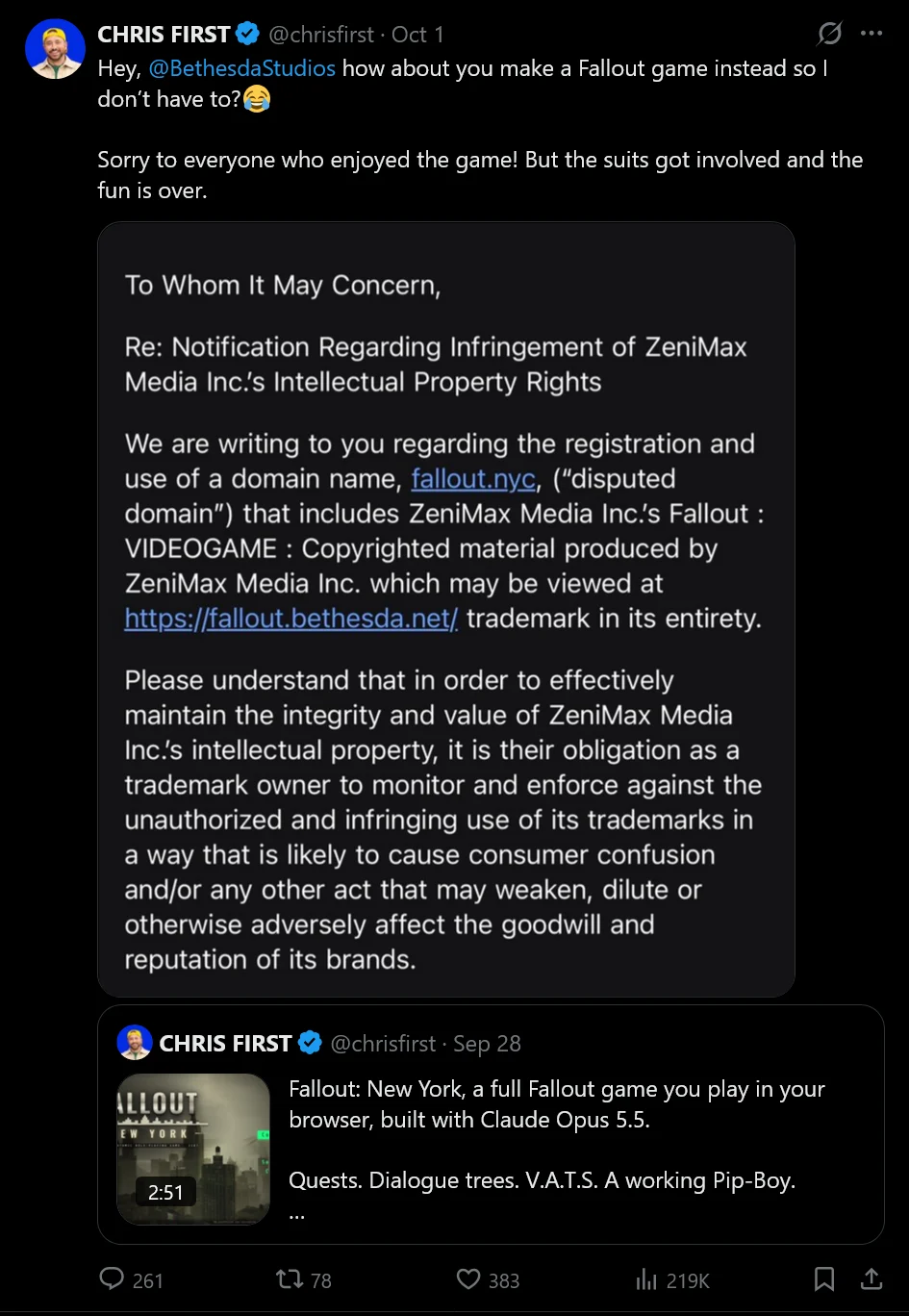
However, the project’s lifespan was cut brutally short. ZeniMax Media, the parent company of Bethesda Softworks, swiftly intervened, issuing a formal cease-and-desist letter targeting the project—specifically citing the registration of the infringing domain name fallout.nyc.
While legal crackdowns on fan-made content often draw universal sympathy from the gaming community, this particular enforcement has triggered a vastly different public reaction. Rather than rallying behind an independent creator facing off against a billion-dollar corporate entity, much of the gaming public—alongside industry commentators—has largely applauded Bethesda’s move. The incident has cast a harsh light on the growing divide between passion-driven fan projects, such as massive multi-year overhaul mods like Fallout: London or Skyblivion, and low-effort, AI-generated content often dismissed by critics as "slop."
Chronology of Events
The brief and controversial history of Fallout: New York unfolded rapidly across social media platforms before catching the eye of corporate legal teams:
- Late September 2026: Chris First takes to X (formerly Twitter) to showcase his latest experiment. He reveals that he directed the AI model Claude Opus 5.5 and a studio of cooperating AI agents to build a fully functional Fallout game playable directly inside a web browser.
- The Technical Showcase: First highlights the unusual architecture of the game, boasting that it features zero manual texture files and zero pre-recorded sound files. Every single building, weapon, character face, and audio cue is dynamically generated via code.
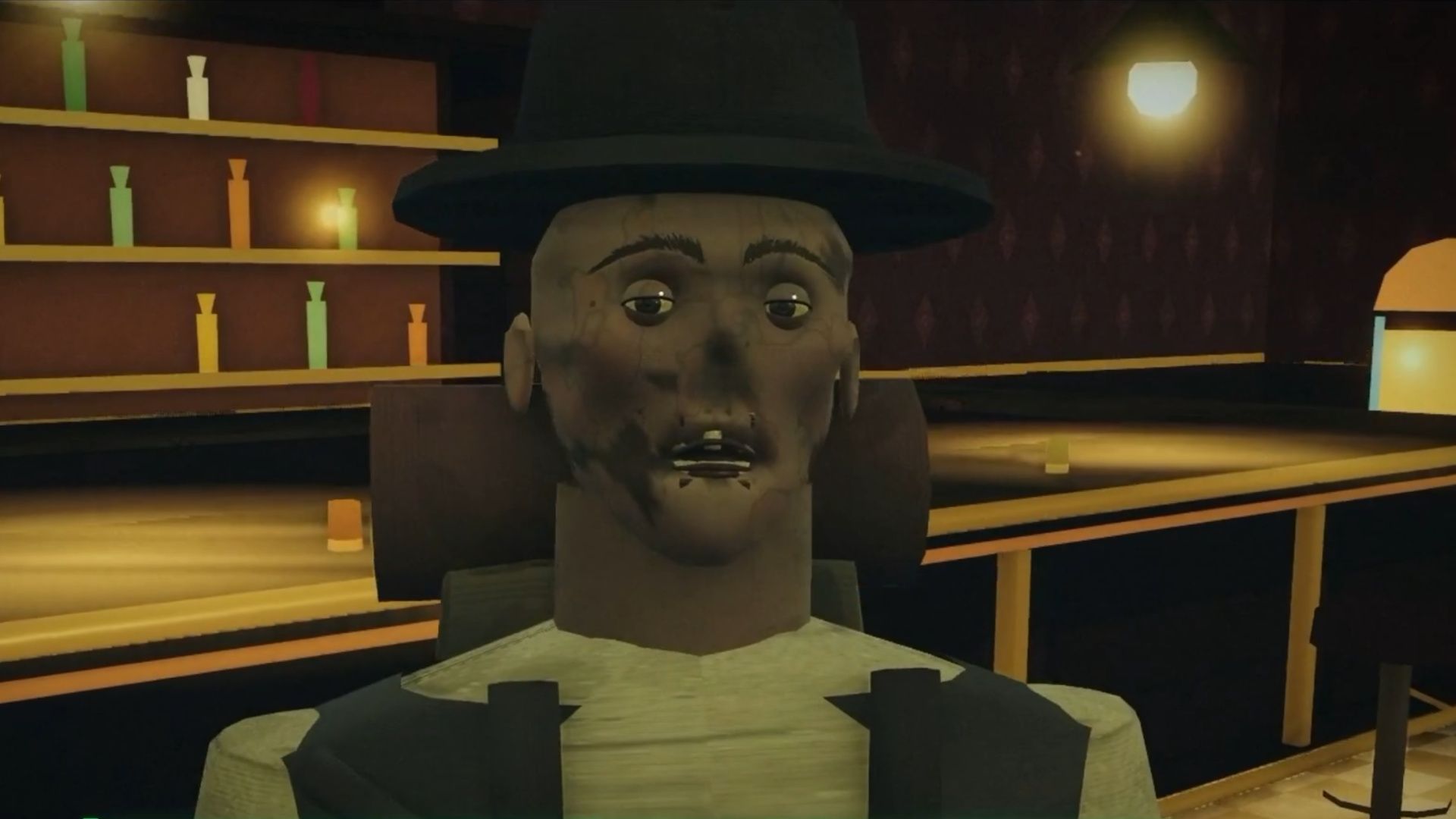
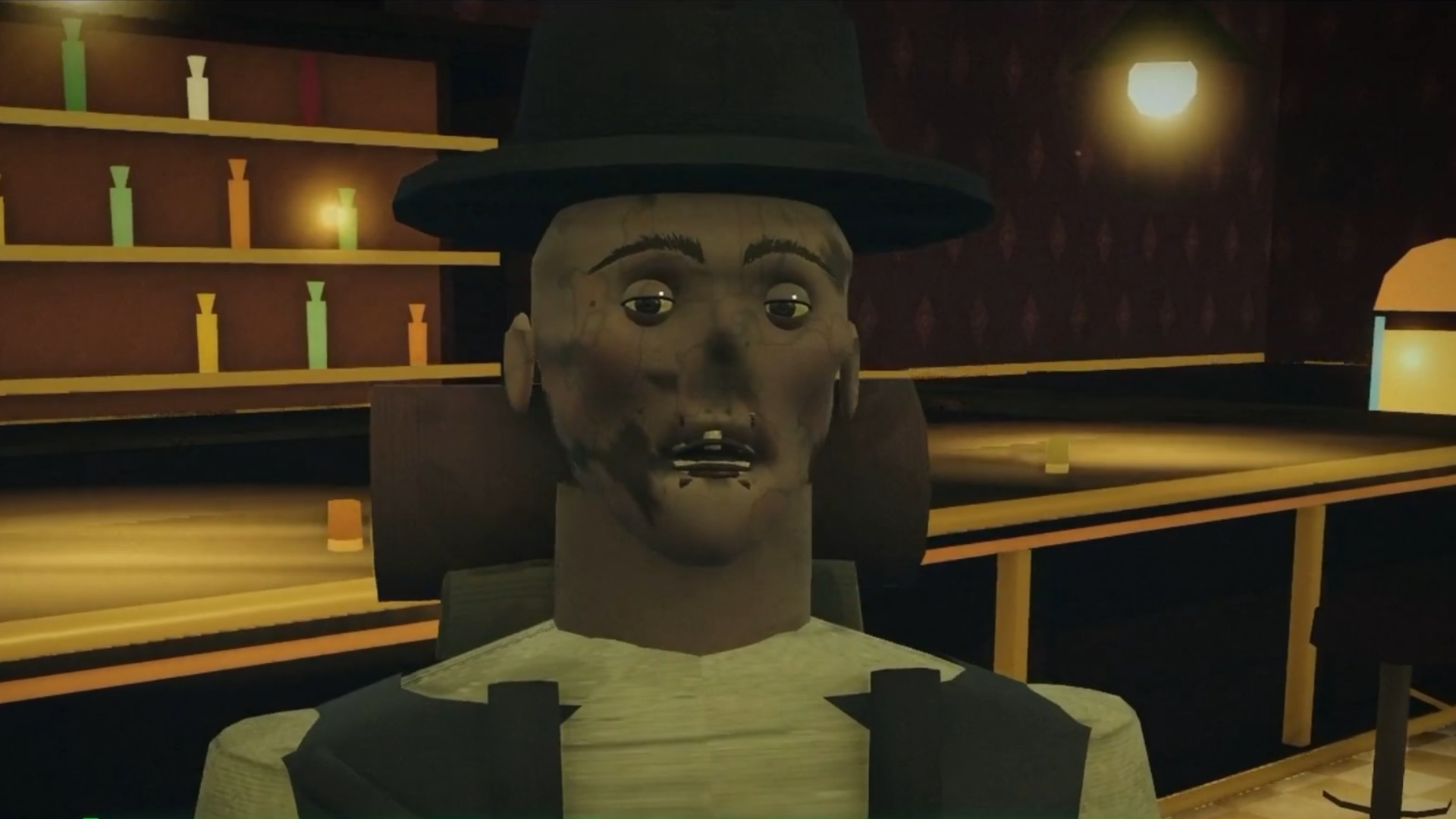
- The Backlash Begins: As clips and screenshots of the browser game circulate, public reception is mixed to hostile. Gamers point out the bizarre, low-poly aesthetics and uncanny, distorted character models. Critics note that First explicitly instructed the AI to make a game "exactly like Fallout" rather than drawing loose inspiration from it.
- October 2026 (The Legal Strike): ZeniMax Media’s legal department acts swiftly. First receives an official notification stating that his project—and particularly his registration and use of the
fallout.nycdomain—constitutes a direct and actionable infringement on Bethesda’s heavily guarded intellectual property rights. - Public Shutdown: Facing immediate legal exposure, First pulls the plug on the project. He posts a screenshot of the notice on social media with the parting shot: "Hey, @BethesdaStudios how about you make a Fallout game instead so I don’t have to? Sorry to everyone who enjoyed the game! But the suits got involved and the fun is over."
Supporting Data and Context
To understand why Fallout: New York faced such intense public backlash—even before the legal hammer fell—it is essential to examine the technical realities and the broader modding ecosystem surrounding the Fallout franchise.
The Contrast with True Fan Craftsmanship
In the gaming community, fan projects generally fall into two categories: passion projects and automated novelties. For years, Bethesda’s titles have enjoyed legendary status largely due to the monumental efforts of dedicated modding communities.
- Fallout: London: A massive, DLC-sized modification released after years of coordination by a volunteer team of writers, level designers, voice actors, and programmers. It represents thousands of hours of human creativity and technical mastery.
- Skyblivion: An ongoing, monumental undertaking by hundreds of volunteers striving to recreate The Elder Scrolls IV: Oblivion inside the modern engine of Skyrim.
In stark contrast, Fallout: New York required no such human artistry or collective devotion. By outsourcing the entirety of the creative, artistic, and coding processes to a large language model, the project bypassed the very elements that make video game development an artistic medium. Critics were quick to point out that generating low-poly, glitchy web code via text prompts does not equate to the sweat, tears, and artistic vision poured into traditional modding marvels.
Technical Feats vs. Quality Standards
Defenders of AI-assisted tools argued that running a functional RPG entirely in a web browser is an impressive technical benchmark. However, veteran gamers and industry analysts countered that browser-based emulation and conversion are not entirely unprecedented. For instance, technical hobbyists previously managed to port The Elder Scrolls III: Morrowind to web browsers. Crucially, that project successfully preserved the aesthetic and functional integrity of the original game, whereas the AI-generated assets in Fallout: New York resulted in universally mocked, misshapen character models and rudimentary environments.
Furthermore, economic context played a role in public reception. With classic franchise entries like Fallout 3 and Fallout: New Vegas routinely available on digital storefronts like Steam for nominal prices—often under five dollars during seasonal sales—consumers felt little economic or experiential need for a low-quality, AI-slapped imitation.
Official Responses and Public Reactions
The standoff between Chris First and ZeniMax Media produced a fascinating sociological reaction within the gaming community, subverting the typical narrative of David versus Goliath.
The Creator’s Stance
Chris First framed his experiment as a lighthearted endeavor and a critique of Bethesda’s notoriously slow development cycles for main-line entries in the franchise. With fans facing a potentially long wait for the next official installment in the post-apocalyptic universe—industry speculation suggests a new entry may not materialize until well into the 2030s—First positioned his browser game as a satirical and functional stopgap. Upon receiving the cease-and-desist, his public statements reflected a mix of defiance and resignation, blaming corporate "suits" for shutting down harmless public amusement.
Community Backlash
Unlike instances where publishers crack down on beloved, community-driven mods (which regularly invites massive public outcry), the response to ZeniMax’s intervention was largely a collective shrug, punctuated by outright approval.
Social media responses heavily criticized First for openly using the trademarked name "Fallout" in both the title and the custom domain (fallout.nyc). Commentators noted that utilizing protected corporate branding while leaning entirely on automated AI text-and-code generation was an open invitation for a swift legal response.
Moreover, a deep-seated fatigue surrounding generative AI tools within artistic spaces heavily influenced the commentary. Many users expressed exhaustion over the flood of low-effort, AI-generated content across creative industries, expressing little sympathy when copyright holders stepped in to protect their assets from being utilized in automated, prompt-driven clones.
Broader Implications for the Industry
The rapid rise, fall, and public reception of Fallout: New York offer a window into several critical trends currently shaping the video game industry:
1. The Maturation of AI Copyright Battles
As generative AI tools become more powerful and accessible to casual users, boundaries between inspiration, transformation, and outright copyright infringement are blurring. ZeniMax’s swift action underscores a zero-tolerance policy toward unauthorized commercial or promotional uses of major intellectual properties—particularly when distinct brand identifiers like custom domains (fallout.nyc) are involved. This case serves as an early precedent for how major publishers intend to police AI-generated spin-offs of their flagship franchises.
2. The Value of Human Craftsmanship
The public’s harsh dismissal of the project highlights a growing consumer appreciation for authentic human artistry in video games. While corporations are increasingly exploring ways to integrate AI into development pipelines for efficiency, the end-user market continues to place a premium on genuine creative expression, narrative depth, and artistic intent. Projects that rely solely on automated prompts without human curation risk immediate rejection by a discerning player base that values the blood, sweat, and tears of traditional developers and modders.
3. Franchise Starvation and Fan Impatience
Underlying the entire controversy is a very real consumer pain point: the immense gaps between major franchise releases. With players facing multi-year droughts between canonical installments of beloved role-playing series, the temptation for DIY solutions—whether through massive, multi-year volunteer mod projects or hasty, AI-driven novelties—will only grow. Until major publishers find ways to balance their development pipelines or provide more frequent content updates, independent creators and hobbyists will continue pushing the boundaries of what is possible, inviting inevitable collisions with corporate legal teams.
Ultimately, while Fallout: New York has vanished from the web, the conversation it sparked regarding ownership, creativity, and the soul of video game development will reverberate through the industry for years to come.

