

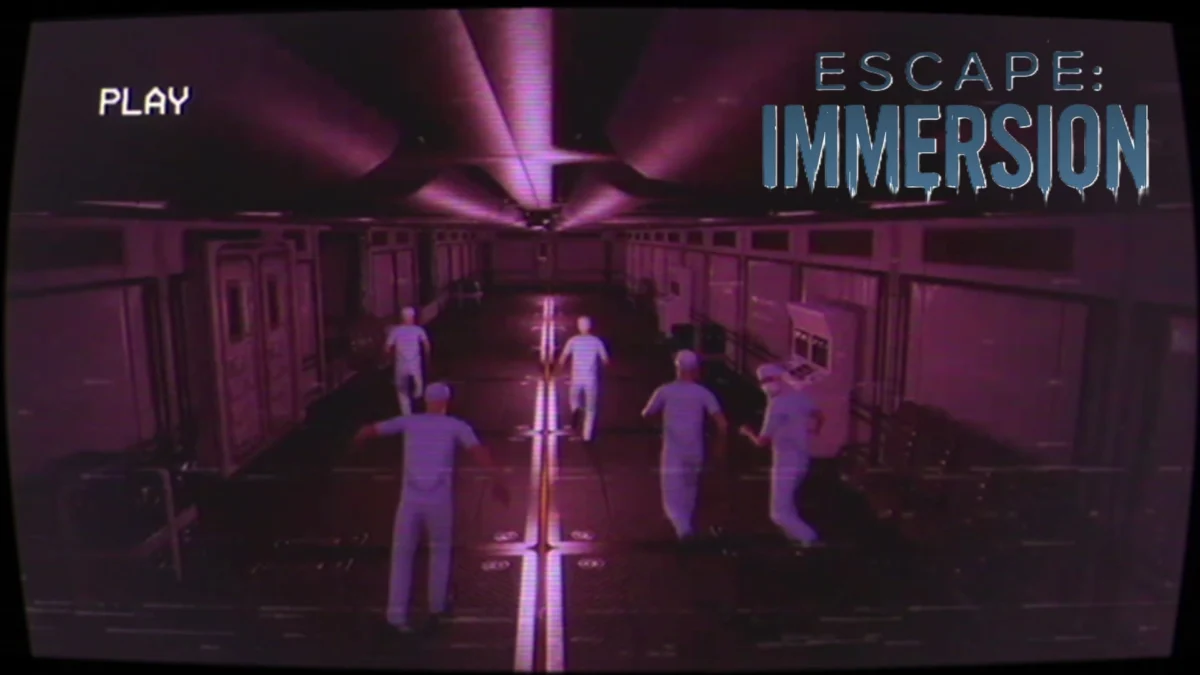
After a protracted four-year development cycle that pushed the boundaries of its indie creators, Escape: Immersion has officially surfaced. The cinematic horror adventure, a collaborative effort between developers AzDimension and Royal Games, has launched simultaneously across Android, iOS, and PC via Steam. This release marks a significant milestone for the studios, transitioning from a long-gestating concept into a fully realized 2.5D experience that challenges the conventions of the mobile horror genre.
The Premise: A Descent into Aqueous Claustrophobia
At its core, Escape: Immersion is a masterclass in environmental tension. Players are thrust into the role of an amnesiac protagonist who awakens within the decaying, pressurized confines of a top-secret military facility located deep beneath the ocean floor. The setting is not merely a backdrop; it is an active antagonist. As the facility suffers from catastrophic structural failure, the game forces players to navigate a labyrinth of flooding corridors, failing security protocols, and pitch-black chambers where the silence is as dangerous as the shadows.
The narrative hook is intentionally opaque. By stripping the player of their memory and identity, the developers force a reliance on environmental storytelling. Every groaning metal bulkhead and flickering emergency light serves as a piece of a larger, more sinister puzzle. The player is not just escaping a facility; they are piecing together the events that led to its collapse, all while fighting against the encroaching ocean.
Chronology: A Four-Year Development Odyssey
The journey to the release of Escape: Immersion was anything but linear. When the project was first conceptualized by AzDimension and Royal Games, the goal was to create a mobile experience that matched the production quality of high-end console indie titles.
- 2020-2021 (The Inception Phase): The initial concept focused on atmosphere over action. During this period, the teams experimented with various camera perspectives, eventually settling on the 2.5D plane, which they believed offered the best balance between cinematic framing and intuitive gameplay control.
- 2022 (The Technical Pivot): Mid-development, the team shifted toward a more rigorous approach to lighting and audio. It was during this phase that the "VHS-inspired" aesthetic was finalized, aiming to provide a nostalgic yet unsettling visual texture that separates the game from the high-definition polish of modern titles.
- 2023 (Refinement and Optimization): The most grueling year for the developers involved porting the engine-heavy mechanics to mobile hardware. Optimizing the fluid physics—which play a critical role in the game’s "flooding room" segments—required significant re-engineering of the game’s core systems to ensure parity between the PC and mobile versions.
- 2024 (Polishing and Release): The final year was dedicated to balancing the difficulty curve. Feedback from limited closed beta sessions suggested that while the atmosphere was top-tier, the platforming mechanics needed to be tightened to avoid frustration during high-stress sequences.
Supporting Data: Mechanics and Aesthetic Philosophy
Escape: Immersion draws heavy design DNA from modern classics such as Playdead’s INSIDE and Tarsier Studios’ Little Nightmares. However, it distinguishes itself through its unique "Survival-Puzzle-Platformer" hybrid model.
Environmental Hazards
The game utilizes a "dynamic environment" system. Unlike games where hazards are static, Escape: Immersion features:
- Thermal Fluctuations: Players must navigate freezing zones, which can slow movement and impact character health.
- Structural Integrity: Areas of the base are subject to collapse; players must recognize audio cues (groaning metal, dripping pipes) to avoid being crushed.
- Water Displacement: The flooding mechanic is not just a timer. The rising water levels change the geometry of the levels, turning previously accessible areas into submerged, puzzle-heavy gauntlets.
Audio and Visual Design
The developers have implemented a "Sound-First" design philosophy. By stripping away traditional background music in favor of a dense soundscape—composed of ultrasonic hums, metallic stress, and distorted oceanic echoes—the game creates an oppressive atmosphere. The VHS-inspired visual filter adds a layer of "degraded reality," simulating the feeling of watching a grainy security tape from the perspective of the trapped subject.
Official Responses and Developer Insight
In recent statements, representatives from AzDimension and Royal Games addressed the challenges of the long development cycle. "We didn’t want to release a product that felt ‘mobile-first’ in a derogatory sense," a spokesperson noted. "We wanted a console experience in your pocket. The four-year delay was a conscious choice to ensure that the transition from a dry corridor to a flooded abyss felt visceral and earned."
Regarding the choice of the 2.5D perspective, the developers emphasized that it allows for superior "cinematic choreography." By locking the camera to specific planes, they can guide the player’s eye to environmental storytelling elements that might be missed in a fully free-roaming 3D environment. This creative control is crucial for a horror game, where the placement of a shadow or a flicker of light must be precisely calibrated to be effective.
Implications: The Future of Mobile Horror
The release of Escape: Immersion represents a growing trend in the mobile gaming market: the migration of high-fidelity, indie-focused horror titles to handheld platforms. For years, mobile horror was dominated by "jump-scare" simulators or simplistic point-and-click adventures. Escape: Immersion challenges this by proving that complex, physics-based platforming and deep, atmospheric storytelling can function effectively on a touchscreen.
The Freemium Model and Accessibility
The distribution strategy for the game is worth noting for its transparency. By offering the introductory chapters as a free-to-play trial, the developers are allowing the barrier to entry to remain non-existent. This "demo-first" model is a refreshing departure from the predatory microtransactions often found in the mobile space. It signifies a shift toward treating mobile games as premium experiences that deserve a one-time purchase, rather than recurring revenue streams.
Impact on the Indie Ecosystem
For AzDimension and Royal Games, the successful launch provides a roadmap for other small studios. By focusing on a "niche" sub-genre (underwater survival horror) and polishing it to a high degree of fidelity, they have carved out a space that larger, AAA developers often ignore. If the title sees continued success, it could spur a resurgence of interest in 2.5D horror titles on mobile, encouraging other studios to invest in similar atmospheric projects.
Conclusion: Is It Worth the Plunge?
Escape: Immersion is a bold, uncompromising, and deeply unsettling experience. While its mechanics are borrowed from titans of the genre, it synthesizes them into something that feels uniquely claustrophobic. For players who enjoy the methodical, "die-and-retry" tension of Little Nightmares and the haunting, wordless narratives of INSIDE, this title is an essential download.
The game is currently available on the Google Play Store and other major mobile storefronts. Players can experience the introductory chapters at no cost before deciding to unlock the full narrative. As the gaming landscape continues to evolve, Escape: Immersion stands as a testament to the fact that with enough time, vision, and atmospheric care, mobile devices can deliver horror experiences that are just as potent as those on high-end hardware. Whether you find yourself scrambling across a failing ventilation shaft or holding your breath as you swim through a flooded hallway, the game promises a cold, lonely, and terrifying journey into the abyss.

