

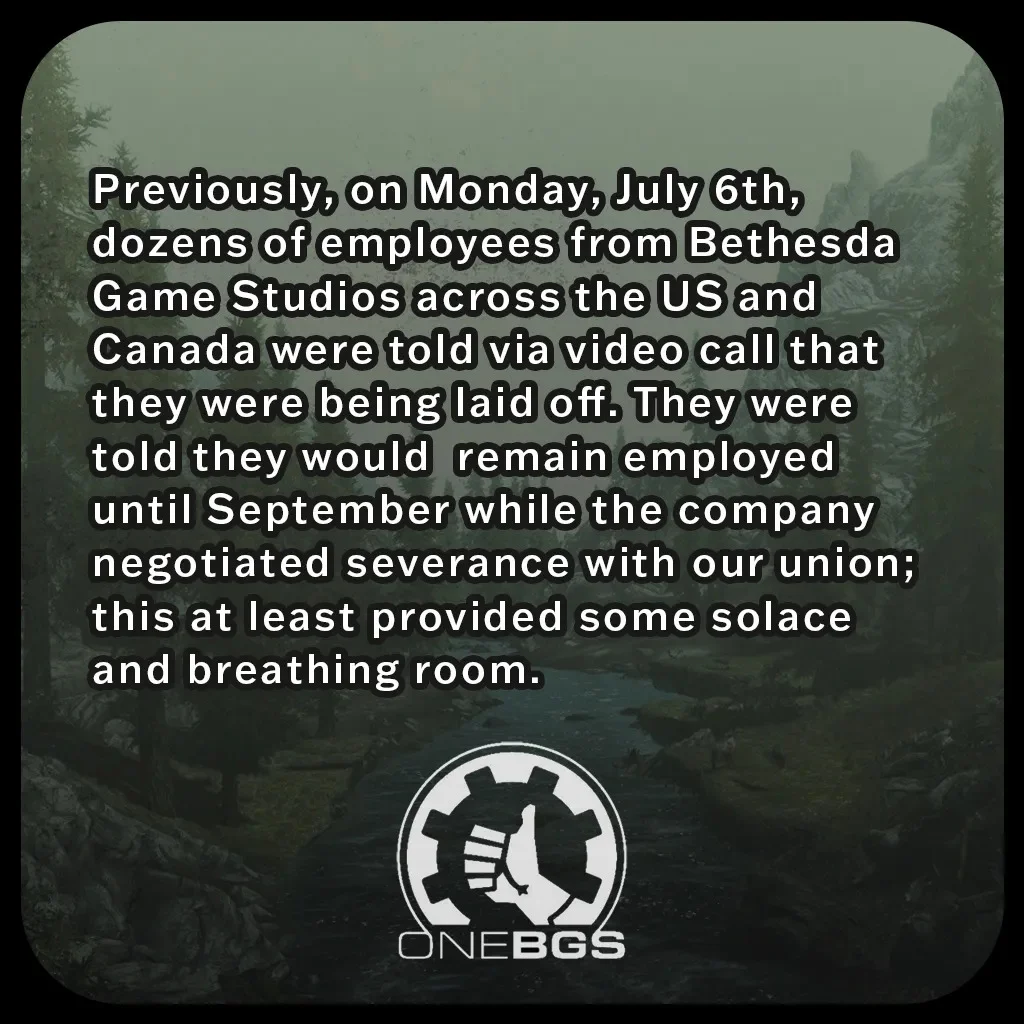
The gaming industry is currently navigating a period of unprecedented volatility. Amidst a wave of massive workforce reductions, the Bethesda Game Studios Union (OneBGS) has launched a formal legal challenge against Bethesda, alleging that the company has engaged in the systematic violation of Canadian labor laws. This dispute, which centers on the abrupt termination of Montreal-based employees, has ignited a firestorm regarding corporate accountability, the ethics of mass layoffs, and the tension between public relations strategies and human welfare.
The Convergence of Announcements and Terminations
On July 17, Bethesda Game Studios executed a dual strategy that has drawn intense scrutiny from labor advocates and industry observers alike. As the studio released a highly anticipated suite of announcements—including the confirmation of remasters for Fallout 3 and New Vegas, news of an Obsidian-led Fallout project, and the early development status of Fallout 5—a darker narrative was unfolding behind the scenes.
While the gaming community was distracted by the prospect of future titles, affected employees at Bethesda’s Montreal office were receiving termination notices via email. This action was not only unexpected but, according to the union, directly contradicted the timeline previously established by management. The juxtaposition of these events—a celebratory "infodump" of beloved intellectual properties set against the backdrop of layoffs—has led the OneBGS union to label the announcements a "purposeful smokescreen" designed to mitigate public outcry over the loss of hundreds of jobs across the Microsoft and Xbox ecosystem.
A Chronology of Conflict
To understand the gravity of the situation, one must look at the timeline of events leading up to the current legal escalation:
- Early July 2024: Following a broader announcement from Microsoft regarding the layoff of 3,200 employees and the closure of four major studios, dozens of Bethesda Game Studios employees across the United States and Canada were informed via video call that their positions were being eliminated.
- The "Solace" Period: During these initial video calls, management reportedly assured staff that they would remain employed until September. This period was intended to provide a buffer for the affected workers while the company negotiated severance packages with the union.
- July 17, 2024: The situation shifted drastically. Despite the previous assurances, Canadian employees received formal termination letters. These letters, delivered on the same day as the high-profile Fallout franchise announcements, mandated immediate termination and the cessation of group health benefits.
- July 22, 2024: The OneBGS union formally went public with their grievances on social media platform Bluesky, condemning the "poor treatment" of Montreal staff and encouraging the community to voice their disapproval through Microsoft’s feedback portals.
The Legal and Ethical Discrepancies
The core of the legal complaint rests on the breach of trust and potential violation of labor statutes regarding notice and bargaining. Under Canadian law, employers are generally bound by strict protocols when terminating staff, particularly when a collective bargaining unit is involved.
The union argues that Bethesda bypassed these legal obligations by failing to discuss the accelerated timeline with the union representatives. Instead of the negotiated severance or the promised employment window through September, the affected employees were offered only the "bare legal minimum." This includes eight weeks of pay in lieu of notice and outstanding vacation pay, accompanied by the immediate loss of essential health insurance benefits.
Carmel Smyth, president of CWA Canada, has been vocal about the broader context of these actions. Prior to the July 17 incidents, the Communications Workers of America and CWA Canada had already initiated a joint complaint against Microsoft. Smyth noted that Microsoft had "unlawfully fired people without giving notice to or discussing it with the union," a move that constitutes a significant breach of the employer’s duty to negotiate in good faith during the term of a collective agreement.
The "Smokescreen" Strategy
The timing of the Fallout announcements is widely viewed by labor experts and the gaming press as a calculated attempt to control the news cycle. By flooding media outlets with content that appeals to the core interests of the fanbase, the company sought to shift the focus from the suffering of its workforce to the excitement of future game releases.
This tactic, often referred to as "burying the lede," creates a narrative where the loss of human capital is framed as a necessary, albeit unfortunate, side effect of "corporate restructuring." However, for the employees of Bethesda Montreal, this was not just a business metric—it was the loss of livelihoods and the disruption of a community that had been promised a period of transition. The irony of using Fallout—a series famously critical of corporate greed and societal collapse—to distract from real-world corporate misconduct has not been lost on the public.
The Wider Implications for the Gaming Industry
The conflict at Bethesda is symptomatic of a larger, systemic problem within the triple-A gaming industry. As major conglomerates like Microsoft consolidate their holdings, the distance between corporate decision-makers and the developers on the ground continues to grow.
1. The Erosion of Job Security
The, at times, precarious nature of game development is being exacerbated by the "hire-and-fire" culture of major tech acquisitions. When employees are treated as disposable assets rather than the primary drivers of value, it creates a toxic work environment that stifles creativity and destroys morale.
2. The Rise of Collective Bargaining
The formation and activity of unions like OneBGS represent a pivotal shift in the gaming industry. Developers are increasingly recognizing that without organized labor, they have little recourse against unilateral management decisions. This legal battle is likely to serve as a bellwether for future union-management relations in the digital entertainment space.

3. Corporate Responsibility vs. Shareholder Value
Microsoft’s mandate to its studios often emphasizes profitability and long-term franchise growth. However, this case suggests that these goals are being pursued at the expense of established labor standards. The question remains: can a company truly foster a culture of creative excellence while simultaneously eroding the rights and security of its workforce?
Official Responses and Next Steps
As of this writing, Microsoft and Bethesda leadership have remained largely silent on the specifics of the legal complaint, opting to focus on their product roadmap. However, the unions involved—the CWA and CWA Canada—have signaled that they are prepared for a prolonged legal battle.
The OneBGS union’s message on social media was a clarion call to the industry: "Bethesda and Xbox leadership depend on our labor to make them millions, and yet when we do, we are disposed of. The cycle of workers paying for the mistakes of management ends here."
The implications of this statement are profound. If the union successfully proves that the layoffs were conducted in violation of Canadian labor law, it could set a massive legal precedent. Such a victory would not only force Microsoft to provide proper severance and restitution to the affected Canadian workers but would also establish a stronger framework for employee protections across the entire industry.
Conclusion
The situation at Bethesda serves as a sobering reminder of the human cost behind our favorite games. While players wait for the next installment of Fallout, they must also grapple with the reality of how those games are made—and at what price. The legal struggle between the Bethesda Game Studios Union and its parent company is not merely a dispute over notice periods and severance pay; it is a fundamental challenge to the way the gaming industry treats the people who bring these worlds to life.
As the case proceeds through the legal system, the industry will be watching closely. Whether this leads to greater accountability or remains another chapter in the story of corporate indifference will depend on the continued persistence of labor organizations and the willingness of the public to hold these gaming giants to account. For now, the "Steel Dawn" of the gaming labor movement is just beginning, and the industry may never be the same.

