

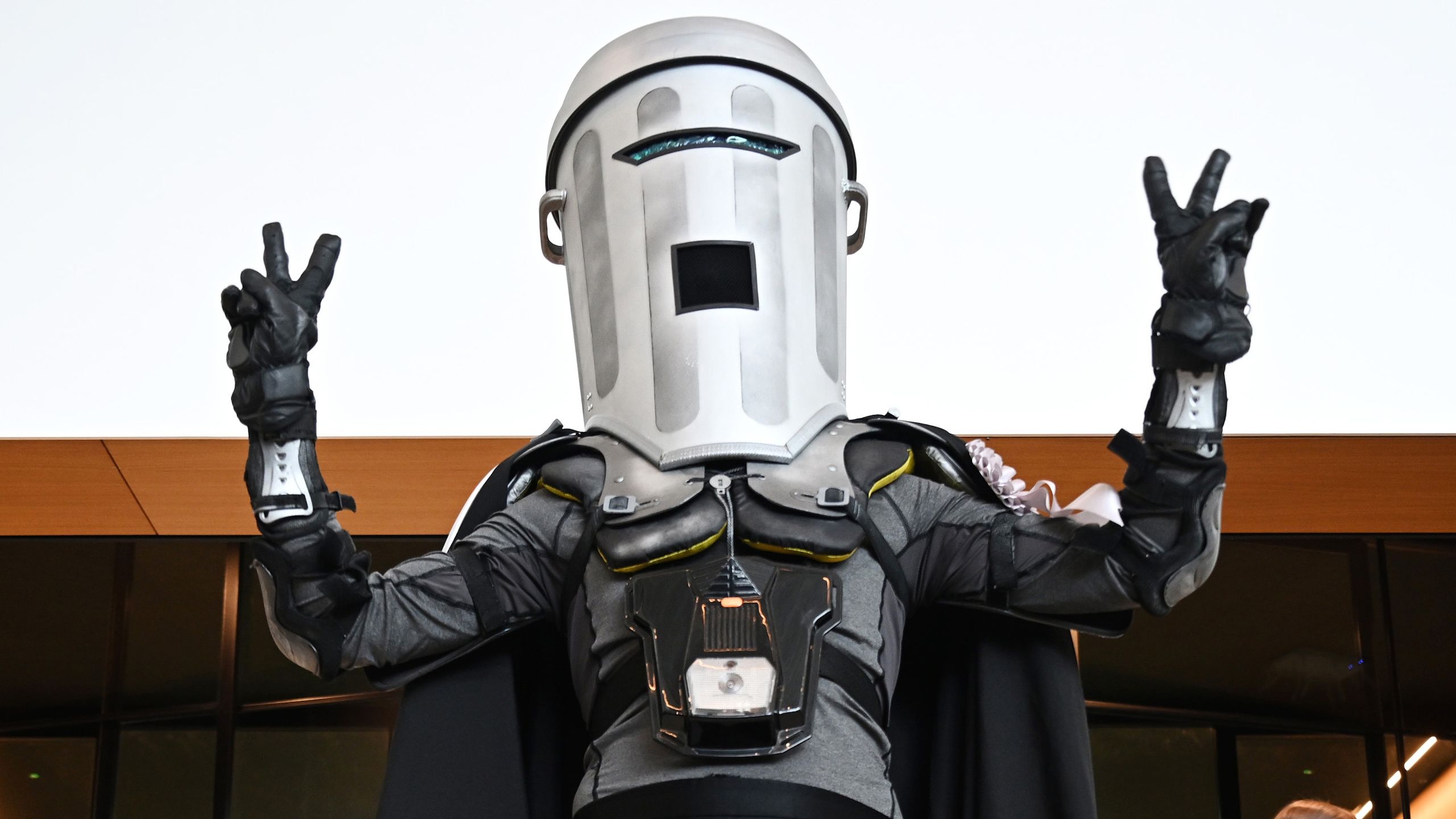
In the strange, often surreal landscape of British electoral politics, few figures stand out with the eccentricity—or the singular focus—of Count Binface. A satirical candidate known for his metallic headgear and a manifesto that balances absurdist humor with genuine, if bizarre, civic grievances, the Count has officially expanded his platform from local infrastructure and pastry price caps to the high-stakes world of Japanese video game development.
In a move that has sent shockwaves through both the gaming community and the halls of social media, Count Binface has issued a formal, albeit "galactic," demand to the leadership at Sega: stop the delay and finalize Shenmue 4. The ultimatum, delivered with the theatrical flair for which the candidate is known, includes the provocative suggestion that the company faces the threat of nationalization should they fail to meet the expectations of the long-suffering Shenmue fanbase.
The Man Behind the Bin: A Profile in Satire
To understand the gravity of this demand, one must first understand the political entity known as Count Binface. In his "unbinned" form, the candidate is known as Jonathan David Harvey, a writer and comedian who has carved out a unique niche in the UK political scene. Unlike many satirical candidates who use the platform merely for irony, Harvey has consistently engaged in actual electoral contests, including high-profile runs for the London Mayoralty and, most recently, a direct challenge against Reform UK leader Nigel Farage in the Clacton by-election.
His platform is a tapestry of the mundane and the impossible. Among his policy highlights are a mandatory £1 price cap on croissants, the banning of "loud snacks" in movie theaters, and the relocation of a specific, notoriously misplaced hand dryer in an Uxbridge pub. However, the Count’s interest in the cultural infrastructure of the UK—and by extension, the digital landscapes of global gaming—is a defining feature of his persona.
A Chronology of a Lingering Cliffhanger
The frustration surrounding the Shenmue franchise is a narrative that has spanned decades. Created by the legendary Yu Suzuki, the original Shenmue and its successor Shenmue II were revolutionary titles that defined the Sega Dreamcast era, setting new standards for open-world interactivity and cinematic storytelling.
The journey to a conclusion, however, has been fraught with delays and industry uncertainty:
- 1999–2001: The release of the first two Shenmue titles establishes a massive cult following, but the games underperform commercially, leading to a long hiatus for the series.
- 2015: During Sony’s E3 press conference, Yu Suzuki announces a Kickstarter campaign for Shenmue III, which becomes the fastest-funded video game in Kickstarter history.
- 2019: Shenmue III is finally released. While celebrated by die-hard fans for retaining the spirit of the original games, it leaves the overarching narrative on a massive cliffhanger, fueling immediate speculation about a fourth installment.
- 2025: A "leaked" trailer for Shenmue 4 surfaces, causing a massive wave of excitement across social media. The hype is short-lived, as the trailer is quickly debunked as a sophisticated forgery, leading to legal threats from the studio.
- 2026: Count Binface enters the fray, weaponizing his political platform to amplify the voices of fans who have grown weary of the silence from Sega.
The "Galactic" Ultimatum: Implications and Strategy
The video message, shared via the Shenmue Dojo community, marks a significant intersection between internet fan culture and political theater. In the clip, the Count calls upon Sega with a directness rarely seen in corporate-fan relations.
"I need to say a galactic ‘hello’ to Sega on behalf of the Shenmue fans," the Count declared. "I’ve got a little bone to pick with you, because the fans would like to campaign for an update from you, Sega, about Shenmue 4."
The most striking portion of the message is the threat of nationalization. While clearly hyperbolic, it serves as a satirical critique of corporate inertia. The Count also expressed a desire to see the revival of the iconic "Sega World" in London’s Trocadero, a venue that remains a nostalgic touchstone for many UK gamers. This aligns with his 2021 mayoral manifesto, which explicitly called for the restoration of the Trocadero as a "top-notch video arcade."
Is This a "Paid" Political Op?
The legitimacy of the demand has been questioned by media outlets like Metro. Because the video appears to be a bespoke production potentially commissioned through the Count’s Cameo platform—a common practice for political figures seeking to fund expensive campaign trails—some critics argue the demand lacks "purity."
However, in the world of modern advocacy, the source of the message is perhaps secondary to the visibility it generates. By leveraging his political brand, the Count has successfully inserted a niche gaming concern into the broader news cycle. Whether or not he is taking "stacks of cash in brown paper bags," as some wags might suggest, the sentiment remains a legitimate expression of the frustration felt by millions of gamers who have waited seven years for a resolution to Ryo Hazuki’s story.
Industry Context: The Difficulty of Reviving a Legend
Sega’s silence on Shenmue 4 is not necessarily an act of malice; it is a reflection of the brutal economics of the modern gaming industry. Shenmue is a series defined by a slow, methodical pace—a design philosophy that is difficult to translate into the high-octane, live-service-heavy market of 2026.
Industry analysts note that reviving a property as niche as Shenmue requires a massive investment of capital with a high risk of low return. The Shenmue III Kickstarter, while successful, highlighted the limitations of relying on a dedicated but finite fanbase. For Sega, the cost of development—coupled with the high expectations of a community that has waited decades for closure—represents a significant corporate hurdle.
The Power of the "Loud Minority"
Count Binface’s intervention is a masterclass in modern digital activism. By utilizing a recognizable, humorous persona, the campaign for Shenmue 4 has moved beyond the insular forums of Shenmue Dojo and into the mainstream political conversation.
While it is highly improbable that the UK government will move to seize the assets of a Japanese multinational conglomerate based on the policy demands of a man in a trash-can helmet, the message serves a greater purpose. It keeps the franchise in the headlines. In an industry where visibility is currency, constant reminders of a game’s existence—even through the medium of a satirical candidate—can influence investor sentiment and corporate priority.
Looking Forward: Will the Count Prevail?
As the situation stands, Sega has remained tight-lipped regarding the future of the Shenmue IP. There has been no official confirmation that the studio is working on a fourth entry, nor has there been any comment on the Count’s proposal for the nationalization of the publisher.
However, the intersection of politics and gaming is an evolving landscape. We are living in an era where fan-led campaigns, internet memes, and high-profile endorsements have real-world consequences. While the Count’s demand might not result in an immediate trailer release, it has successfully crystallized the feelings of a generation of gamers who feel abandoned by the industry’s shift away from the auteur-driven, experimental titles of the late 90s.
Ultimately, Count Binface may be a parody of a politician, but in his demand for the conclusion of Shenmue, he is representing a very real, very human desire for resolution. Whether the powers-that-be at Sega take the hint remains to be seen, but one thing is certain: the campaign for Shenmue 4 has never been more visible—or more surreal. If nothing else, the prospect of a nationalized Sega World in the Trocadero is a policy platform that, at the very least, deserves a public hearing.

