

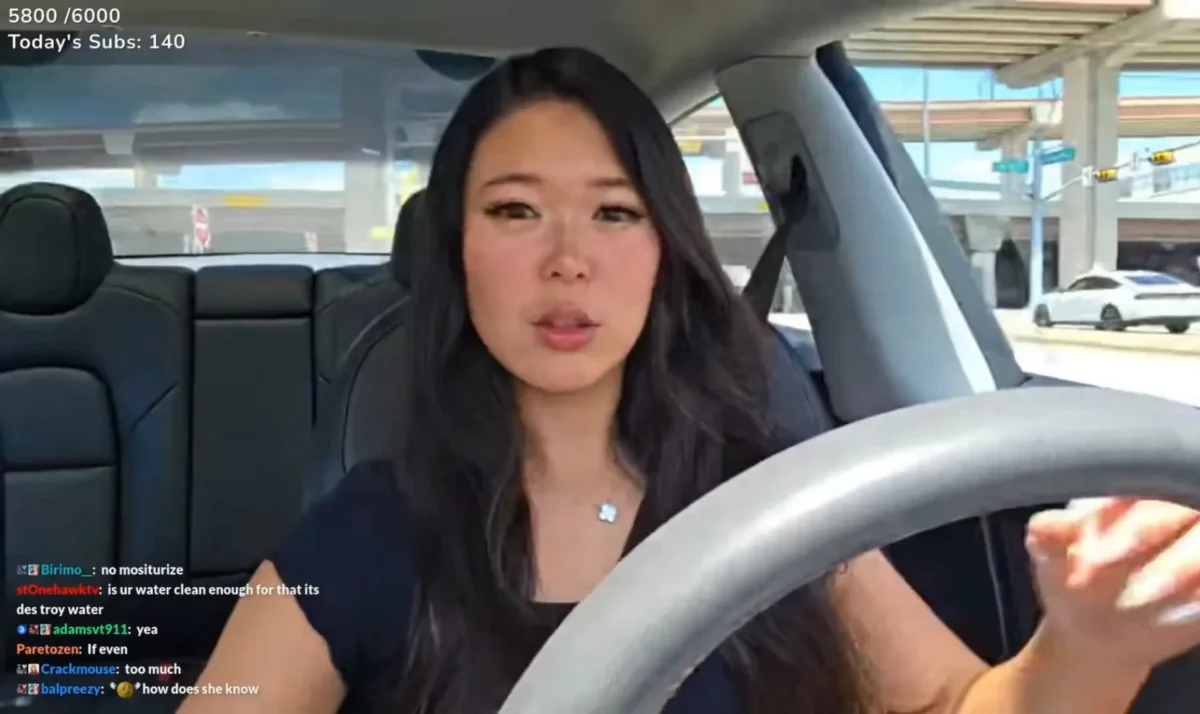
The intersection of high-stakes live entertainment and public safety has reached a volatile boiling point. As the creator economy continues to evolve, the trend of "IRL" (In Real Life) streaming has pushed creators to find new ways to engage their audiences, often by broadcasting from behind the wheel. However, a recent, near-catastrophic incident involving popular Twitch streamer ExtraEmily—born Emily Xuechun Zhang—has reignited a fierce debate within the digital community. Critics and fellow content creators are now calling on Twitch to abandon its inconsistent disciplinary policies and implement a total ban on streaming while driving.
The incident in question occurred during a routine broadcast, where Zhang, distracted by her chat, averted her eyes from the road to check her phone. In a split second, her vehicle drifted into another lane, nearly colliding with an oncoming car. Her immediate, dismissive reaction—"That was my bad… whoopsies, it’s fine"—was captured on video and rapidly went viral, sparking outrage across social media platforms. While Twitch initially issued a suspension, the reversal of that decision just 24 hours later has left many questioning the platform’s commitment to safety.
A Timeline of Negligence and Enforcement
The controversy surrounding ExtraEmily is not an isolated event; it is merely the latest chapter in a long-standing pattern of reckless behavior permitted by lax platform guidelines.
The Rise of the "Distracted Driver" Trend
Over the past several years, the "car stream" has become a staple of Twitch content. While initially intended for commuters or long-haul truckers sharing their experiences, the format has morphed into a dangerous engagement tool. Streamers like Adin Ross and Kai Cenat have previously faced intense public scrutiny for manipulating their phones and interacting with chat interfaces while operating vehicles at high speeds.
The ExtraEmily Incident (June 2026)
- The Broadcast: On June 28, 2026, Zhang was live-streaming while operating her vehicle.
- The Near-Miss: Evidence circulating on X (formerly Twitter) shows the precise moment of distraction. Zhang’s focus shifted to her chat, causing her to lose lane discipline and narrowly avoid a multi-vehicle collision.
- The Initial Suspension: Following widespread reporting and viewer reports, Twitch issued a temporary suspension for reckless driving.
- The Reversal: Within 24 hours, the suspension was lifted, drawing immediate criticism from the community, who perceived the quick reinstatement as a sign that Twitch values "star power" over user safety.
Historical Precedents
This is not the first time Twitch has been forced to act. Figures like RaKai and other rising influencers have been caught on camera engaging in high-speed, dangerous maneuvers. In each instance, the platform’s reaction has been inconsistent, ranging from multi-week bans to simple warnings, creating a culture where creators believe they are effectively "above the law" as long as their view counts remain high.
The Professional Dissent: Voices from Within
The most vocal critics of the current "status quo" are not outside observers, but fellow high-profile streamers who fear the consequences of a fatal accident.
The Asmongold Stance
Zack "Asmongold" Hoyt, one of the platform’s most influential figures, did not mince words regarding the situation. Taking to social media, Hoyt argued that the convenience of streaming while mobile does not outweigh the existential risk to public safety. "They need to just ban streaming and driving entirely," Hoyt stated. "Want to stream yourself going somewhere? Get an Uber or have someone else drive." His sentiment reflects a growing consensus that the "content-at-all-costs" mentality has become a liability.
The "Existential Threat" Argument
Gamer and content creator Jesse Cox took a more dire approach, framing the issue as a legal threat to the entire streaming industry. Cox emphasized that this is not merely a violation of community guidelines like copyright infringement or mild profanity; it is a matter of life and death. "They keep getting second, third, fourth chances—this isn’t ‘oh I watched a copyright movie’ kind of stuff," Cox tweeted. "Cars are dangerous machines and if someone dies, the lawsuit against Twitch will kill the site."
The Complexity of Regulation: Why a Blanket Ban is Difficult
While the moral argument for banning in-car streaming is strong, the technical and logistical implementation remains a challenge for Twitch’s policy team.
The "Trucking" Category Dilemma
Twitch hosts a robust, legitimate community of professional truck drivers who use the platform to share their long-haul experiences. These creators are often stationary or use advanced, hands-free setups to communicate with their audience during long stretches of highway driving. A blanket ban on "in-vehicle streaming" would inadvertently punish these professionals, who rely on the platform for community building and supplementary income.
The Illusion of "Hands-Free" Safety
The industry has long touted "hands-free" setups as a safe compromise. However, safety experts argue that the cognitive load of interacting with a live, scrolling chat—which often requires emotional investment and rapid-fire responses—is just as distracting as holding a phone. Even if a streamer’s hands are on the wheel, their mind is in the chat. This "cognitive distraction" is a documented cause of accidents, yet it remains difficult for moderation teams to police.
Implications for the Future of Twitch
The current state of affairs places Twitch in a precarious position. The platform’s identity is built on intimacy and real-time interaction, but that very intimacy is the catalyst for the distracted driving epidemic.
Legal and Liability Risks
If a high-profile streamer were to cause a fatality while live-streaming, the legal ramifications for Twitch would be unprecedented. While platforms generally enjoy Section 230 protections, a persistent failure to address known, recurring violations of safety standards could invite a new wave of litigation. Insurance premiums for the company, regulatory scrutiny from the FTC, and a potential exodus of advertisers could permanently damage the platform’s bottom line.
The "Influencer Culture" Cycle
There is a disturbing generational aspect to this crisis. As younger creators—like those who were still teenagers when they first began streaming—rise to prominence, they often mirror the dangerous habits of their predecessors. If the platform does not set a firm boundary now, it risks "breeding" a new generation of creators who view the road as merely another stage for performance.
Moving Forward: Policy Recommendations
To mitigate the risk, industry analysts suggest that Twitch should consider:
- Strict Geo-Fencing or Motion Detection: Utilizing technology that detects high-speed movement and automatically restricts certain interactive features of the chat, forcing the creator to focus solely on driving.
- Zero-Tolerance Policies: Moving away from the "revolving door" of suspensions. A single confirmed incident of reckless driving should result in an immediate, long-term suspension to send a clear message.
- Mandatory Safety Certification: Requiring streamers who intend to stream from vehicles to undergo a review process or adhere to specific, strictly enforced safety protocols.
Conclusion
The ExtraEmily incident serves as a grim reminder that the boundary between entertainment and real-world safety is paper-thin. While Twitch has thus far relied on reactive, often inconsistent disciplinary measures, the weight of public opinion and the looming shadow of potential tragedy suggest that a more structural change is necessary.
As Asmongold, Jesse Cox, and a growing chorus of the Twitch community have pointed out, no amount of engagement, viewership, or platform growth is worth a human life. The era of the "distracted streamer" must come to an end—not just for the sake of the platform’s survival, but for the safety of everyone sharing the road. The question now remains: will Twitch take the lead, or will they wait for a tragedy to force their hand?

