

Main Facts
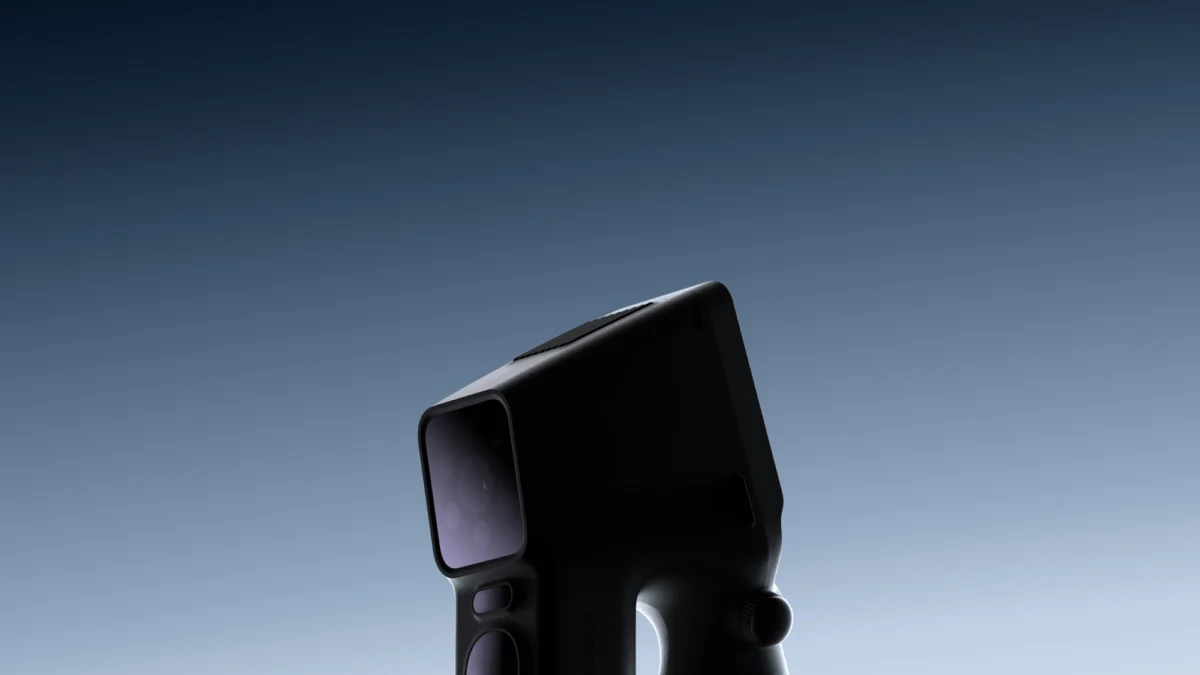
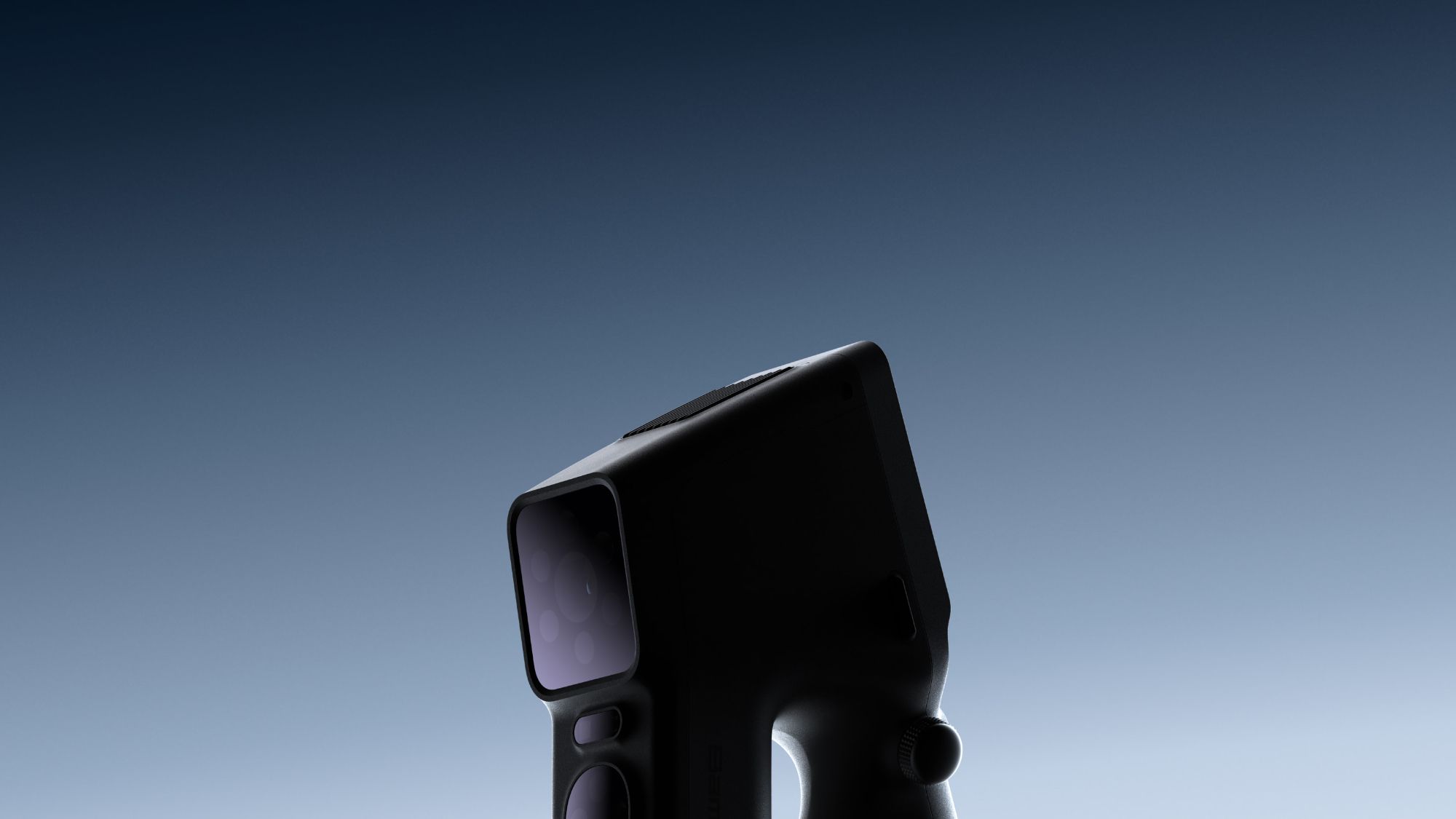
Bambu Lab, a company that has fundamentally disrupted the desktop 3D printing industry with its high-speed, user-friendly CoreXY machines, is officially expanding its hardware ecosystem. The company has teased the upcoming Bambu Lab S1 3D scanner, with an anticipated commercial release slated for November 2026.
While Bambu Lab has kept official product specifications tightly under wraps, the announcement alone has sent ripples through the maker, prototyping, and engineering communities. Known for lowering the barrier to entry in additive manufacturing through automated bed leveling, closed-loop calibration, and seamless multi-color printing via the Automatic Material System (AMS), industry watchers expect Bambu Lab to apply its signature "it just works" philosophy to the notoriously complex world of 3D metrology and scanning.
Currently, 3D scanning occupies a distinct technological niche. Unlike 3D printers—which have largely transitioned from enthusiast tinkering to mainstream consumer appliances—3D scanners have historically required significant technical know-how. Users often grapple with steep learning curves involving specialized software, complex point-cloud alignment, mesh cleaning, and tedious computer-aided design (CAD) resurfacing. By entering this space, Bambu Lab is positioning itself to bridge the physical-to-digital gap, potentially offering an end-to-end workflow where users can scan an object on an S1 and immediately prepare it for slicing and printing on a Bambu Lab printer.
Chronology of Events and Industry Context
The journey toward Bambu Lab’s entry into the 3D scanning market has been marked by strategic positioning, corporate partnerships, and subtle breadcrumbs left in regulatory filings.
- Early Disruption in Additive Manufacturing (2022–2023): Bambu Lab burst onto the scene with the launch of the X1 and P1 series printers. By prioritizing speed, reliability, and out-of-the-box calibration, the company captured a massive share of the desktop 3D printing market, forcing legacy competitors to accelerate their own research and development.
- The Rise of Ecosystem Integration (2024–2025): As Bambu Lab expanded its hardware footprint to include larger-format machines and advanced filament management systems, industry analysts frequently speculated about what market the company would conquer next. Laser engraving, CNC milling, and 3D scanning were frequently cited as logical extensions.
- Strategic Partnerships and Regulatory Footprints: Clues regarding the S1 began to materialize through corporate alignments. Bambu Lab’s strategic partnership with SCANOLOGY—a recognized player in spatial data capture and 3D measurement—hinted at shared technological foundations. Furthermore, early FCC filings and regulatory documentation began pointing toward hardware bearing Bambu Lab identifiers designed for optical capture and spatial mapping.
- The Official Teaser (Late 2025/Early 2026): Bambu Lab officially pulled back the curtain with a pre-launch campaign for the S1 3D scanner, establishing a timeline that points toward a full commercial rollout in November 2026. This extended runway suggests the company is taking its time to refine not just the hardware, but the accompanying software ecosystem necessary to make scanning accessible to non-professionals.
Supporting Data: The Current Landscape of 3D Scanning
To understand the significance of Bambu Lab entering the market, it is essential to examine the current state of 3D scanning. 3D scanning is a niche within a niche, operating largely parallel to, but distinct from, desktop 3D printing.
Applications Beyond 3D Printing
While hobbyists often view 3D scanners as companions to 3D printers for duplicating objects, the technology serves diverse, high-value industries:
- Game Asset Creation and VFX: Capturing real-world textures, organic forms, and complex geometries for digital environments and CGI.
- Archaeology and Cultural Heritage: Digitally archiving fragile historical artifacts, fossils, and architecture without causing physical degradation.
- Prosthetics and Medical Orthotics: Creating custom-fit medical devices by scanning human anatomy.
- Museum Archiving and Education: Making physical artifacts digitally accessible to researchers and students globally.
- Reverse Engineering: Capturing legacy automotive parts, industrial machinery components, and discontinued brackets to reproduce them via additive or subtractive manufacturing.
Existing Market Competitors
For years, prosumer and consumer 3D scanning has been serviced by a handful of dedicated brands. Prominent players include:
- Creality: Well-known for their budget-friendly CR-Scan line (such as the CR-Scan Ferret and Lizard series), which brought structured-light scanning down to consumer price points.
- Revopoint: Famous for portable, versatile devices like the Pop series, the Mini (for high-detail, small-object scanning), and the MIRACO, an all-in-one standalone scanner that does not require a tethered PC.
- SHINING3D: A dominant force in the prosumer and professional tier, offering high-accuracy devices like the Einstar, bridging the gap between consumer budgets and industrial metrology standards.
Despite these offerings, the primary bottleneck for consumer adoption has always been the computational overhead. High-end scanning demands robust PC hardware, complex GPU processing for real-time mesh generation, and intensive manual labor in post-processing software to patch holes, remove artifacts, and convert polygon meshes into clean, editable CAD files.
Official Responses and Ecosystem Strategy
Bambu Lab has kept specific technical parameters—such as whether the S1 will utilize blue laser lines, infrared structured light, or photogrammetry—under strict confidentiality. However, the company’s corporate philosophy provides clear insight into how they plan to approach the S1.
In previous product rollouts, Bambu Lab’s leadership has emphasized that hardware alone is insufficient; the user experience is defined by the software loop. For 3D printing, this meant cloud-connected slicing, AI-powered first-layer inspection, and spaghetti detection.
Applying this same ethos to 3D scanning means that the true innovation of the S1 may lie in automated software pipelines. If Bambu Lab can successfully automate the most frustrating aspects of scanning—such as point-cloud stitching, automated hole-filling, and one-click export to printable formats—they could effectively democratize a technology that has traditionally required specialized engineering degrees to master efficiently.
Industry insiders also point to the partnership with SCANOLOGY as a strong indicator that the S1 will feature professional-grade accuracy wrapped in a consumer-accessible interface. SCANOLOGY’s expertise in industrial metrology suggests that the S1 may not merely be a toy for replicating plastic figurines, but a capable tool for accurate reverse engineering and dimensional inspection.
Implications for the Maker and Prosumer Markets
The introduction of the Bambu Lab S1 in November 2026 carries profound implications for multiple industries, from individual makers to small businesses and educational institutions.
1. The Democratization of Reverse Engineering
For automotive enthusiasts, small-batch manufacturers, and DIYers, the ability to accurately capture a broken mechanical part and generate a clean CAD model is the holy grail. If Bambu Lab can streamline the transition from physical object to editable parametric model, it will unlock a massive wave of localized repair and modification, extending the lifespan of legacy equipment and consumer goods.
2. Pressure on Competitors
Just as Bambu Lab’s entry into the 3D printing market forced established brands to upgrade their speed, auto-calibration, and multi-color capabilities, the S1 will place immense pressure on companies like Creality and Revopoint. Competitors will likely be forced to invest more heavily in software automation, user interface design, and seamless integration with popular slicers to keep pace with Bambu Lab’s ecosystem gravity.
3. Expansion of the Maker Ecosystem
When users buy into the Bambu Lab ecosystem, they are buying a closed-loop workflow where hardware, software, filament, and accessories work in harmony. Introducing a 3D scanner creates a powerful loop: Scan -> Process -> Slice -> Print. By owning every stage of this pipeline, Bambu Lab reduces friction points that typically cause beginner drop-off, potentially converting casual hobbyists into active digital creators.
Looking Ahead to November 2026
As the tech world awaits further leaks, FCC disclosures, and official press releases leading up to the November 2026 launch, anticipation is reaching a fever pitch. If Bambu Lab can replicate its 3D printing magic within the scanning sector, the S1 may well be remembered as the device that finally dragged 3D scanning out of specialized industrial labs and onto the desks of everyday creators.

