

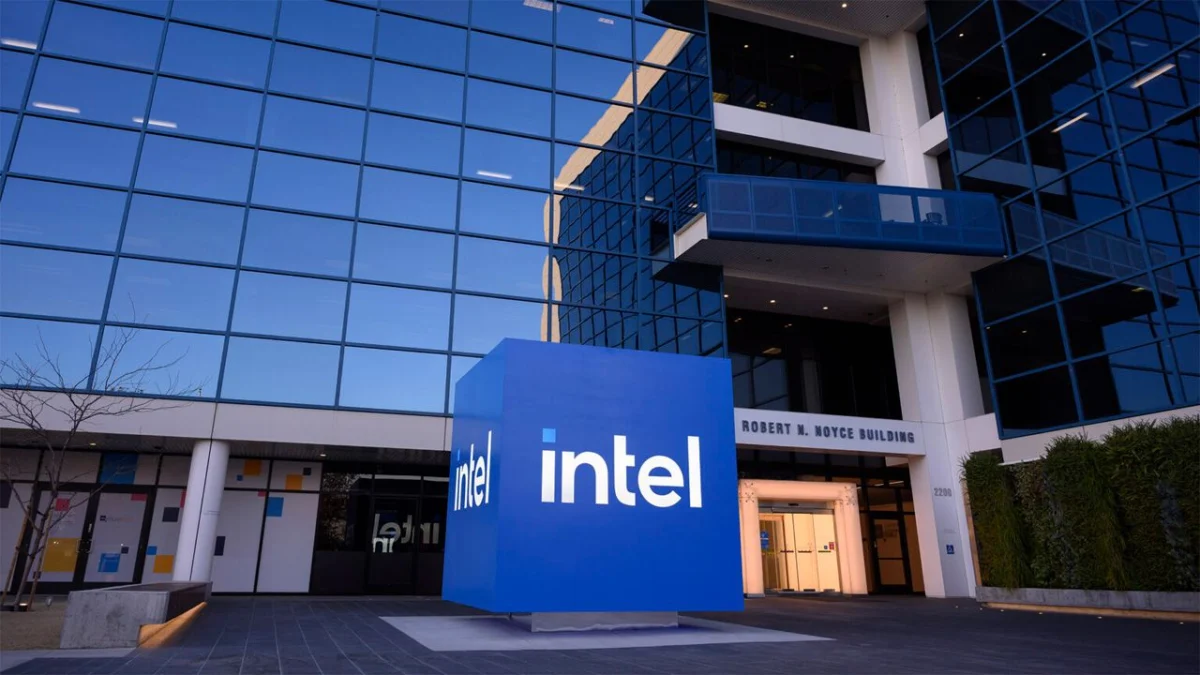
SANTA CLARA, CA – July 21, 2023 – In a significant development for the semiconductor industry and a pivotal moment for Intel’s ambitious foundry aspirations, Intel Foundry Services (IFS) has announced a groundbreaking partnership with Fortinet. Under the terms of the agreement, Intel will undertake the comprehensive design, packaging, and fabrication of Fortinet’s sixth-generation Security Processor (SP6) on its cutting-edge Intel 4 process node. This landmark collaboration, revealed on July 21, marks Intel 4’s inaugural named external foundry customer, nearly three years after the process technology first entered production.
This alliance carries substantial weight, not only for the financial prospects of IFS but also as a powerful validation of Intel’s "IDM 2.0" strategy, championed by CEO Pat Gelsinger. While Intel maintains that this agreement aligns with the long-standing strategy for Intel 4, including support for custom networking ASIC workloads, the move also represents a notable deviation from previous public statements made by the company. Historically, Intel’s 2021 roadmap had primarily scoped Intel 4 for internal products, and as recently as 2022, the company had indicated that Intel 3, not Intel 4, would be its initial offering to external foundry customers. The Fortinet deal thus casts a new light on Intel’s evolving strategy and its aggressive pursuit of the burgeoning foundry market.
Main Facts: A Strategic Foundry Coup
The core of the announcement centers on Intel’s commitment to delivering Fortinet’s next-generation Security Processor, the SP6, utilizing its advanced Intel 4 manufacturing technology. This is not merely a fabrication deal; Intel’s involvement spans the entire spectrum from design and packaging to the final fabrication, underscoring a deep, co-development partnership. The SP6 is expected to power Fortinet’s future portfolio of high-performance cybersecurity solutions, including next-generation firewalls, intrusion prevention systems, and secure SD-WAN devices, demanding unparalleled speed and efficiency for deep packet inspection, cryptographic operations, and threat analysis.
The significance of Fortinet as Intel 4’s first named external customer cannot be overstated. In the highly competitive and capital-intensive foundry market, securing a prominent, demanding client like Fortinet serves as a crucial proof point for Intel Foundry Services. It demonstrates the technical readiness and operational maturity of the Intel 4 node, a process that incorporates Extreme Ultraviolet (EUV) lithography, and signals Intel’s capability to serve complex, high-performance Application-Specific Integrated Circuit (ASIC) designs for leading-edge applications. For Fortinet, this partnership provides access to a geographically diversified, cutting-edge manufacturing source, critical for supply chain resilience and maintaining its technological lead in the rapidly evolving cybersecurity landscape.
Chronology: Intel’s Foundry Journey and Evolving Strategy
Intel’s journey into the foundry business, while formally re-launched with IDM 2.0 in 2021, has roots stretching back over a decade. However, consistent execution and customer acquisition proved elusive until recently.
The Genesis of Intel 4 and IDM 2.0
The Intel 4 process node, formerly known as 7nm, has been a cornerstone of Intel’s manufacturing roadmap for several years. It officially entered production roughly three years prior to the July 21 announcement, placing its genesis around mid-2020. Initially, Intel 4 was earmarked primarily for internal consumption, most notably for the Meteor Lake client CPU architecture, which integrates multiple tiles (chiplets) manufactured on different processes. The vision for Intel 4 was to usher in EUV lithography for Intel’s high-volume manufacturing, promising significant power and performance improvements over its Intel 7 (10nm Enhanced SuperFin) predecessor.
The broader context for this shift arrived with Pat Gelsinger’s return as CEO in early 2021 and the unveiling of his "IDM 2.0" strategy. This ambitious plan sought to re-establish Intel’s manufacturing leadership, expand its use of external foundries for certain products, and, crucially, establish Intel Foundry Services (IFS) as a major global foundry player. Gelsinger articulated a vision where Intel would not only manufacture its own leading-edge products but also become a trusted partner for other fabless and integrated device manufacturers (IDMs) worldwide.
Evolution of Foundry Ambitions and Node Naming
Early pronouncements from Intel regarding IFS often highlighted its intention to first offer its older, more mature process nodes (like Intel 16 and Intel 12, derived from 14nm and 10nm technologies) to external customers. This conservative approach aimed to build confidence and establish a customer base before venturing into leading-edge offerings. Furthermore, for a significant period through 2022, Intel explicitly communicated to engineers, investors, and the public that Intel 3 (the successor to Intel 4) would be its first process node made available to external foundry customers, with Intel 4 largely reserved for internal products like Meteor Lake.
The 2021 roadmap, while ambitious, had a clear internal focus for Intel 4. The company’s messaging consistently positioned Intel 3 as the gateway for external customers seeking Intel’s most advanced foundry technologies. The Fortinet agreement, therefore, represents a significant and seemingly accelerated shift in strategy, demonstrating a newfound flexibility and willingness to open up its advanced nodes earlier than previously indicated. This could be interpreted as a strategic pivot, driven by a desire to gain market share more rapidly or capitalize on specific customer needs.
Fortinet’s Needs and Partnership History
Fortinet has long been a pioneer in the cybersecurity space, distinguishing itself through its commitment to custom silicon. Unlike many competitors who rely heavily on general-purpose CPUs or FPGAs, Fortinet has invested heavily in designing its own Application-Specific Integrated Circuits (ASICs), known as Security Processors (SPs). These ASICs are meticulously engineered to accelerate specific network security functions, such as deep packet inspection, VPN encryption/decryption, intrusion prevention, and threat detection, at wire speed and with minimal latency. This approach provides Fortinet’s FortiGate appliances with a substantial performance and power efficiency advantage, crucial for handling the ever-increasing volume and complexity of network traffic and cyber threats.
Previous generations of Fortinet’s SPs have been manufactured by various leading foundries, reflecting a strategic approach to supply chain diversification. The decision to partner with Intel for the SP6 likely stems from a combination of factors: Intel’s advanced process technology capabilities, its commitment to a comprehensive design-to-fabrication solution, and the geopolitical imperative of diversifying semiconductor supply chains away from over-reliance on any single region or foundry. This partnership allows Fortinet to leverage Intel’s manufacturing prowess to push the boundaries of its security processing capabilities, ensuring its products remain at the forefront of cybersecurity innovation.
Supporting Data: Technical Edge and Market Dynamics
The Fortinet partnership is underpinned by the technical merits of the Intel 4 process and the strategic importance of custom silicon in high-performance computing.
The Intel 4 Process Node
Intel 4 is a critical milestone in Intel’s manufacturing roadmap, marking the company’s first high-volume manufacturing node to fully incorporate Extreme Ultraviolet (EUV) lithography. This transition to EUV is fundamental for achieving the necessary density and performance scaling for next-generation chips. Compared to its predecessor, Intel 7, Intel 4 offers a significant improvement in transistor density, delivering approximately 2x density gain, alongside substantial performance-per-watt enhancements. These improvements are crucial for complex, high-performance ASICs like Fortinet’s SP6, where maximizing throughput while minimizing power consumption is paramount.
For a security ASIC, the benefits of Intel 4 are clear:
- Performance: Faster clock speeds and more efficient transistor switching enable quicker execution of complex security algorithms (e.g., cryptographic operations, regex matching for intrusion detection).
- Power Efficiency: Reduced power consumption per operation allows for higher performance within existing power envelopes, crucial for networking appliances that operate 24/7.
- Density: More logic and memory can be integrated onto a single die, enabling richer feature sets and higher throughput capacities for deep packet inspection and concurrent security services.
While Intel 4 is still playing catch-up to TSMC’s N5/N4 nodes in terms of maturity and market adoption, its technical specifications position it competitively. For a custom ASIC like the SP6, the combination of performance, power, and Intel’s integrated design and packaging services offers a compelling proposition.
Fortinet’s Security Processors: The ASIC Advantage
Fortinet’s reliance on custom ASICs is a cornerstone of its product strategy. General-purpose CPUs, while flexible, are often bottlenecked by the sheer volume of data and the specific computational demands of network security tasks. FPGAs offer reconfigurability but typically fall short on raw performance and power efficiency compared to purpose-built ASICs.
Fortinet’s SPs are designed from the ground up to accelerate specific functions:
- Deep Packet Inspection (DPI): Rapidly analyze packet headers and payloads for malicious content or policy violations.
- Cryptographic Acceleration: Offload computationally intensive encryption and decryption tasks (e.g., IPSec VPNs, SSL/TLS inspection).
- Threat Intelligence: Process vast amounts of threat data to identify known and zero-day attacks.
- Policy Enforcement: Apply complex security policies at line speed.
The evolution of these SPs, now reaching its sixth generation, has been critical for Fortinet to maintain its competitive edge against rivals. The SP6, manufactured on Intel 4, is expected to deliver unprecedented levels of performance and efficiency, enabling Fortinet to address the increasing demands of hyper-scale networks, 5G security, and the proliferation of encrypted traffic.
The Foundry Landscape and Intel’s Ambition
The global semiconductor foundry market is dominated by TSMC, with Samsung Foundry as a strong second. Intel Foundry Services faces an uphill battle to establish itself as a third major player. However, the current geopolitical climate, characterized by supply chain vulnerabilities and a push for regional self-sufficiency (e.g., the U.S. CHIPS Act, EU Chips Act), provides a unique window of opportunity for Intel. Governments worldwide are incentivizing domestic semiconductor manufacturing, making Intel’s "Made in America" proposition increasingly attractive.
IFS’s strategy involves offering a comprehensive suite of services, from intellectual property (IP) and design enablement to packaging and manufacturing, aiming to be a full-service foundry. The Fortinet deal validates this "full stack" approach, demonstrating that Intel can attract customers for its advanced nodes and provide more than just raw wafer fabrication. Success with customers like Fortinet is vital for IFS to build credibility, secure more design wins, and ultimately achieve its ambitious goal of becoming the second-largest foundry globally by the end of the decade.
Official Responses: Reconciling Past and Present
The announcement prompted questions regarding Intel’s previous statements about its foundry strategy, particularly concerning Intel 4 and Intel 3.
Intel’s Stance
Intel’s official statement to Tom’s Hardware asserted that the agreement "reflects the strategy Intel outlined for Intel 4 several years ago," including support for custom networking ASIC workloads. This position suggests that while Intel 4 was primarily designed for internal products, the underlying strategy always allowed for external engagements, especially for specific, high-value ASIC customers.
One plausible interpretation is that Intel’s initial public messaging prioritized internal product roadmaps and a phased approach for IFS. However, the competitive landscape and specific customer opportunities, such as the Fortinet deal, may have accelerated or altered the execution timeline. It’s also possible that "support for custom networking ASIC workloads" was always an underlying capability, even if not explicitly highlighted as a primary external foundry offering for Intel 4. The company’s IDM 2.0 vision inherently implies flexibility and a willingness to adapt to market demands and strategic partnerships. Securing a marquee customer like Fortinet on an advanced node like Intel 4 is a significant strategic win that might warrant an adjustment to previously stated timelines or priorities.
Fortinet’s Perspective
While specific direct quotes from Fortinet executives regarding the Intel partnership were not provided in the original snippet, their motivations are clear. Fortinet, known for its strategic long-term planning, would seek partners that offer:
- Cutting-edge Technology: Access to advanced nodes like Intel 4 for superior performance and power efficiency.
- Supply Chain Resilience: Diversifying manufacturing partners to mitigate geopolitical risks and ensure continuity of supply.
- Co-development Opportunities: A deep partnership that goes beyond simple fabrication, allowing for optimized design and packaging.
- Strategic Alignment: Partnering with a major technology player like Intel for mutual benefit and future innovation.
The SP6’s success is critical to Fortinet’s product roadmap and market leadership. Partnering with Intel on this pivotal component underscores Fortinet’s confidence in Intel’s manufacturing capabilities and its strategic importance to their business continuity and technological edge. It sends a strong signal to the market that Fortinet is committed to leveraging the best available technology to deliver unparalleled cybersecurity performance.
Implications: Reshaping the Semiconductor and Cybersecurity Landscapes
The Intel-Fortinet partnership carries significant implications for Intel Foundry Services, Fortinet, and the broader technology ecosystem.
For Intel Foundry Services
- Validation and Credibility: This is arguably the most significant immediate implication. Securing Fortinet as the first named external customer for Intel 4 provides tangible validation of IFS’s capabilities, dispelling doubts about its ability to attract leading-edge customers. It’s a powerful statement of technical readiness and builds critical credibility for attracting more clients.
- Revenue Potential: While the immediate revenue impact might be modest compared to Intel’s overall business, it establishes a foundational revenue stream for IFS and, more importantly, a successful case study that can be leveraged to win future contracts.
- Technological Readiness: The design, packaging, and fabrication of a complex ASIC like the SP6 on Intel 4 demonstrates the process’s maturity and its ability to handle diverse, high-performance workloads beyond Intel’s internal CPU designs.
- Strategic Shift Reinforcement: It reinforces the flexibility and aggressive nature of Intel’s IDM 2.0 strategy. It signals that IFS is willing and able to offer advanced nodes earlier than previously communicated, potentially accelerating its market penetration.
- Future Prospects: This success could open doors for Intel 3, Intel 20A, and Intel 18A to attract external customers even sooner. It suggests a more aggressive posture in pursuit of foundry market share on leading nodes.
For Fortinet
- Competitive Advantage: Access to Intel 4 for the SP6 positions Fortinet to deliver a significant leap in performance, power efficiency, and feature integration for its cybersecurity products. This will be crucial for maintaining its lead in a highly competitive market where performance is paramount.
- Supply Chain Resilience: Diversifying its manufacturing base is a strategic imperative. Partnering with Intel, particularly with its significant manufacturing footprint in the U.S. and Europe, enhances Fortinet’s supply chain security and reduces reliance on single-region foundries.
- Performance Leap: The SP6 on Intel 4 is expected to enable Fortinet to process more traffic, detect more sophisticated threats, and accelerate security services at speeds previously unattainable, directly translating into stronger customer offerings.
- Market Position: This high-profile partnership reinforces Fortinet’s reputation as an innovator and a leader in custom silicon for cybersecurity, potentially strengthening its market share.
For the Semiconductor Industry
- Increased Competition: A strong and successful IFS means more options for fabless companies, potentially easing capacity constraints and fostering innovation through increased competition among foundries. This could also lead to more favorable pricing and terms for customers in the long run.
- Geopolitical Impact: This partnership aligns with global efforts to strengthen regional semiconductor manufacturing capabilities. As Intel expands its U.S. and European fabs, it contributes to a more geographically balanced and resilient global supply chain, a key objective of initiatives like the CHIPS Act.
- Integrated Device Manufacturers (IDMs) as Foundries: A successful Intel Foundry Services could encourage other IDMs with significant manufacturing capabilities to explore or expand their foundry offerings, further diversifying the market.
Challenges and Outlook
Despite this significant win, scaling IFS into a truly global, top-tier foundry remains a monumental challenge. Intel needs to:
- Attract More Diverse Customers: Fortinet is a great start, but IFS needs to secure a broader portfolio of customers across different market segments (mobile, automotive, data center, AI).
- Execute on Future Nodes: Delivering Intel 3, 20A, and 18A on time and hitting performance targets is crucial for long-term credibility.
- Build a Robust IP Ecosystem: A rich ecosystem of third-party IP cores (ARM, RISC-V, specialized accelerators) is essential for attracting a wide range of fabless designers.
- Operational Excellence: Consistent manufacturing quality, timely delivery, and competitive pricing are non-negotiable for sustained success in the foundry business.
The Fortinet deal is a powerful first step, injecting momentum and confidence into Intel’s foundry ambitions. It signals Intel’s serious commitment to IDM 2.0 and its potential to reshape the semiconductor landscape by providing a viable, leading-edge alternative for global chip design houses. For Fortinet, it ensures access to state-of-the-art technology, fortifying its position at the vanguard of cybersecurity innovation. The industry will be watching closely as this partnership unfolds and Intel Foundry Services strives to fulfill its audacious vision.

