

MANILA / TOKYO — In a major strategic play to secure its foothold in the booming enterprise storage market, Japanese technology giant Toshiba has committed approximately ¥60 billion (roughly $380 million) toward expanding its hard disk drive (HDD) manufacturing infrastructure in the Philippines.
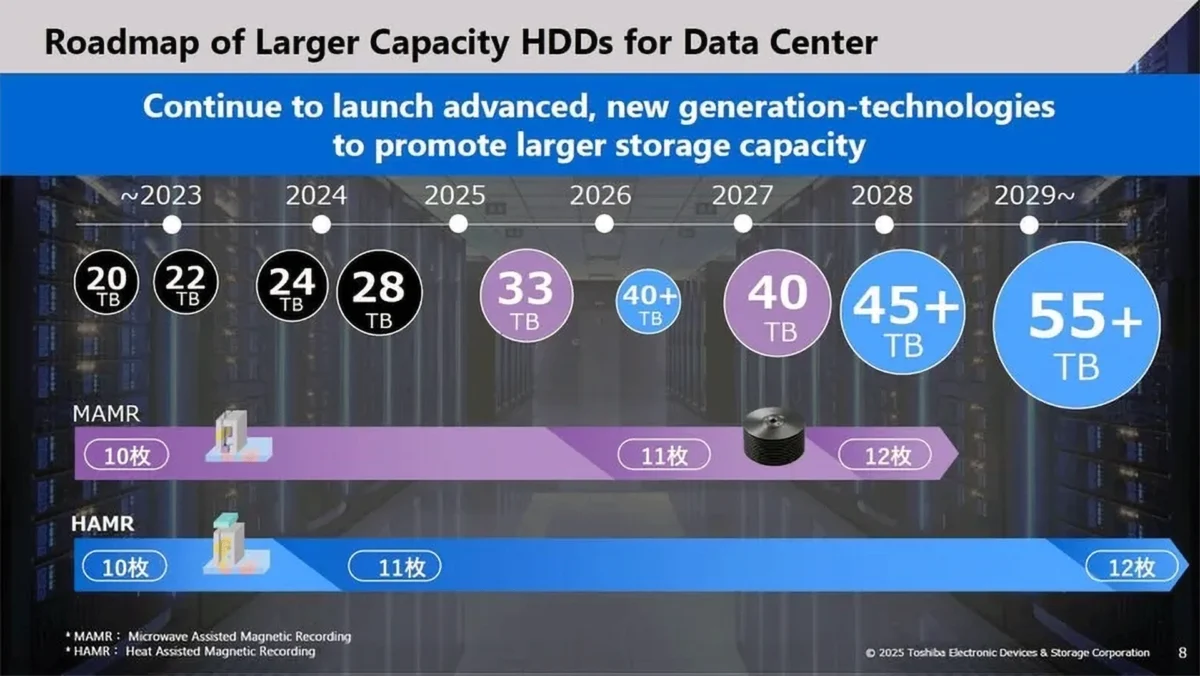
According to recent industry reports, the substantial capital expenditure is designed to double Toshiba’s nearline HDD production capacity by fiscal year 2027 compared to fiscal year 2025 levels. This massive infrastructure scaling aligns seamlessly with the company’s aggressive technological roadmap, which promises the commercial rollout of next-generation 30TB-class HDDs in 2027, followed by ambitious long-term projections of 65TB drives by 2030 and staggering 100TB-class capacities in the distant future.
This move underscores the enduring, irreplaceable value of high-capacity mechanical storage in an era increasingly dominated by solid-state drives (SSDs) and flash memory. As the global explosion of artificial intelligence (AI), cloud computing, and big data analytics strains traditional data infrastructure, Toshiba is positioning itself to bridge the memory gap and meet the insatiable appetite for hyperscale data storage.
Main Facts: The Scope of Toshiba’s Investment
The core of Toshiba’s recent strategic announcement centers on a two-pronged approach: heavy financial investment in physical manufacturing capabilities and an aggressive technological timeline aimed at record-breaking storage densities.
- Capital Expenditure: Approximately ¥60 billion ($380 million) has been funneled into expanding Toshiba’s hard drive assembly facilities in the Philippines.
- Capacity Increase: Nearline HDD production capacity is projected to double by fiscal year 2027, benchmarking against fiscal year 2025 output.
- Product Roadmap:
- 2027: Commercial release of 30TB-class hard disk drives.
- 2030: Projected introduction of 65TB-class hard disk drives.
- Long-term: Future development targeting groundbreaking 100TB-class drives.
- Market Driver: Surging enterprise demand fueled by AI data centers, large-scale cloud providers, and the global need for cost-effective, high-density cold and warm data storage.
Chronology of Expansion: From Strategy to Execution
Understanding Toshiba’s current pivot requires looking at the trajectory of the enterprise storage market over the past several years. While consumer markets have largely transitioned to solid-state drives for speed and efficiency, the enterprise sector—particularly hyperscale cloud operators—remains heavily reliant on HDDs due to cost-per-terabyte advantages.
2023–2024: Identifying the Bottleneck
As generative AI models exploded in popularity, data centers faced unprecedented data ingestion and retention requirements. Companies needed to store vast training datasets, user inputs, and analytical outputs. While flash memory and AI accelerators (such as GPUs) grabbed headlines, data centers quickly realized that fast storage alone was not enough; they needed massive, scalable, and economical long-term repositories. Toshiba identified a looming supply bottleneck in high-capacity nearline drives.
2025: Laying the Groundwork
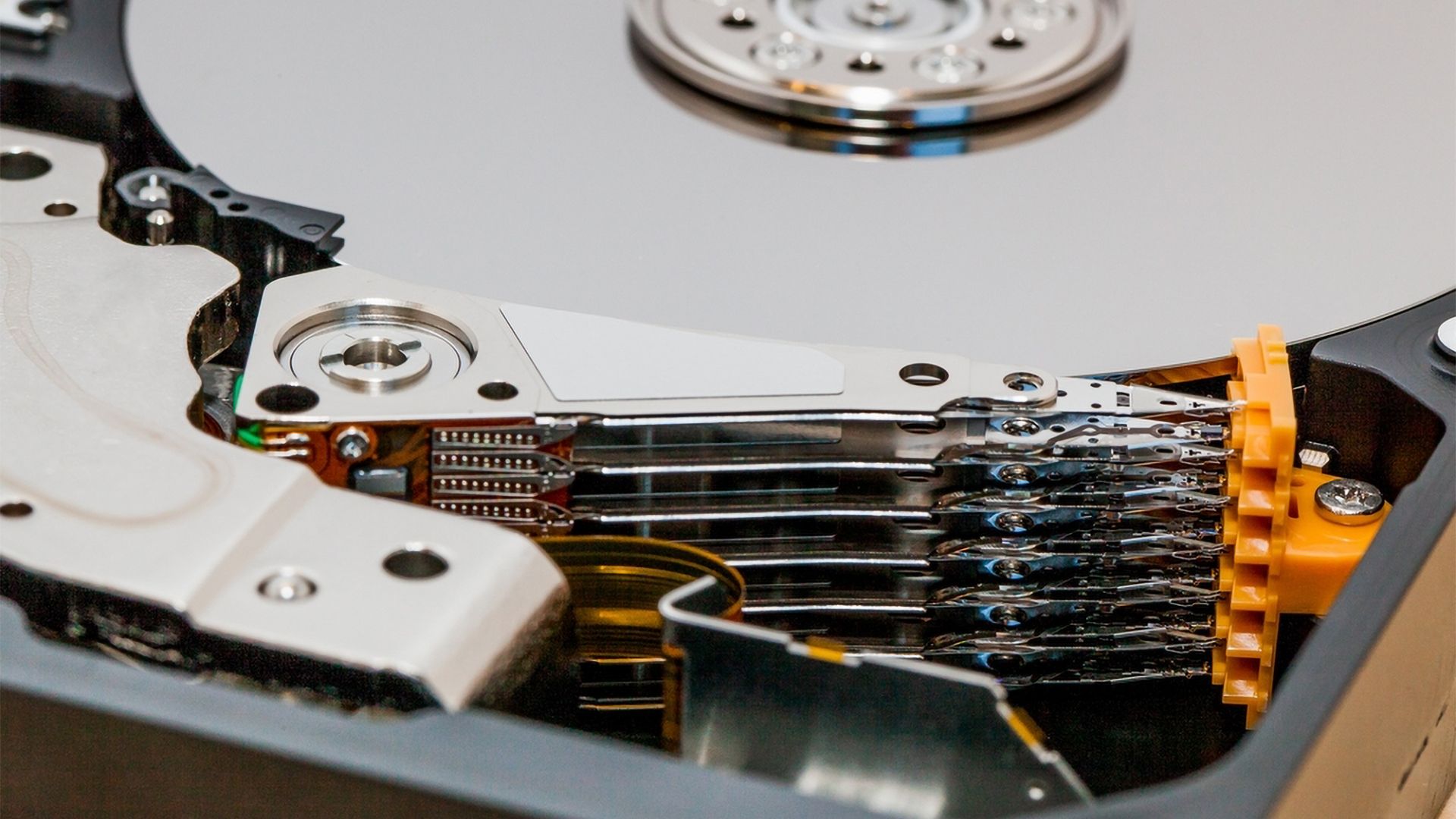
Throughout fiscal year 2025, Toshiba initiated preparations for its factory upgrades. By funneling funds into its assembly plants in the Philippines—a crucial hub for the company’s cost-effective hardware manufacturing—Toshiba began laying the groundwork for automated, high-precision assembly lines capable of handling advanced multi-disk configurations and energy-assisted magnetic recording (EAMR) technologies.
2027 (The Horizon): Doubling Output and 30TB Launch
By fiscal year 2027, the fruits of the ¥60 billion investment are scheduled to materialize fully. Not only will the Philippine plants be operating at twice their previous nearline capacity, but this surge in output will directly coincide with the commercial availability of Toshiba’s 30TB-class HDDs.
Beyond 2030: The Path to 65TB and 100TB
Looking past the immediate 2027 milestone, Toshiba’s engineering roadmaps stretch toward the end of the decade. By 2030, the company aims to introduce 65TB-class drives, utilizing next-generation recording technologies to pack unprecedented amounts of data onto standard 3.5-inch form factors. Ultimately, research and development teams have their sights set on the elusive 100TB threshold.
Supporting Data: The Economics of Enterprise Storage
The decision to pour nearly $400 million into mechanical hard drives rather than shifting entirely to flash memory is rooted in hard economics and physics.
While NAND flash production continues to scale, the cost per terabyte of an SSD remains significantly higher than that of an enterprise-grade HDD. For hyper-scalers like Amazon Web Services, Microsoft Azure, and Google Cloud—which manage exabytes of data that may only be accessed infrequently (warm and cold storage)—deploying all-flash arrays is financially prohibitive.
| Storage Metric | Current Industry Standard | Toshiba 2027 Target | Future Roadmap (2030+) |
|---|---|---|---|
| Typical Enterprise Capacity | 16TB – 24TB | 30TB-class | 65TB to 100TB-class |
| Primary Target Market | Cloud & Enterprise Data Centers | Hyperscale AI & Cloud Repositories | Massive Deep-Archive & Big Data |
| Manufacturing Hub | Philippines / Global | Expanded Philippine Facilities | Scaled Global Infrastructure |
| Investment Scale | Baseline Operations | ¥60 Billion ($380 Million) Expansion | Ongoing R&D and Plant Upgrades |
Nearline HDDs occupy a sweet spot in the data center architecture. They are built for continuous operation (24/7/365), offering lower power consumption relative to capacity, high reliability, and predictable performance. By doubling its manufacturing footprint in the Philippines, Toshiba ensures it can secure long-term supply contracts with major cloud service providers who cannot afford to experience hardware shortages in the middle of an AI infrastructure boom.
Official Responses and Industry Context
While direct executive commentary accompanying the Nikkei report focuses primarily on operational readiness, industry analysts have been quick to contextualize Toshiba’s moves within the broader macroeconomic and technological landscape.
Storage industry observers note that the HDD market has undergone a significant consolidation phase over the past decade. With only three major players left standing globally—Western Digital, Seagate, and Toshiba—the competitive dynamics have shifted away from a destructive price war toward disciplined, high-margin innovation in areal density.
Toshiba’s decision to heavily invest in its Philippine workforce and facilities reflects a broader trend of supply chain diversification and regional resilience. By consolidating large-scale nearline assembly in Southeast Asia, Toshiba can optimize its logistics, manage labor costs effectively, and insulate itself against geopolitical trade disruptions that frequently plague high-tech manufacturing sectors.
Furthermore, industry engineers emphasize that pushing HDDs to the 30TB mark and beyond is no small feat. It requires continuous refinement of technologies such as Microwave-Assisted Magnetic Recording (MAMR) or Heat-Assisted Magnetic Recording (HAMR), alongside precision mechanical engineering to maintain stable read/write operations when flying recording heads mere nanometers above rapidly spinning magnetic platters. Toshiba’s massive capital injection is vital precisely because it funds the sophisticated cleanroom environments and testing equipment required to achieve these microscopic tolerances at scale.
Implications: What This Means for the Future of Data
Toshiba’s aggressive capital allocation carries profound implications for multiple sectors of the technology ecosystem:
- Relief for Cloud and AI Infrastructure: The AI boom is data-hungry. Without a reliable, high-capacity stream of affordable enterprise HDDs, data centers would quickly exhaust their physical floor space and power budgets. Toshiba’s doubled production capacity helps avert a potential hardware bottleneck.
- Sustained Cost-Efficiency for End Users: By keeping the cost per terabyte of storage on a downward trajectory, high-density HDDs ensure that cloud storage providers can continue offering economical backup, archival, and data lake services to businesses and consumers alike.
- The Coexistence of Flash and Spinners: Despite the rapid evolution of solid-state storage, Toshiba’s multi-million-dollar bet confirms that traditional magnetic hard drives are not going away anytime soon. Instead, the industry is settling into a complementary relationship: flash handles high-speed transactional data and active compute tasks, while high-capacity HDDs shoulder the heavy burden of mass data retention.
As Toshiba marches toward its 2027 target of 30TB drives and doubles its operational footprint in the Philippines, the company is proving that mechanical storage still has plenty of life left—and that the future of big data will be built on a foundation of both silicon and spinning platters.

