


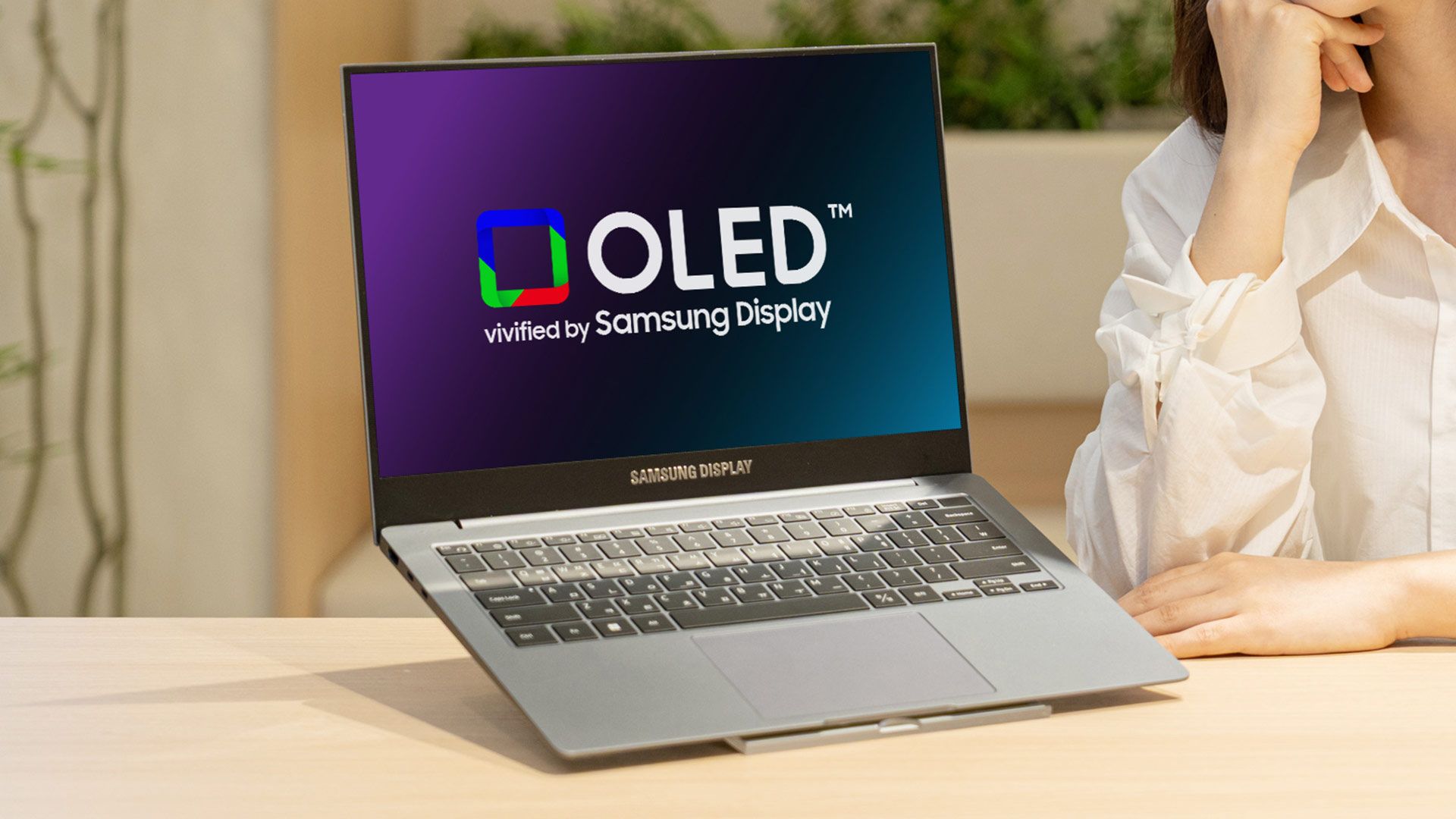
Seoul, South Korea – In a monumental leap forward for portable visual fidelity, Samsung Display has officially commenced the mass production and supply of its groundbreaking VESA DisplayHDR True Black 1400 monitor panels. These cutting-edge tandem OLED displays, poised to redefine the laptop viewing experience, are already making their way into the product lines of industry giants such as Lenovo, Asus, Dell, and MSI. The announcement heralds a new era of unparalleled brightness, contrast, and color accuracy for laptop users, promising the most vivid and immersive portable displays yet seen on the market.
The significance of this development cannot be overstated. Just weeks after the Video Electronics Standards Association (VESA) introduced the stringent DisplayHDR True Black 1400 standard, Samsung Display has emerged as the pioneering supplier, demonstrating its technological prowess and leadership in the display manufacturing sector. This new certification demands an astonishing 40% increase in peak brightness compared to its predecessor, setting a new benchmark for premium High Dynamic Range (HDR) performance in OLED panels. As these advanced displays integrate into upcoming laptop models, consumers can anticipate a transformative visual experience, from professional content creation to high-stakes gaming and cinematic consumption.
Main Facts
The core of Samsung Display’s recent announcement revolves around the mass production and immediate supply of its VESA DisplayHDR True Black 1400 certified OLED panels. This is not merely an incremental upgrade but a substantial leap, primarily driven by the innovative "tandem OLED" architecture.
Samsung Display’s Breakthrough
At the heart of this technological marvel is Samsung Display’s proprietary tandem OLED structure. Unlike conventional OLED panels that rely on a single organic emissive layer, tandem OLED panels stack two such layers. This architectural innovation dramatically enhances light-emitting efficiency, enabling significantly higher brightness levels without compromising the panel’s lifespan. By distributing the electrical load across two layers, the stress on each individual layer is reduced, thereby mitigating the risk of burn-in and extending the overall durability of the display. This dual-layer approach allows Samsung Display’s new panels to achieve remarkable luminance while maintaining the inherent advantages of OLED technology, such as perfect blacks and infinite contrast ratios.
The panels are the first to meet the rigorous VESA DisplayHDR True Black 1400 specification. This new standard, recently unveiled by VESA, is specifically tailored to certify next-generation OLED displays designed for professional HDR content creation and high-fidelity media consumption. It represents the pinnacle of HDR performance for OLED technology, demanding a level of visual precision that was previously unattainable in mass-produced laptop displays. Samsung Display’s ability to quickly meet and exceed this standard underscores its robust research and development capabilities and its efficient production pipelines.
Key Partners and Market Impact
The immediate adoption of these panels by leading laptop manufacturers signals a rapid shift in the premium segment of the portable computing market. Lenovo, a long-standing innovator in laptop design, was quick to integrate Samsung’s new tandem OLED panel into its Yoga Pro 9i Aura Edition, showcasing its commitment to offering cutting-edge technology to its customers. This early adoption by a major brand like Lenovo provides a strong endorsement of the technology’s readiness and performance.
Following Lenovo’s lead, other prominent players in the laptop industry, including Asus, Dell, and MSI, are poised to release their own devices featuring these advanced displays. These new laptops are expected to hit retail shelves sometime in the second half of the current year, creating a wave of excitement among tech enthusiasts, content creators, and gamers. The integration of VESA DisplayHDR True Black 1400 panels will undoubtedly serve as a key differentiator for these premium models, elevating the competitive landscape and pushing the boundaries of what consumers can expect from their portable devices. The widespread adoption by such influential brands ensures that this display technology will quickly establish itself as a new benchmark for high-end laptops, driving innovation across the entire industry.
Chronology
Understanding the timeline of display technology evolution and the recent developments leading to Samsung Display’s announcement provides crucial context for this breakthrough.
Evolution of HDR Standards
The journey towards today’s ultra-bright, high-contrast displays has been a progressive one, marked by continuous innovation in panel technology and the establishment of industry standards. High Dynamic Range (HDR) itself emerged as a significant advancement over Standard Dynamic Range (SDR), aiming to reproduce a wider range of luminance levels and colors, thereby bringing images closer to what the human eye perceives in the real world. Early HDR implementations were often inconsistent, leading to a need for standardized performance tiers.
VESA, a globally recognized technical standards organization, stepped in to address this fragmentation with its DisplayHDR certification program. Launched initially for LCD panels, the DisplayHDR standard provided a clear framework for measuring and certifying HDR performance, ranging from DisplayHDR 400 to DisplayHDR 1000 and beyond. Recognizing the unique capabilities and challenges of OLED technology, VESA later introduced the DisplayHDR True Black tiers (e.g., True Black 400, True Black 500, True Black 600, True Black 1000). These specific tiers were designed to leverage OLED’s ability to achieve absolute black levels, a characteristic impossible for even the most advanced LCD panels. The "True Black" designation signifies a black level of 0.0005 nits or lower, ensuring infinite contrast and unparalleled depth in dark scenes. The introduction of True Black 1000 marked a significant milestone, providing a high bar for OLED performance with a peak brightness of 1,000 nits.
The Introduction of True Black 1400
The latest and most demanding standard, VESA DisplayHDR True Black 1400, was officially introduced by VESA earlier this month, just prior to Samsung Display’s announcement. This new certification was specifically designed to accommodate and push the boundaries of next-generation OLED displays, particularly those employing advanced architectures like tandem OLED. Its introduction was a clear signal to the industry that display technology had reached a point where even higher brightness levels could be achieved while maintaining the pristine black levels inherent to OLED.
The immediate impact of this new standard was to set a new, aspirational target for display manufacturers. It challenged them to innovate further, not just in peak brightness but also in maintaining overall display integrity, efficiency, and longevity. By requiring a 40% higher peak brightness than the previous top-tier True Black 1000, VESA effectively created a new "ultra-premium" category for OLED displays, specifically targeting professional content creators and discerning users who demand the absolute best in visual performance. The quick succession of the standard’s introduction and Samsung Display’s mass production announcement highlights the rapid pace of innovation in the display industry and the close collaboration between standards bodies and manufacturers.
Samsung Display’s Development Timeline
While Samsung Display has not released a detailed timeline of the tandem OLED panel’s development, such a significant technological leap typically requires years of intensive research, engineering, and capital investment. The development would have encompassed several key phases:
- Fundamental Research: Initial exploration into dual-layer OLED structures to overcome brightness and longevity limitations of single-layer designs. This phase likely involved materials science, electrical engineering, and optical physics.
- Prototype Development: Building initial prototypes to validate the tandem OLED concept, testing various material combinations, and optimizing layer thickness and arrangement for efficiency and performance.
- Process Engineering: Developing the complex manufacturing processes required for mass production of tandem OLED panels. This involves highly precise deposition techniques, quality control, and scaling up production capacity.
- Standard Compliance & Certification: Working closely with bodies like VESA to ensure the panels meet or exceed new and existing performance standards, including the rigorous DisplayHDR True Black 1400 specifications.
- Partnership & Integration: Collaborating with laptop OEMs (Original Equipment Manufacturers) like Lenovo, Asus, Dell, and MSI to integrate these new panels into their upcoming products, which involves mechanical, electrical, and software integration.
Given the timing of VESA’s True Black 1400 introduction and Samsung Display’s immediate mass production, it’s highly probable that Samsung had been developing these tandem OLED panels for a considerable period, anticipating and perhaps even influencing the direction of future VESA standards. Their readiness to supply panels so swiftly after the standard’s announcement speaks volumes about their foresight and long-term investment in advanced display technologies.
Product Rollout Schedule
The rollout of devices featuring these advanced displays is already underway and set to accelerate. Lenovo’s Yoga Pro 9i Aura Edition holds the distinction of being the first commercially available device to integrate Samsung Display’s new tandem OLED panel. This flagship laptop, targeting creative professionals and users demanding premium performance, serves as a showcase for the capabilities of the VESA DisplayHDR True Black 1400 standard.
Looking ahead, the second half of the year promises a broader adoption curve. Asus, Dell, and MSI are all slated to launch their respective laptops featuring these cutting-edge displays within H2 2024. This staggered release allows for market penetration across various segments, from high-performance gaming laptops to ultra-premium workstations. The competitive landscape will undoubtedly intensify as these brands vie for market share, with the tandem OLED display being a key selling point. The rapid integration by multiple manufacturers indicates strong industry confidence in the technology and its potential to captivate a demanding consumer base.
Supporting Data
A deeper dive into the technical specifications and architectural innovations reveals why Samsung Display’s new panels are a significant leap forward.
Deep Dive into VESA DisplayHDR True Black 1400
The VESA DisplayHDR True Black 1400 certification is not merely a label; it represents a set of extremely demanding technical requirements designed to ensure an unparalleled HDR experience, particularly for OLED displays.
-
Black Levels of 0.0005 nits or Lower: This specification is fundamental to the "True Black" designation. A nit (candela per square meter) is a unit of luminance. A black level of 0.0005 nits is virtually imperceptible to the human eye, representing absolute black. This is where OLED technology inherently shines, as each pixel can be individually turned off, producing perfect blacks. In contrast, even the best LCD panels, including those with Mini-LED backlights, struggle to achieve such deep blacks due due to backlight bleed, where some light inevitably leaks through. This perfect black level is critical for achieving an infinite contrast ratio, which is the cornerstone of realistic HDR imagery. It allows for astonishing detail in shadows and creates a profound sense of depth and dimensionality.
-
Peak Brightness of 1,400 nits at a 10% On Pixel Ratio (OPR): This is the headline specification that truly sets True Black 1400 apart. 1,400 nits of peak brightness represents a phenomenal increase over previous standards. The "10% On Pixel Ratio (OPR)" is a crucial qualifier. It means that the display must be able to achieve 1,400 nits when 10% of the screen area is displaying white (a highlight), while the remaining 90% is black. This is a realistic scenario for HDR content, where small, bright highlights (like reflections, stars, or explosions) appear against predominantly dark backgrounds. Achieving such high brightness in localized areas is challenging for OLEDs because driving individual pixels to extreme luminance can lead to higher power consumption and heat. The tandem OLED architecture is key to meeting this requirement efficiently. For comparison, the previous highest certification, True Black 1000, required 1,000 nits peak brightness. This 40% increase in peak brightness for True Black 1400 significantly enhances the dynamic range, making highlights appear much more vibrant and lifelike, mimicking the intensity of real-world light sources.
-
Benefits: The combination of true blacks and exceptionally high peak brightness translates into several key benefits for the user:
- Enhanced Realism: Images appear more true-to-life, with a greater sense of depth and impact.
- Improved Detail: Details in both the brightest highlights and darkest shadows become visible, revealing nuances previously lost.
- Superior Color Volume: HDR is not just about brightness; it’s also about color. Higher brightness allows colors to be reproduced accurately across a wider luminance range, leading to richer, more saturated, and nuanced colors, especially in bright scenes. This is particularly crucial for professional color grading and photography.
The Tandem OLED Advantage
The innovation behind Samsung Display’s new panels lies in its "tandem OLED" architecture, a sophisticated engineering solution designed to overcome the traditional limitations of single-layer OLEDs.
-
Technical Explanation: In a conventional OLED panel, there is a single layer of organic emissive material that produces light when an electric current passes through it. In a tandem OLED, two such emissive layers are stacked on top of each other, separated by a charge generation layer. When power is supplied, both layers contribute to light emission. This effectively doubles the light output for the same amount of current, or allows for the same brightness with significantly less current per layer.
-
Benefits:
- Unprecedented Brightness: By stacking two emissive layers, the tandem architecture inherently allows for much higher peak brightness levels. Samsung Display notes that its new tandem OLEDs can offer up to 1,600 nits of peak brightness, exceeding the VESA True Black 1400 requirement and representing a 40% increase over the typical 1,100-nit peak brightness of conventional single-layer OLED panels. This extra headroom ensures that the panels can comfortably meet the certification while potentially offering even greater dynamic range in certain content.
- Extended Lifespan and Burn-in Mitigation: One of the historical concerns with OLED technology has been "burn-in" or "image retention," where static elements displayed for long periods can leave a faint, permanent ghost image. This occurs due to the degradation of the organic materials over time, which is accelerated by high current density. The tandem OLED design significantly mitigates this risk. By using two emissive layers, the electrical load (current) required to achieve a certain brightness is effectively halved for each individual layer. As Samsung explains, "a tandem OLED can produce greater brightness using the same current or reduce the load on each emissive layer at the same brightness level, extending the panel’s lifespan." This reduced stress on each layer slows down material degradation, making the panels more robust and durable, particularly for devices like laptops that often display static elements for extended periods (e.g., operating system interfaces, taskbars).
- Improved Power Efficiency: While capable of extreme brightness, tandem OLEDs also offer better power efficiency at lower, more common brightness levels. Because each layer is working less intensely to achieve a given brightness, the overall power consumption can be optimized. This is crucial for laptops, where battery life is a critical factor. The technology ensures that users won’t experience a significant "crater" in their laptop battery life when only modest brightness levels are required for typical home or office environments. This balance of extreme performance when needed and efficiency during everyday use makes tandem OLED highly practical for portable devices.
-
Contrast with Conventional Single-Layer OLED: While conventional OLEDs offer excellent contrast and color, their single emissive layer limits their maximum sustainable brightness and makes them more susceptible to burn-in over extended periods, especially at high brightness settings. Tandem OLED directly addresses these limitations, offering a more robust and brighter display experience without sacrificing the core advantages of OLED.
The OLED Landscape
The broader display market is witnessing a significant shift towards OLED technology, driven by its inherent advantages. OLED panels offer instantaneous pixel response times, leading to incredibly smooth motion without blur, which is crucial for gaming. They also boast wide viewing angles with minimal color shift, ensuring consistent image quality regardless of the viewer’s position. Most importantly, their ability to achieve perfect blacks provides an unmatched contrast ratio that other display technologies struggle to replicate. Historically, OLEDs faced challenges related to cost, peak brightness, and burn-in concerns. However, advancements like the tandem OLED architecture are systematically addressing these drawbacks, making OLED an increasingly viable and superior option for a wider range of devices, including high-end laptops and professional monitors. This technological evolution is positioning OLED as the dominant premium display technology for the foreseeable future.
Official Responses
The unveiling of Samsung Display’s VESA DisplayHDR True Black 1400 panels has been met with significant industry excitement, prompting statements from the manufacturer, adopting partners, and the standards body itself.
Samsung Display’s Vision
Samsung Display, a global leader in display technology, has consistently emphasized its commitment to pushing the boundaries of visual innovation. While specific quotes from the most recent press release highlight the technical achievements, the broader corporate message underscores a strategic vision. A Samsung Display spokesperson would likely articulate their pride in being the first to mass-produce panels meeting the new True Black 1400 standard, stating that this achievement reinforces their position as a pioneer in OLED technology.
"Our development of the tandem OLED architecture and its rapid deployment into mass production represents a pivotal moment for the display industry," a representative might comment. "We are not just delivering higher brightness; we are delivering a more immersive, durable, and energy-efficient viewing experience for laptop users. This innovation directly addresses the evolving demands of content creators, gamers, and everyday users who require the absolute best in visual performance from their portable devices. We believe these VESA DisplayHDR True Black 1400 panels will set a new benchmark for premium laptops, driving innovation across the entire ecosystem."
Samsung Display’s strategy is clear: to maintain its leadership by continuously innovating in panel technology, providing superior visual solutions that empower its OEM partners to create truly differentiated products. The tandem OLED technology is a cornerstone of this strategy, promising not only enhanced performance but also greater longevity, addressing previous concerns associated with OLED adoption in certain form factors.
Laptop Manufacturers’ Enthusiasm
The swift adoption by major laptop manufacturers such as Lenovo, Asus, Dell, and MSI is a strong testament to the perceived value and market readiness of Samsung Display’s new panels. These companies are in a highly competitive market, constantly seeking differentiating features to attract consumers. The VESA DisplayHDR True Black 1400 tandem OLED panel offers a compelling advantage.
-
Lenovo: As the first to integrate the panel into its Yoga Pro 9i Aura Edition, Lenovo has positioned itself at the forefront of this display revolution. Lenovo’s marketing for the Yoga Pro 9i Aura Edition would undoubtedly highlight the "stunning visual clarity," "unprecedented brightness," and "true-to-life colors" enabled by the new OLED screen. A Lenovo spokesperson might state, "The Yoga Pro 9i Aura Edition, powered by Samsung Display’s VESA DisplayHDR True Black 1400 panel, redefines what’s possible for creative professionals and premium users. It offers a visual experience that is simply unmatched, combining perfect blacks with incredible peak brightness, essential for tasks from video editing to enjoying the latest HDR content." Their strategy is to appeal to a high-end demographic that prioritizes display quality as a key factor in their purchasing decisions.
-
Asus, Dell, and MSI: These brands, known for their strong presence in both professional and gaming laptop segments, will likely emphasize different aspects of the new display.
- Asus: Often catering to creators and gamers, Asus might focus on the panel’s color accuracy for creative work and its stunning visuals for immersive gaming experiences, perhaps in their ZenBook or ROG (Republic of Gamers) lines.
- Dell: With its premium XPS line, Dell would undoubtedly highlight the display as a critical component for productivity and multimedia consumption, offering a "best-in-class viewing experience" for professionals and consumers alike.
- MSI: A powerhouse in gaming laptops, MSI would likely leverage the tandem OLED’s high contrast, vibrant colors, and potentially improved response times (inherent to OLED) to deliver a more immersive and competitive gaming experience, perhaps within their Titan or Raider series.
The collective enthusiasm from these major OEMs signifies a strong belief that these new displays will be a significant draw for consumers, justifying the premium associated with such advanced technology.
VESA’s Role and Perspective
The Video Electronics Standards Association (VESA) plays a crucial role in establishing and maintaining universal standards for display performance. Their introduction of the DisplayHDR True Black 1400 standard underscores their commitment to pushing the boundaries of display technology and providing clear, measurable benchmarks for the industry.
A VESA representative would likely emphasize the importance of rigorous testing and certification in ensuring a consistent and high-quality HDR experience for consumers. "The VESA DisplayHDR True Black 1400 standard represents the pinnacle of OLED display performance," a VESA spokesperson might explain. "It was developed in close collaboration with industry leaders to address the capabilities of next-generation OLED technologies. Our stringent criteria for black levels, peak brightness, and response times ensure that any display carrying this certification delivers a truly exceptional HDR experience. Samsung Display’s prompt achievement of this certification is a testament to their engineering excellence and helps validate the industry’s continuous drive for innovation."
VESA’s perspective highlights the collaborative effort behind setting these standards, which ultimately benefits the entire ecosystem by providing transparency and guaranteeing a certain level of performance for end-users. Their role is to ensure that as display technology advances, there are clear, industry-wide benchmarks to guide both manufacturers and consumers.
Implications
The introduction of Samsung Display’s VESA DisplayHDR True Black 1400 tandem OLED panels is set to have far-reaching implications across the laptop market, the broader display industry, and for the end-user experience.
Impact on the Laptop Market
- Premium Segment Redefined: The immediate impact will be a significant elevation of the premium laptop segment. These panels will become a key differentiating factor, raising the bar for what constitutes a "high-end" laptop. Brands not offering similar display technology may find themselves at a disadvantage in this competitive space. This will spur other manufacturers to invest in comparable display solutions, accelerating overall innovation.
- Content Creation: For professional photographers, videographers, graphic designers, and animators, these displays offer an unprecedented level of accuracy and dynamic range in a portable form factor. The ability to view and edit HDR content with 1,400 nits peak brightness and true blacks means a more accurate representation of the final output, reducing the need for external reference monitors in many scenarios. This will significantly enhance workflow efficiency for creative professionals on the go.
- Gaming: Gamers will experience a new level of immersion. The combination of OLED’s instantaneous response times (eliminating motion blur) with the extreme contrast and vibrant colors of True Black 1400 will make games look incredibly lifelike and visually stunning. Dark scenes will have more depth, bright explosions will pop with greater intensity, and the overall visual fidelity will be dramatically improved, providing a competitive edge and a more enjoyable experience.
- Mainstream Adoption: While initially confined to high-end laptops due to manufacturing costs, the history of display technology suggests that these innovations eventually trickle down. As production scales and costs decrease, tandem OLED technology, or its future iterations, could become more common in mid-range laptops, making premium visual experiences accessible to a broader consumer base in the coming years.
Competitive Landscape
- LG Display’s Response: Samsung Display’s primary rival, LG Display, is also a major player in the OLED panel market and is already gearing up to compete in the premium segment with its own tandem OLED solutions. This rivalry is beneficial for consumers, as it fosters continuous innovation and competitive pricing. LG Display has a strong presence in large-format OLEDs (TVs) and has been expanding its presence in monitor and laptop panels. Their competitive offerings will ensure that tandem OLED technology evolves rapidly.
- Mini-LED vs. OLED: The advancement of tandem OLED strengthens OLED’s position against Mini-LED in the premium display market. Mini-LED technology, primarily used in high-end LCDs, offers improved local dimming and higher brightness compared to traditional LCDs. However, it still cannot achieve the perfect pixel-level blacks and infinite contrast ratio of OLED. With tandem OLED matching or even surpassing Mini-LED in peak brightness while retaining superior black levels, the case for OLED as the ultimate premium display technology becomes even stronger.
- Panel Manufacturing Dominance: This move further solidifies Samsung Display’s leadership in advanced display technology, particularly in the competitive small and medium-sized OLED panel market (which includes laptops). It highlights their capacity for rapid innovation and efficient mass production, putting pressure on competitors to accelerate their own R&D efforts.
Future of Display Technology
- Beyond True Black 1400: The introduction of True Black 1400 is unlikely to be the final frontier. Future iterations of tandem OLED or entirely new display technologies will likely aim for even higher brightness, greater energy efficiency, and potentially new form factors like rollable or foldable displays with enhanced durability. Research into quantum dot OLED (QD-OLED) and other hybrid technologies will continue to push the boundaries.
- Other Applications: While the current focus is on laptops, the benefits of tandem OLED technology, particularly its enhanced brightness, lifespan, and efficiency, make it highly suitable for other applications. This includes professional desktop monitors, high-end tablets, virtual reality (VR) headsets, and even automotive displays, where durability and extreme environmental conditions are critical.
- Sustainability Considerations: As technology advances, sustainability becomes increasingly important. The improved energy efficiency of tandem OLED, especially at typical brightness levels, contributes to longer battery life in portable devices, potentially reducing overall energy consumption. Further research into more sustainable materials and manufacturing processes will be a focus for the industry.
Consumer Experience
Ultimately, the most significant implication is for the end-user. Consumers investing in laptops equipped with VESA DisplayHDR True Black 1400 tandem OLED panels will gain access to an unparalleled visual experience. This means:
- Unrivaled Visual Fidelity: Images that pop with vibrant colors, incredible detail in both shadows and highlights, and a sense of depth that draws you into the content.
- Immersive Entertainment: Movies, TV shows, and games will be rendered with breathtaking realism, making every viewing session a cinematic event.
- Enhanced Productivity and Creativity: Professionals will benefit from more accurate color representation, higher contrast for detailed work, and a display that reduces eye strain due to its superior clarity and wide viewing angles.
- Robust and Long-Lasting Displays: The tandem OLED architecture’s focus on lifespan and burn-in mitigation ensures that this premium visual experience will endure for the life of the device, providing peace of mind for users investing in high-end equipment.
In conclusion, Samsung Display’s mass production of VESA DisplayHDR True Black 1400 tandem OLED panels marks a pivotal moment in display technology. It not only sets a new benchmark for laptop screens but also signals a future where portable devices offer visual experiences previously reserved for dedicated professional monitors. As these displays become more widespread, the way we interact with and consume content on our laptops is set for a truly spectacular transformation.

