

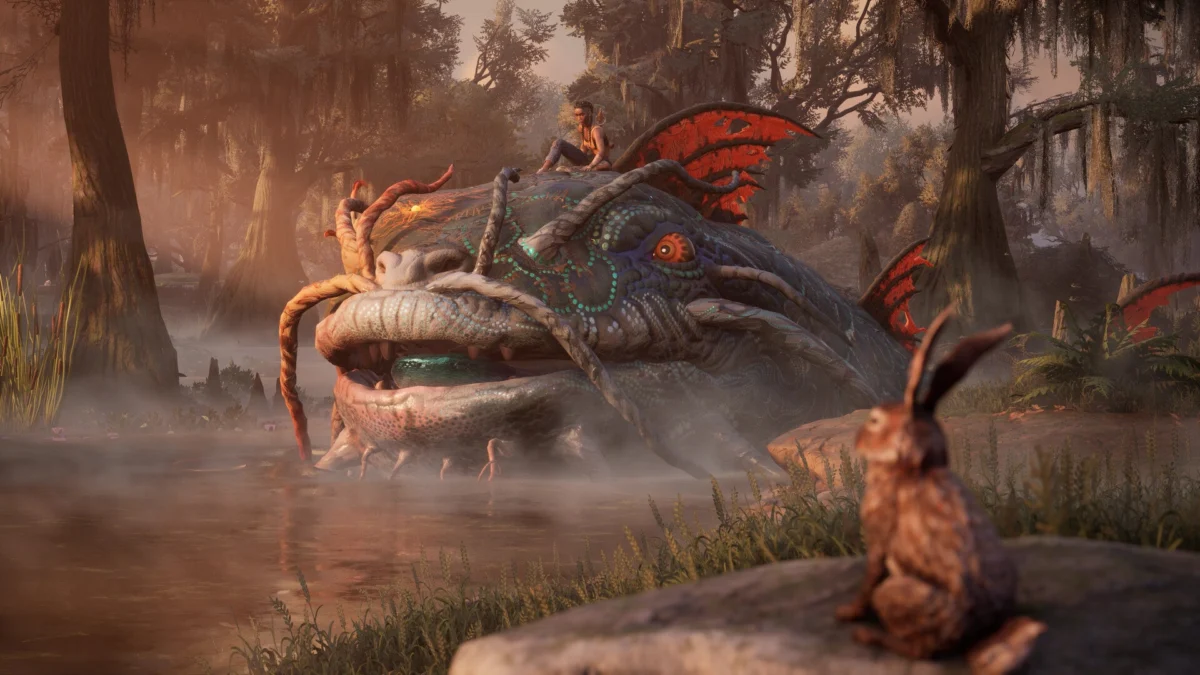
In a rapidly shifting landscape for the gaming industry, Microsoft’s Xbox division finds itself at a critical crossroads. Recent reports indicate that several of the company’s most cherished internal studios—most notably Compulsion Games, the creators of the critically acclaimed South of Midnight—are currently engaged in high-stakes negotiations regarding their future within the Microsoft ecosystem. These discussions, described by insiders as existential, have sent shockwaves through the development community, raising questions about the long-term sustainability of Microsoft’s aggressive acquisition strategy.
Alongside Compulsion Games, other heavyweights in the Xbox Game Studios portfolio, including Tim Schafer’s legendary Double Fine and the narrative-focused Ninja Theory, are reportedly facing similar scrutiny. As management navigates a period of significant financial recalibration, the potential for closures, spin-offs, or radical restructuring has become an unfortunate, if not entirely unexpected, reality for thousands of employees.
The Current Crisis: Compulsion Games and Beyond
The focal point of the current uncertainty is Compulsion Games, a studio that has long been lauded for its distinct artistic vision and ability to craft atmospheric, narrative-driven experiences. According to reports from Kotaku, leadership at the studio is currently in "negotiations" with Microsoft regarding the studio’s fate. While the specific terms of these discussions remain under wraps, the gravity of the situation is clear: the studio is fighting for its continued existence as an Xbox entity.
This is not an isolated incident. Bloomberg has corroborated that the malaise extends across several segments of the Xbox organization. Ninja Theory, the studio behind the technically groundbreaking Senua’s Saga: Hellblade II, and Double Fine, the imaginative powerhouse behind the Psychonauts franchise, are allegedly in similar "crisis talks." These discussions are reportedly centered on the possibility of spinning these studios off into independent entities or finding alternative structures that would allow them to operate outside of the increasingly heavy-handed oversight of the Xbox corporate umbrella.
A Chronology of Escalation
To understand how a powerhouse like Microsoft reached this point of organizational turbulence, one must look at the recent timeline of the company’s gaming division:
- The Acquisition Spree: Over the past five years, Microsoft aggressively expanded its footprint, acquiring ZeniMax Media (Bethesda), Activision Blizzard, and numerous mid-sized independent studios like Compulsion, Ninja Theory, and Double Fine. The goal was to build an insurmountable catalog for Xbox Game Pass.
- The Financial Realignment: Following the acquisition of Activision Blizzard, the focus shifted from growth at any cost to fiscal efficiency. In her first 100 days as CEO, Asha Sharma highlighted a sobering reality: despite an investment of over $20 billion in the Xbox division over five years, annual revenue has declined by approximately $500 million.
- Leadership Departures: The instability reached the executive suite recently when Craig Duncan, the head of Xbox Game Studios, stepped down after only 18 months in the position. His departure, alongside that of chief of staff Louise O’Connor, signaled a lack of confidence in the current strategic direction.
- The "Reset" Strategy: Reports have begun to surface that Microsoft is actively considering a complete structural overhaul, including the possibility of spinning off the entire Xbox division or restructuring it as a wholly owned subsidiary to distance the main Microsoft brand from the gaming division’s recent financial underperformance.
The Paradox of Success: Why the Crisis Hits Harder
Perhaps the most baffling element of these potential closures is that they target studios currently at the height of their creative powers. Compulsion Games, for instance, has recently been the recipient of widespread critical acclaim. Their latest title, South of Midnight, has been a runaway success, winning the Game of the Year award at the 2026 Gayming Awards and Best New Intellectual Property at the 2026 BAFTA Awards.
Furthermore, the game earned a prestigious Peabody Award—a rare honor for a video game—for its ability to weave folklore into narratives that carry "the weight of beauty and the truth of scars." To contemplate the closure or forced separation of a studio that is producing award-winning, culturally significant work highlights a disconnect between creative output and corporate fiscal metrics. When developers are producing "stories that matter," as the Peabody committee noted, the logic of shuttering those teams becomes increasingly difficult to justify to both consumers and the broader gaming industry.
Supporting Data: The Financial Landscape
The impetus for this wave of potential closures is rooted in a fundamental shift in Microsoft’s financial expectations. According to CEO Asha Sharma, the massive capital outlay of the last five years has not yielded the expected returns. The $500 million annual drop in revenue, even when excluding the massive, newly integrated Activision Blizzard properties, suggests that the traditional model of "growth through acquisition" is failing to scale.
Industry analysts point to the rising cost of development (AAA games now frequently cost $200–$300 million to produce) and the saturation of the subscription market as primary culprits. With Xbox Game Pass failing to hit the growth targets necessary to offset these costs, the "Xbox Reset" has become a matter of survival. The current strategy appears to be a ruthless trimming of "non-essential" or "underperforming" assets, regardless of their cultural pedigree.
Official Responses and Industry Sentiment
At this stage, Microsoft and Xbox have remained largely tight-lipped regarding the specific fates of individual studios. GamesIndustry.biz and other outlets have reached out for comment, but official channels have offered only generic statements regarding their "continued commitment to gaming," which has done little to assuage the fears of staff at the affected studios.
The silence from leadership has created a vacuum, filled by speculation and anxiety. Within the industry, the sentiment is one of profound disappointment. Many observers argue that Microsoft’s strategy has moved from fostering independent creativity to a corporate efficiency model that treats human-centric development teams like replaceable line items on a balance sheet. The departure of high-level executives like Craig Duncan is being interpreted by many as a "jumping ship" moment, suggesting that even those in the inner circle are wary of the long-term viability of the current path.
Implications for the Future of Xbox
The implications of these potential closures are far-reaching:
- Loss of Institutional Knowledge: If studios like Double Fine and Ninja Theory are spun off or closed, the industry stands to lose decades of collective expertise and unique, studio-specific creative methodologies.
- The "Game Pass" Dilemma: If Xbox continues to shed its prestige studios, the value proposition of Xbox Game Pass will inevitably decline. Players subscribe for the promise of unique, high-quality exclusive content; if the studios creating that content are gone, the ecosystem loses its primary draw.
- A Chilling Effect on Independent Developers: The current climate makes it significantly harder for independent studios to view acquisition by a "Big Tech" firm as a secure path forward. The "safety" promised by Microsoft has proven to be conditional, which may lead developers to prefer remaining independent, even at the cost of smaller budgets.
- Reputational Damage: Microsoft risks permanently damaging its reputation with the gaming community. Gamers are loyal to studios and developers; seeing beloved teams dismantled for the sake of quarterly financial adjustments is a surefire way to alienate the core demographic that has sustained the Xbox brand for over two decades.
As negotiations continue, the gaming world watches with bated breath. The fate of Compulsion Games, Double Fine, and Ninja Theory is not just about the future of three companies; it is a litmus test for the future of the industry itself. If Microsoft cannot find a way to reconcile its financial ambitions with the necessity of supporting creative talent, it risks losing the very heart of what makes its gaming division relevant. The coming months will likely define the legacy of the "Xbox Reset," and for many developers, the stakes could not be higher.

