

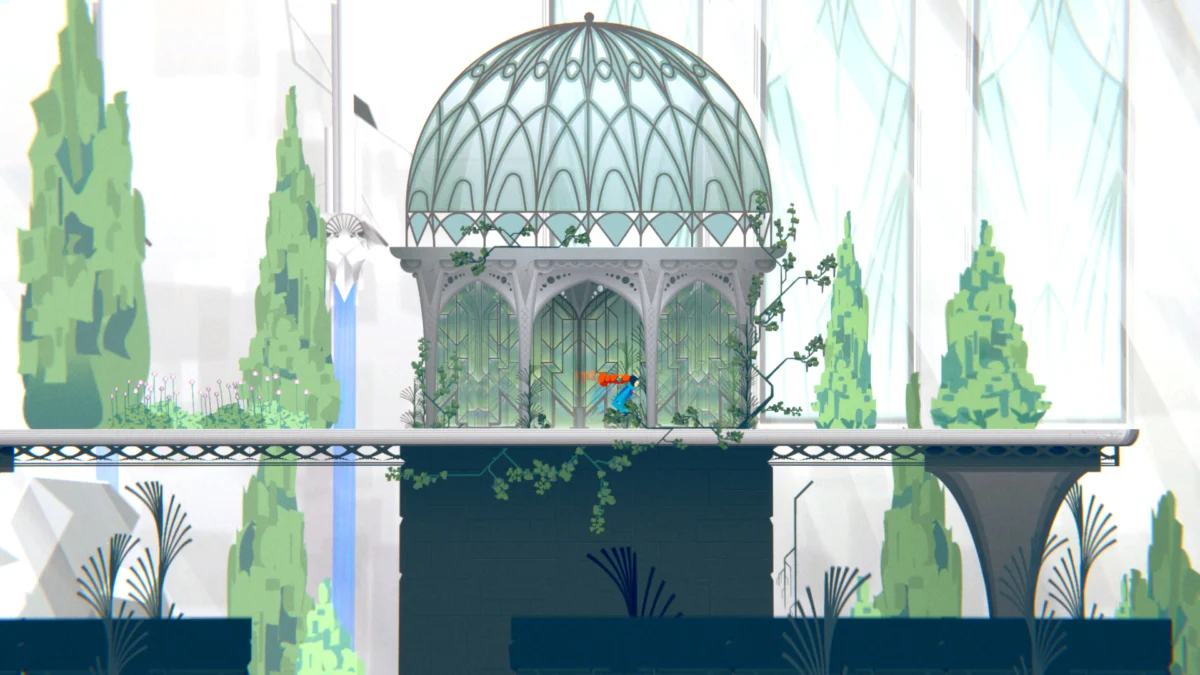
In the modern gaming landscape, the term "story-rich" has become as ubiquitous and occasionally hollow as a gluten-free label on a carton of eggs. It is a marketing shorthand that promises emotional depth, narrative complexity, and a transformative experience, yet often delivers little more than a polished aesthetic. Developer Wondernaut Studio’s Aspire: Ina’s Tale, released in late 2021, serves as a poignant case study in this phenomenon. While the title offers a feast for the eyes and a collection of competent puzzles, it ultimately founders on the shoals of narrative derivative and mechanical frustration.
The Premise: Familiarity in a Tower of Dreams
Aspire: Ina’s Tale positions itself as an atmospheric 2D platformer, a genre that has seen a surge in popularity following the successes of titles like Gris, Hoa, and Minute of Islands. Players assume the role of Ina, a waifish, spindly-legged protagonist who awakens in a surreal, dream-consuming construct known as the Tower. As the "Heart of the Tower"—a role seemingly ordained by an elusive figure known as the Architect—Ina is tasked with navigating the structure’s labyrinthine levels to secure her freedom and return to her homeland, Kamiura.
The narrative beats follow a well-trodden path: an amnesiac protagonist, a mysterious structure with divine connotations, and a "chosen one" trope that feels increasingly tired. Ina’s journey involves interacting with various NPCs and avoiding shadowy manifestations that threaten to derail her progress. The game attempts to weave a tale of existential exploration, yet it struggles to differentiate itself from the very games it seeks to emulate.
Chronology of a Disappointing Descent
The player’s journey through Aspire begins with promise. The game’s opening sequences are undeniably striking, showcasing a visual language that is both crisp and evocative. Reflections of Ina in crystal shards and the way light plays against ancient armor indicate a high level of artistic craftsmanship.
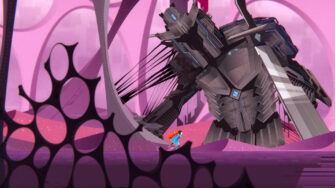
However, as the chapters progress, the initial charm begins to wear thin. The narrative, which hinges on Ina’s growing bewilderment at the Tower’s dark, demon-worshipping sculptures, fails to provide a compelling hook. While the developers clearly intended for a tone of mystery and wonder, the execution feels sterile. By the second act, the novelty of the art style is no longer sufficient to carry the experience, and the repetitive nature of the platforming challenges begins to eclipse the game’s aesthetic virtues. The final act arrives not as a climax of emotional resonance, but as a test of endurance, leaving players with a sense of resignation rather than accomplishment.

Supporting Data: Mechanical Hurdles and Platforming Friction
Beyond the narrative stagnation, Aspire faces significant mechanical hurdles that impede the user experience. For a game that relies on precision, the controls are surprisingly imprecise.
The Precision Problem
The platforming mechanics in Aspire are demanding, requiring exact timing and positioning. This is particularly problematic on the Nintendo Switch version of the game, where subtle control issues become magnified. Even on high-quality hardware, Ina’s movement feels floaty and unresponsive.
- Rope-Swinging Physics: Perhaps the most egregious offender is the rope-swinging mechanic. The physics engine governing these segments is stiff and unforgiving, turning what should be a fluid movement sequence into a session of repetitive, high-frustration trial and error.
- The Checkpoint Buffer: To the developers’ credit, the game is generous with its checkpoint system. Without this frequent respawning, the game would likely be unplayable for many. However, reliance on frequent checkpoints is often a symptom of poor level design, where death feels like a result of bad game feel rather than player error.
- Puzzle Variety: The puzzles are functional, revolving around standard tropes: shifting blocks, manipulating light sources, and environmental object interaction. While individual puzzles offer moments of genuine satisfaction, they are frequently interrupted by the mechanical stiffness of the platforming controls.
Official Responses and Developer Intent
Wondernaut Studio marketed Aspire: Ina’s Tale as a journey of discovery and atmospheric storytelling. In various interviews and promotional materials surrounding the launch, the team emphasized the "hand-painted" nature of the world and the intention to create an "immersive narrative."
While the artistic intent was clearly realized—critics and players alike have lauded the game’s visual fidelity—the disconnect lies in the "story-rich" promise. A narrative, no matter how beautifully presented, requires a foundation of originality. When asked about the inspirations for the title, developers cited a desire to create a "dreamlike" space. Yet, in the competitive market of 2021, the desire to be "dreamlike" was not enough to distinguish Aspire from its peers. The studio aimed for a minimalist, emotional experience, but failed to realize that minimalism is a stylistic choice, not an excuse for a lack of narrative depth.
Implications for the "Story-Rich" Genre
The reception of Aspire: Ina’s Tale highlights a growing trend of "aesthetic-first" game design. There is an increasing number of indie titles that prioritize high-fidelity, hand-drawn art styles to compensate for thin, derivative, or underdeveloped gameplay loops.
The "Aesthetic Trap"
When a game relies solely on its visuals, it risks becoming a "walking simulator with buttons." Aspire falls into this category by dressing up standard 2D platforming in beautiful clothing. The implication for the industry is clear: developers must invest as much effort into the "soul" of the game—its pacing, narrative innovation, and mechanical responsiveness—as they do into its "skin."
The Burden of Expectation
Players are becoming more discerning. The success of titles like Hollow Knight or Celeste has raised the bar for what indie 2D platformers can achieve. These games balance high-stakes narrative with tight, responsive gameplay and original world-building. Aspire, by contrast, feels like a relic of a slightly earlier era of indie development, where a pretty art style was enough to garner attention.
Conclusion: A Lesson in Balance
Aspire: Ina’s Tale is not a "bad" game in the traditional sense. It is a competent, visually arresting project that manages to deliver a functional puzzle-platforming experience. However, it serves as a cautionary tale for developers. Beauty can only take a project so far.
For the average player, Aspire offers a few hours of pleasant exploration, but those seeking a truly "story-rich" experience will likely walk away feeling hollow. If the game’s goal was to inspire awe, it succeeds in short bursts; if its goal was to leave a lasting mark on the genre, it falls short. In an industry saturated with high-quality indie offerings, Aspire: Ina’s Tale is a reminder that to truly stand out, a game must offer more than just a pretty face—it must offer a heart that beats with something new. For those who enjoy testing their patience against stiff controls in exchange for gorgeous scenery, Ina’s Tale might be worth a look, but for those searching for the next great narrative experience, the Tower is unfortunately empty.

