

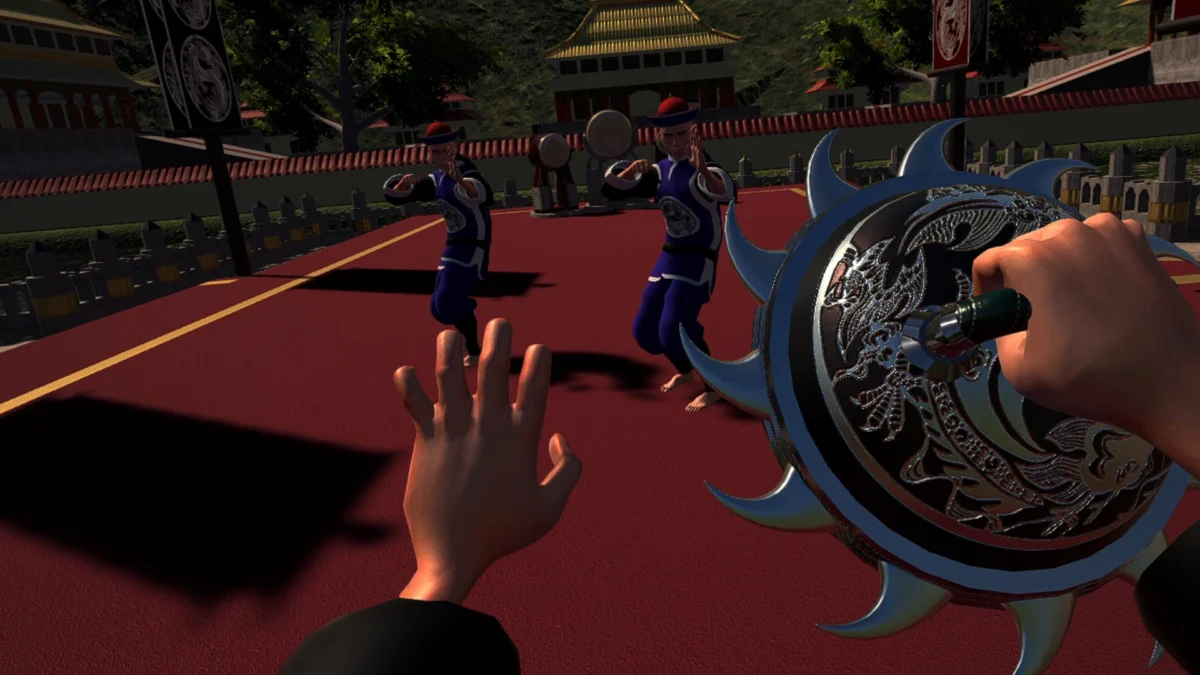
As the boundaries between digital environments and physical reality continue to blur, the medium of Virtual Reality (VR) is undergoing a significant transition. Once relegated to the realm of prohibitively expensive hardware and tethered experiences, VR is finally finding its stride in the consumer market. A pivotal catalyst in this shift has been the accessibility of the Oculus Quest 2, paired with wireless connectivity solutions like Air Link and Virtual Desktop. Within this evolving ecosystem, titles that prioritize physical engagement over passive observation are beginning to flourish. Among these, Dragon Fist: VR Kung Fu stands out not merely as a game, but as a testament to the potential of immersive, physics-based combat.
The Core Mechanics: Precision Meets Immersion
At its heart, Dragon Fist: VR Kung Fu is a first-person fighting simulator that demands more from the player than simple button-mashing. Unlike traditional arcade-style fighting games, Dragon Fist requires the player to inhabit the body of a martial artist. The gameplay loop involves selecting a fighter from a diverse roster and navigating a series of escalating encounters.
Strategic Combat Systems
The game’s brilliance lies in its tactical depth. Players utilize a variety of offensive maneuvers—punches, palm strikes, and precision finger jabs—each serving a specific strategic purpose. This is not a "swing and pray" experience; it is a tactical exercise in pressure points and stamina management.
By striking specific anatomical zones, players can trigger debuffs that fundamentally change the flow of a match. A well-placed finger jab to the eyes temporarily obscures an opponent’s vision, while a calculated strike to the lower ribs forces the AI to struggle with stamina regeneration. This emphasis on anatomical interaction elevates the game from a standard brawler to a cerebral, high-stakes duel, forcing players to master their own physical movements to succeed against the game’s increasingly difficult AI adversaries.
The Chronology of Development and Release
The journey of Dragon Fist from a niche passion project to a recognized VR title reflects the broader trajectory of the indie VR development scene.
- Late 2020 – Early 2021: The development team behind Dragon Fist began focusing on creating a combat engine that prioritized realistic physics and hit-detection. During this period, the team concentrated on refining the "feel" of the strikes, ensuring that every interaction felt impactful within the constraints of current VR tracking technology.
- Late 2021 (The Build-Up): As the Oculus Quest 2 began dominating market share, the demand for high-fidelity, high-intensity VR experiences grew. The developers recognized that players were looking for games that utilized the full range of motion offered by standalone headsets.
- December 21, 2021: Dragon Fist: VR Kung Fu officially hits the Steam storefront. The release arrived at a critical juncture in the holiday season, capturing the attention of VR enthusiasts looking for active, movement-heavy experiences.
- Post-Launch Updates: Following its release, the developer continued to iterate on the character roster, balancing the unique strengths and weaknesses of each fighter to ensure a fair competitive landscape.
Supporting Data: The VR Market Context
The success of Dragon Fist cannot be decoupled from the hardware landscape of late 2021. According to industry reports from that period, the shift toward standalone VR devices—led by the Meta (formerly Oculus) Quest 2—resulted in a 70% increase in the total user base of VR platforms.
The Accessibility Factor
The rise of "wireless VR" through technologies like Air Link and Virtual Desktop removed the primary barrier to entry: the tether. By allowing players to stream games from a high-powered PC to a standalone headset, developers were no longer constrained by the limited processing power of mobile hardware. Dragon Fist capitalized on this by offering a visual fidelity that challenged the player’s spatial awareness while maintaining a high frame rate—a requirement for preventing motion sickness in high-intensity fighting games.
Physical Engagement Metrics
Industry studies on VR fitness suggest that games requiring sustained upper-body movement, such as Dragon Fist, can serve as a legitimate form of cardiovascular exercise. When playing Dragon Fist at higher difficulty levels, users reported sustained heart rates comparable to moderate aerobic exercise. This "gamified fitness" has become a major sub-genre in VR, with Dragon Fist being a premier example of how combat simulation can double as an effective workout regimen.
Professional Insights: The Challenges of VR Physics
While Dragon Fist is lauded for its ambition, it is not immune to the limitations of current-generation tracking. The primary challenge, as noted in initial user reviews and early post-launch analysis, involves "latency-to-movement" mapping.

When a player executes a rapid-fire punch, the headset’s internal sensors and the controllers’ infrared LEDs must communicate with the game engine at lightning speed. Any delay in this feedback loop results in a "ghosting" effect, where the virtual hand fails to track the physical hand perfectly.
Addressing the Tracking Gap
"It is a reality of the current state of consumer-grade VR," notes one independent hardware analyst. "Developers like those behind Dragon Fist are constantly fighting against the physics of light-based tracking. When a player moves with the speed of a Kung Fu master, the camera often loses sight of the controller for a millisecond. The fact that Dragon Fist manages to feel as precise as it does is a testament to the game’s predictive algorithms."
Despite these limitations, the community response has been largely positive. Players have largely accepted the minor tracking hiccups as a "known trade-off" for the level of immersion the game provides.
Implications for the Future of VR Gaming
The success of titles like Dragon Fist: VR Kung Fu carries significant weight for the future of the industry. It proves that there is a massive, underserved audience for "hardcore" VR experiences that move beyond the "walking simulator" or "wave shooter" tropes.
The Shift Toward Niche Specialization
We are seeing a move away from "jack-of-all-trades" VR games toward highly specialized simulators. Dragon Fist is the premier Kung Fu simulator; other titles are carving out niches in sword fighting, archery, or tactical shooting. This specialization allows developers to polish specific control schemes, leading to a more satisfying user experience.
The Evolution of Haptic Feedback
The implications for hardware manufacturers are clear: if users are engaging in high-intensity fighting games, the demand for better haptic feedback will grow. Future iterations of VR controllers will likely focus on "resistance" and "impact" simulation to complement the visual feedback provided by games like Dragon Fist.
Conclusion: A New Standard for Interaction
Dragon Fist: VR Kung Fu represents a vital step forward for the medium. By marrying the accessibility of wireless VR hardware with a deep, strategy-driven combat engine, the game provides a blueprint for how developers can create immersive experiences that are both mentally and physically rewarding.
While the game is not without its limitations—tracking issues remain an inherent hurdle for the entire VR industry—the core gameplay loop offers an experience that simply cannot be replicated on a flat-screen display. As the hardware continues to catch up to the software’s ambition, Dragon Fist stands as a benchmark for what is possible when we stop looking at games and start stepping inside them. For those looking to test their reflexes, sharpen their martial arts strategy, and get a solid workout in the process, Dragon Fist remains a mandatory addition to any VR library.

